The Independent's journalism is supported by our readers. When you purchase through links on our site, we may earn commission. Why trust us?
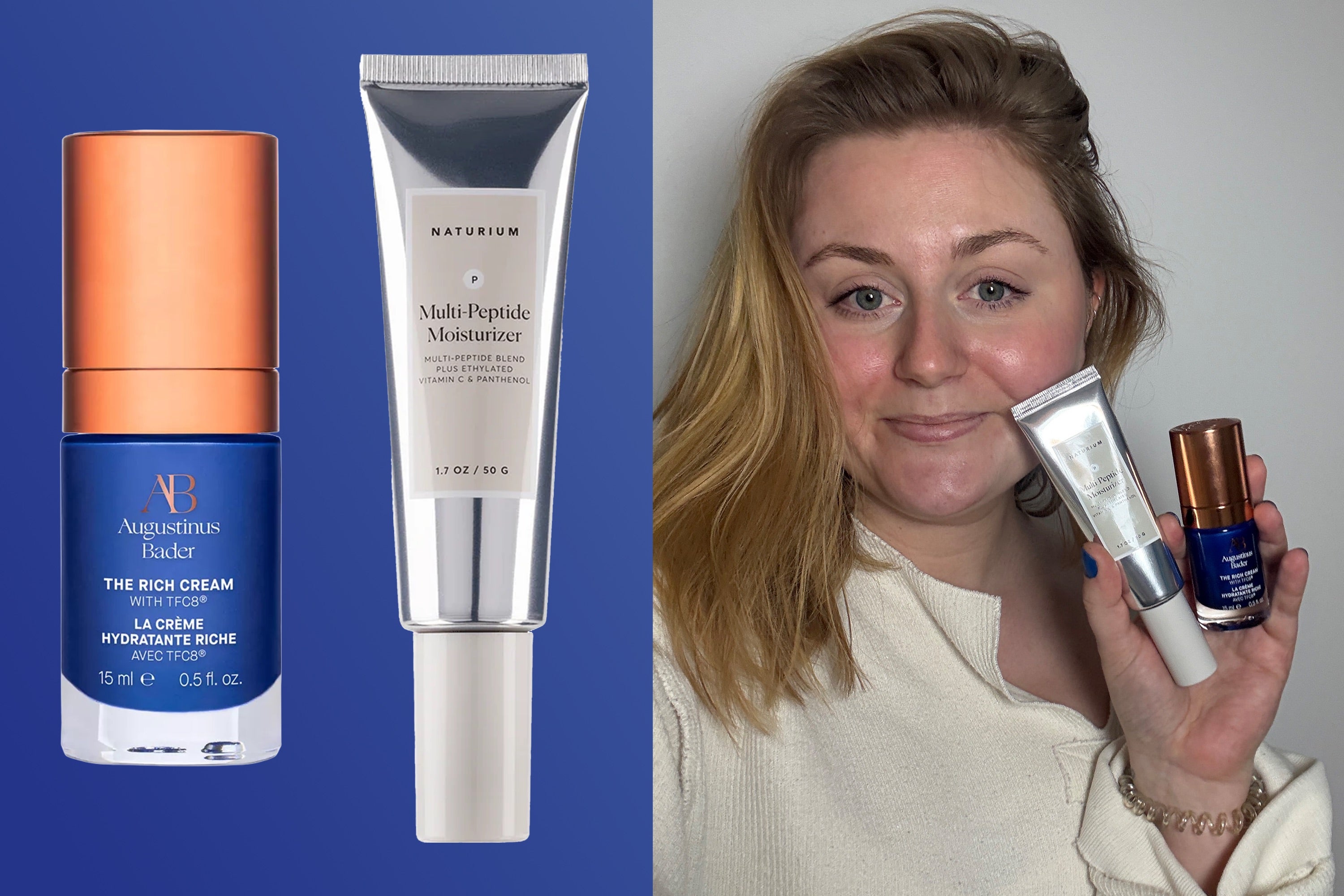
I didn’t expect a £21 moisturiser to rival Augustinus Bader’s rich cream – but it did
The Korean alternative boasts a very similar ingredients list
- 1
 2
2
There’s no denying that Augustinus Bader’s the rich cream (£80, Cultbeauty.co.uk) has become one of modern skincare’s most talked-about luxury moisturisers. Often hailed as the gold standard for rich, reparative formulas, it owes much of its reputation to the brand’s patented TFC8 complex – a closely guarded blend whose exact composition remains under wraps.
Naturally, my curiosity got the better of me. I wanted to uncover what really lies behind the mystique and whether the results of the complex are truly as unique to Bader as its luxury price tag suggests. After weeks spent digging into ingredient lists and comparing formulations, however, I managed to track down a viable – and more affordable – alternative.
So, whether you’re here to decode the science behind TFC8 or you’re simply searching for a rich, skin-smoothing moisturiser without the luxury spend, read on – I may have found a compelling, far more budget-friendly option.
Read more: Nivea vs La Mer review: Does this bargain cream compare to a £300 moisturiser?
What is TFC8?
Taken from the patent that Augustinus Bader filed for TFC8, according to Skinskool (a tech-driven beauty platform that takes a deep-dive into the ingredients list of the products we know and love and provides budget-friendly alternatives) the trigger factor complex features 25 components which, for your average individual, can be condensed as such:
- Water
- Glycerol (glycerin)
- Two types of ceramide
- One type of peptide
- Vitamin C
- Vitamin E
- Nine amino acids, including taurine
- Fatty acids
- Cholesterol
How I tested
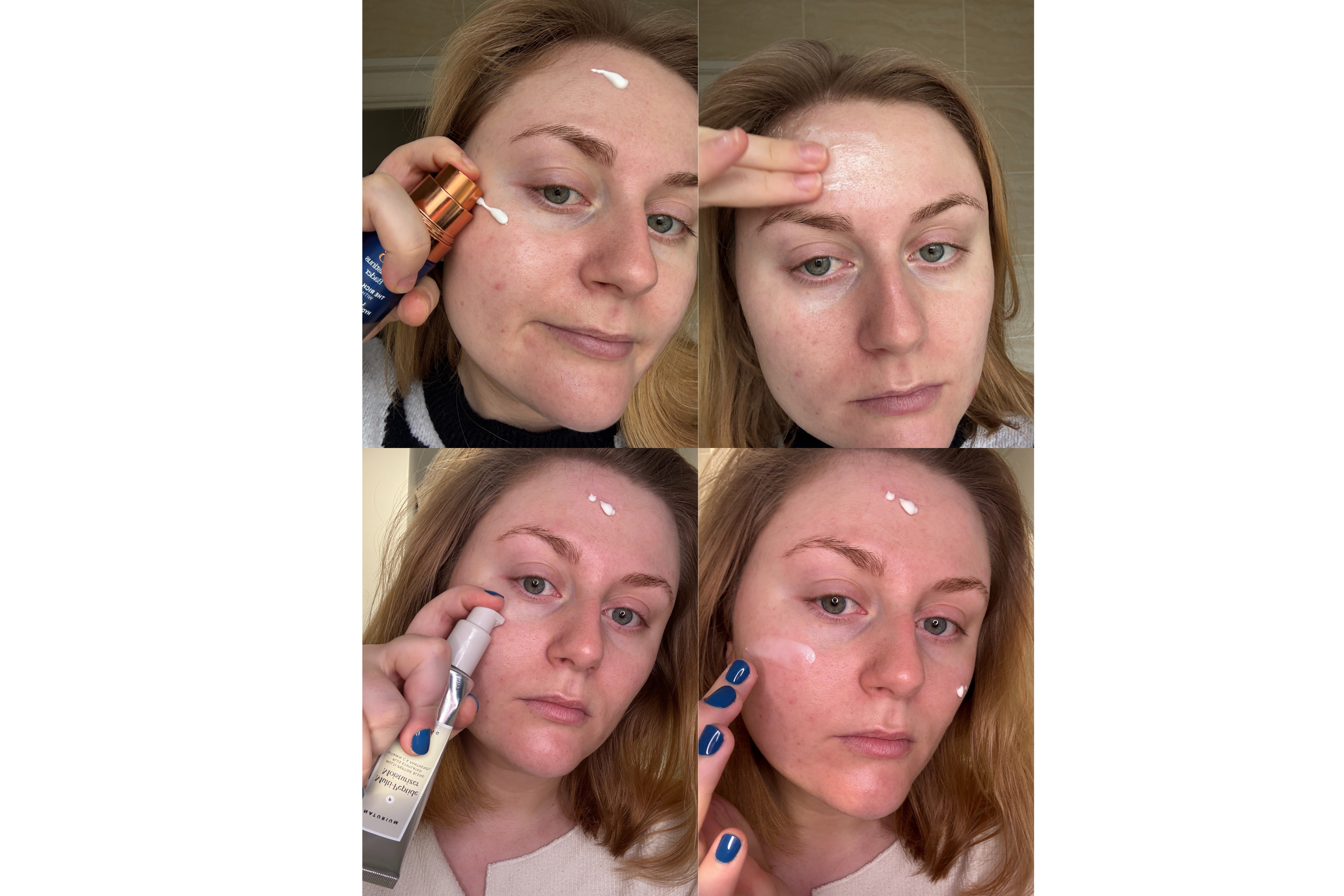
Integrating both products into my day-to-day skincare routine, I paid attention to factors such as texture, feel and the appearance of/any changes to my skin over the testing period. Further down this review you’ll find a more detailed list of my testing criteria.
Read more: Best moisturisers for dry skin, tried and tested by a beauty editor in her 40s
1Augustinus Bader the rich cream
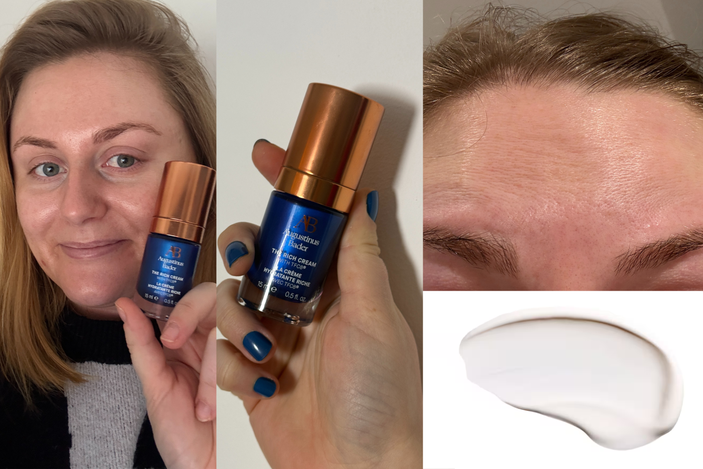
- Key ingredients TFC8 (glycerin, ceramides, peptides, vitamin C, vitamin E, amino acids and fatty acids), hyaluronic acid, squalane, shea butter, zinc PCA
- Cruelty-free Yes
- Fragranced No
- Why we love it
- Doesn't leave a greasy sheen
- Sits under make-up and SPF nicely
- Take note
- It's expensive
- You have to use quite a few pumps to adequately hydrate
The formula
Once I had a base understanding of Augustinus Bader’s TFC8 inclusion, I was pleased to discover that for its hefty price tag, the rich cream features nearly every skincare buzzword going. From vitamins C and E to fatty and amino acids, this cream – on paper – is really going to wake up your skin and leave it feeling rejuvenated and looking its best. Plus, opting for peptides versus retinoids, the rich cream will still work to tackle fine lines and wrinkles but it shouldn’t prompt much of a reaction.
My initial impression of the formula is that it is rich and feels akin to a balm or butter as you rub it into the skin. I was disappointed to find that, compared to competitor ‘rich’ formula iterations (for example Clinique’s moisture surge intense), this one has no stretch and requires at least four pumps to adequately cover an entire face.
Read more: This new high-street perfume smells just like Glossier you – but it’s half the price
Performance
As someone with oily skin, I was surprised that I needed additional moisture in the form of other hydrating products and I found when applying the cream, it somewhat dragged on my skin.
That said, once all worked into the skin, the moisturiser left me feeling comfortable and hydrated, not to mention layering well with my SPF, foundation and cream blush. I experienced no pilling or product separation on the skin.
Despite the peptides and ceramides, I didn’t see a noticeable change in the plumpness or elasticity of my skin – but I have only been using it for a week. As pictured with my eyebrows raised, the fine lines in my forehead area remained subtly visible and, while I’m 27 and certainly not complaining, I have seen more immediate results from using moisturisers in the past. For £80 and for just 15ml, no less, I might have hoped for something more distinct – though I can’t speak for the cream’s performance long-term.
2Naturium multi-peptide moisturiser

- Key ingredients Glycerin, squalane, fatty acids, amino acids, peptides, vitamin C, vitamin E, hyaluronic acid, niacinamide
- Cruelty-free Yes
- Fragranced No
- Why we love it
- A little goes a long way
- Skin feels immediately quenched
- Low-mid range price
- Skin appears more plumped vs. AB's the rich cream
- Take note
- Slight uptick in blackheads while using
The formula
When comparing Naturium’s multi-peptide moisturiser with Augustinus Bader’s the rich cream on paper, the main differences are the lack of shea butter and ceramides, plus the addition of niacinamide. For slightly more than £20, this offering from Naturium has a whopper list of actives. Of course, when the price decreases you do have to consider the potency of the ingredients included. For instance, what’s the molecular weight of the hyaluronic acid? Is it going to effectively hydrate the skin beyond its outermost layer? These are exactly the questions I wanted to answer in testing.
The Naturium – the brand’s founder is half Korean and acknowledges Korean skincare as a significant brand influence – formula presents a texture that’s entirely different to Augustinus Bader’s the rich cream in its multi-peptide moisturiser. Two pumps were enough to provide the hydration I needed. The inclusion of niacinamide piqued my interest given my shine-prone complexion – but how did it fare in practice?
Performance
The formula absorbed into the skin quickly, and, much like the rich cream, the moisturiser layered well with my SPF and subsequent make-up products. However, as someone with a bad habit of touching my face, I did notice some pilling as a result of the contact.
Surprisingly, I didn’t find the addition of niacinamide to be as effective as I might have liked. In fact, be it hormonal or a result of the Naturium, I saw more blackheads crop up on my skin during testing and a slight increase in my skin’s shine at around 3pm. It’s hard to pinpoint whether I hadn’t topped up my usual loose powder enough or if my sweaty commute was part and parcel of the dishevelled complexion. Plus, to give a little more context, I tested Augustinus Bader’s cream while at home.
One thing I was pleased to see – and hadn’t expected – was the marked difference in the fine lines pictured here versus those after using the rich cream. I can see, particularly towards the middle to left of the image that my forehead appears more plump, with the lines looking less pronounced, too. After just seven to eight days of use, this is undeniably a good result.
Is there a dupe for Augustinus Bader’s the rich cream?
Ultimately, I have to give it to Naturium on this occasion, with the results of the fine lines (with raised eyebrows) on my forehead evidence enough of the affordable product’s effectiveness.
I must admit, I really wanted to love the Augustinus Bader and – granted – it’s a lovely moisturiser with a good measure of active ingredients but it has a very hefty price tag. So, if the cost of the luxury formula makes you wince or perhaps you were on the fence about making the purchase in the first place, I’d take this as your sign to give Naturium’s multi-peptide moisturiser a whirl first.
How I tested Augustinus Bader and Naturium’s moisturisers
Each moisturiser was incorporated into my daily skincare for seven consecutive days, used both morning (pre-SPF) and night (as the final step). I kept all other products consistent to isolate the effect of the creams and, while using both formulas, considered the following characteristics:
- Application and texture: I assessed how easily the formulas spread across my face, how much product was needed, and whether they absorbed smoothly without dragging or leaving residue.
- Comfort and finish: I monitored how the skin felt immediately after application, throughout the day and at the end of each seven-day period, checking for greasiness, shine or discomfort.
- Layering: Both creams were tested under SPF, foundation and cream blush to see how well they layered and whether they caused pilling or separation.
- Anti-ageing effects: I photographed my forehead and under-eye area at the start and end of each seven-day cycle to track changes in fine lines, plumpness, and overall radiance.
- Negative effects: I noted any breakouts, blackheads, or increased shine during testing, particularly in areas prone to congestion or hormonal fluctuations.
Why you can trust IndyBest reviews
Lucy Smith has been covering beauty for IndyBest since 2024, bringing hands-on testing and editorial insight to a wide range of products. Over the years, she has written extensively on everything from the best SPF moisturisers and moisturisers for oily skin, to luxury brand dupes – including sought-after alternatives to the Chanel bronzer and Bobbi Brown vitamin-enriched face base. Her experience ensures a balanced, expert perspective, combining thorough testing with practical advice for readers.
Read more: 9 best anti-ageing day creams, tested by a beauty editor in her 40s
Bookmark popover
Removed from bookmarks