Electric vs petrol or diesel cars: Our EV editor compares hidden costs and which is best
EVs are getting more affordable, but does that make going electric better than buying a petrol or diesel car?
More and more people are thinking about buying their first electric car. EV sales jumped by nearly 24 per cent last year, with almost a quarter of all new cars sold being electric models.
If you’re thinking of switching to an EV, you’ll probably have a lot of questions. How much do EVs cost? How quickly do they charge? What about range, and should I consider buying second-hand instead of new? And, crucially, should I stick with my petrol or diesel car, or buy a hybrid model?
These queries, and many more, are answered here in our complete guide to buying an EV. As The Independent’s EV editor, I’ve outlined all of the major questions and concerns drivers might have, from value and maintenance costs, to range, charging and driving experience. All of these factors differ between electric, hybrid and petrol or diesel cars, so there’s quite a lot to learn before making your purchase.
There are also a lot of myths and half-truths to be tackled, especially when it comes to durability and range anxiety. The good news is there are more EV models available than ever before, prices are falling, range is increasing and charge time is speeding up too.
To help separate the fact from the fiction, and bring you all of the essential EV information to help you make a more informed decision, I’ve answered some of the biggest questions you’ll want to ask when it comes to buying and driving your first electric car.


Are EVs more expensive than petrol or diesel cars?
EV prices are coming down all the time and cars like the new Vauxhall Frontera promise an EV for the same price as a hybrid petrol model. You also have to factor in some of the discounts available, whether that’s in the form of the government’s Electric Car Grant (ECG) or discounts and other incentives that a car maker or dealer might throw in. Then you have to look at finance – as the Independent’s EV Price Index revealed, often EVs come with lower-rate finance as an additional incentive.
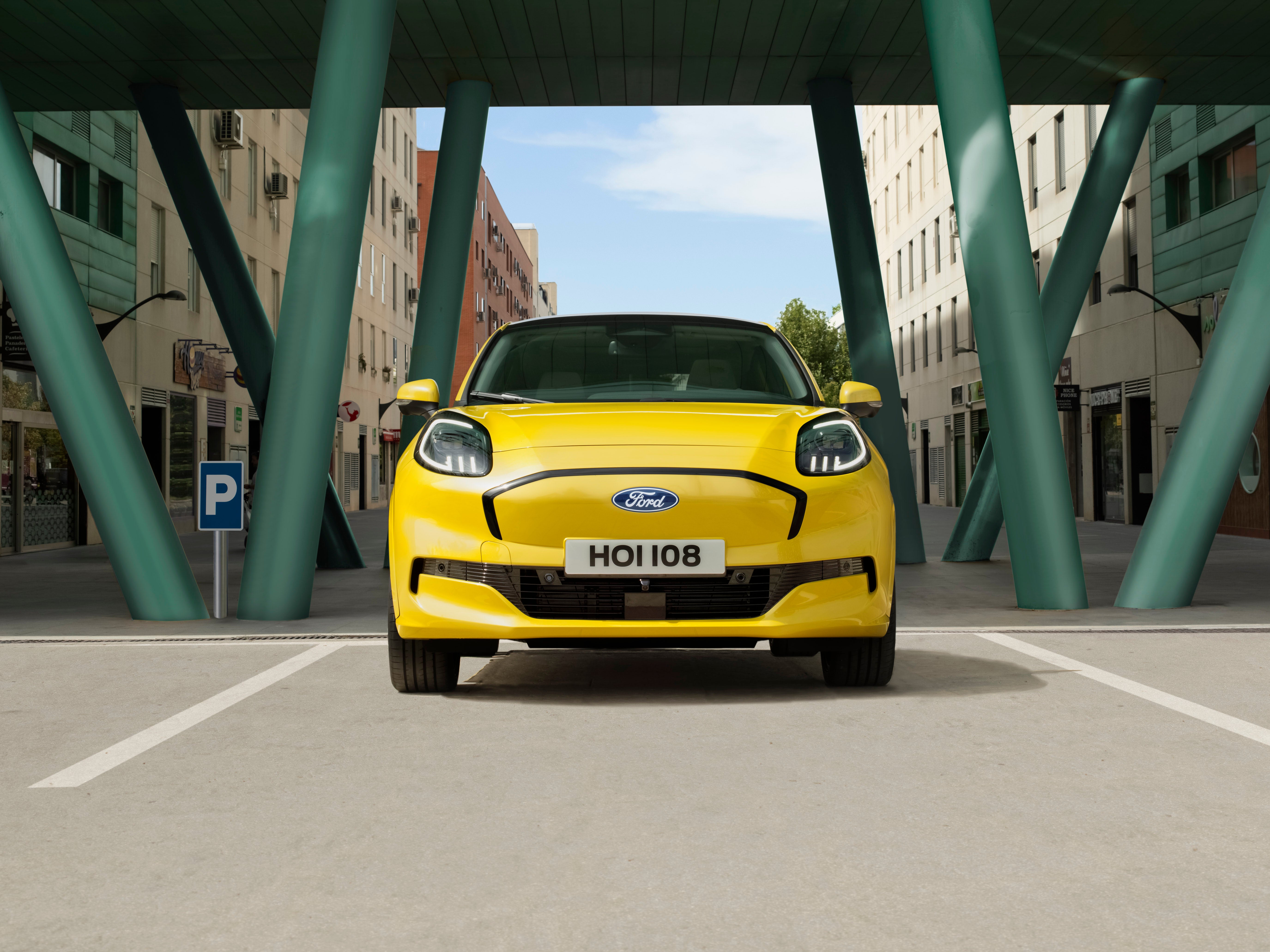
Let’s take Britain’s best-selling car as an example. The electric version, the Puma Gen-E, costs from £26,245, which includes a £3,750 ECG discount. The cheapest petrol Puma currently costs £26,580 – and that’s before an electric car’s running cost benefits (especially if you charge at home using a cheap tariff) are taken into account.
One of the most exciting cars coming to the market is the new BMW iX3, an all-electric model with a maximum claimed range of over 500 miles. It costs from £58,755, while if you want to buy the cheapest petrol-powered X3 it’ll set you back less at £53,305. The iX3 is a much newer car that showcases BMW’s impressive latest technology, but over a three-year period the cheaper running costs will eat into the difference between the petrol and electric models’ list prices.
As car makers are being pushed to sell more EVs every year by the government’s Zero Emissions Vehicles Mandate, the additional incentives can be huge. Take a look at some of the leasing sites, which at the time of writing have some EVs available for lease from less than £130 a month, plus a deposit.
The electric version of Britain’s best-selling car, the Ford Puma, is cheaper than a petrol Puma after the government’s Electric Car Grant is taken into account
Are EVs slow to charge?
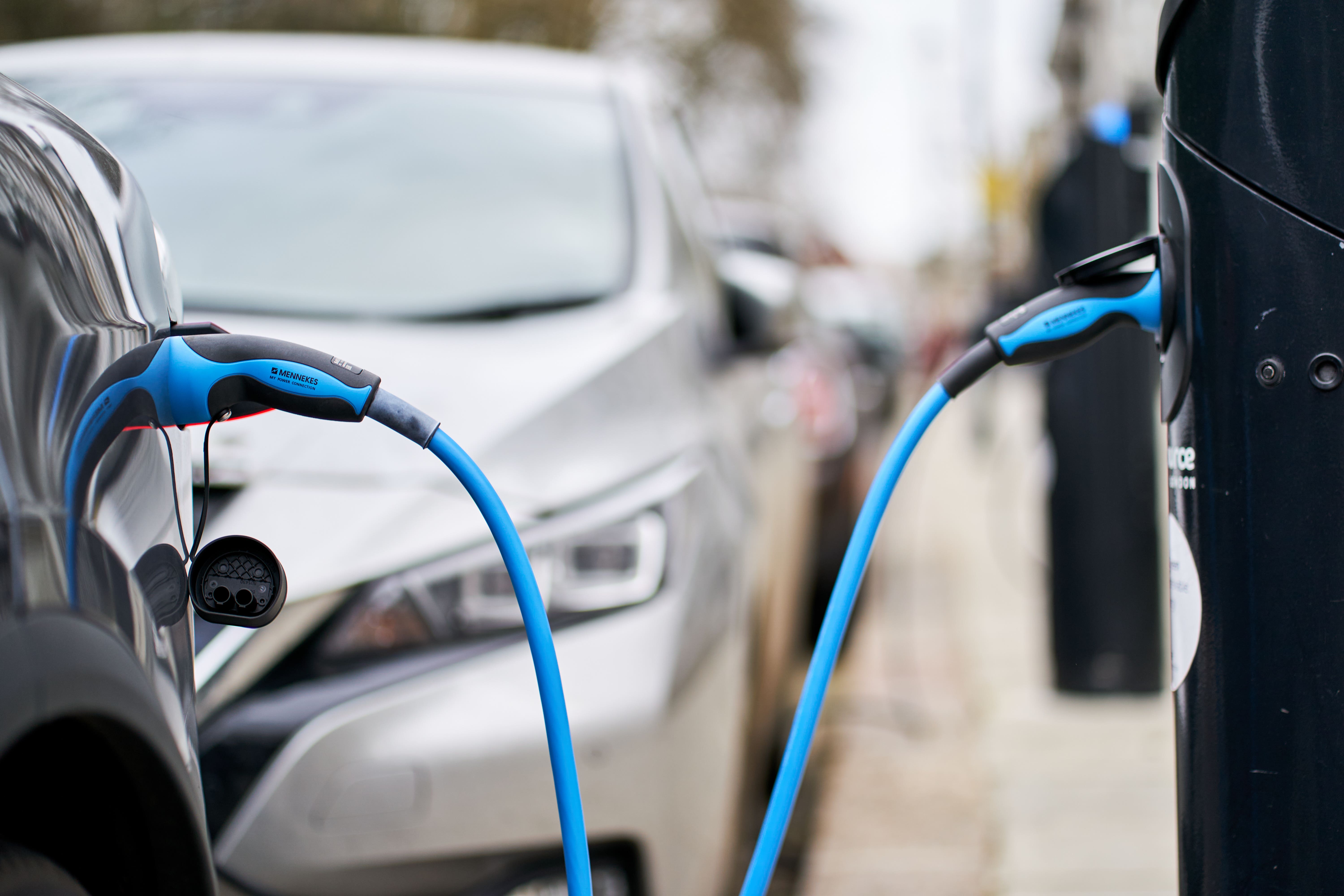
This depends on how the EV is charged, and what its maximum charge rate is. Plug a fast-charging EV like the latest Porsche Taycan into the speediest public charger you can find, and it’ll fill its battery at up to 320kW, which means a top-up from 10 to 80 per cent can take just 18 minutes.
However, plug that same car in at home, using a 7kW wallbox charger, and you’re looking at 12 hours for a complete fill, or 22 hours if you only have a 3.6kW charger. Use a three-pin domestic socket, which is possible with just about all EVs, and the Taycan will take over 30 hours to fill its battery.
Most mid-market electric cars have a maximum charge rate of between 100kW and 200kW. Broadly speaking, if you plug into a charger that delivers electricity at the same rate, the battery will fill from 20 to 80 per cent in 20 to 40 minutes.
What is the range of an EV?
Just like petrol and diesel cars, different EVs can travel different distances. Some need a top-up after only 100 miles or so, while 200 miles of real-world range has quickly become the norm among many models, and some manufacturers claim their cars can achieve over 300 or even 400 miles on a charge.
The current range king is the BMW iX3 at 500 miles, although the upcoming Volvo EX60 trumps that with 503 miles. Once again, things are changing fast as more and more new EVs are launched. However, buyers are quickly understanding that you buy what you need. If you only drive locally, then you don’t need a 500-mile range. It’s why car makers offer different battery sizes in the same way as they’ve always offered different engine sizes.
One of Britain’s best-selling small EVs is the Renault 5. The cheapest models offer a 192-mile range from a 40kWh battery, while more expensive models claim 252 miles from their 52kWh batteries.
If you do want long range, the Mercedes EQS has a maximum claimed range of 481 miles. Meanwhile, the new Polestar 3 can manage up to 438 miles per change, and both the Volkswagen ID.7 and Tesla Model 3 have a claimed 436 miles. There are currently two Peugeots – the e-3008 and e-5008 – that can also both clear the 400-mile barrier. At the other end of the spectrum, the new Dacia Spring has a claimed range of only 140 miles, but then it costs from just £14,995.
It’s worth briefly explaining that car manufacturers tend to state their EV range using the WLTP figure. This stands for Worldwide Harmonised Light Vehicle Test Procedure. Just like the MPG figures of petrol and diesel cars, WLTP range isn’t always indicative of real-world performance, but offers a useful way of comparing the respective abilities of two vehicles. EV efficiency is often calculated as miles per kWh (kilowatt-hour), or kWhs per 100 miles.
Do EVs have a shorter range in winter?
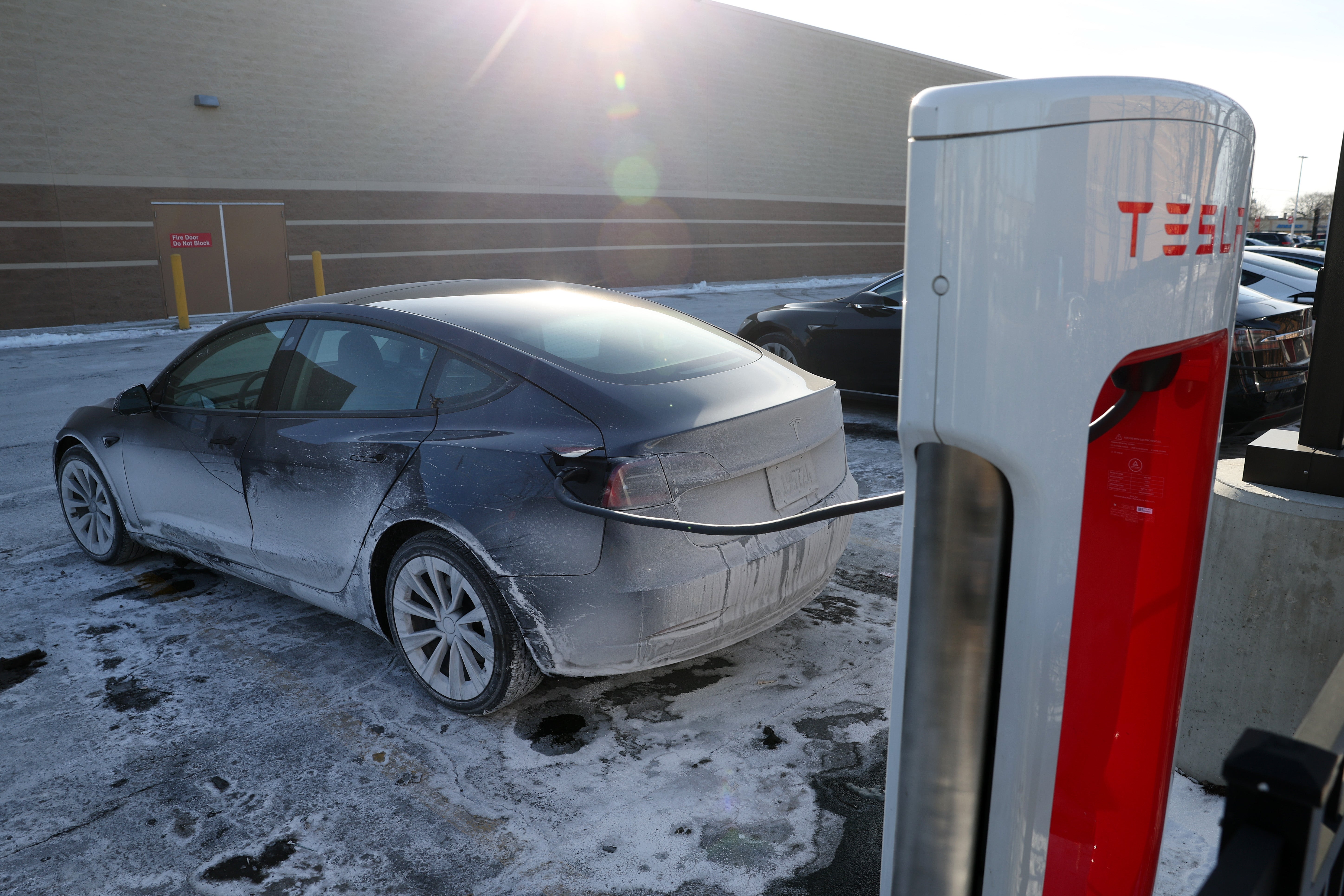
Yes. Lithium batteries like those used in electric cars, as well as in your smartphone, laptop and camera, perform less well when cold. For cars this means a shorter range and slower charging, too.
It’s hard to say exactly how much range your EV will lose in the winter, because that depends on all sorts of factors, including the exact temperature, driving style and speed, use of cabin heating, whether the car was preheated, and if its battery was preconditioned before setting off. Annual tests conducted in Norway by NAF have found EV range can fall by between four and 30 per cent in cold weather.
To help prevent range loss in winter, EV drivers should allow their cars to preheat before setting off, and while plugged into the charger at home. That way they can get their cabins and batteries up to temperature using mains power instead of depleting the battery.
Read more on how EV range and charging is affected by cold weather – and what to do about it
Are EVs simpler and cheaper to maintain?
Yes, generally speaking, they are. There is no engine oil to change, no filters or spark plugs to replace, no timing belts or chains to maintain. Electric motors are far simpler than internal-combustion engines, so there is less to maintain and less to go wrong. This is reflected in manufacturer service costs, which can often be lower for EVs than for petrol or diesel cars.
Because EVs can use their motor to slow down (called regenerative braking), their brake pads and discs tend to last much longer than those of other cars, too. Regular maintenance is still required – especially if you want to ensure the battery warranty remains intact – but it is generally true that EVs are simpler to live with.
Are second-hand EVs good value?
Second-hand EVs can offer incredible value for money. This is because electric cars tend to depreciate quickly during their first year – in some cases by up to 50 per cent of their original price. And while this can be bad news for EV drivers who bought their car new and outright, it’s great news for shoppers in the nearly-new market.
As I write this in early 2026, it is possible to buy an EV from as little as £1,500 for an old Nissan Leaf. It might not go that far on its battery, but if you only do occasional short journeys it could suit you well.
The Ford Puma Gen-E might be quite new still, but a Ford Mustang Mach-E can be yours for around £13,000, while the cheapest Tesla Model 3s are now well under £10,000. The Peugeot E-208 is a great all-electric supermini, while an MG ZS could cost you from £7,000 and a Kia Niro might cost you the same (and could have some of that car’s original seven-year warranty left on it).
Our list of the best used electric cars will show you some of our favourites and it’s regularly updated as prices and availability change.
Should I buy a second-hand EV?
Of course, but make sure you do all of the usual checks, just as you would when buying any second-hand car. A key consideration is the health of the battery. This can be estimated by looking at the estimated range (and seeing how quickly it falls) during a test drive, or ideally you should visit an EV specialist and have them perform a diagnostic scan. This can help reveal the health of the battery. A healthy battery is better able to charge fully and will deplete gradually.
As an indication of how long some EVs can last, I recently drove a decade-old Tesla Model S with 250,000 miles on the clock. Despite its age the only major parts to have been replaced were its tyres and interior mats, and the battery still had 84 per cent of its charge capacity remaining.


Are EVs different to drive?
Yes, but they are also very easy to drive, and any first-time EV driver will get used to their new car very quickly. They are quieter, smoother and often quicker than an equivalent petrol or diesel car, and since they only have one gear they drive in a similar way to an automatic car, with no clutch pedal and no manual handbrake either.
Other occasional quirks include no start/stop button, with EVs like the Tesla Model 3 and Polestar 2 turning on when you press the brake pedal, then switching off after you have shifted into park and opened the door. The biggest difference with how an EV drives is called regenerative braking, which we explain in the next section.
What is EV regenerative braking?
This is the biggest difference between how EVs and other cars drive. Regenerative braking is when the car uses its motor to slow down when you lift the accelerator, coast, or brake. In simple terms, the motor becomes a generator and, while slowing the car, uses the kinetic energy generated by the momentum of the vehicle to top up the battery.
You don’t need to understand how it works. Instead, think of the accelerator as a pedal that works in two directions. The more you press it, the quicker the car accelerates. The more you lift the accelerator, the quicker the car decelerates. A small lift will slow the car a little, while stepping fully off the pedal will slow the car with as much force as lightly pressing the brake pedal. This takes a bit of getting used to, but once you have the hang of it you’ll realise how satisfying it is to gently lift the accelerator and bring the car to a halt without ever using the brakes.
Most EVs let you switch regenerative braking on or off. If disabled, the car will coast freely when you lift the accelerator, like when a petrol car is shifted into neutral. Many EVs let you adjust the strength of the regenerative braking, either via the touchscreen or with paddles on the back of the steering wheel. This makes it easy to adjust the strength of the ‘regen’ depending on the situation; you might want stronger regen that brings the car to a stop in city traffic, but much less when on the motorway, so it doesn’t slow every time you move your foot.
When driving an EV down a long hill, and with the regen engaged, you might even see your indicated range creep up by a mile or two, since a large amount of energy is being generated by the momentum of the car, and fed into the battery.
What is EV one-pedal driving?
Some EVs have a mode called one-pedal driving. This is when the regenerative braking is turned all the way up, to a point where it will bring the car to a complete stop. This means you rarely ever need to press the brake pedal, unless slowing suddenly, and it makes the car even simpler to drive.
Are there any cheap/affordable EVs?
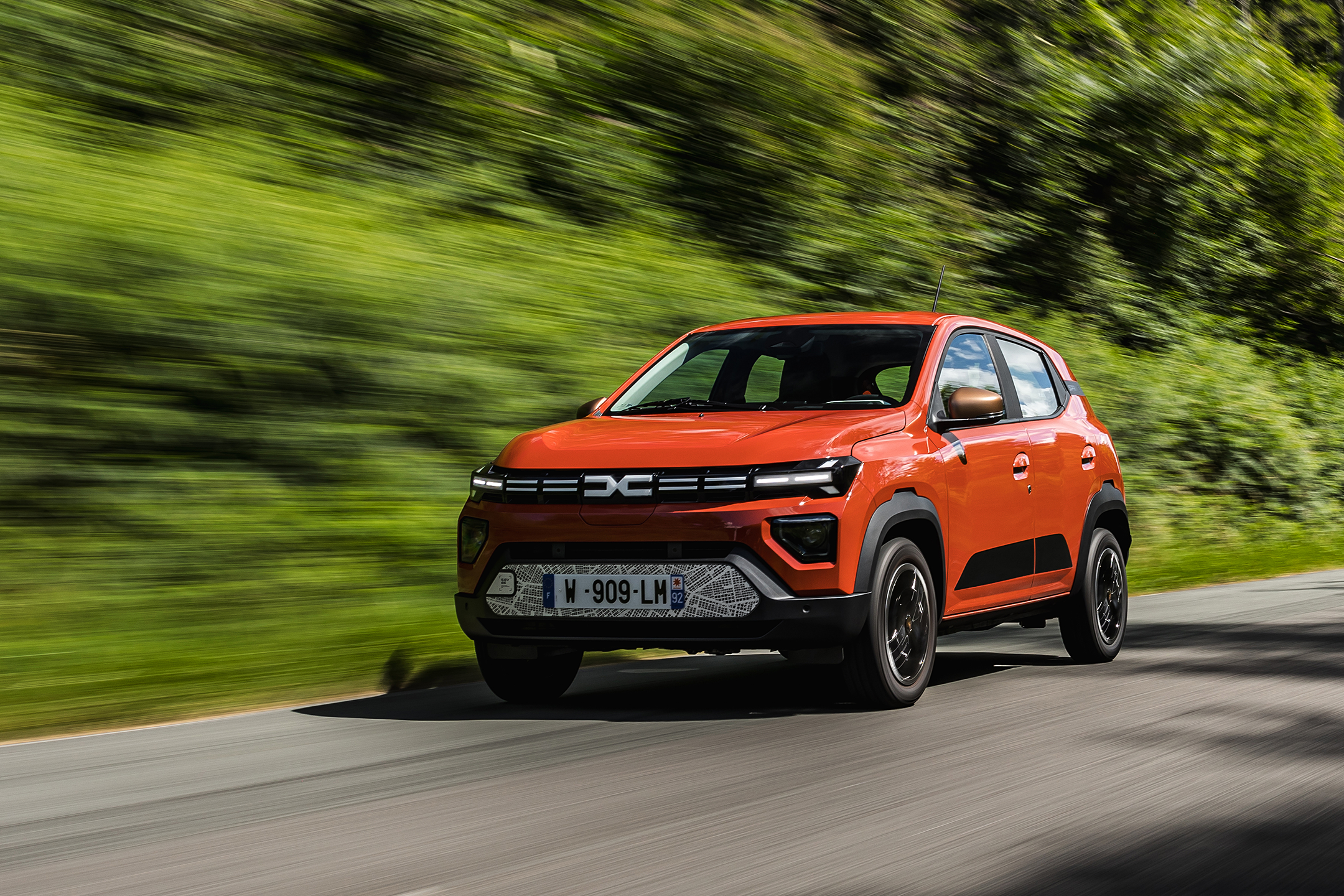
Compared like-for-like, EVs are more expensive than equivalent petrol or diesel cars. However, the market is broadening all the time and today there are plenty of new EVs available for less than £25,000. The Dacia Spring is the new low-price hero, at just £14,995, while the Citroen e-C3, BYD Dolphin and MG4 all start below £27,000, and there are several more that sneak in under the £30,000 barrier.
If you’d rather lease, there are plenty of new EVs available for under £200 a month, and some even start below £150.
Hidden costs to be aware of
Buying an EV is no different to buying any other car, but there are always costs that a dealer may add in that you might not need. All sorts of insurances – from gap insurance to tyre and even key insurance – will bump up your monthly payment (and the dealer’s commission). Meanwhile, if you’re buying with any form of finance then make sure you’re aware of potential penalties if you exceed a pre-agreed mileage limit.
You should also make sure you know what you’re signing up for when it comes to finance. Our guide to the different kinds of car finance available will help.
Should I consider a hybrid or plug-in hybrid instead of an EV?
First of all it’s useful to know what sort of hybrids are out there. Mild hybrids are no more than a petrol car with a slightly larger battery that adds a bit of a boost to the engine – just as a turbocharger would.
Full hybrids – often called self-charging hybrids – have slightly bigger batteries and can run for short periods on electric power alone. When the battery gets depleted, it’s self-charged by the engine or using energy harvested under braking, and the engine and battery-powered electric motor will work together or alone.
Plug-in hybrids (or PHEVs) use a bigger battery that can be recharged via a plug, as an EV does, plus a petrol engine, too. The very latest PHEVs can run for over 50 miles on electric power alone (with some claiming over 90 miles of EV running) before the petrol engine needs to take over, when the car then runs in a similar fashion to a self-charging hybrid. Most PHEVs will combine petrol and electric power for maximum efficiency, with some claiming a combined EV and petrol range of over 700 miles when the tank and battery are both full.
The key to getting the best out of a PHEV is plugging it in regularly. You may find you can do most of your running on electric power alone – taking advantage of cheap electricity overnight on a low-rate tariff – meaning you hardly ever use any fuel. But the reassurance of having a petrol engine to take over is proving popular with buyers – PHEV sales were up nearly 35 per cent last year.
Join our commenting forum
Join thought-provoking conversations, follow other Independent readers and see their replies
Comments
Bookmark popover
Removed from bookmarks