My epic journey to the remote Scottish island that looks like the Maldives
The Isle of Harris in the Outer Hebrides is an island of two halves, boasting both stunning beaches and otherworldly landscapes. US Travel Editor Ted Thornhill and his family find it’s an all-weather winner
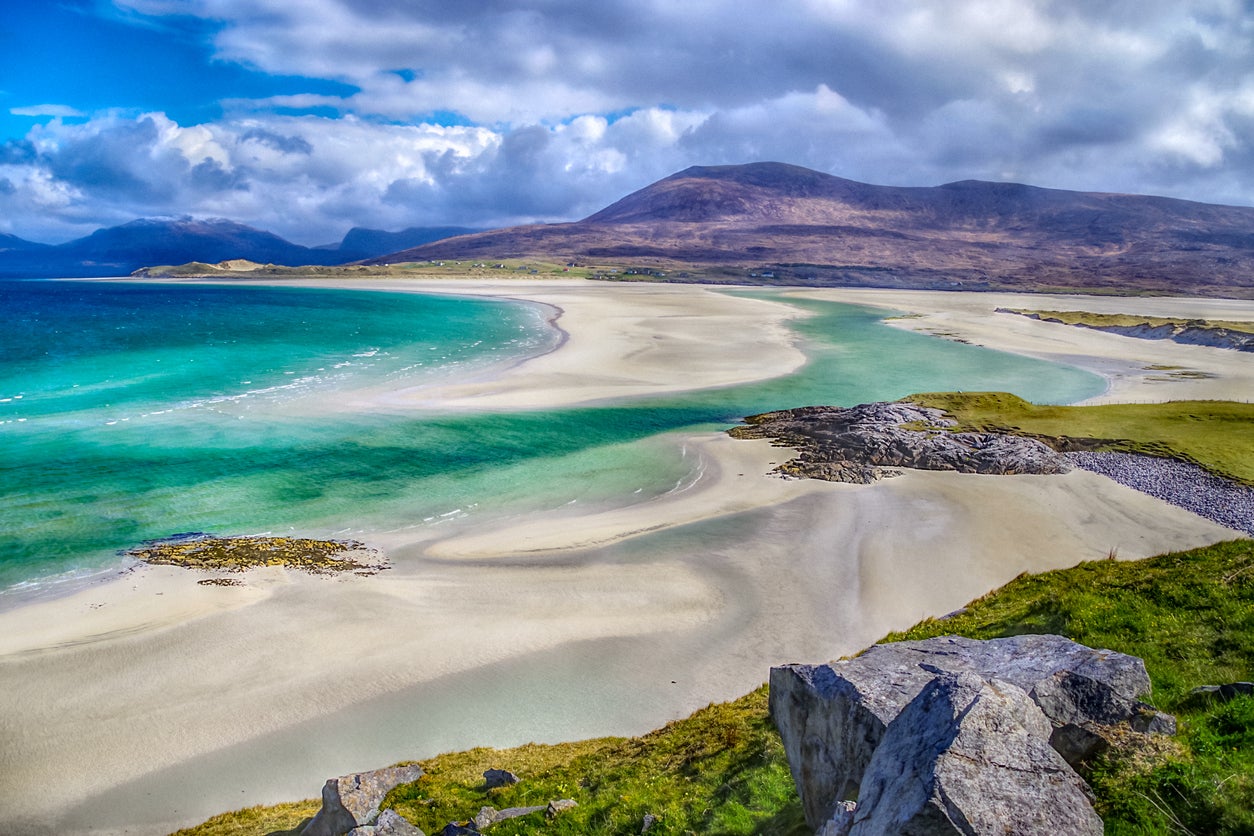
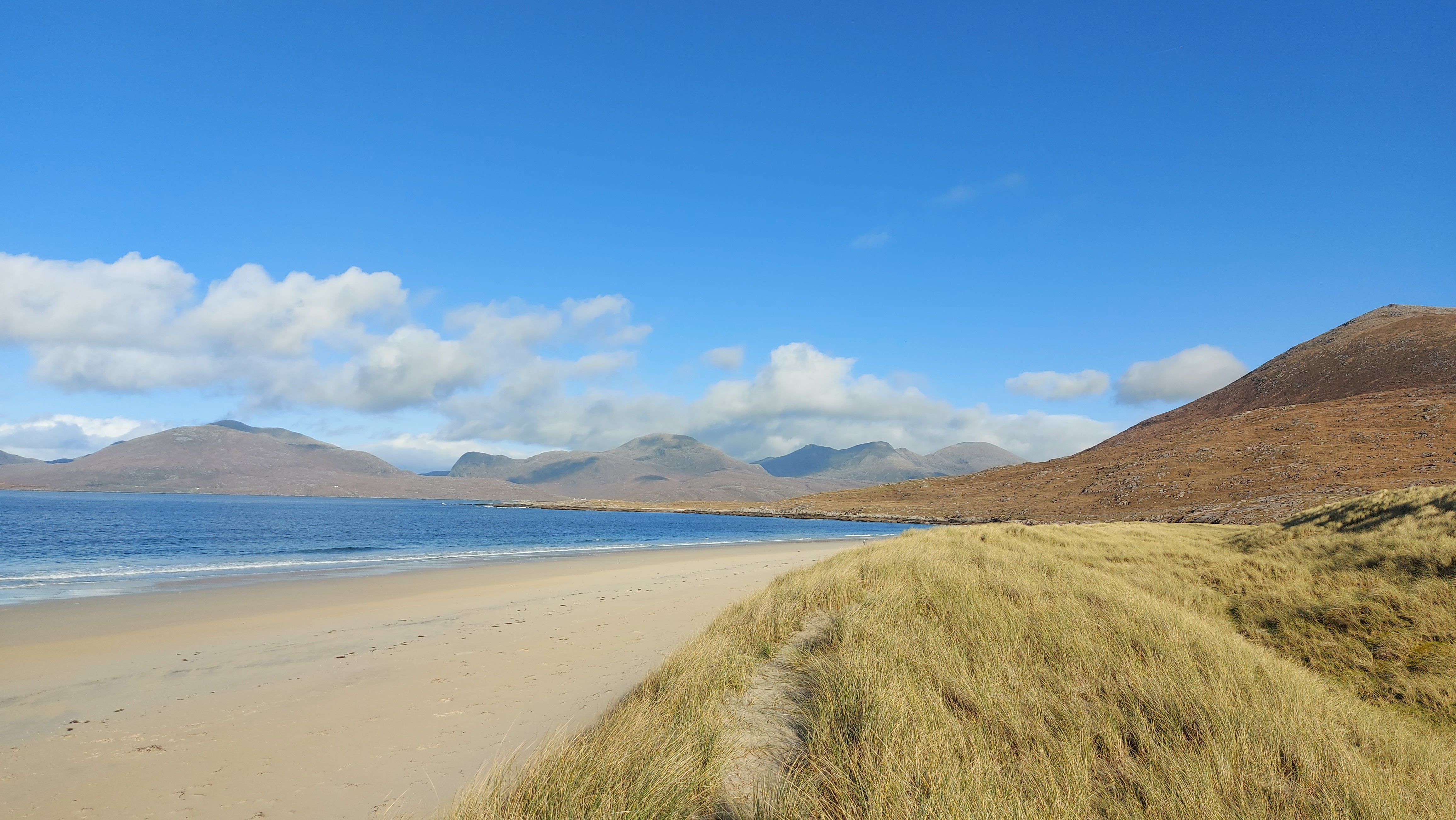
This golden sweep of sand has no business being here. It should be in the South Pacific, the crowning glory of a palm-fringed paradise. But no, it's here on a remote Scottish island, leaving me, my partner and our daughter deliriously happy. Not just because it’s one of the most beautiful stretches of sand I've set foot on, but because its almost completely deserted.
Welcome to my family break on the Isle of Harris, one of the six principal islands of the Outer Hebrides archipelago (the others being Lewis, North Uist, South Uist, Benbecula, and Barra) — a place we reach via train and road trips with cinematic views, a walk up one of Britain’s most beautiful hills on the Isle of Skye, and a ferry journey across a sea strait we’ll discover is a dolphins’ playground.
Before we set off from our London home, I’d wondered if this October half-term trip was ill-advised. Would a trip to the edge of the UK map appeal to an eight-year-old who orients herself in the capital by the locations of toy shops?
The answer, thankfully, is yes, despite the occasional bout of Biblical weather. I’m confident core memories have been formed on this holiday.


Dream train journey
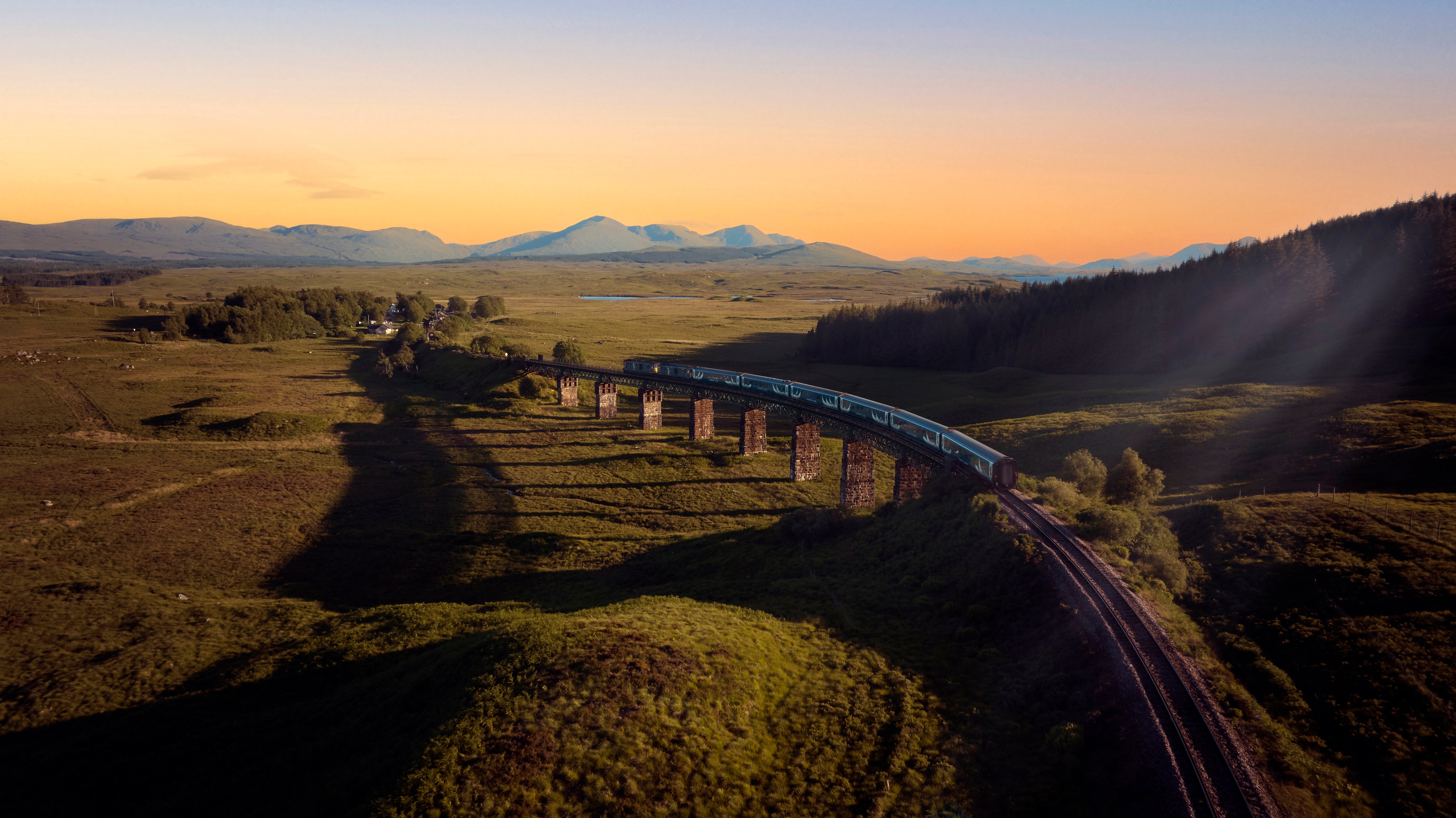
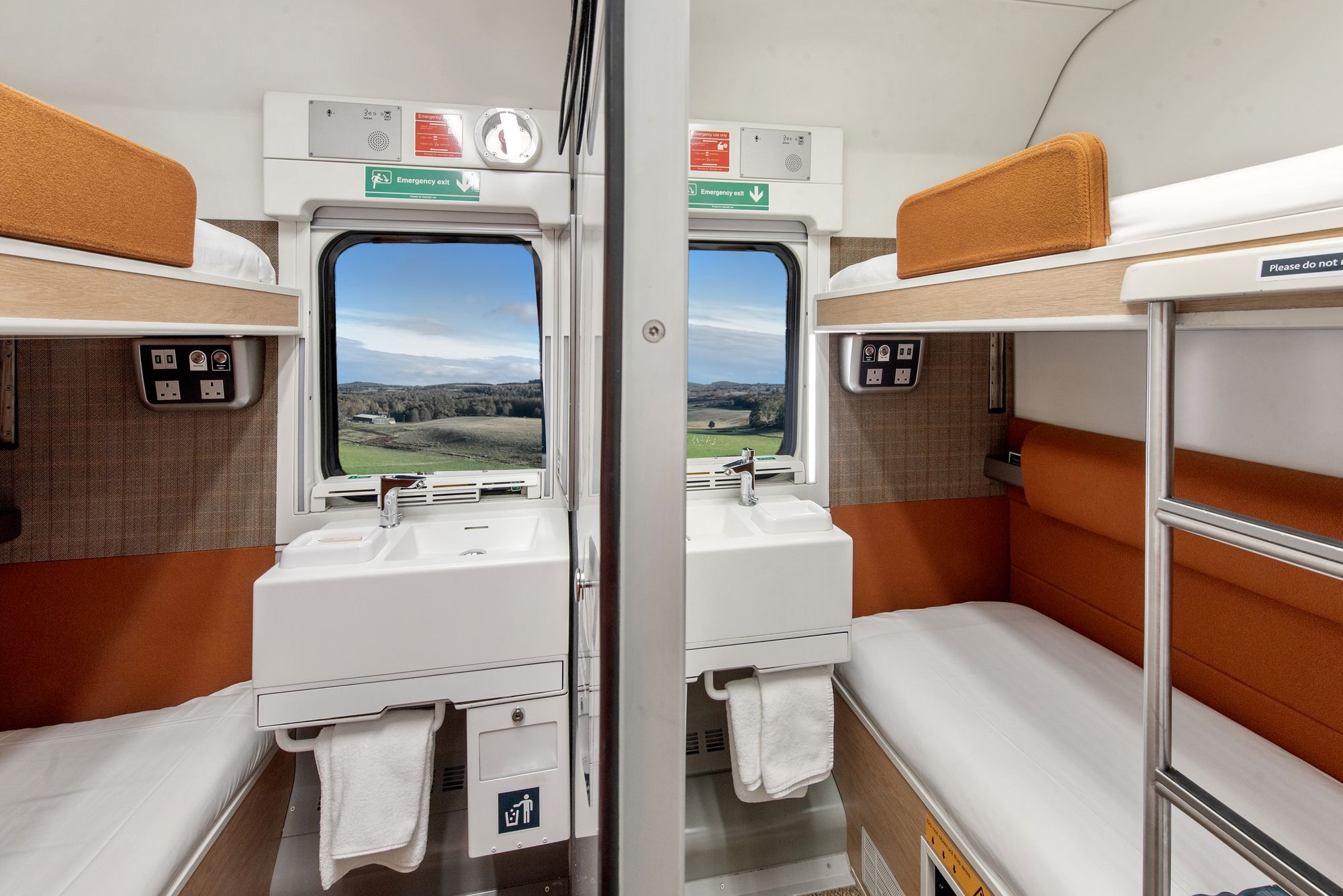
The first leg of our trip is from London Euston to Fort William on the Caledonian Sleeper, undoubtedly one of the world’s greatest rail journeys. As the train slides out at 9.15pm into a cold, inky Thursday night, my daughter and I are cosy inside a well-equipped Classic Room.
We bank a few hours’ sleep and wake up to a parade of Highland mountains and glacier-carved glens.
The train clickety-clacks its way through the Loch Lomond and the Trossachs National Park and traverses the roadless peat-bog wilds of Rannoch Moor before docking at Fort William station, where we swap train tracks for some of Britain’s most breathtaking driving roads to an Isle of Skye layover rental.
Before setting off in a Renault Clio conveniently dropped off in the train station’s car park by the Enterprise car hire, we stock up on gloves and waterproofs. Rumour has it that the West Coast of Scotland gets a lot of rain.
Road trip thrills
The drive to Skye is one to savour along two roads — the A82 and then the A87 — that thread through a tapestry of mountainous splendour. On leaving Fort William, imperious Ben Nevis, Britain’s highest mountain at 4,413 feet above sea level, is in the rear-view mirror, with the road skirting the fjord-like Loch Lochy before we turn west on to the A87.
Read more: The best spa hotels in Scotland – perfect for a relaxing country getaway
Next we cruise alongside Scotland-shaped Loch Garry, stopping off to admire a Highland feast of moorland and moody summits.
Perhaps the most dramatic pre-Skye moment, though, is the descent through Glen Shiel, where the road is enclosed by a dozen soaring peaks, including Sgùrr Fhuaran (3,378ft).
Before departing the mainland, we take a look around 13th-century Eilean Donan Castle, which sits on an islet by the A87. Self-billed as “Scotland’s most romantic castle”, it’s also recognisable from the movie Highlander and The World Is Not Enough.
Read more: The best hotels in Edinburgh to make the most of the city
The Isle of Skye casts a spell
Minutes later, we’re trundling over the arched bridge in the Kyle of Lochalsh to the Misty Isle, arriving at our pink-hued harbourside hire house in the island’s “capital”, Portree, in darkness and double-wiper-speed rain.
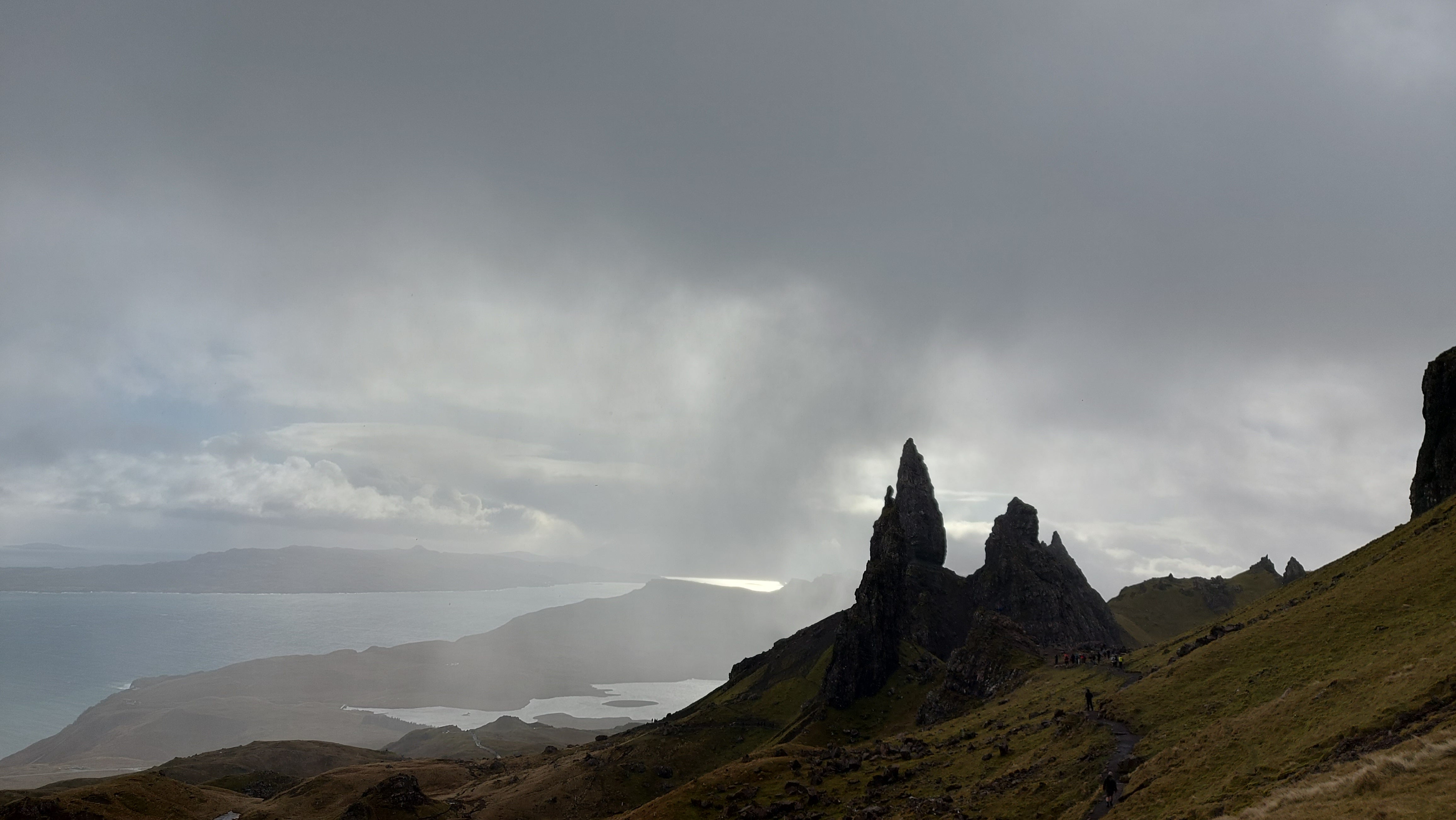
The following day, however, the magic emerges. The island puts on a show, rolling out a rainbow over one of its most famous sights – the Old Man of Storr – as we approach.
We visit this bombastic basalt spire, north of Portree before catching an evening ferry to our Outer Hebrides HQ. It’s a rock star with a sensational support act – Trotternish Ridge to the south, the adjacent Needle Rock and 2,358ft-tall Storr mountain directly above.
We ascend in four-seasons-in-one-hour weather, which veers from sunshine to sideways hail via driving rain, the walk slowed by the urge to stop every 20 feet to snap a picture of the landscape.
To the east, foaming waves frame the islands of Rona and Raasay and foreboding mainland peaks rise beyond, while the Storr ensemble lends the scene a distinct Land Before Time vibe. There is so much spectacle concentrated in such a short stretch.
We tick off one more geological showstopper on our way to the ferry port in Uig – the Quiraing, 12 miles away at the northern end of the Trotternish Ridge, where the land has seemingly been massaged into a series of extraordinary lumps and bumps by giant hands.
Read more: I’ve ridden the world’s railways – here’s why Scotland’s are the best (and now even cheaper)
To the edge of the map
In tiny town of Uig, we’re catching a Caledonian MacBrayne ferry across The Little Minch sea strait to Tarbert on an island where we'll be almost closer to Iceland than London.
Our ride to the UK’s perimeter is the car ferry MV Hebrides, cosy on the inside with a café, but it's pitch-black outside. And so while the view-less arrival feels anti-climactic, at least we don't need to worry about directions – Harris's road network isn't exactly complicated.
After disembarking to reach our accommodation on the west coast of South Harris, I sense the island’s blissful isolation – the only company we have on the road during the 25-minute drive is a solitary van and a dozen or so sheep resting on the verges.
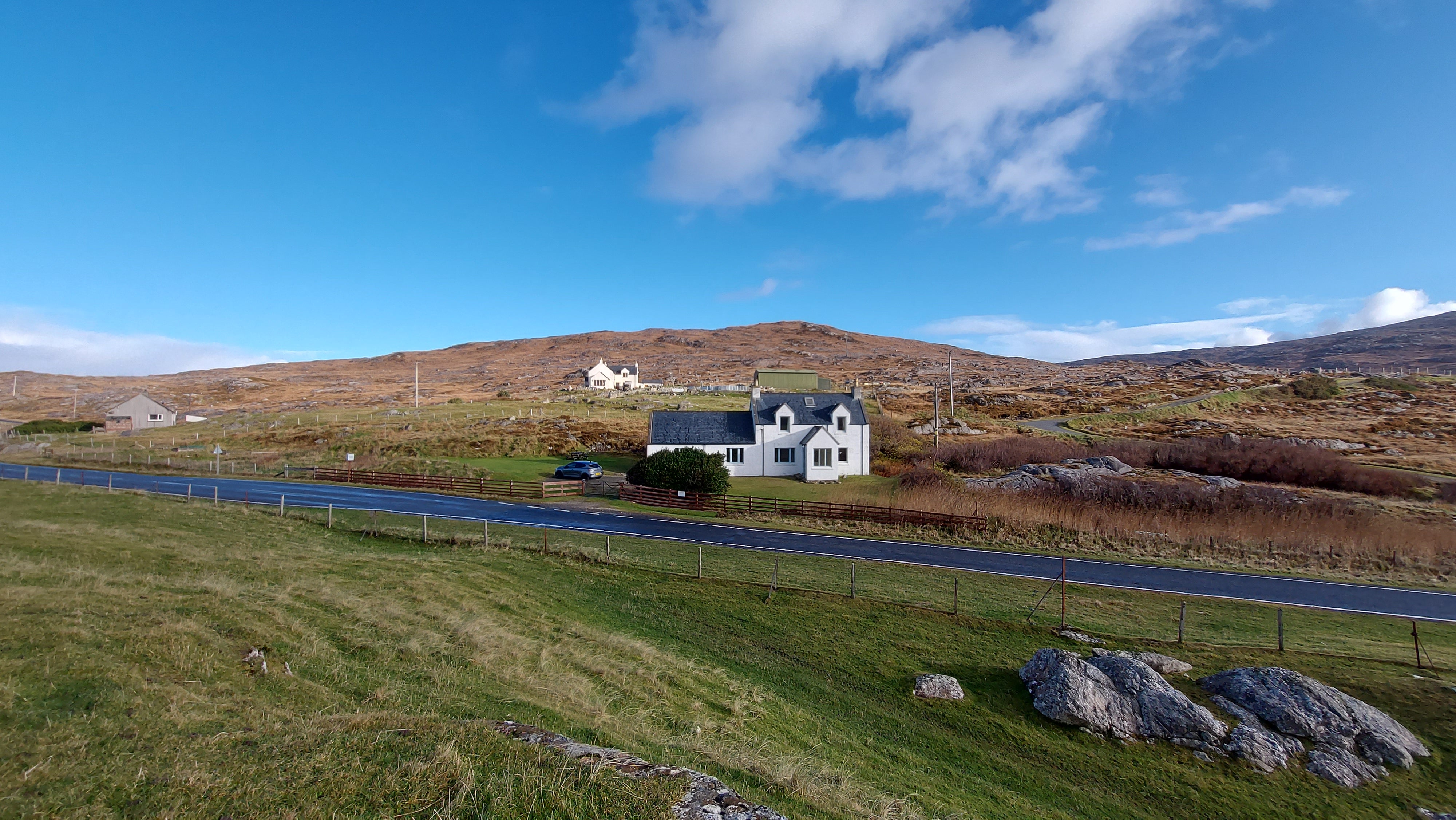
Our home for the next four nights is a stone-built croft house that stands alone in the Borve Valley. It’s part of the loosely distributed and architecturally intriguing Borve Lodge Estate portfolio.
Nearby is The Broch, a refurbished Iron Age Tower, and the Rock House, furnished with items whittled from driftwood. Laxdale Cottage, meanwhile, is a secluded inland bothy by a small loch. All these properties accommodate two, while ours, Claddach House, sleeps six in farmhouse-chic comfort.
Read more: The best Inverness hotels for 2025, reviewed by a Scottish travel expert
We love the Cape Cod-esque panelled walls and the kitchen with its huge island and woodburning stove; the living room entices with its trio of plush, comely sofas; and the bedrooms — two doubles and a twin — have boutique hotel-worthy beds.
And the location? The breaking of dawn reveals it's pretty special. Claddach in Gaelic means “shore” and the property is aptly named.
Directly opposite, across a lump of machair grassland, is the secluded Borve Beach, unseen from the road. I stride across to it and stand transfixed. Eddies created by the meeting of a small river and imperious Atlantic waves swirl over untouched sands, while beyond lies the uninhabited island of Taransay, owned by the Borve Estate. You might recognise it as the location for BBC TV series Castaway from the year 2000.
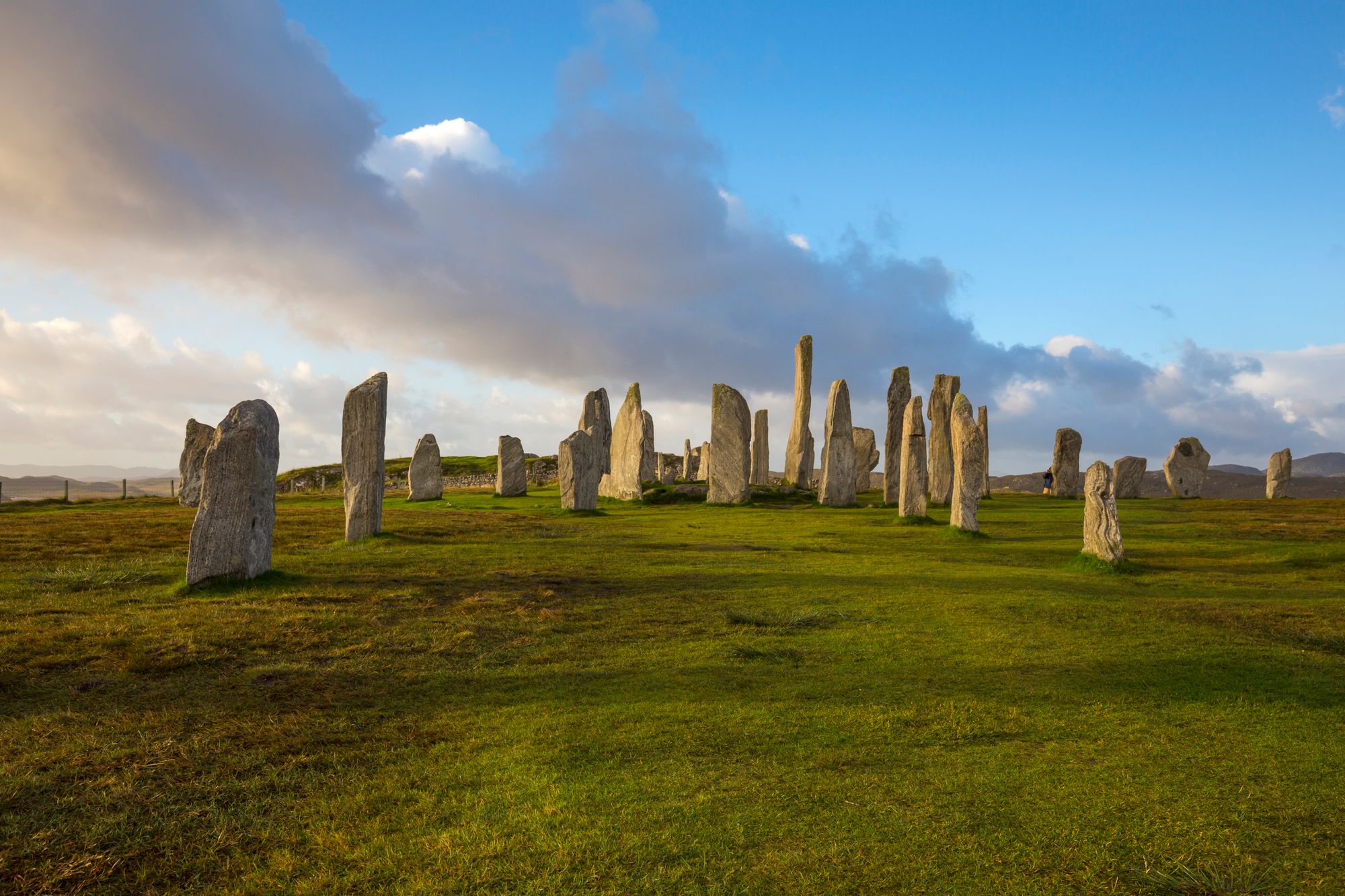
We’re desperate to explore the rugged wilds, to touch the soul of the islands. But first we take a detour west to one of the most extraordinary ancient sites in the UK – the mystical Calanais Standing Stones, megaliths arranged in a cross-shape that were erected around 5,000 years ago for a purpose that remains a mystery. They’re known locally as Na Fir Brighe (The False Men), the name deriving from the belief that the stones are giants who were turned to stone for refusing to convert to Christianity, while academics theorise that they were a kind of astronomical observatory.
Touching the stones is forbidden, but Emma delights in running around them as the wind plays havoc with her hair.
Read more: The best hotels in Edinburgh to make the most of the city


Britain’s most beautiful beaches
In the morning, blue skies prevail, so we head for Luskentyre. We plan to see if it lives up to the hype of being not just the flagship beach on Harris, and indeed in the Outer Hebrides, but one of the best in the world. Short answer: it does.
Access is via a single-track road The beach is tantalisingly concealed by dunes, which we walk, then run up. Seconds later, an outrageous sweep of golden sand is unveiled that’s almost totally deserted, which is both thrilling and slightly surreal. If this beach was teleported somewhere tropical, it would be lined with luxury resorts.
We run forwards, laughing in disbelief that we have the vast tract of sand to ourselves. A picnic is eaten, the football is kicked, and we occasionally stop to stare at the row of mountains in the background so perfectly rounded they look they've been drawn in by a cartoonist.
Does Luskentyre have any meaningful competition? Absolutely. For starters, Scarista beach, further south by the Isle of Harris golf course, is also world class. Again, it's largely out of sight, and there is no signposting. Whatsoever.
Turns out the path to the beach is by a red postbox (that we drove past three times). Clamber over a couple of stiles, nod at the sheep, cross the dunes — and you’re in paradise. We have the stretch of flour-soft sand to ourselves as the sun sets. We feel like castaways.
Read more: Our travel team choose their favourite beaches in the UK
Out of this world
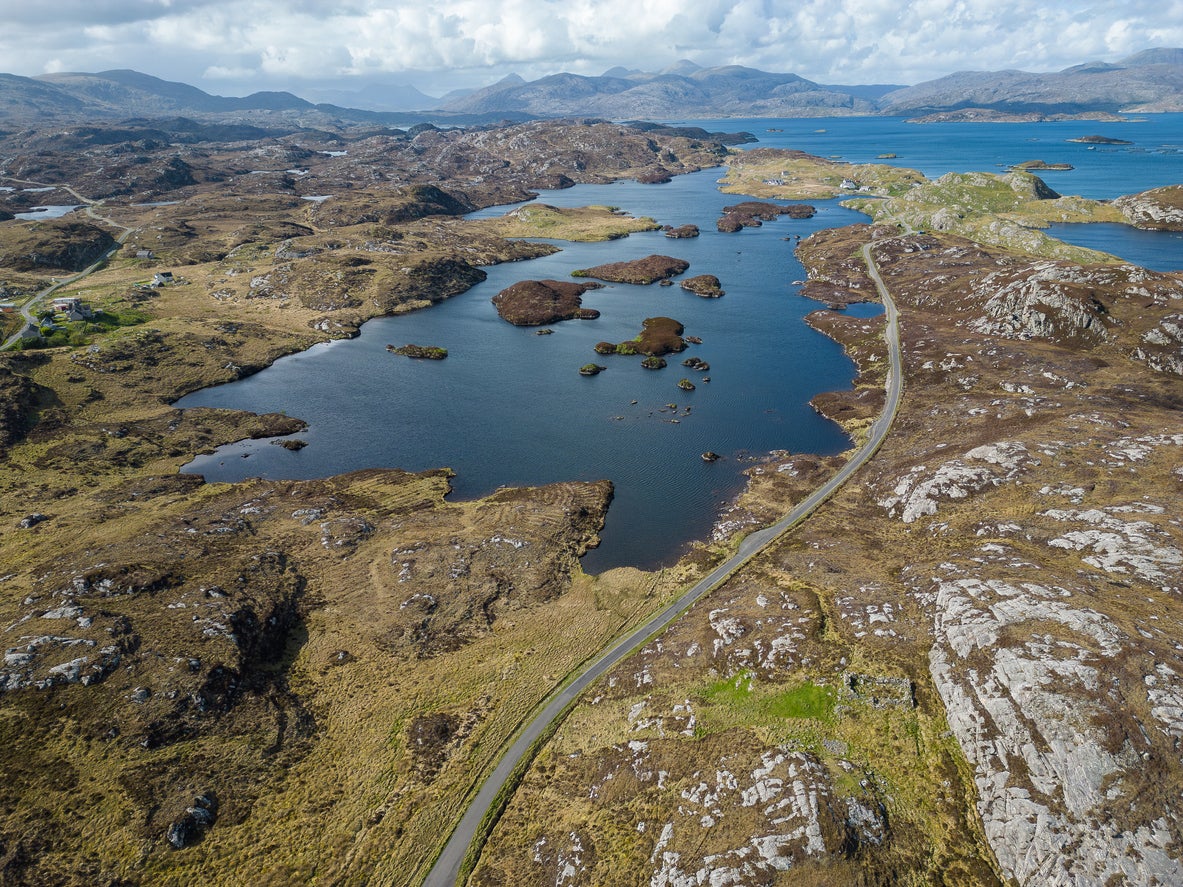
South Harris is an island of two halves. While the west coast has the postcard beaches, the east coast is a rocky, lunar-like landscape pockmarked with tiny lochs. In fact, its appearance is so firmly off-planet that Stanley Kubrick used aerial footage of it as a stand-in for Jupiter’s surface during a dreamy sequence in 2001: A Space Odyssey.
We mirror Birkin's flypast at ground level via a stop in the tiny coastal village of Leverburgh at the south end of the island, where life is refreshingly simpler.
Emma pushes postcards she wrote in a loch-side letterbox near a self-serve petrol pump with instructions to “pay at the machine in the wee shed to the left”, and we gaze across at North Uist, the next major island in the Outer Hebrides chain.
The exploration of Harris’s “Jupiter” location is via a ribbon of tarmac called The Golden Road that weaves along the entire east coast and is so named because of the extortionate cost per mile when it was built in 1897 and upgraded in 1940. The name also happens to describe the experience of driving it.
Read more: A booming wild sauna culture is transforming how people explore the Scottish outdoors
Five miles along from Leverburgh is the minuscule village of Finsbay, where we explore the wonderful Mission House art gallery. It’s run by photographer Beka Globe and her husband Nickolai, an expert ceramicist, and is a treasure trove of their work.
They live above the gallery, telling us that they escaped city life to make a home here 20 years or so ago and have never looked back. Gazing at the pristine bay beyond their garden and the family of seals resting on nearby rocks, it comes as no surprise.
The following day, the return journey home yields yet more treats. We watch wide-eyed in wonder as dozens of dolphins leap in and around the ferry on our morning crossing to Uig; we hike to the mini waterfall lagoons in the shadow of the Alpine-esque Cuillin mountains known as the Fairy Pools; and the journey is broken up with a night in the charming Eilean Iarmain Hotel on the shore of Skye’s tranquil Sound of Sleat.
Despite arriving back in Fort William for the return sleeper journey in a downpour, our enthusiasm for the fringes of Britain refuses to be dampened. Come rain, shine, or sideways hail, we vow to return.
Ted visited the Isle of Harris as a guest of Visit Scotland. A stay in Claddach House costs from £1,095 per week.
Read more: Best family-friendly hotels in Scotland: Where to stay for a warm welcome and lasting memories
Join our commenting forum
Join thought-provoking conversations, follow other Independent readers and see their replies
Comments
Bookmark popover
Removed from bookmarks