This new Skoda is Epiq by name and almost epic by nature
Skoda’s most affordable EV yet mixes compact dimensions with clever packaging, solid range and familiar practicality
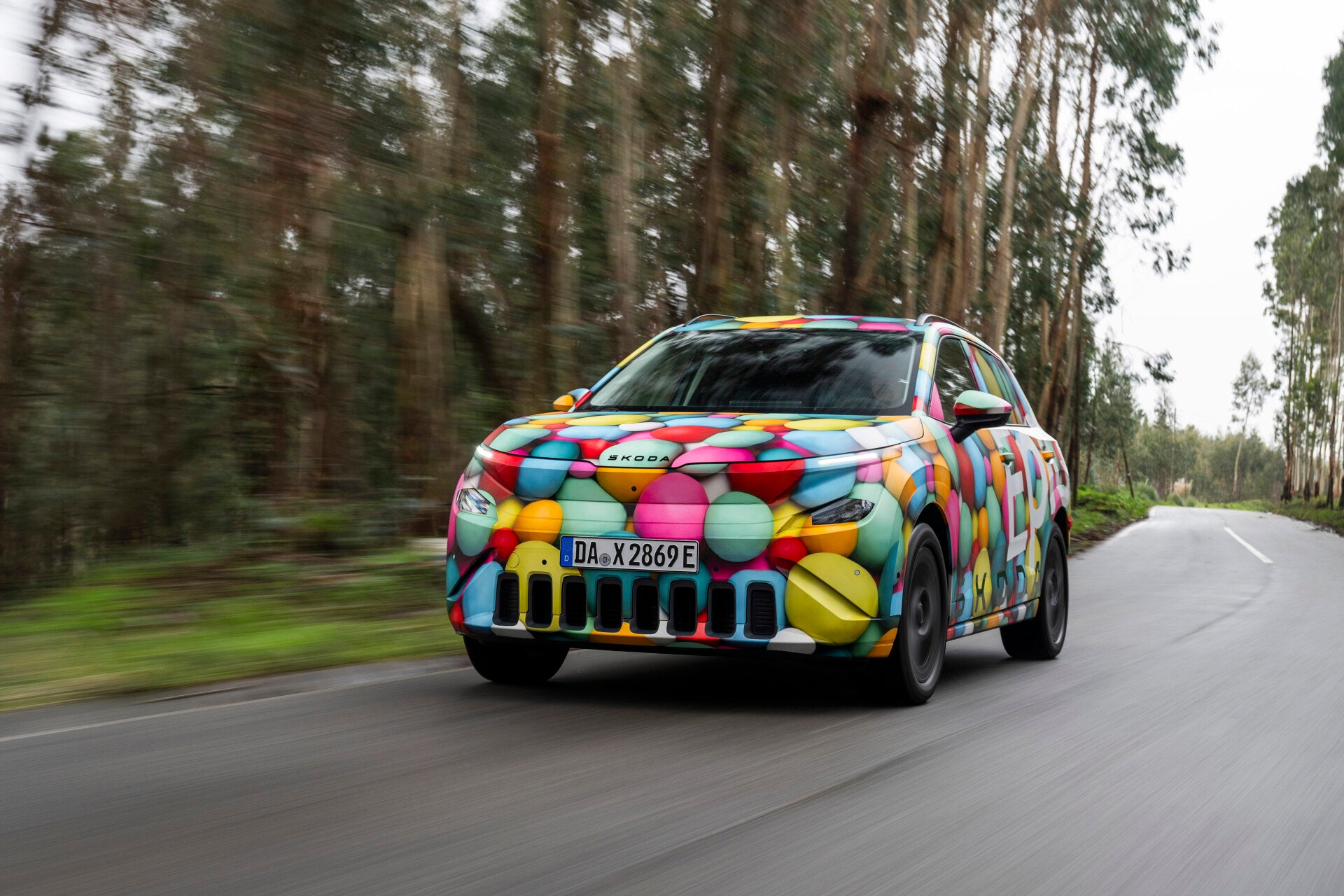
The Skoda Epiq is a small electric SUV with a clear aim: it’s designed to be the brand’s most affordable all-electric model. The car sits below the Elroq and Enyaq, while offering a genuine alternative to small petrol-powered crossovers such as the Kamiq.
In size and intent, it lands in a sweet spot that has proved hugely popular in recent years: compact enough to be easy in town, but tall and practical enough to work as an everyday family car.
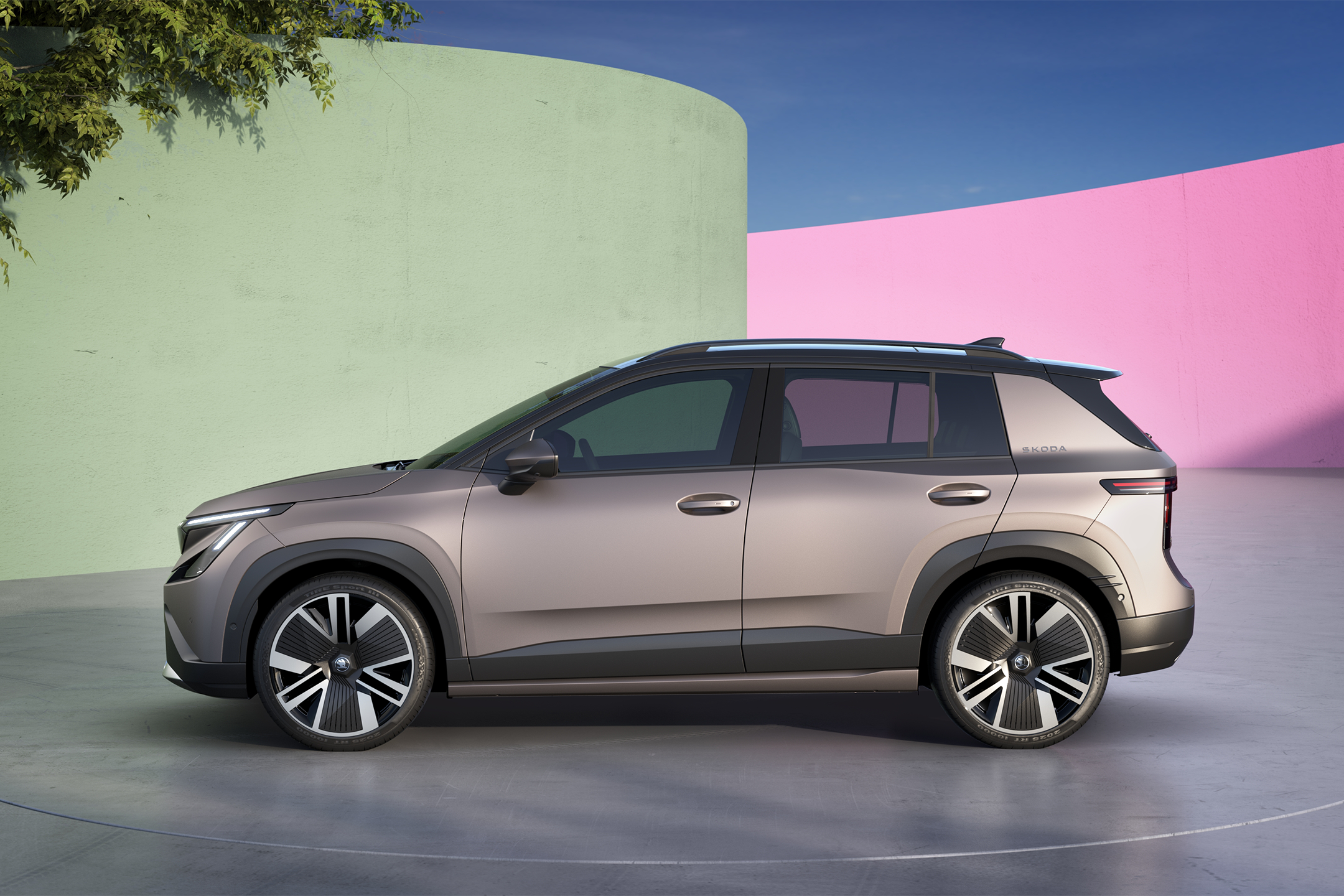
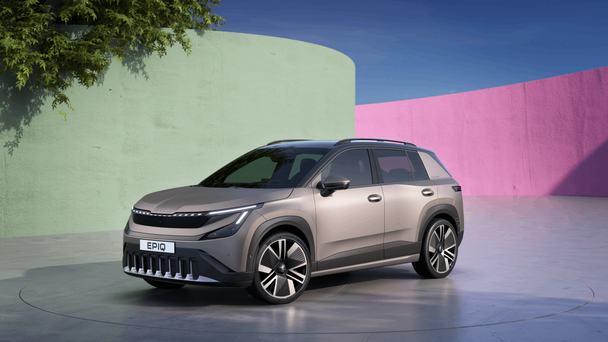
In the metal, the Epiq immediately feels like a sensible, well-judged size. Its proportions are reminiscent of the Audi Q2, making it easy to park and place on the road, helped further by good all-round visibility through deep side windows and a usable rear window.
The squarish shape also pays dividends when manoeuvring, and Skoda backs this up with plenty of parking aids, including advanced self-parking technology.
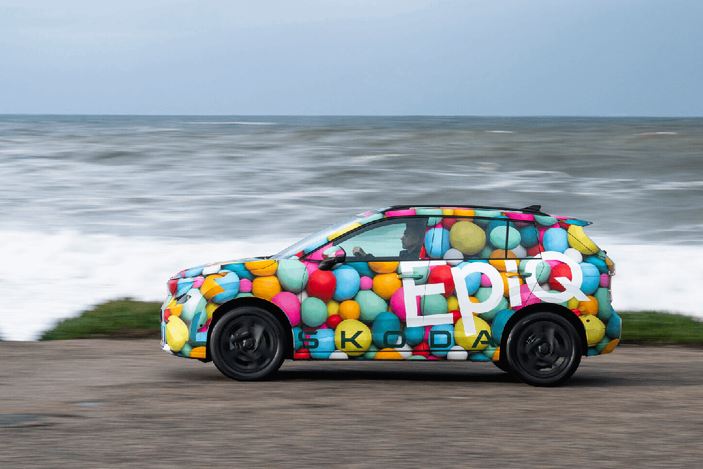
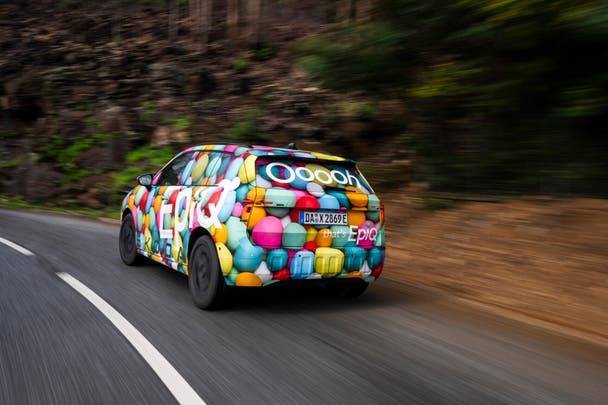
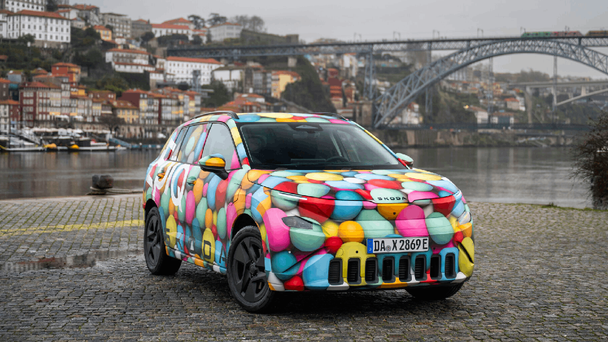
This is also the first production from Skoda to fully embrace the brand’s new Modern Solid design language. Even under camouflage, the Epiq looks chunky and confident, with details such as T-shaped LED lights front and rear all set to become a Skoda signature. Aerodynamics have clearly been prioritised, too, with a quoted drag coefficient of 0.275. Full details will be revealed when the covers come off later this year.
Skoda positions the Epiq as a direct electric counterpart to the Kamiq, with pricing in many markets expected to be broadly comparable. That makes it a key part of the brand’s plan to make electric cars feel like a natural, affordable choice rather than a pricey step-up. Keen to know more? Keep reading for my full, honest review.
How I tested

My drive of a very early Skoda Epiq was on the streets and motorways in and around the pretty Portuguese city of Porto. The tight cobbled streets gave the car’s suspension a good test, while I made sure I drove on a wide variety of town streets, country roads and motorways. And, of course, I tested the space in the front, back and boot of the car. I also looked at essentials like access and visibility. A full test of the infotainment will follow with the car’s official launch later this year.
Read more: This is the comfiest car I’ve ever driven
Skoda Epiq
- Price range Expected from around £25,000
- Battery size 38.5kWh or 55kWh
- Maximum claimed range Up to 272 miles (WLTP)
- Charging Up to 125kW DC
- Power Up to 208bhp
- Why we love it
- Easy-to-live-with size
- Nice to drive
- Good visibility
- Generous boot for its size
- Clever storage features
- Take note
- Rear space not as generous as Skodas usually are
- Old infotainment hardware
Battery, range, charging, performance and drive
The Epiq sits on the Volkswagen Group’s latest MEB+ platform, developed specifically for smaller electric cars. All versions are front-wheel drive and use a single electric motor, with three power outputs planned. Entry-level versions offer 114bhp or 134bhp from a 38.5kWh battery, while the range-topping Epiq 55 uses a larger 55kWh battery and produces 208bhp.
It was the Epiq 55 that I drove, and it feels well matched to the car. Performance is best described as swift rather than fast, with a 0-62mph time of 7.4 seconds, but responses are smooth and predictable. All the pedal controls are nicely modulated, which makes the car easy to drive in traffic and around town.
There are two levels of brake regeneration to choose from. The lighter setting feels natural, while the stronger mode may be a touch abrupt for some drivers. You can also switch regeneration off entirely. Crucially, whichever mode you choose, the brake pedal itself feels consistent and reassuring, avoiding the grabby or artificial sensation that can affect some EVs.
The steering feels natural, too – not overly assisted, while it can be weighted up slightly by selecting sport mode, which also sharpens throttle response and introduces a very subtle synthetic sound that you may not even notice over the sounds of the radio.
Ride comfort is generally good, with my test car riding on 18-inch wheels. There is the occasional thump over potholes and drain covers, and the setup feels slightly sportier than expected for a non-vRS Skoda – I was surprised it didn’t err on the side of comfort a bit more. However, body control is excellent and this isn’t a car that will lean through corners, while on the motorway, the Epiq settles down nicely and remains quiet and composed.
Official range figures go up to around 272 miles for the Epiq 55, with energy consumption quoted at roughly 4.8 miles per kWh. DC charging peaks at 125kW on the most powerful version, allowing a 10-80 per cent charge in a little over 20 minutes, while all models support 11kW AC charging at home or on public posts.
Interior, practicality and boot space
Inside, the Epiq follows the familiar Skoda approach, with an emphasis on clarity, simplicity and storage. The driving position is good, with controls placed logically and clear sightlines out of the front and sides. The dashboard design is clean and horizontal, helping the cabin feel airy, especially in models fitted with the panoramic roof.
Passenger space reflects the Epiq’s compact footprint. With the driver’s seat set for someone who is 5ft 11in tall, there’s enough room to sit behind in reasonable comfort. However, it doesn’t have the class-beating space for passengers that there usually is in a Skoda.
Rear headroom is particularly good, and visibility for rear passengers is a strong point thanks to the deep windows. The rear doors also open wide, making access easier than in some rivals.
Boot space is rated at up to 475 litres, which is impressive for a car just over four metres long, and there are plenty of dividers and clever touches. A snap-in cable holder on the back of the rear seats is a particularly neat example of Skoda’s Simply Clever thinking.
However, the sloping rear hatch means the space between the tailgate and the back seats is not especially tall, so owners with larger dogs may find it less accommodating than older boxier Skodas such as the Yeti. You will also need to set the boot floor to its lowest position to maximise capacity.
Elsewhere, Skoda claims up to 26 litres of additional storage dotted around the cabin, including the usual umbrella hidden in the door. Production models will also add a small front boot under the bonnet for charging cables.
Technology, infotainment and stereo
Technology in the Epiq is functional rather than flashy. A 5.3-inch digital driver display sits behind the steering wheel, familiar from other Skoda electric cars, while a 13-inch central touchscreen handles infotainment and vehicle settings. Although the central screen was covered up for my test drive, the screens will look familiar to anyone who has spent time in recent Volkswagen Group products – which means you may inadvertently turn the volume up if you rest your thumb on the bottom of the screen – although Skoda promises its own software layer and graphics.
There is a row of physical switches on the dashboard, though key climate functions are still expected to appear to live within the touchscreen menus.
Driver assistance technology is more advanced than ever, with Travel Assist 3.0 bringing features usually seen in larger and more expensive cars. These include adaptive lane assistance, traffic sign recognition with online updates, automatic responses to stop signs, and a top-view panoramic camera system that gives a 3D bird’s-eye view for tight manoeuvres.
Up to nine airbags are available, including a central airbag between the front seats, reinforcing the Epiq’s focus on everyday safety rather than headline-grabbing gimmicks.
Prices and running costs
UK prices have yet to be confirmed, but Skoda has indicated that the Epiq will be priced in line with the petrol-powered Kamiq in many markets. That suggests a starting price of around £25,000 for the entry-level Epiq 35, with higher-spec versions such as the Epiq 55 likely to push well beyond £30,000. The more powerful versions are expected to arrive first, with the more affordable entry-level models following later, and a Sportline trim planned for 2027. A hotter vRS version has not been confirmed, but Skoda has made little effort to hide its interest.
With modest kerb weight, efficient motors and relatively small batteries, running costs should be competitive, particularly for urban drivers who can take advantage of home charging and the Epiq’s compact dimensions.
The verdict: Skoda Epiq
The Skoda Epiq feels like another winner for Skoda. It’s compact, easy to drive and park, and packed with the kind of thoughtful storage and usability features Skoda buyers expect. While it does not offer class-leading rear space or a standout infotainment system, it balances comfort, agility and practicality in a way that suits everyday use. As an affordable entry point into electric motoring, it fits neatly into Skoda’s range and should appeal to buyers who want an EV that simply gets on with the job.
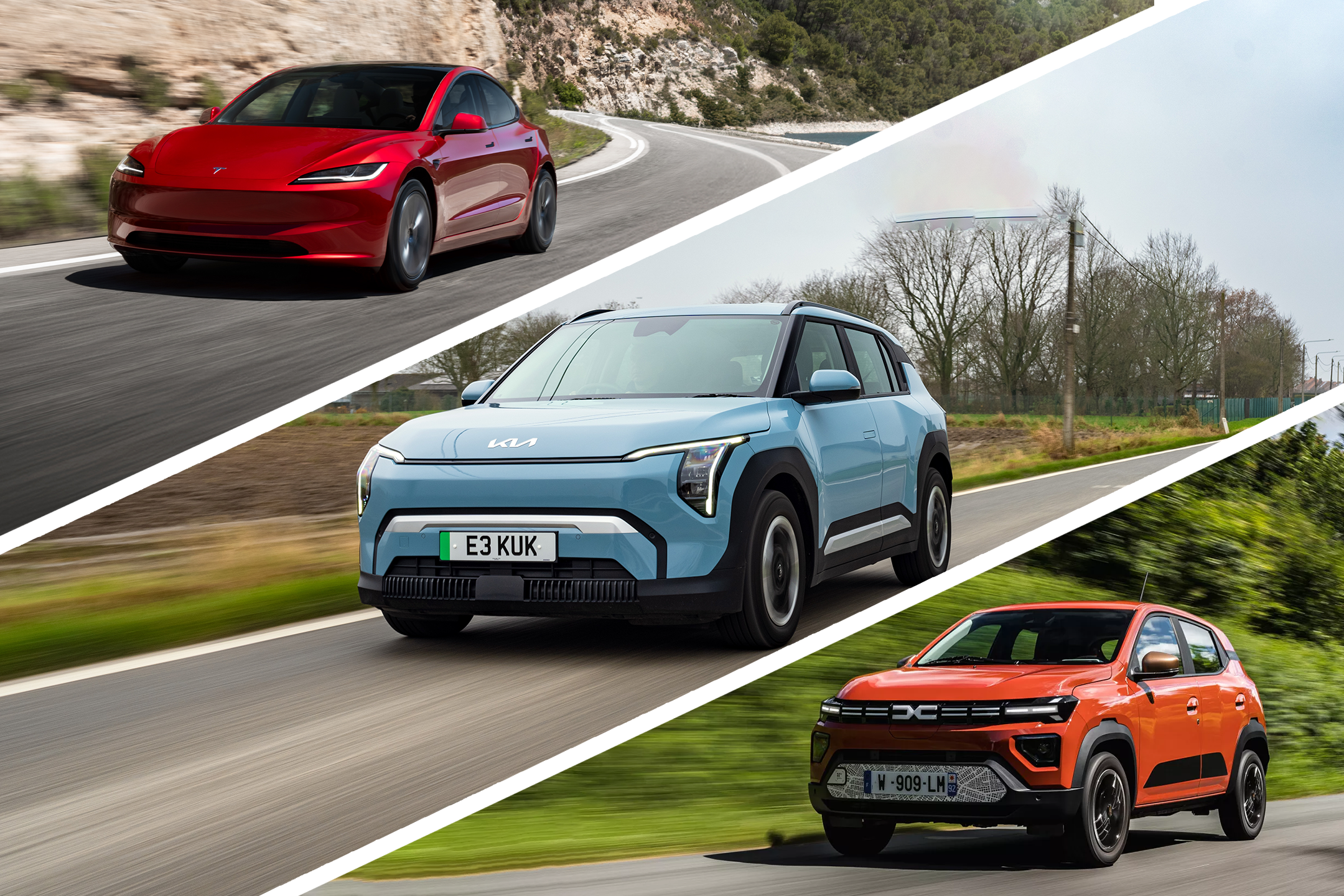
Skoda Epiq rivals
FAQs
How long does it take to charge?
The longest-range version of the Epiq is claimed to travel up to around 272 miles on a full charge under WLTP testing, with smaller-battery versions offering less. DC charging peaks at 125kW on the most powerful version, allowing a 10-80 per cent charge in a little over 20 minutes, while all models support 11kW AC charging at home or on public posts.
How much does it cost – is it worth it?
Official pricing is some way off yet, but Skoda is hinting at price parity with the petrol Skoda Kamiq. This means a starting price of around £25,000 going up to well over £30,000 for the Epiq 55 in its highest trim level.
Does Skoda replace batteries for free?
Like most manufacturers, Skoda covers its EV batteries with a warranty that lasts for eight years or 100,000 miles, whichever comes first. If the battery fails, or its capacity falls by an unreasonable amount in that time, it will be replaced.
Why you can trust our car reviews
With more than 30 years of experience, Steve Fowler is one of the UK’s best-known automative journalists. Steve has interviewed key industry figures, from Tesla’s Elon Musk to Ford’s Jim Farley, and is a judge for both Germany’s and India’s Car of the Year Awards, as well as being a director of World Car of the Year. When it comes to electric vehicles, Steve reviews all the latest models for The Independent as they launch, from Abarth to Zeekr, and he uses his expert knowledge of car buyers' needs to provide a comprehensive verdict.
Bookmark popover
Removed from bookmarks