After the Winter Olympics, will ICE cast a shadow over the 2026 World Cup?
As the United States prepares to host the 2026 World Cup, concerns about visa cancellations and ICE being visible at sporting events are leading to fears that immigration enforcement could define the beautiful game, says Khalid Sayed of the African National Congress


The Fifa World Cup is still months away, but the Winter Olympics offered a preview of how international sport can become entangled with US immigration policy.
In Milan, the proposed involvement of the US Immigration and Customs Enforcement agency (ICE), which was framed as routine “security”, triggered protests. But what unfolded revealed something more troubling: the normalisation of domestic immigration crackdowns inside global sporting arenas.
The next test will be the World Cup, which is being held in the United States, Mexico and Canada – a tournament that depends not just on teams crossing borders, but on millions of supporters, often from the Global South, doing the same.
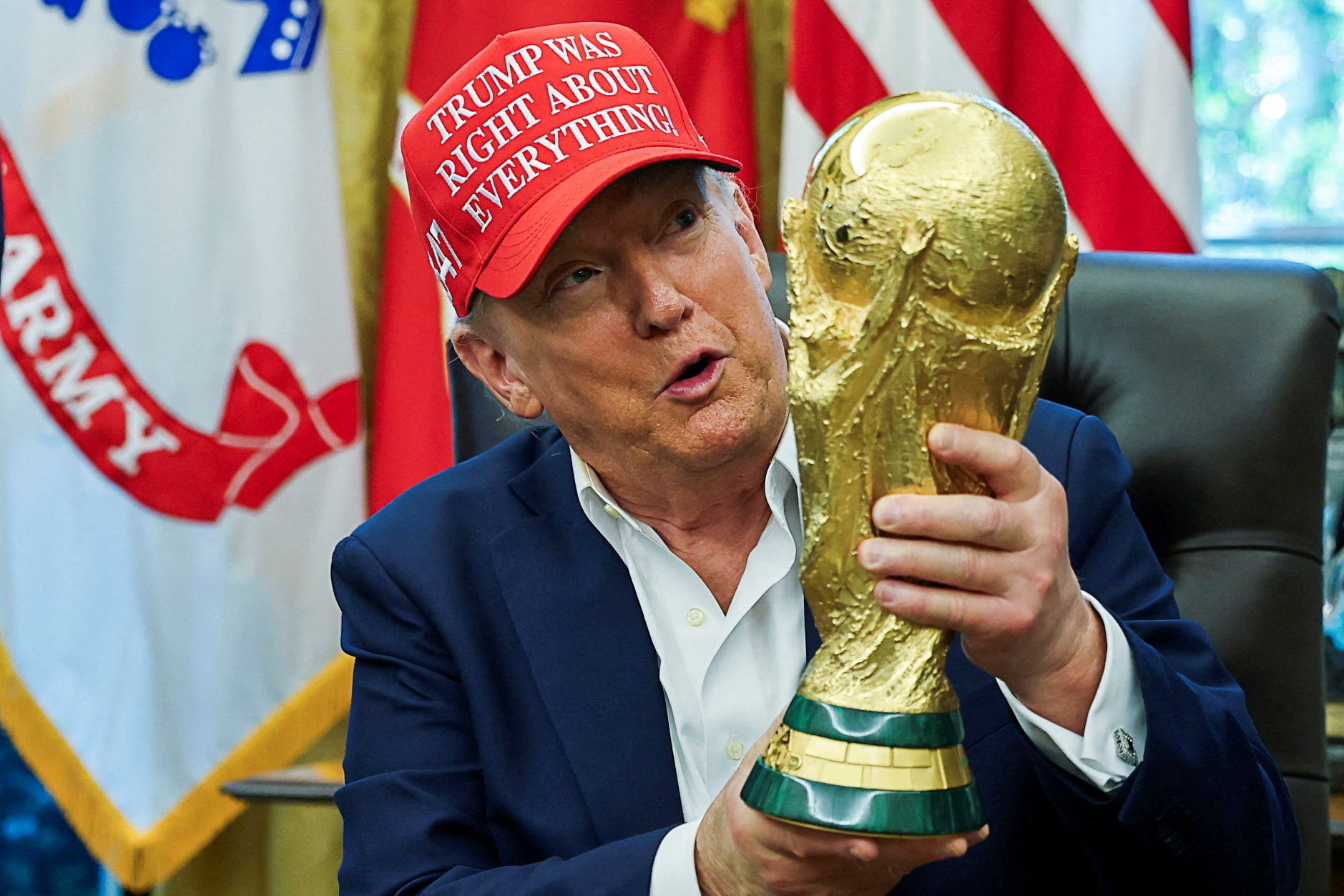
President Donald Trump has already used Fifa’s ceremonial stage to advance his own political image – most notably when he was awarded a “peace prize” at the World Cup draw in Washington in December. Now concerns are spreading among federations, sponsors and political leaders about how immigration enforcement might shape the tournament’s atmosphere. UK MPs have urged Fifa to seek clarity. Debates in host cities have begun over how to respond to the visible presence of ICE at football events.
There have already been reports of large-scale visa cancellations linked to the summer’s multi-city tournament. American officials stress these are not tourist visas. But that distinction offers little reassurance to supporters navigating unpredictable processing times, heightened scrutiny and the possibility of ICE enforcement activity around matchdays. With extended travel bans affecting countries such as Senegal, Côte d’Ivoire and Haiti, the World Cup increasingly revolves around a stark question: will fans be allowed to show up at all – and will they feel safe if they do?
Sport is not neutral, especially in America. When NFL quarterback Colin Kaepernick knelt during the pre-game national anthem, he helped ignite the Black Lives Matter movement. Today, however, it is more likely to be governments politicising the pitch. There is nothing organic about turning soft culture into a projection of state power.
The United States would hardly be the first country to harness global sport to shape international perception. The 1936 Olympics were a pure display of pro-Hitler propaganda and ideological dominance. In apartheid South Africa, authorities used sport to project normalcy abroad. Springbok rugby tours, cricket fixtures against democratic nations and “token” Black players on national teams were presented as proof of stability and legitimacy – even as the state practised brutal policing and exclusion at home.
That façade collapsed only when athletes, federations and governments refused to play along – culminating in the International Olympic Committee banning South Africa from the 1964 Tokyo Olympic Games because of its racial segregation of athletes.
Since then, global football’s legitimacy has rested on widening participation, particularly from regions historically excluded from the game’s centres of power. When South Africa hosted the 2010 World Cup, it was celebrated not just as a sporting milestone but as a symbolic opening of the global game to a continent long pushed to its margins. The tournament’s energy flowed from that sense of arrival and belonging.
This principle extends beyond hosting to the ecosystems that sustain international sport. In Bangladesh, for example, sportswear manufacturer Youngone Corporation recently hosted the Bangladesh Football Federation at its Korean Export Processing Zone in Chattogram to support training for the women’s national team – creating pathways for athletes from underrepresented nations to compete on the world stage.
But such investment presumes access – that players, fans and federations can travel freely. When that mobility is curtailed, decades of effort to globalise the game are quietly undermined.
For Trump and the 2026 World Cup, travel hesitancy or empty seats would undercut the image of strength the tournament is meant to project. That matters because this presidency has consistently measured success in the optics of scale – crowd size, ratings and global prestige.
That creates leverage. Coordinated international pressure – particularly from sponsors, participating nations and football federations – could push the administration to provide explicit guarantees on visa access, fan mobility and the scope of enforcement around matchdays.
A ring-fenced, fast-track World Cup visa regime with transparent criteria and guaranteed timelines would restore confidence without compromising security. Fifa and participating nations should insist on tournament-specific visa protocols insulated from broader political crackdowns. Sponsors, meanwhile, must ensure enforcement operations are not staged for symbolic effect.
Sporting access should be treated as critical infrastructure – not collateral damage in a domestic culture war. Otherwise, the United States risks eroding one of its last reservoirs of soft power.
And with the Los Angeles Olympics approaching in 2028, the precedent set now will matter far beyond a single tournament.
Khalid Sayed is the leader of the opposition in the Western Cape Provincial Legislature for the African National Congress
Join our commenting forum
Join thought-provoking conversations, follow other Independent readers and see their replies
Comments
Bookmark popover
Removed from bookmarks