Mindfulness in the mud: How digging up the past on an archaeology holiday unearthed real calm and connection
It might not be Indiana Jones, but a growing number of budding archaeologists from around the world are getting hands-on at community digs across Britain. Ben Eley joins DigVentures at Lindisfarne to explore the surprising wellbeing benefits of unearthing Britain’s past
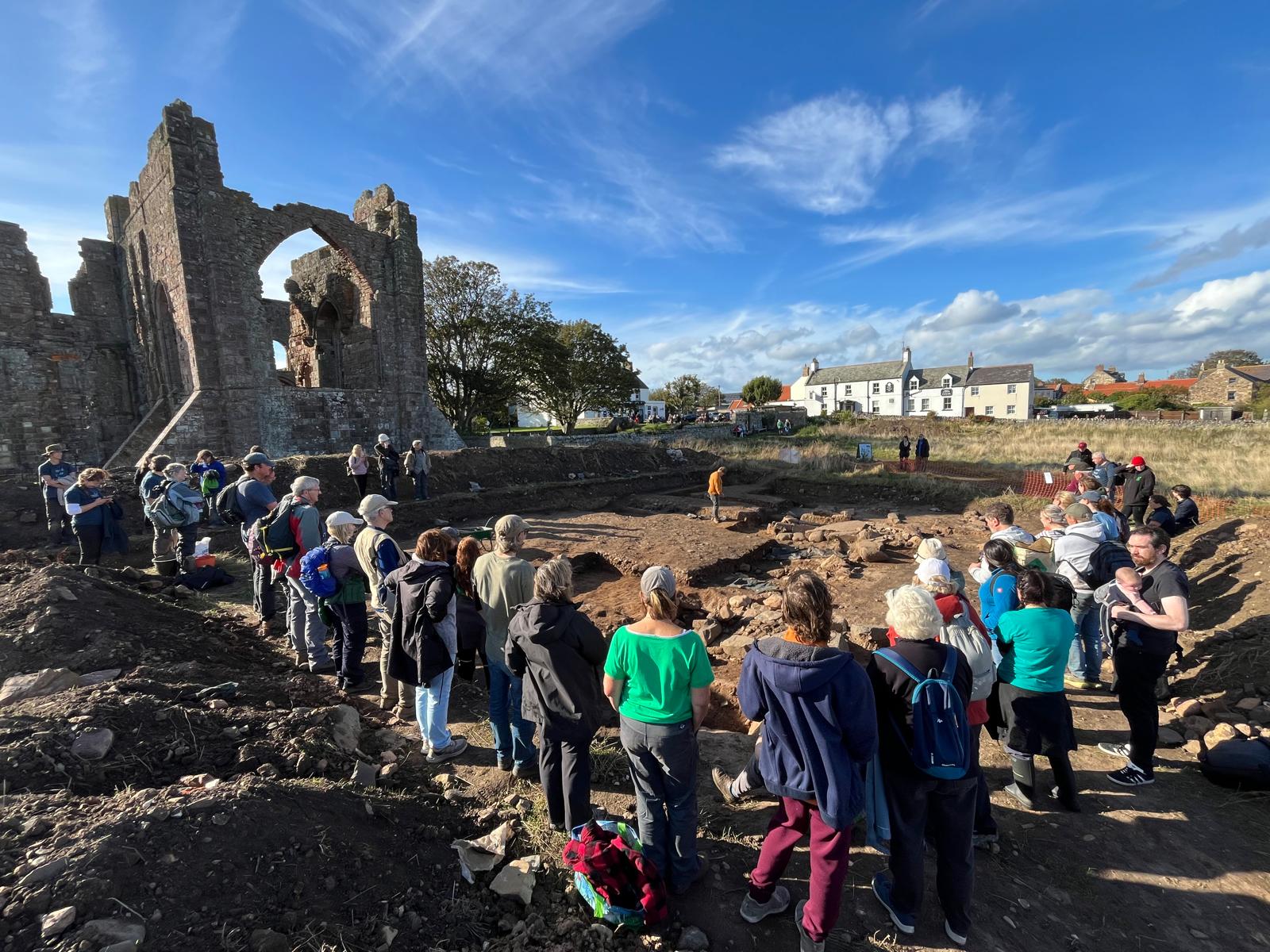
Four-year-old Calla’s eyes light up. “Is it a dinosaur?”
“A triceratops,” quips Hamish with a wry smile. Our trench supervisor leans in, countering “It’s probably bovine,” tracing butchery marks in the jawline. Huddling round, we’re enthralled by a thousand-year-old sign of human life. Across the bay, the castle is perched atop its volcanic rock, the Farne Islands hazy on the horizon. “There is a kind of magic here,” says Liz, 73, her weathered face softening as she speaks – the matron of this crowdfunded archaeological castaway.
I’m joining DigVentures for its 10th and final year on the Holy Island of Lindisfarne.
This intertidal island off the wild Northumberland coast was a spiritual cradle of early English Christianity. St Aidan’s seventh-century monastery became the hermitage of the North’s patron saint, Cuthbert, to whom the monks dedicated the resplendent Lindisfarne Gospels. Their community succumbed to Britain’s first Viking raid in AD793 – or so we thought.
Shows like Time Team and Digging for Britain testify to the UK’s strong tradition of citizen archaeology. “People don’t realise the groundswell,” says Lisa Westcott Wilkins, who co-founded DigVentures with her husband Brendon in 2011. A non-profit social enterprise, it’s dedicated to greater transparency and public inclusion in archaeology. DigVentures offers a choice: either dip your toe into online learning or a digital project, take on a stepping-stone weekend dig, or deep-dive into a fortnight in the trench. Its crowdfunding model makes impossible digs possible.
Its first dig at Flag Fen in Cambridgeshire “blew up”, says Lisa, attracting 250 budding archaeologists: it was billed as the world’s first crowdfunded dig. The couple have since hosted 10,000 people from 80-plus countries at more than 40 digs across Britain and Ireland. But none have lasted as long as the one at Lindisfarne. Here, 1,700 history-lovers have unearthed tens of thousands of artefacts and 200 burials. Over half of the volunteers are return visitors, and with 94 per cent saying the dig has improved their wellbeing, I’ve come along to find out more.
Read more: Seven of the best walks in the Yorkshire Dales
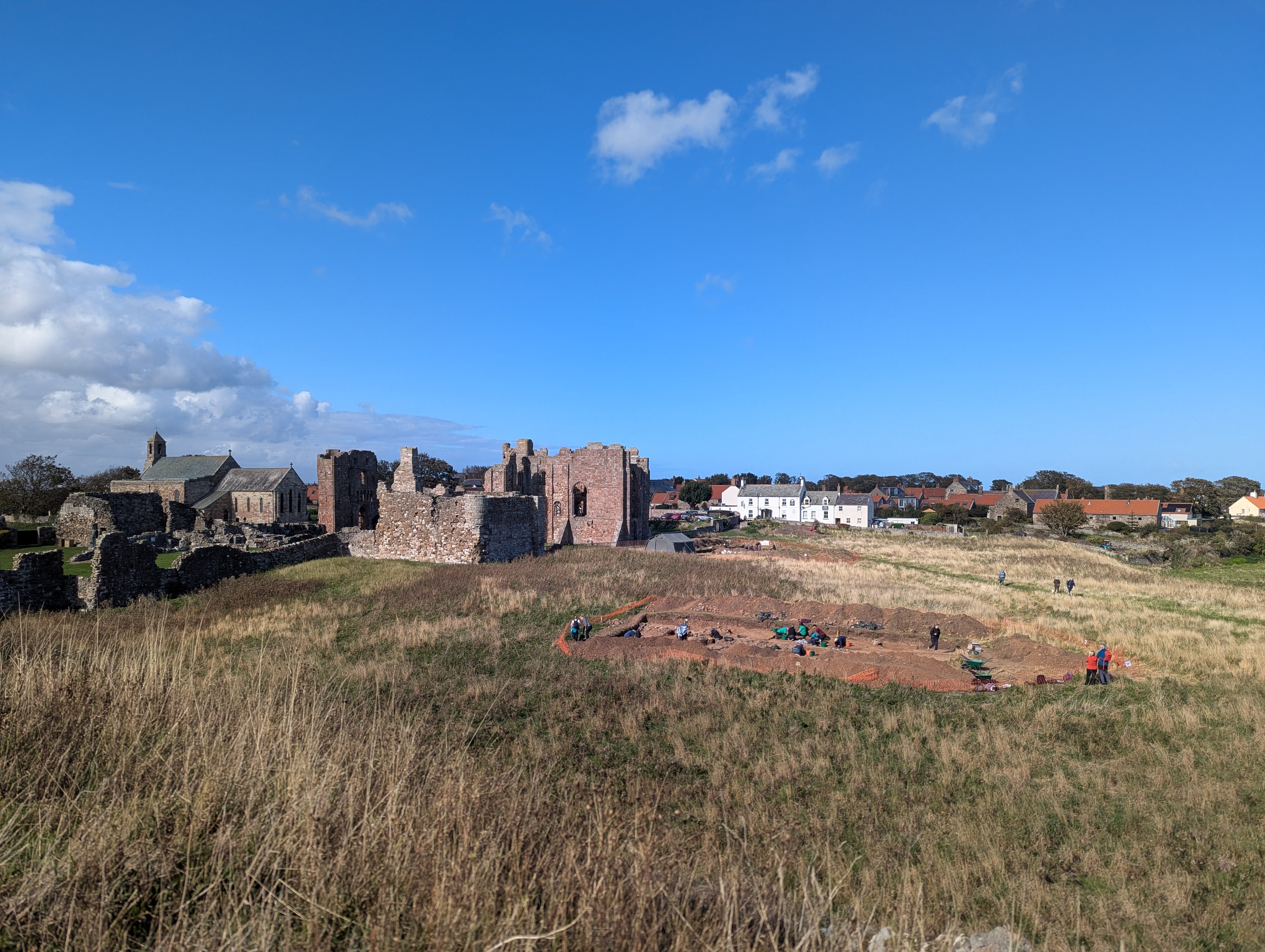
The island’s vast dunes and its sea-cut stone plateaus are sculpted by the tides. It’s internationally recognised for its wildlife, and godwits and oystercatchers wade the shifting shores while the wind carries the howl of grey seals. Nature and history converge: it’s the perfect setting for an archaeological adventure.
I’m staying at the DigVentures bunkhouse; others are lodging at local pubs, boutique hotels or B&Bs. A 9.30am start allows for a coffee before induction at the village hall. My sense of being an imposter soon dissolves in the warm, convivial atmosphere among staff and fellow “Venturers”, who range from accountants to doctors and nurses. I’m greeted by DigVentures engagement lead Maiya Pina-Dacier. She says: “I ensure people are included, welcome and learning so they can make a meaningful contribution.” She expands on the ethos: come with a smile, enthusiasm and your lived experience, and they’ll do the rest.


Read more: The benefits of wild camping and why everyone should experience it
Assigned to Trench 11, I’m in awe of the later medieval priory ruins. Immediately immersed in nature’s therapy, framed by vivid sunflowers, my mind is cleared by immense skies and a coastal panorama.
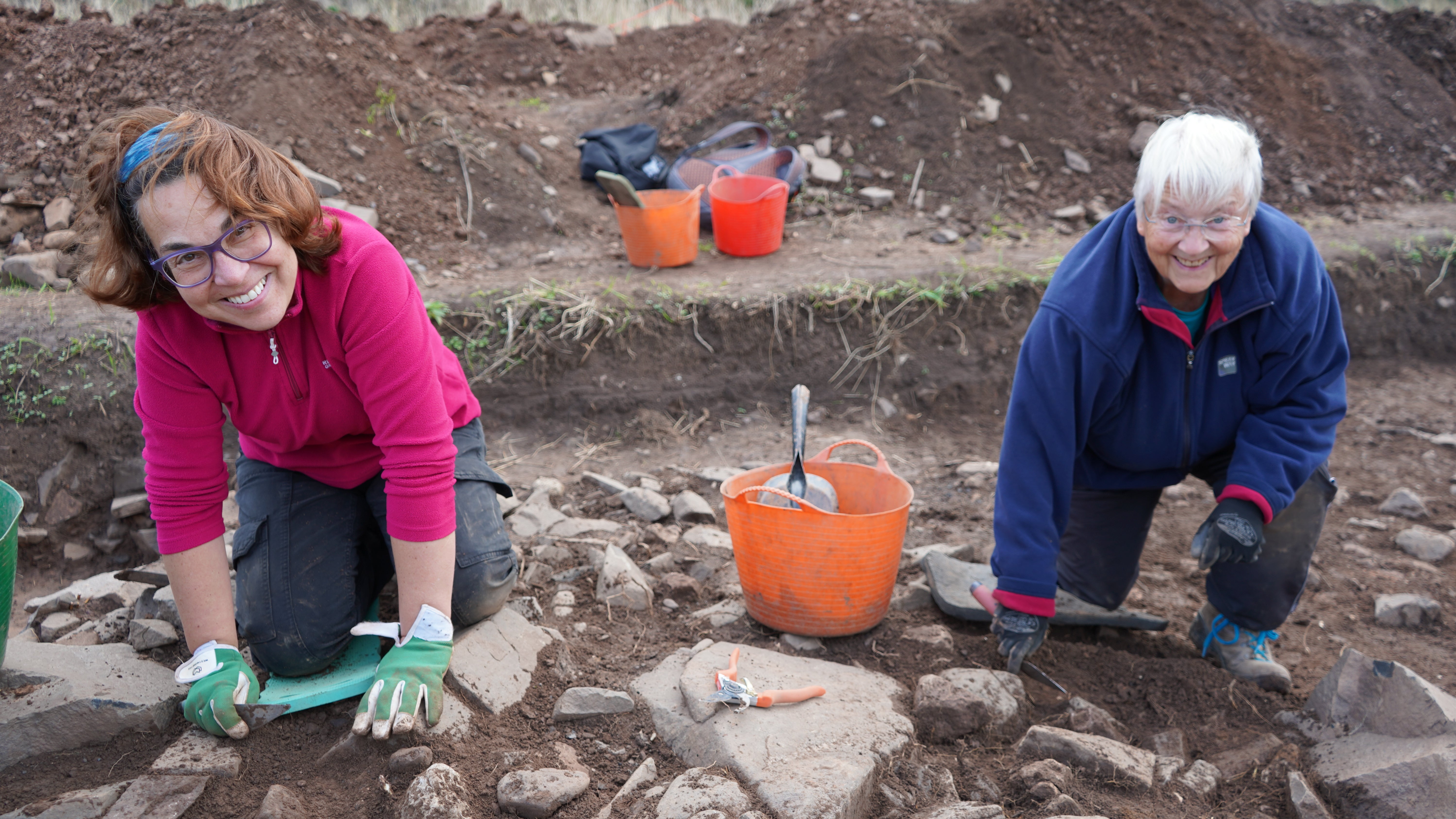
Our engaging trench supervisor teaches us how to wield our trusty trowels while “cleaning up” some shapely stones that are thought to be part of the ancient track used to build the priory. The process becomes rhythmic, even calming. Time slows as I enter a mindful state, my attention restored through focused concentration.
“Look at this stone,” I exclaim, as the object in question sees the sun for the first time in a millennium. “Looks like an upturned cow’s head,” says another digger, Ian, his smile peeking through his hipster beard. Turns out the road became a medieval “midden” (rubbish dump) – and they’ve already sieved bucketloads of ancient animal remains. One find was a bear claw, one of only 85 found in the UK from the last 10,000 years.
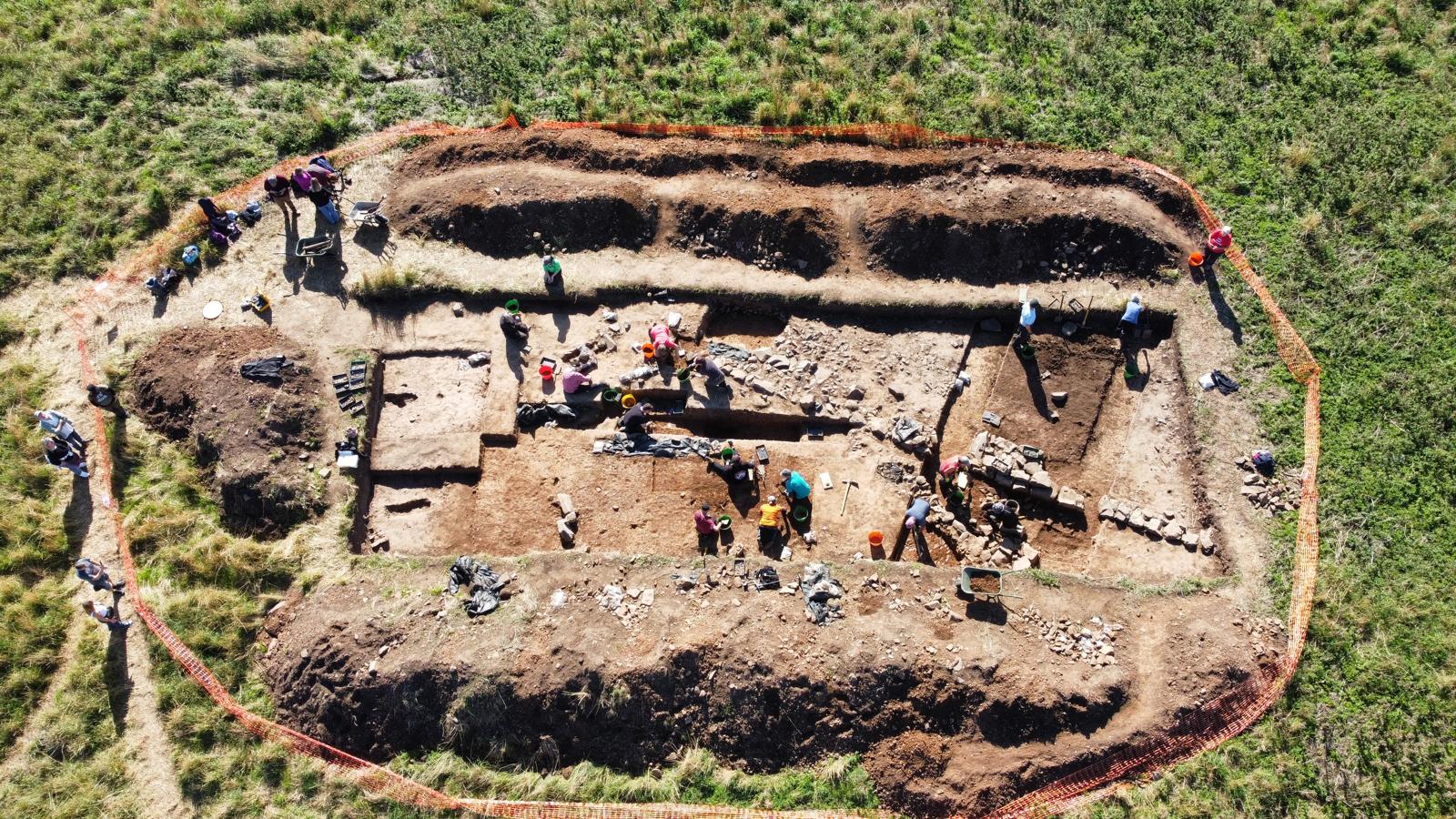
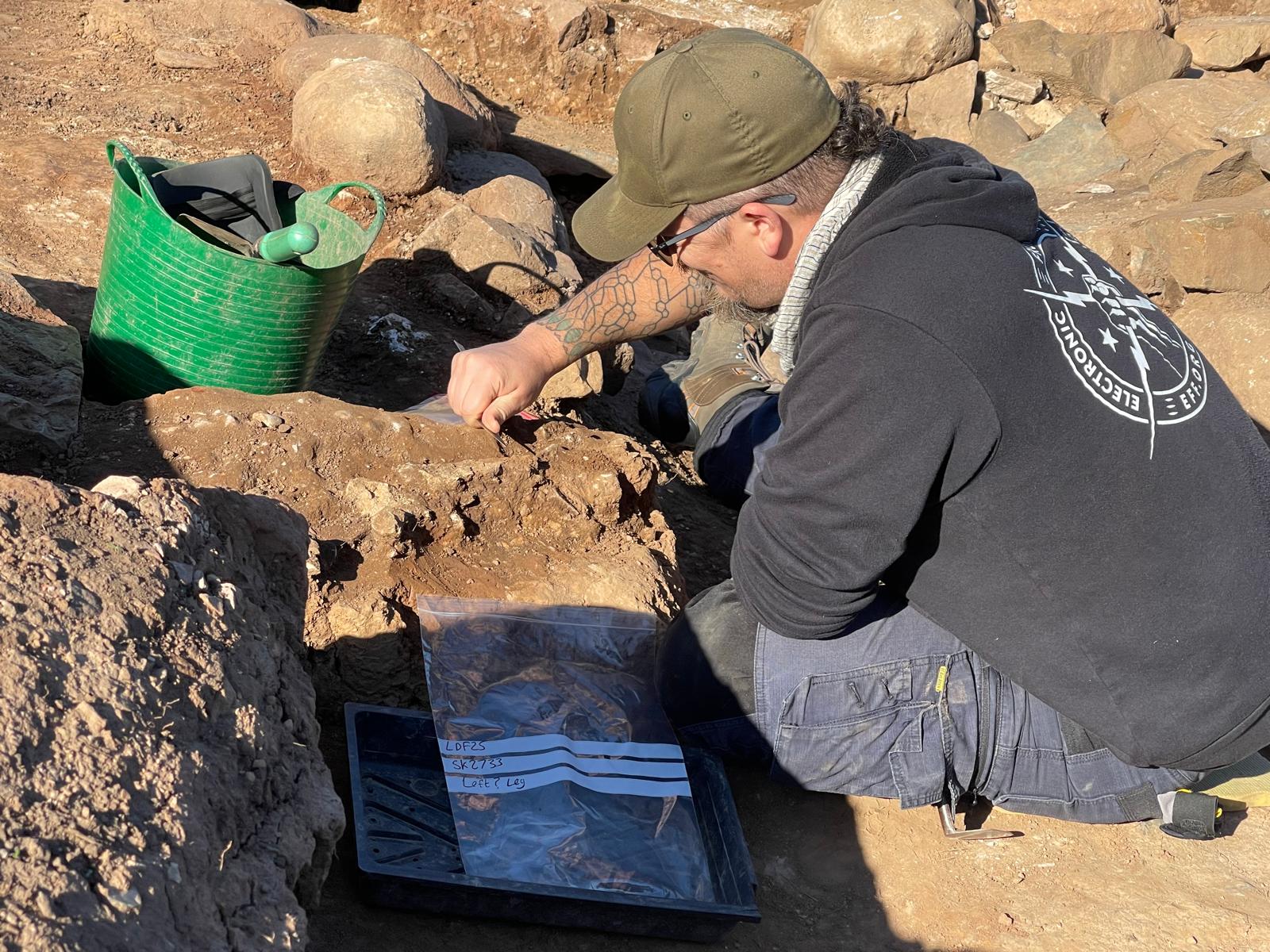
Over in Trench 2, Art and his wife Becca are methodical, tracing the outline of human remains – a resident of the island’s earliest community. They’ve escaped “mind-numbing tech jobs”, finding awe in the slow reveal of deep time, and in human connection. “This changed my life,” says Hamish, who unearthed the remains of a young Anglo-Saxon girl. Feeling a sense of responsibility, he’s sponsoring further study. “I want to tell her story,” he tells me.
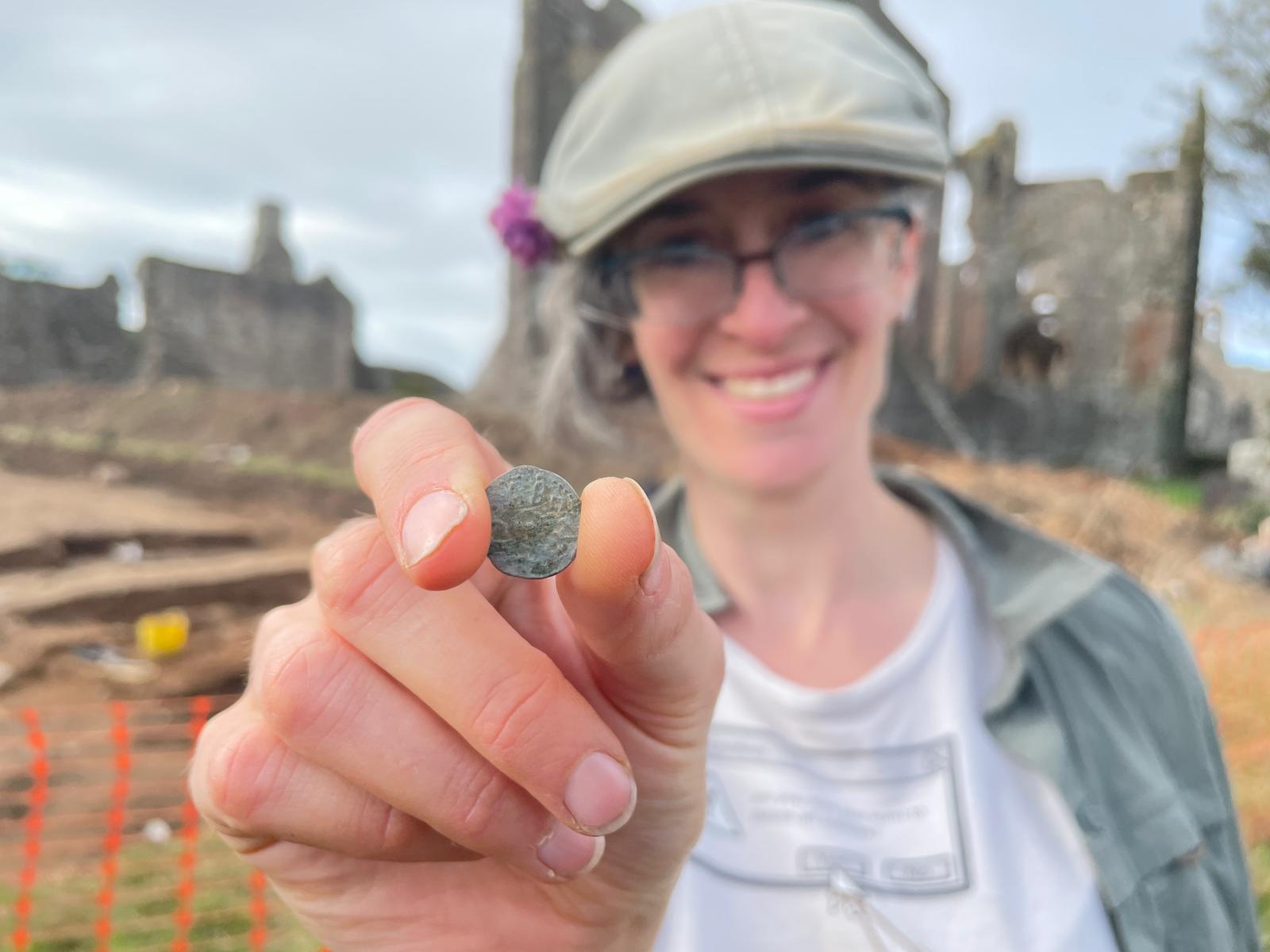
Later, I rest my knees, swapping the trowel for some upper-body work. My mattock makes a satisfying thump clawing thick organic soil. Eve and I are working beyond the perimeter vallum ditch – the boundary of the original monastery. “As an introvert, I find this helps,” she tells me, explaining that it allows her to be present, spared from modern life’s distractions, engaging on her own terms. My first find receives tongue-in-cheek applause: another animal bone. Susan, who has travelled from London, recalls her first find: a remarkable Roman coin. “I cried,” she says. “It helped unlock my inner child.” There’s an innocent joy in the sense of anticipation and discovery.
Read more: Why York is a haven for book lovers
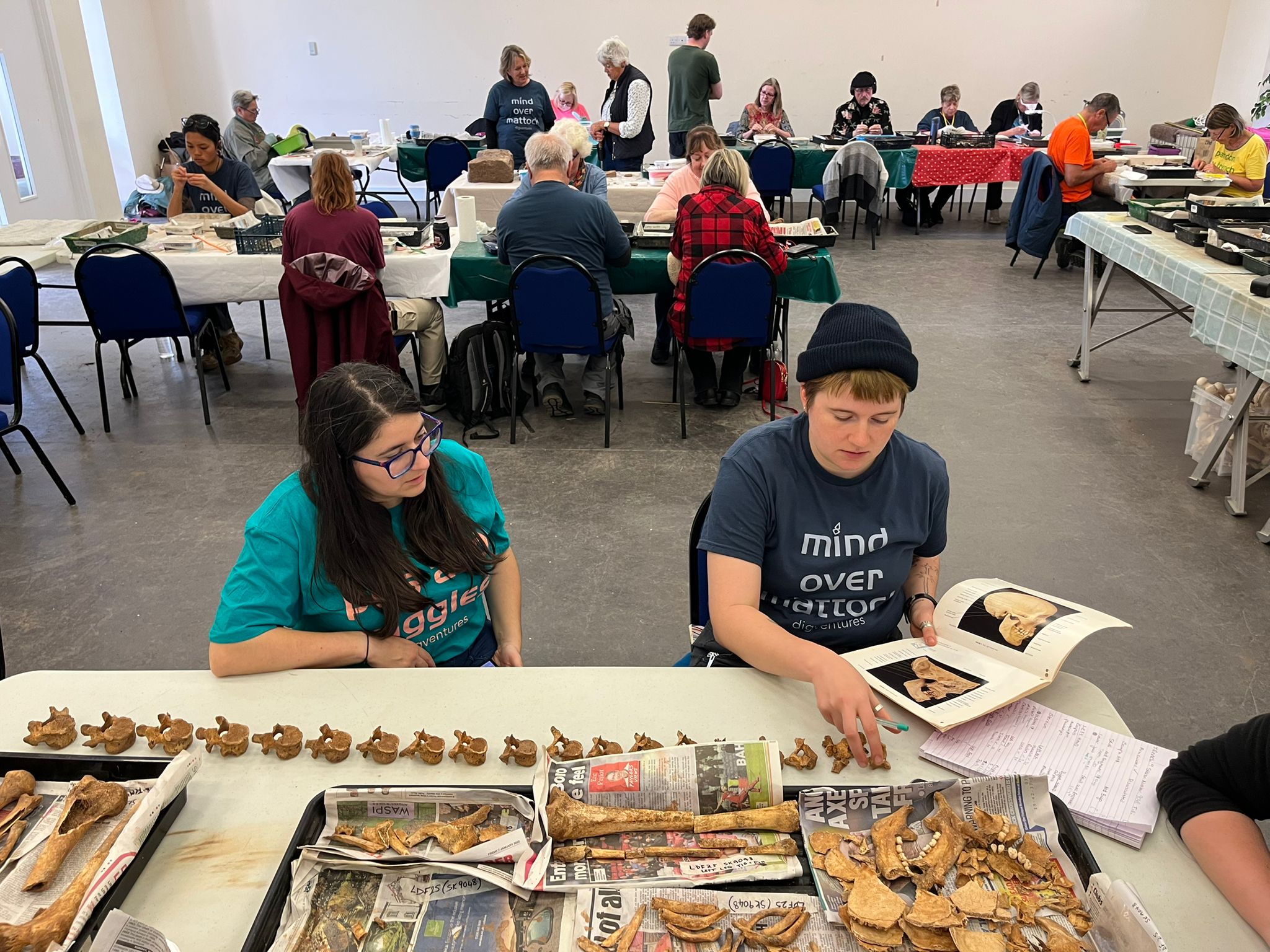
This sense extends to those whose knees feel better suited to the “finds room”. Here, Venturers and experts mingle, sharing knowledge as they prepare trench finds for study. Helen Walker, now 76, is living her dream at last. As a keen childhood archaeologist, she was told: “But you’re not a man.” We chat while gently cleaning human remains – she tells me she finds the slow, methodical brush strokes therapeutic.
Opposite us, Sydney, 17, is savouring her last visit. When she was just eight years old, her gentle brushstrokes revealed the intricate details of an incredible medieval comb made from bone. Her legacy now rests in the revamped Lindisfarne Priory Museum.
Locals stop by for a chat. Vicar Sarah Hill led a campaign against laws threatening the livelihoods of around 13 remaining fishermen. She recalls making the case to officials about the depth of heritage at risk, pointing to a rosary made from salmon vertebrae – discovered by the volunteers – that is also now in the museum. Believed to be the earliest known example in Britain, it is testament to Lindisfarne’s long bond with the sea. The islanders fought back – and won.


As the sun sets on the dig, locals and Venturers pack the Crown and Anchor for a farewell gig. “We’ll miss them,” says publican Paul. “They’re part of island life now.”
Local communities are often passive in the face of modern travel, at worst feeling impinged upon – but not here.
A veteran Venturer from the very first dig raises a toast to co-founders Brendon and Lisa: “You’ve created something special,” he says. On reflection, my body and mind have grown from this experience – one where the treasure lies not in the artefacts, but in a collective contribution to the ever-evolving story of a place. It feels like meaningful slow travel: a rare connection between time, place and people.
The applause says it all.
Read more: Want the Lake District all to yourself? Walk the Cumbria Way
Join our commenting forum
Join thought-provoking conversations, follow other Independent readers and see their replies
Comments
Bookmark popover
Removed from bookmarks