Against the glory, 2025 was the year football battled for its soul
The year of the underdog, with historic successes for Crystal Palace and Newcastle, contrasted with the political edge to Fifa’s World Cup, writes Miguel Delaney

.jpeg)
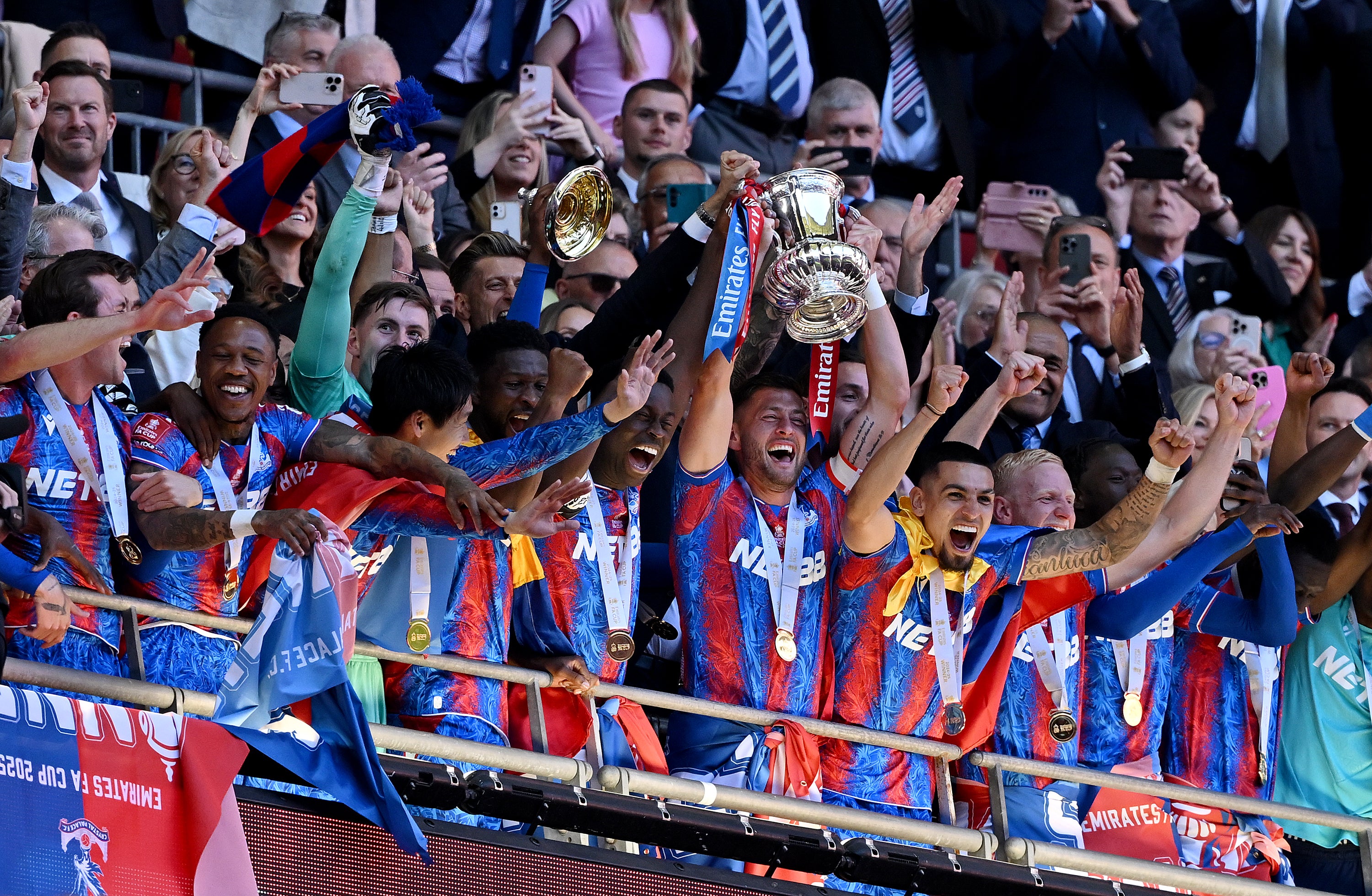
It was already one of the most uplifting moments of 2025 when Oliver Glasner elevated it even further.
“The biggest success is not winning the trophy,” the Crystal Palace manager said after his side’s FA Cup final win over Manchester City. “It’s that we could give thousands of our supporters a moment for their lives. We can give them great times. Maybe they have problems at home, we give them hours and days they can forget all of this, and just be happy.
“We did this for many, many people.”
Many, many other people from all over the world would have echoed these sentiments over 2025, from Sarina Wiegman’s European champions through to Troy Parrott and Ireland, then Scotland’s World Cup qualifiers, to Bologna’s Coppa Italia winners and Tottenham Hotspur and Newcastle United.
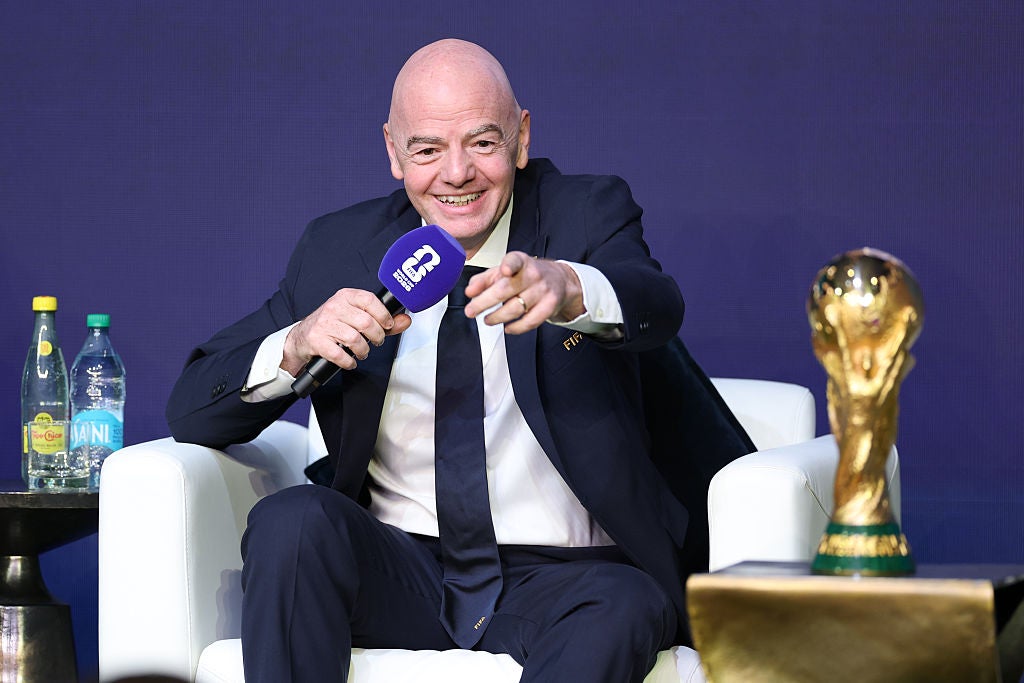
It wouldn’t be football in 2025 going into 2026, however, without those very sentiments being skewed and soured elsewhere. Six months on from Palace’s pure Wembley joy, in a much more sterile setting at the World Cup draw, Gianni Infantino offered his own hackneyed version of Glasner’s homage to the game.
The Fifa president repeated a description of his own governing body as “the number one happiness provider for humanity for over 100 years”. In other words, taking something emotionally authentic and making it sound like a factory.

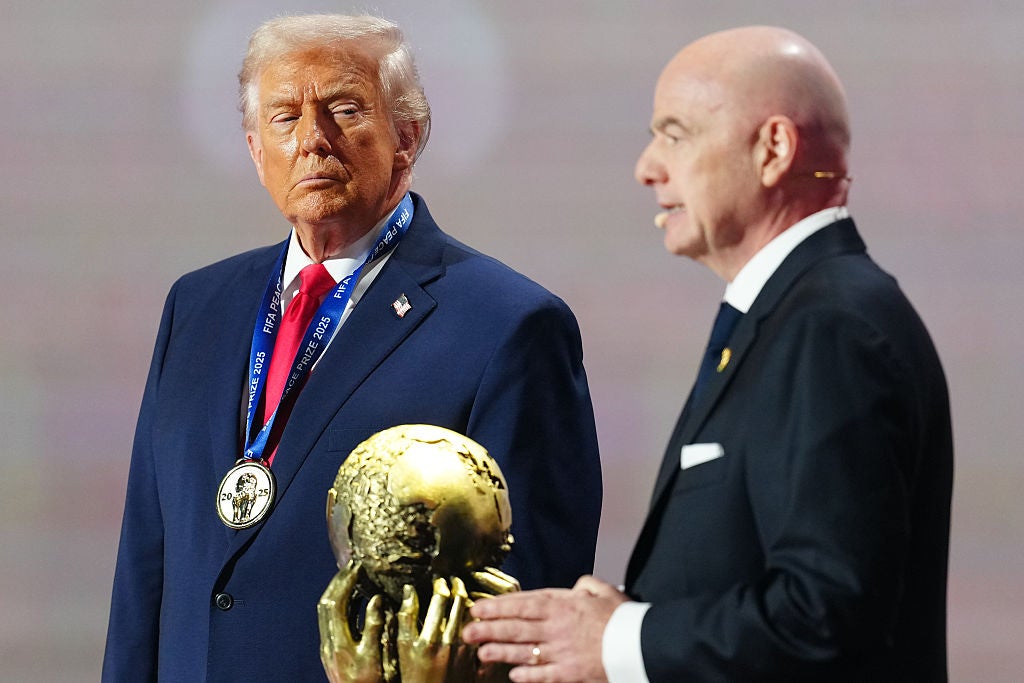
More troublingly, this was only a prelude to a Fifa video that gave a highly politicised interpretation of Donald Trump’s role in global conflicts, as a justification for awarding a new “Peace Prize”.
The most common responses to this within football – including from many of Infantino’s voters – were shock, revulsion and anger, if with some mockery. People couldn’t believe that the sport was being used in this way, and all on the authority of one man – Infantino – as he sought to pander to another man, in Trump.
But that was only within football, over WhatsApps, and in conversations that were insistently off the record.
Beyond that, there was barely any public comment, not even when Fifa’s disgraceful World Cup ticket prices were announced. An attempt to begin a climbdown following a rush of fan anger, offering some £45 tickets to the lucky few, was subsequently described as a “PR game”.
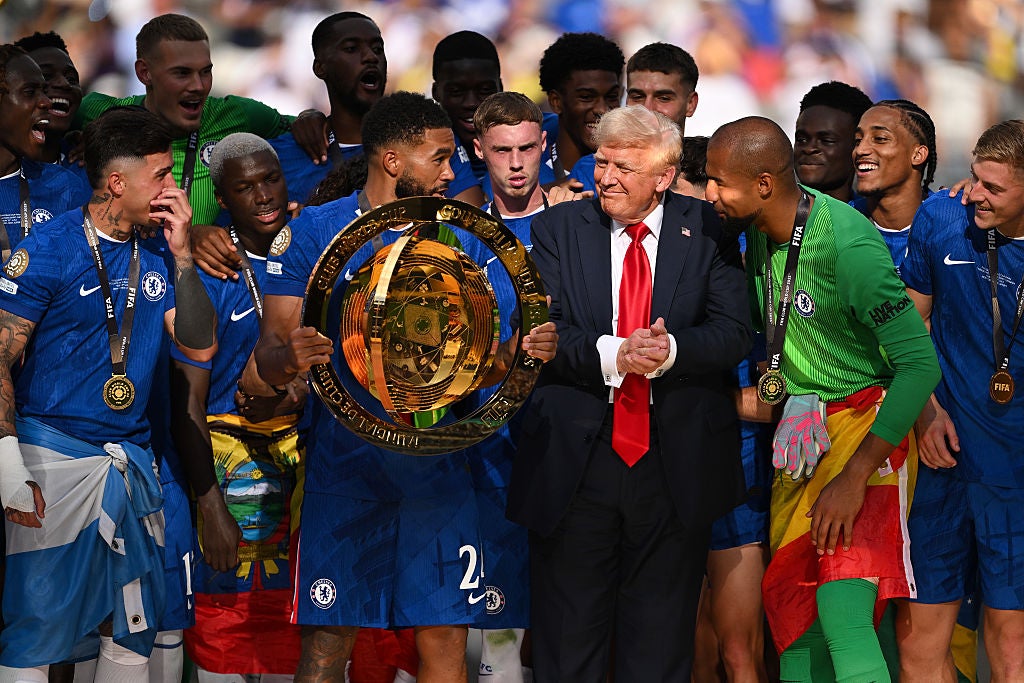
It leaves one huge question as the game goes into 2026 and a figure like Trump may be afforded an even grander football stage than that which he enjoyed in an absurd appearance at the Club World Cup.
Why does the sport allow this to happen? Why does it seem to keep letting everything get worse? Why is there so little fight for what it is supposed to represent?
The reasons for this are obvious, of course.
Much like society, the infrastructure of the game is geared towards a specific economic-political model, which makes dissent very difficult.
This is even more acute in Fifa’s case, since it is a patronage system where votes are perpetually returned for the president so long as revenues keep rising.
Fifa gets to defend Infantino on the basis that his voters – the national associations – are happy with him. No one dares – or bothers – to speak out.
Even when Uefa criticised Infantino over “private political interests” for appearing late at his own Congress due to a visit to Saudi Arabia, some of those same politics ensured this potential discord went no further.
The irony is that football’s stakeholders are otherwise in conflict over all sorts of other issues, particularly the calendar. Most of those are about control, though, which ultimately comes down to control of where the money goes.
It all means that the main war within football is a philosophical one, over its very soul. The last 12 months arguably showcased this more than any other, as a natural evolution of how all of the game’s many issues are almost engineered to escalate.
Many great things happened, some of them wonderfully historic, as certain teams and figures finally enjoyed their days of glory.
And yet it was almost as if none of them could happen without some toxin ingrained into the sport poisoning something.
Even Palace’s long-awaited FA Cup win was quickly engulfed by an unseemly conflict over Europa League qualification, itself a direct consequence of the game’s biggest present issues: ownership, and especially the difficulties of navigating multi-club ownership, not to mention perceptions of how Uefa treats big clubs and small clubs.
The wait for the Manchester City outcome, meanwhile, went on, although the Independent Football Regulator was finally passed into law.
Elsewhere in the Premier League, the admirable progress of clubs such as Bournemouth and Brighton was threatened by a self-interested vote for Squad Cost Ratio, without the essential implementation of anchoring. It’s now easy to see what will happen: the wealthiest clubs and owners will be able to extend the gap.
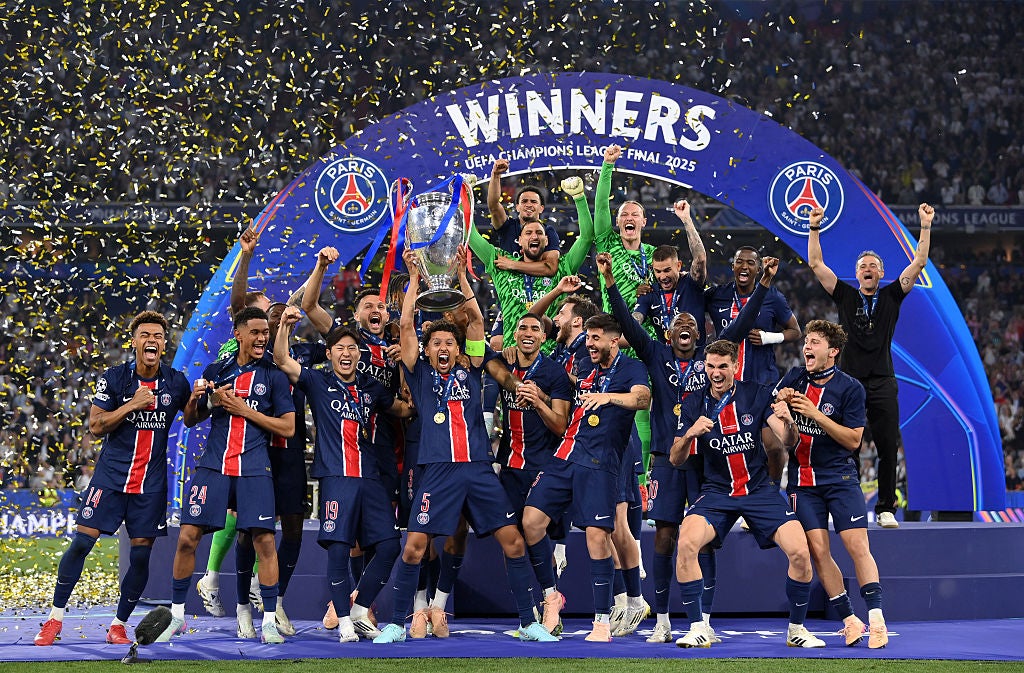
And that’s all happening as the wealthiest still win most of the trophies, such as Qatar’s Paris Saint-Germain finally becoming European champions.
Uefa’s secondary trophy saw Tottenham sack Ange Postecoglou shortly after winning the Europa League, with that anxious final largely a product of how much wealthier they and Manchester United were over the rest of the field. It wasn’t that long before chair Daniel Levy, stunningly, followed Postecoglou in leaving the north London club.
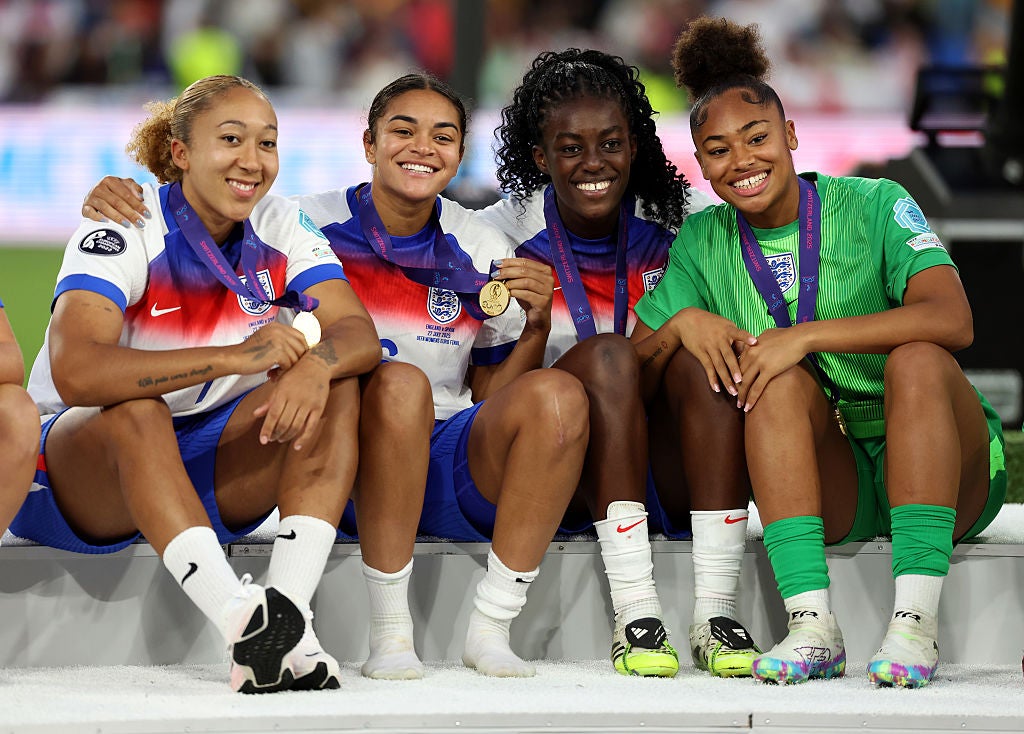
England did show admirable defiance in ousting an imperious Spain at Euro 2025, especially as they had to play through the usual grim noise, particularly the racist abuse of Jess Carter.
As the peak of the game, the World Cup was the ultimate example – with the final stretch of qualifiers surpassing all expectations as the best week of the year. On one side was the euphoria around Parrott, Scotland, Curacao, Cape Verde and Haiti. On the other was the manner in which the great show was used as a display for something else.
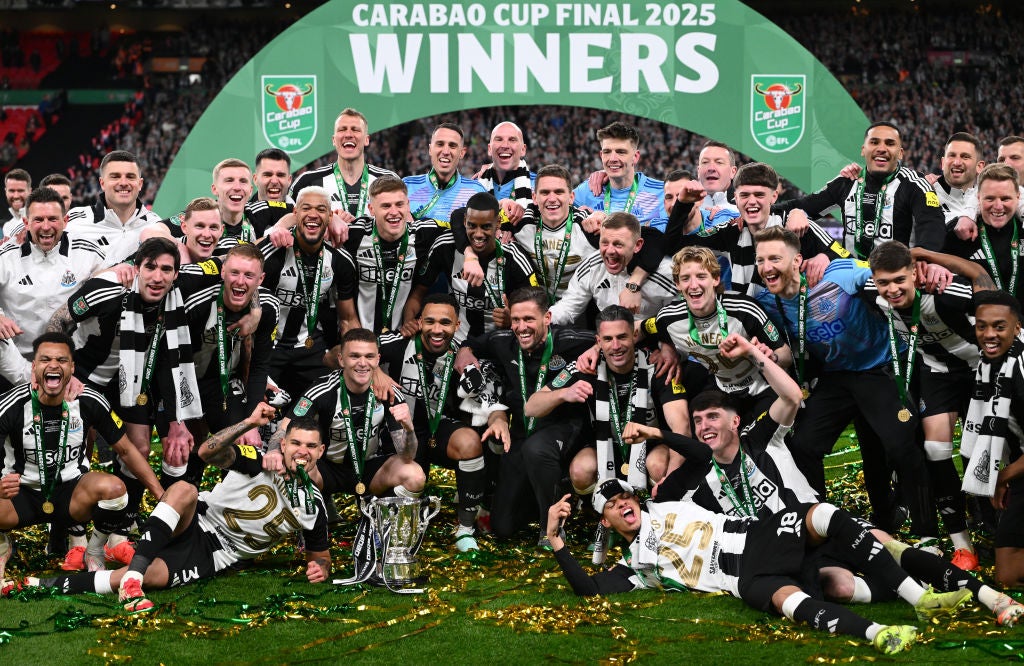
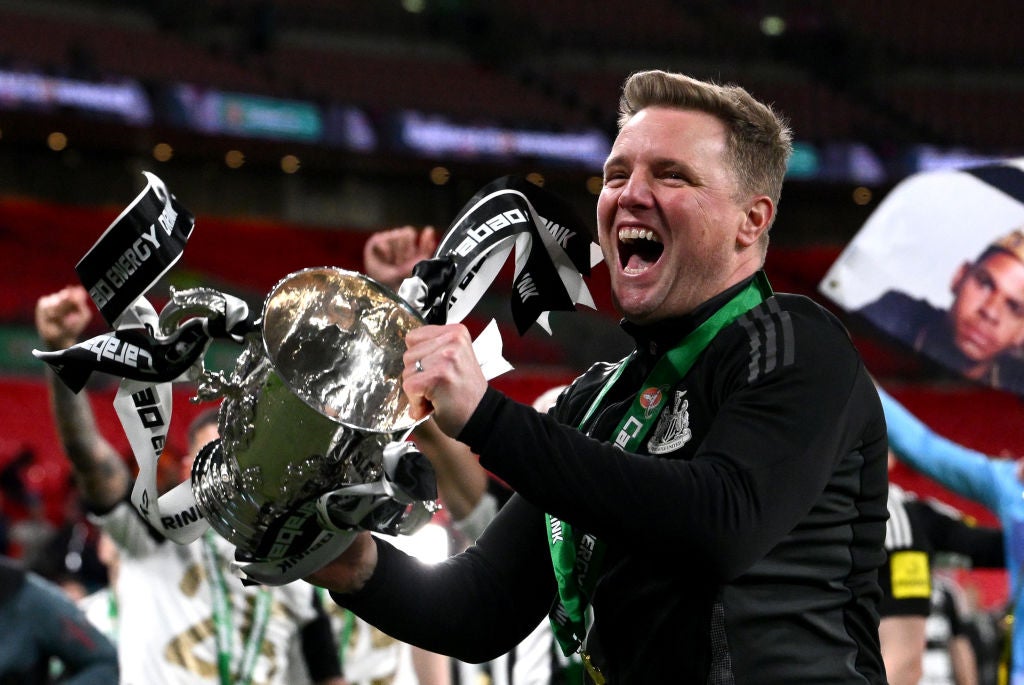
You could say similar of another entity owned by the 2034 hosts. It feels so difficult to square the tears of joy of Newcastle fans with the reality that it was only possible due to Saudi Arabia’s takeover.
Just as appropriately for football in 2025, elements of that win might be just as difficult for some fans to watch, since Aleksander Isak was so central. His unseemly transfer saga encapsulated so much of the game, as a capitalist fund had to strike a deal with a sovereign wealth fund.
Liverpool did have a greater need for this due to one of the other, more tragic, events that 2025 will be remembered for. That was the heartbreaking passing of Diogo Jota, which still feels so jarring to discuss in a football context.
The Liverpool squad still had to persevere.
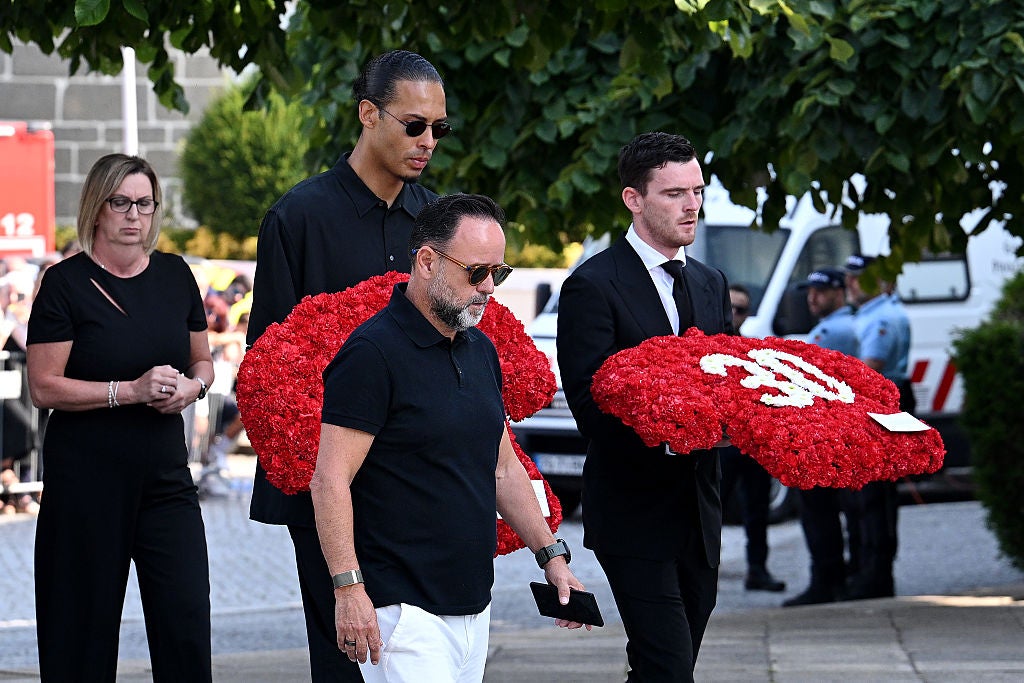
And yet, as the admiration for PSG manager Luis Enrique showed amid the remembrance of his daughter, football does respond to these events with genuine heart.
There’s an authenticity that’s impossible to manufacture, that comes from the fact that this is all just people coming together every week.
That community is what the sport is really about, and why it exists in the form it does, even if the sport itself constantly threatens that community.
There was at least some fightback against this, as various fan groups mobilised under the Football Supporters’ Association in a manner usually more associated with German football. Supporters rallied around clubs like Morecambe and Sheffield Wednesday, and there was a laudable pushback against World Cup ticket prices.
You could quip here about it already being too expensive before you consider the Premier League’s regression to direct, aerial football and the resurgence of long throws, but it remains to be seen whether this is just a fad.
Then again, that was football in 2025. Even when it gets better, it’s as if it can’t stop itself from getting worse.
Join our commenting forum
Join thought-provoking conversations, follow other Independent readers and see their replies
Comments
Bookmark popover
Removed from bookmarks