Trump promised the ‘largest deportation operation.’ He brought chaos to American streets
The president’s campaign to arrest and deport thousands of immigrants has turned cities run by his political enemies into conflict zones, Alex Woodward reports


Nearly one year after returning to the White House with a promise to carry out the “largest deportation operation” in American history, masked immigration officers ripped a woman from her car as she tried to get to a doctor’s appointment in Minneapolis. On the other side of the country, a 21-year-old protester in Santa Ana, California, was recovering from eye surgery after an officer fired a riot-control weapon inches from his face.
They both came just days after an officer fatally shot 37-year-old Renee Good.
The Trump administration’s promise to go after the “worst of the worst” in his nationwide campaign to rapidly deport tens of thousands of people has turned American cities into conflict zones patrolled by hundreds of masked and heavily armed officers.
Democratic officials warned for months that a surge of militarized Immigration and Customs Enforcement and Customs and Border Protection officers would only stir up more unrest. They warned that the scenes of mass protests were by design, giving the president an opening to invoke the Insurrection Act and deploy active-duty troops on Americans in cities run by his political enemies.
Since returning to the White House, Trump has reshaped the government to pursue an anti-immigration agenda across nearly every federal agency, with a mission to find, arrest and deport thousands of people, deter new arrivals and impose new restrictions on legal immigration that have repulsed humanitarian aid groups and civil rights advocates.

Thousands of people, most of whom have never been convicted of a crime, are now locked up in immigration detention centers, entering a byzantine legal process that the administration has pushed to make it virtually impossible to escape.
Federal officers, whose identities are largely kept secret and whose faces are covered, are routinely seen jumping out of cars and vans to round up immigrants and citizens alike, sometimes leaving their cars stranded in roadways or rolling down streets. They leave behind neighborhoods in shock and families in crisis, scrambling where to find members who often end up jailed hundreds of miles from home.
From Los Angeles and Portland, Oregon, to Chicago, New York City, New Orleans and Charlotte, North Carolina, footage and stories of violent arrests and volatile protests have emerged at a dizzying pace.
In Washington, D.C., last summer, Trump invoked a never-before-used authority to seize control of the city’s police department as deployed the National Guard and surged federal officers into the streets, claiming the city was overrun with “bloodthirsty criminals, roving mobs of wild youth, drugged-out maniacs and homeless people.” Officials there accused the administration of waging a politically motivated “hostile takeover.”
And in Minnesota, where thousands of federal officers descended in recent weeks, “news reports simply don’t do justice to the level of chaos and disruption and trauma the federal government is raining down upon our communities,” according to Governor Tim Walz.
“This long ago stopped being a campaign of organized immigration enforcement,” he said January 13. “Instead, it’s a campaign of organized brutality against the people of Minnesota by our own federal government.”
“People are being racially profiled, harassed, terrorized, and assaulted,” Minnesota Attorney General Keith Ellison said in a statement announcing a lawsuit accusing the Trump administration of “spreading terror” in the state. “Schools have gone into lockdown. Businesses have been forced to close.”
-agent-fatally-shot.jpeg)
Trump promised to target the “enemy within” throughout his campaign and into his second administration. In 2023, he told a crowd in Iowa that he would send troops into Democratic-run cities whether officials there wanted them or not.
“And one of the other things I’ll do — because you’re supposed to not be involved in that, you just have to be asked by the governor or the mayor to come in,” he said. “The next time, I’m not waiting.”
Facing widespread protests against his mass deportation campaign, and relying on varying justifications for their deployment, Trump did exactly that. In June, the president began ordering National Guard troops to several Democratic-led cities, an effort that one federal judge rebuked as “a national police force with the president as its chief.”
Legal challenges from state and local officials accused the administration of using American streets for political theater, an attempt to stir up unrest to justify the president’s military and federal law enforcement occupation of cities with large immigrant populations.
In December, the Supreme Court blocked the administration from sending the military into Chicago, and, sensing impending legal failures in the face of other lawsuits over his threats to put boots on the ground, Trump pulled out of the idea altogether on New Year’s Eve.
But the administration has continued to surge officers into Democratic-led cities, dovetailing with the president’s crusade of retribution against his political opponents.
In courtrooms across the country, protesters and detainees alleged officers shot them with chemical weapons at point-blank range, turned neighborhoods into “war zones” filled with tear gas, and racially profiled citizens and Native Americans before hauling them to detention centers.
The administration “has blown through normative guardrails to make mass deportations a central element of government function,” according to the Migration Policy Institute.
That “scorched-earth anti-immigration campaign” is “part of a broader Trump administration assault” on constitutional rights, from the arrests of international scholars Mahmoud Khalil and Rumeysa Ozturk that presaged the administration’s threats to dissent, to his ongoing efforts to unilaterally define who gets to be a citizen, according to Uzra Zeya, president of Human Rights First.
Days after an ICE officer in Minneapolis fatally shot Renee Good, whose death sparked a renewed wave of protests and political outrage, Trump promised a “day of reckoning” for Minnesota, his latest target. “RETRIBUTION IS COMING,” he wrote.
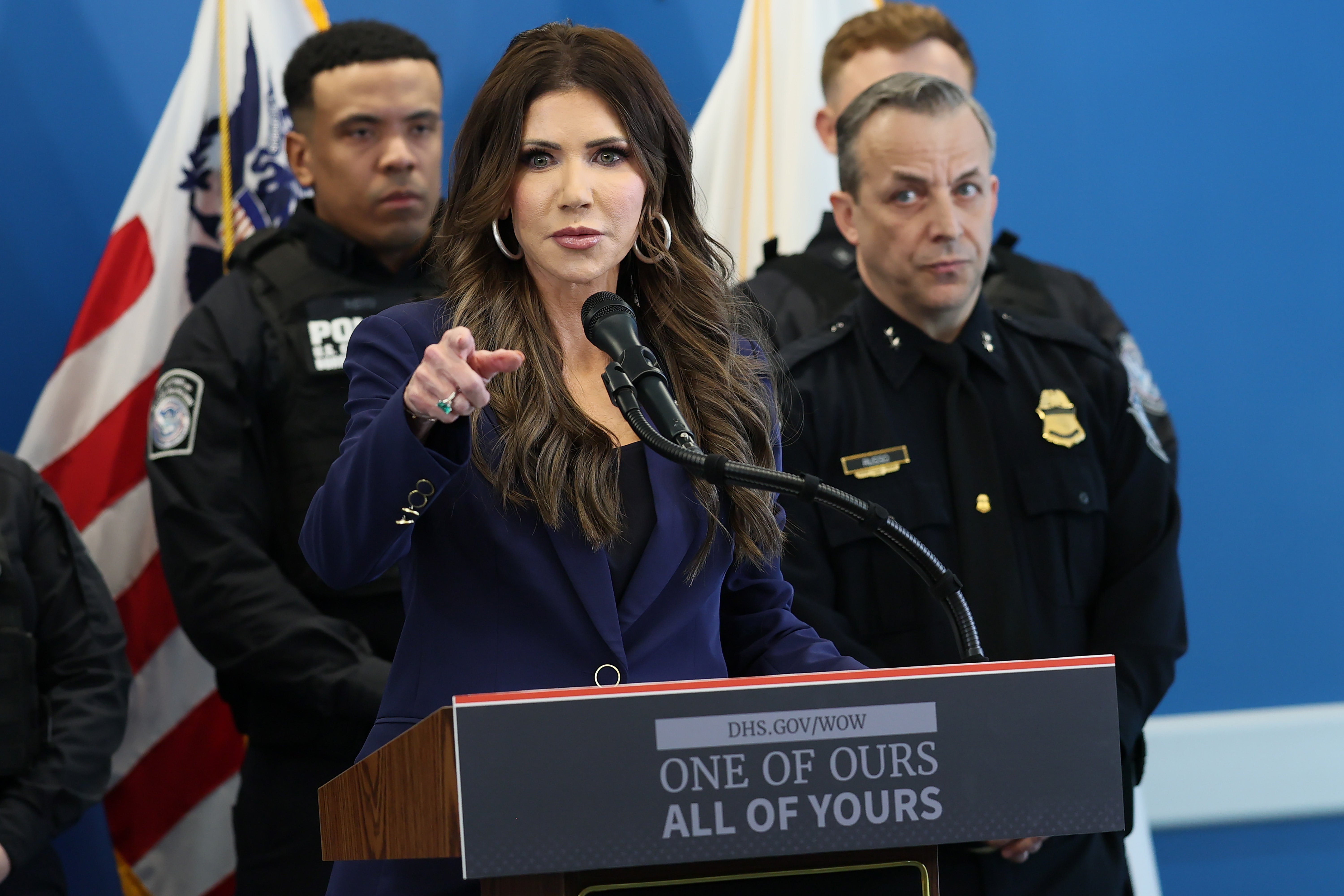
Less than one year after she was sworn into office, Homeland Security Kristi Noem is now facing threats of impeachment from dozens of Democratic members of Congress. And years after moderate Democratic figures sidelined “abolish ICE” demands, lawmakers entered the new year mulling how to cut off new funding for the agency, potentially triggering yet another government shutdown in Trump’s second presidency.
The “abolish ICE” movement gained momentum on the political left under Trump’s first term after the administration’s catastrophic family separation policy and a fresh wave of raids and arrests. Years later, without any new restrictions on federal immigration enforcement, a Republican-controlled Congress last year approved a massive injection of taxpayer cash into ICE that outpaces most foreign military budgets.
A record amount of new funding has turned ICE into the single largest federal law enforcement agency in the nation’s history, with nearly $15 billion a year to expand immigration detention and billions more dollars to recruit and hire officers.
Indiscriminate, large-scale arrests increased by 600 percent within the president’s first nine months, with roving patrols and raids supplementing targeted operations, according to the American Immigration Council.
Those arrests exploded alongside a historic expansion of immigration detention, with dozens of jails, makeshift facilities and state-backed facilities such as “Alligator Alcatraz” in Florida and a wing of the notorious Angola prison in Louisiana holding more than 60,000 people at any given time, shipped around the country and jailed hundreds of miles from where they were picked up.
Unauthorized arrivals at the U.S.-Mexico border have plummeted. Immigration arrests have more than quadrupled. Detentions are at their highest level in modern American history.
More than 622,000 people were deported by the end of 2025, according to Homeland Security. But as many as 73 percent of those booked into ICE custody last year had no criminal convictions, according to ICE data reviewed by the Cato Institute, a libertarian think tank.
The administration has also “de-legalized” more than 1.5 million people who were already legally living and working in the United States, swiftly expanding the pool of “undocumented” or “illegal” immigrants who were following immigration law until the moment Trump’s government changed it.
Immigration agencies are canceling citizenship hearings and threatening green card holders and married immigrants interviewing for permanent legal status. Officers have arrested thousands of people who were showing up for court-ordered check-ins with ICE or immigration court hearings where they sought to make their case to stay in the country, with federal agents waiting on the other side of the door to literally rip them away from their lawyers and families.
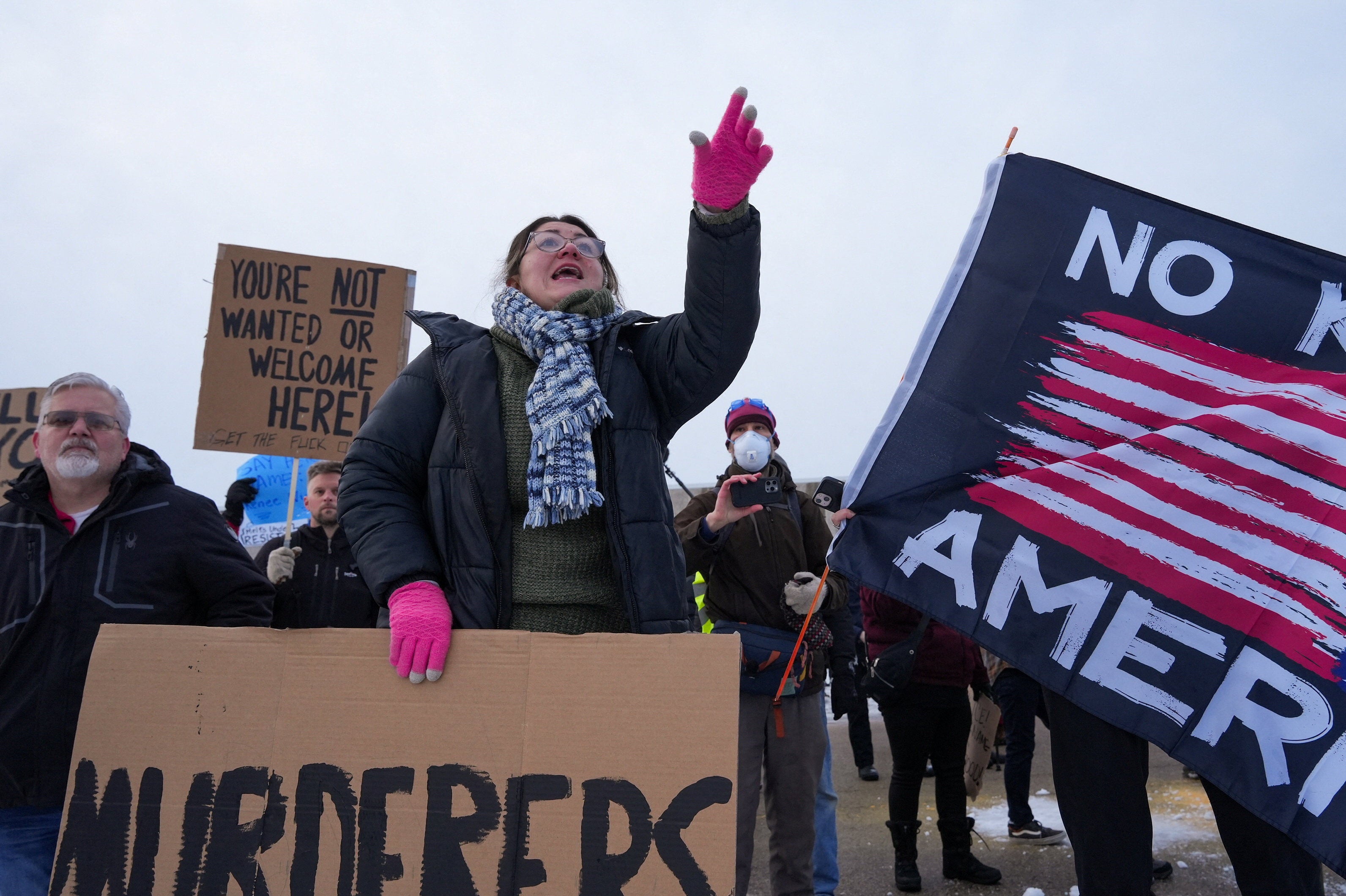
With that radical expansion of the nation’s immigration detention centers came an avalanche of reports of abuse and neglect inside them.
A series of sworn testimonials from detainees at the largest ICE facility in the country allege deteriorating conditions and routine beatings that have left several people hospitalized, including detainees whose testicles were “firmly crushed” by guards.
Federal judges have intervened to force ICE to improve conditions inside facilities in New York and Chicago, where detainees were allegedly forced into cramped cells near open toilets without adequate food, water, clean clothing or a place to bathe or brush their teeth.
“After nearly 35 years of experience with federal law enforcement in this judicial district ... I have never encountered anything like this,” Trump-appointed Judge Gary Brown wrote in response to squalid conditions at one facility on Long Island.
He rebuked “chillingly brutal conditions” at the jail and questioned why ICE shouldn’t be held in contempt.
The agency’s behavior “shocks the conscience,” he wrote.
Join our commenting forum
Join thought-provoking conversations, follow other Independent readers and see their replies
Comments
Bookmark popover
Removed from bookmarks