The Independent's journalism is supported by our readers. If you submit a form or click links to other sites on this page, we will earn commission.
Best solar panels 2026: Expert buying advice for UK homes
Our experts review efficiency, output, warranties and long-term value to reveal the best solar panels for UK homes in 2025

With energy prices still high, many homeowners are asking a familiar question: are solar panels worth it? But which solar panel is actually right for your home? Are you paying extra for features you don’t need? And how do you know the panels you choose will still be performing decades from now?
I’ve reviewed and compared the best solar panels for UK homes in 2026 to answer exactly those questions. This guide focuses on what really matters when choosing panels: which options suit different types of homes and roofs, where premium features genuinely add value (and where they don’t), and which manufacturers can be trusted to deliver reliable performance over the long term.
To find the best solar panels on the UK market, I assessed every model against the key factors that most affect homeowners: efficiency, power output, cost, warranty strength, and long-term degradation. I also reviewed reliability data, spoke directly with experienced UK installers, such as Glow Green and Solar4Good, and considered real-world feedback from homeowners who’ve already made the switch.
Although there are currently no large-scale solar panel manufacturers based in the UK, the panels in this guide are those most commonly specified by UK installers and best suited to British homes and weather conditions.
The result is a clear, practical ranking designed to help you choose panels that fit your home, your budget, and your long-term energy goals, without paying for unnecessary extras or taking risks on unproven brands.
Get a quote for solar panels on your home
This updated guide brings all those insights together to help you choose a system that fits your budget and energy goals. Alongside our rankings, you’ll find a breakdown of the cost of solar panels in the UK today, plus expert advice to ensure your investment pays off for decades to come.


What are the best solar panels in the UK market?
- Best solar panel overall: DMEGC Infinity
- Best solar panel for longevity: SunPower Maxeon 7
- Best budget solar panel: REA Fusion R
- Best solar panel for efficiency: Perlight Black Grid
- Best solar panel for small roofs: Aiko Neostar
- Best solar panel for UK weather (low light): Jinko Tiger
Best solar panels at a glance
Panel | Price per kW, installed | Efficiency | Wattage per panel | Type | Made in | Degradation | Warranty |
SunPower Maxeon 7 | £1,250 | 24 per cent | 475W | N-Type | Malaysia and the Philippines | 90.8 per cent after 30 years | 25 years |
DMEGC Infinity | £795 to £1,195 | 23 per cent | 440W to 460W | N-Type | China and Indonesia | 87.4 per cent after 30 years | 25 years |
REA Fusion R Solar Panel | £700 to £820 | 23 per cent | 460W | N-Type | Australia | 90.3 per cent after 30 years | 25 years |
Perlight Black Grid | £895 to £1,195 | 26 per cent | 500W | N-Type | China | 87.4 per cent after 30 years | 30 years |
Aiko Neostar | £1,250 | 23 per cent | 460W | N-Type | China | 88.90 per cent after 30 years | 25 years |
Jinko Tiger | £1,250 | 22 per cent | 440W | N-Type | China, Malaysia, the US, and Vietnam | 87.4 per cent after 30 years | 25 years |
Best solar panel overall SunPower Maxeon 7
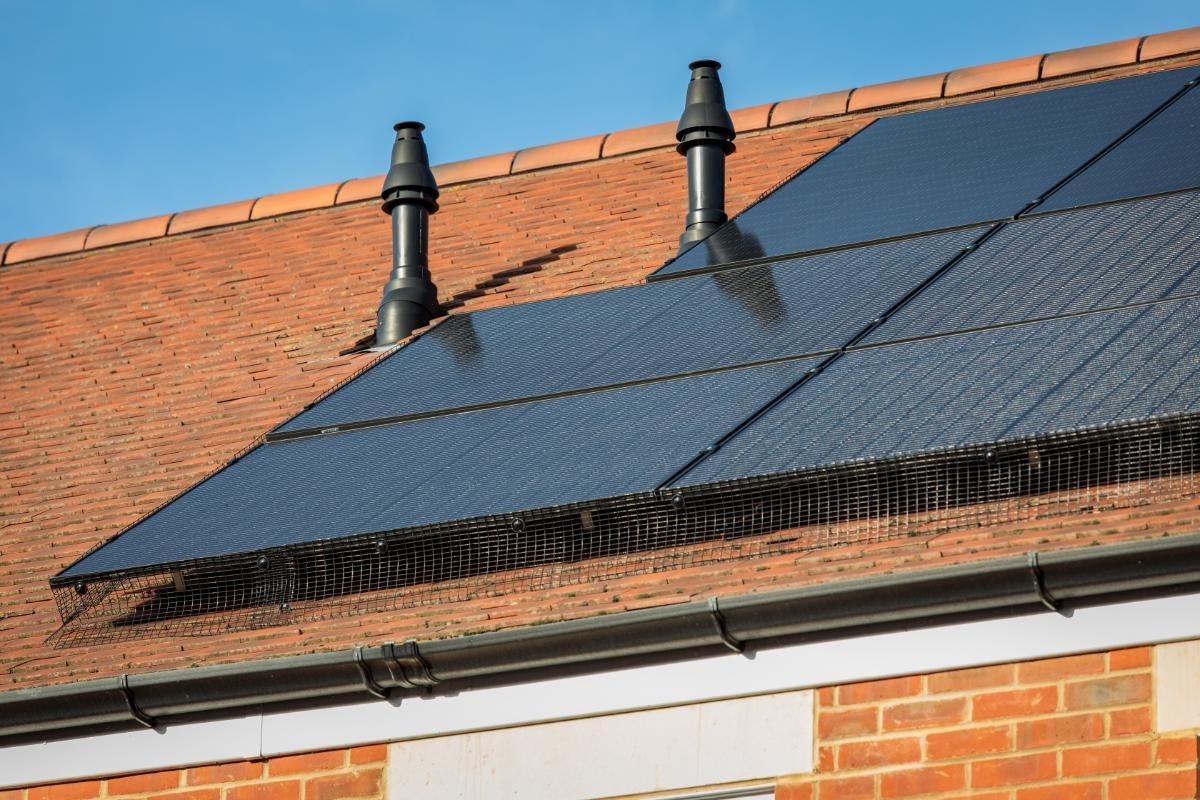
- Price per kW, installed: About £1,250
- Efficiency: 24 per cent
- Wattage per panel: 475W
- Type: N-Type
- Made in: Malaysia and the Philippines
- Degradation: 90.8 per cent after 30 years
- Warranty: 40 years (product and performance, with registration and approved installer)
- Dimensions: 1.79m x 1.04m x 0.04m
- Weight: 21kg
What sets the Maxeon 7 apart is its Interdigitated Back Contact (IBC) cell design. Unlike conventional panels, all electrical contacts sit behind the cell, reducing resistance and improving durability. This design also makes the panel more resistant to micro-cracks, corrosion, and heat-related efficiency loss – key factors over a 30–40 year lifespan.
Degradation performance is among the best we’ve seen. After three decades, the Maxeon 7 is expected to retain more than 90 per cent of its original output, meaning it continues generating meaningful savings long after many panels have declined.
The high output per panel makes it suitable for homes with limited roof space, while its relatively light weight simplifies installation. In real-world use, installers consistently cite reliability and consistency as standout strengths.
Installers and homeowners regularly praise SunPower panels for long-term reliability and low fault rates. Reviews tend to highlight peace of mind, consistent generation, and strong aftercare support when installed through approved partners.
For those seeking top-tier solar solutions, Maxeon Solar Technologies stands as a steadfast leader in the PV sector, backed by a dedicated network.
Pros
- Industry-leading 40-year warranty
- Excellent long-term power retention
- High efficiency and strong per-panel output
Cons
- Premium pricing
- Over-spec for households with modest energy needs
Why SunPower Maxeon 7 is best overall:
It scores highest across efficiency, durability, and warranty strength. While expensive, no other panel offers the same level of long-term certainty for homeowners who want the most dependable option available.
Read the full SunPower Maxeon 7 solar panel review
Best solar panel for longevity: DMEGC Infinity
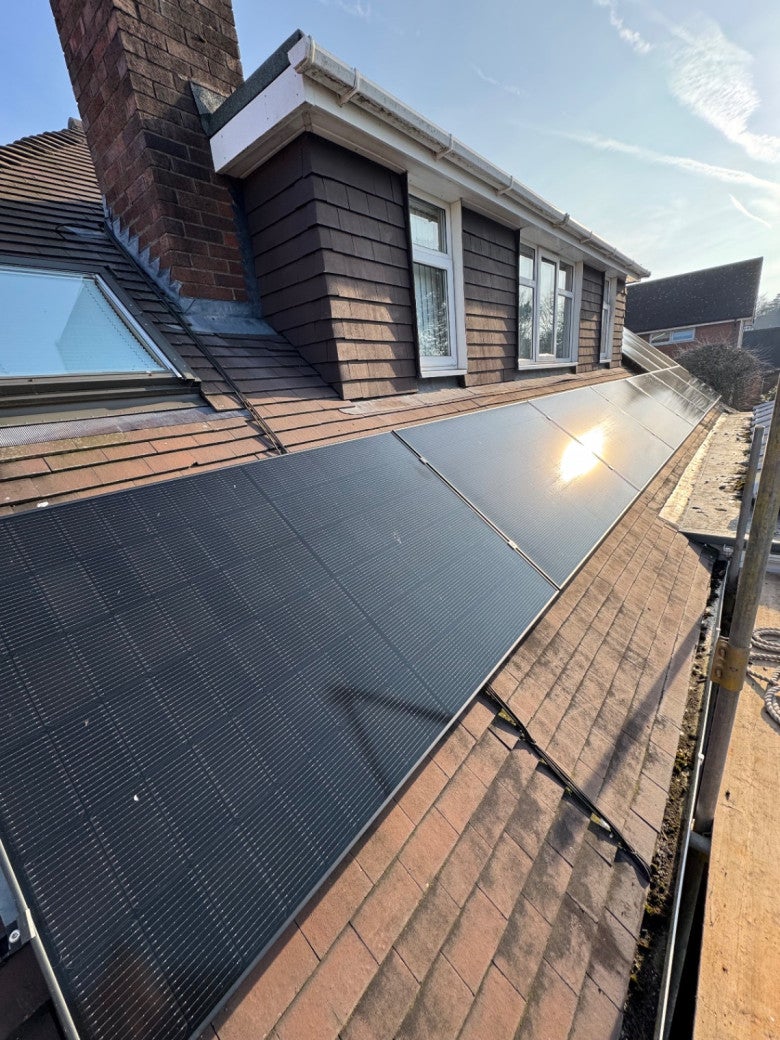
- Price per kW, installed: £795 to £1,195
- Efficiency: 23 per cent
- Wattage per panel: 440W to 460W
- Type: N-Type
- Made in: China and Indonesia
- Degradation: 87.4 per cent after 30 years
- Warranty: 25 years product, 30 years degradation
- Dimensions: 1.76m x 1.13m x 0.03m
- Weight: 24.5kg
The Infinity’s key strength is its balanced degradation profile. While it doesn’t quite reach the 90 per cent benchmark of the very top performers, retaining more than 87 per cent output after 30 years is still well above industry averages.
Its N-type cells slow long-term performance loss and reduce light-induced degradation — a common issue with older P-type panels. Combined with a robust frame, anti-glare coating, and solid heat tolerance, the Infinity is well suited to long-term UK use.
Installers often highlight the panel’s consistency rather than any single standout metric, which is exactly why it works so well for a wide range of homes.
DMEGC panels tend to be reviewed positively when installed by reputable UK installers, with customers noting steady generation and few post-installation issues. Feedback commonly reflects satisfaction rather than flashiness.
Being able to trust in the longevity of a company that has been around as long as DMEGC, its skills in electrical manufacturing and as a Tier-1 solar manufacturer, gives us peace of mind that we are supplying our customers with quality.
Pros
- Strong long-term performance for the price
- Good warranties and proven durability
- Excellent value as a long-life option
Cons
- Not the very highest efficiency
- Degradation slightly behind premium leaders
Why DMEGC Infinity is best for longevity:
It offers dependable performance over decades without the premium price tag of ultra-long warranties, making it a sensible long-term investment for most households.
Read the full DMEGC Infinity solar panel review now
Best budget solar panel: REA Fusion R

- Price per kW, installed: £700 to £820
- Efficiency: 23 per cent
- Wattage per panel: 460W
- Type: N-Type
- Made in: Australia
- Degradation: 90.3 per cent after 30 years
- Warranty: 25 years product, 30 years degradation
- Dimensions: 1.72m x 1.13m x 3cm
- Weight: 24kg
Its standout feature is the combination of N-type cells with Heterojunction Technology (HJT). This pairing improves low-light performance and slows degradation, allowing the panel to retain more than 90 per cent of its output after 30 years — exceptional at this price point.
Optional micro-inverter compatibility adds further value, allowing each panel to operate independently. This improves resilience to shading and boosts generation during cloudy conditions.
The bifacial design can also increase output by capturing reflected light, particularly on lighter-coloured roofs.
Customers installing REA panels through major UK installers often comment on value for money and unexpectedly strong performance, with fewer complaints than typically seen in budget-tier products.
REA Fusion panels combine advanced N-Type and HJT cell technologies, offering the best of both worlds: N-Type cells minimise long-term efficiency degradation, while HJT (Heterojunction Technology) enhances performance in low-light conditions. This powerful combination makes the Fusion 2 the go-to choice for the UK market, delivering maximum generation, even in our famously gloomy climate.
Pros
- Excellent long-term performance for the cost
- Bifacial and micro-inverter options
- Strong degradation figures
Cons
- Less brand recognition
- Slightly lower efficiency than premium panels
Why REA Fusion R is best budget option:
It delivers premium-grade degradation and modern cell technology at a genuinely affordable price.
Read the full REA Fusion R solar panel review
Best solar panel for efficiency: Perlight Black Grid

- Price per kW, installed: £895 to £1,195
- Efficiency: 26 per cent
- Wattage per panel: 500W
- Type: N-Type
- Made in: China
- Degradation: 87.4 per cent after 30 years
- Warranty: 30 years on product and performance
- Dimensions: 1.76m x 1.13m x 0.03m
- Weight: 20.9kg
The key differentiator here is power density. With both high efficiency and high wattage, the Black Grid produces more electricity per square metre than any other panel listed, which makes it a favourite among many of the best solar panel installers.
Its bifacial construction and reinforced frame improve resilience, while the long 30-year warranty adds confidence. Although degradation is slightly weaker than some rivals, overall lifetime output remains strong due to the high starting efficiency.
Perlight panels are frequently mentioned positively by installers for build quality and output. Consumer reviews tend to reflect satisfaction with the generation rather than brand loyalty.
A 30-year product warranty is hard to come by in any product, but Perlight offers one of the longest warranties available in the market.
Pros:
- Class-leading efficiency (26 per cent)
- High power output (500W per panel)
- Long 30-year warranty
- Competitive price compared with other high-performance panels
Cons:
- Degradation is weaker than its rivals
- Not a Tier-1 manufacturer, though established globally
Why Perlight Black Grid is best for efficiency:
It enables homeowners to generate the maximum energy possible from their roof, even if they’re short on space.
Read the full Perlight Black Grid solar panel review
Best solar panel for small roofs: Aiko Neostar
.jpeg)
- Price per kW, installed: About £1,250
- Efficiency: 23 per cent
- Wattage per panel: 460W
- Type: N-Type
- Made in: China
- Degradation: 88.9 per cent after 30 years
- Warranty: 25 years product, 30 years degradation
- Dimensions: 1.76m x 1.13m x 0.03m
- Weight: 21.5kg
The Aiko Neostar delivers high output in a compact, lightweight format, making it ideal for space-constrained rooftops. These panels deliver the best combination of compact design and high power density, with each panel producing 460W at 23 per cent efficiency while maintaining a relatively light and slim build. The panels also boast excellent durability, retaining almost 89 per cent of its output after 30 years.
With new generation All Back Contact (ABC) technology, Aiko Neostar panels supply excellent efficiency, and their entirely black design is aesthetically pleasing and looks great on any rooftop. They represent a premium option built for homeowners in search of the latest in tech and the best performance from a small-scale system.
The panels also feature cell-level partial shade optimisation, which improves energy yield even when parts of the array are shaded. This means a consistent output will be delivered, despite changing skylines or nearby trees.
Durability is another strength. Aiko highlights its micro-crack resistance technology, ensuring panels withstand impacts from hail, branches, or debris. This robustness, coupled with its sleek all-black aesthetic, makes the Neostar both practical and visually appealing.
At just 21.5kg, it’s lighter than many rivals, which reduces strain on roofs and simplifies installation – another advantage for smaller properties.
Pros:
- High power density – ideal for limited roof space
- Nearly 90 per cent output retention after 30 years
- Lightweight and slim design
- Premium all-black finish
Cons:
- More expensive than some competitors
- Efficiency slightly lower than Perlight Black Grid
Why Aiko Neostar is best for small roofs:
With strong per-panel output, lightweight construction, and shade optimisation, the Aiko Neostar is the best choice for homes with limited space. It helps smaller rooftops achieve big solar gains without compromising on quality or longevity.
Read the full Aiko Neostar solar panel review now
Best solar panel for UK weather (low light): Jinko Tiger
.jpeg)
- Price per kW, installed: About £1,250
- Efficiency: 22 per cent
- Wattage per panel: 440W
- Type: N-Type
- Made in: China, Malaysia, the US, Vietnam
- Degradation: 87.4 per cent after 30 years
- Warranty: 25 years product, 30 years degradation
- Dimensions: 1.76m x 1.13m x 0.03m
- Weight: 22kg
The Jinko Tiger is optimised for consistent generation in weak or diffuse light, making it particularly well suited to the UK climate.
The panels have an advanced N-type cell construction to maintain higher energy output even under weak sunlight, whether early morning, evening, or cloudy UK days, ensuring steadier performance throughout the year. So, for the UK’s famously overcast skies and shorter winter days, the Jinko Tiger is the standout choice. N-type cells are also slower to degrade and are resistant to salt corrosion, making them a great pick for coastal properties.
Jinko Tiger panels deliver reliability and performance with robustness and high energy output in weak light conditions. They’re a great choice for customers who want quality, affordability, and performance from one of the best solar manufacturers in the world.
These panels are also mid-weight and relatively small compared with some other options, making them a practical fit for most UK rooftops.
Jinko is one of the most frequently reviewed solar brands globally, with homeowners often citing their reliability and steady year-round output.
Pros:
- Excellent performance in low-light conditions
- Backed by one of the world’s biggest solar manufacturers
- Strong warranties and solid durability features
Cons:
- Efficiency trails leaders such as Perlight
- Degradation is average compared with premium brands
Why Jinko Tiger is best for UK weather:
With its emphasis on low-light performance and proven global reliability, the Jinko Tiger is the most dependable option for homeowners who want to generate energy in Britain’s cloudy climate.
Read the full Jinko Tiger solar panel review
How we chose the best solar panels in the UK
Choosing the best solar panels that UK homeowners can trust means balancing technical performance with real-world experience. To create this guide, we developed a clear scoring system and combined it with expert insight and real consumer feedback.
Every solar panel was rated across five core factors, each on a simple scale of one to five:
- Efficiency: How much sunlight is converted into electricity, including performance during low light.
- Cost: Average installed price per kilowatt, factoring in UK market rates.
- Wattage per panel: Power density (important for small roofs where space is limited).
- Warranty: Coverage length for both product and performance guarantees.
- Degradation: How much output the panel retains after 25-30 years of use.
Each factor was given equal weight to produce an aggregate score out of 25. Panels that scored consistently high across multiple categories were ranked more favourably than those that excelled in just one area.
Panel | Efficiency | Cost | Wattage | Warranty | Degradation | Total (out of 25) |
DMEGC Infinity | 3 | 4 | 4 | 3 | 3 | 17 |
SunPower Maxeon 7 | 4 | 2 | 5 | 5 | 5 | 21 |
REA Fusion R | 3 | 5 | 4 | 3 | 5 | 20 |
Perlight Black Grid | 5 | 3 | 5 | 4 | 3 | 20 |
Aiko Neostar | 3 | 2 | 4 | 3 | 4 | 16 |
Jinko Tiger | 2 | 2 | 2 | 3 | 3 | 12 |
What the scores show
- SunPower Maxeon 7 leads overall with 21 out of 25, thanks to its exceptional warranty and long-term performance. Its higher price, however, limits its appeal for some households, which is why – as installers such as Lloyd Greenfield point out – cost and value still play a major role in our final recommendations alongside the scoring table..
- REA Fusion R and Perlight Black Grid both score 20, representing excellent value – REA for affordability and degradation, Perlight for efficiency and warranty. However, each excels in specific areas rather than across the board, which is why neither is best overall.
- DMEGC Infinity lands at 17 out of 25, but is considered the best overall because it offers the strongest balance of performance, durability, and affordability across all factors, making it the most versatile choice for the widest range of households.
- Aiko Neostar scores 16, lower overall but uniquely strong for small roofs due to its per-panel output.
- Jinko Tiger has the lowest aggregate score at 12 out of 25 but still earns its category win for UK weather because of its superior low-light performance (a factor not fully captured in the scoring table).
Additional methodology
Numbers only tell part of the story. By combining technical specifications, expert recommendations, and consumer sentiment, our methodology ensures that this guide reflects both the science of solar panels and the lived experience of UK homeowners.
The consumer experience
To get a thorough understanding of the best solar panels, we also looked at customer satisfaction through Trustpilot reviews, Google reviews, and independent forums. We also spoke directly to consumers who have purchased solar panels. This feedback helped us understand how different solar panel brands and installers perform when it comes to reliability, service, and post-installation support.
One consumer we spoke with was Justin Webb, a graphic designer and founder of Judmedia. He had solar panels installed more than two years ago. When choosing, he prioritised a clear like‑for‑like kit spec (panels, inverter, battery), long warranties with an MCS‑accredited installer who did an in‑person survey, and a simple single‑brand ecosystem so everything works well together.
While cost was a major consideration for him, he says consumers shouldn’t be too concerned about the return on investment (ROI) in solar. “People always talk about ROI with solar panels, but often forget that there’s no ROI on paying your energy bill, or your gas bill, or your mortgage. You just pay it and it’s gone,” he says. “With solar, I’m fixing my energy price instead. There are so many variables in life that you can’t fix, but energy is one of them. Solar allowed me to fix that cost and future-proof myself against energy price rises.”
And while we’re all concerned about costs, Webb offered the following considerations:
- Quotes vary widely. Webb’s quotes ranged from £11k to £18k, with scaffolding being a surprisingly big chunk.
- Finance options exist. Some mortgage lenders offer 0 per cent loans for solar upgrades, which is worth asking about during a remortgage or a move.
- Summer exports cover standing charges. During sunny months, he often has no bill, as his exports offset the standing charge.
- Home resale. He believes solar can add value (he cites an approximate £10k uplift, from what he’s seen), though exact figures vary by market.
Finally, he suggests not forgetting the basics. Do an energy mini‑audit before you choose your solar panels. Before purchasing panels, he switched all of his lights to LEDs, calculated what his fridge and oven actually draw. The goal, he says, is to reduce waste so that your solar and battery combination can go further and save you the maximum amount of money.
The expert insight
We interviewed leading solar installers, including Glow Green and Solar4Good, and considered guidance from industry bodies such as the Microgeneration Certification Scheme (MCS) and the Energy Saving Trust. These conversations highlighted the importance of installer reputation, aftercare, and real-world durability.
According to Lloyd Greenfield, founder of Glow Green, which sits in our guide to the best solar panel installers, the three factors that should top every homeowner’s checklist are warranty, manufacturer reputation, and cell technology. “There’s a big difference between a panel guaranteed for 30 years and one that only lasts 15,” he says. “You also want a manufacturer with a strong track record, not a new entrant whose panels haven’t been tested in the UK over decades.”
Greenfield warns against focusing solely on price or raw efficiency figures. Many households are quoted for lower-wattage panels to bring down upfront costs, but that can backfire. “If you can get 515W panels instead of 450W in the same roof space, you’ll generate more power and better long-term payback,” he explained. Spending a little more upfront, he argues, often means greater savings over the system’s lifetime.
The choice of installer is just as important as the panel itself. Greenfield advises looking for MCS and NIC accreditations and whether the company uses the Energy Performance Validation Scheme (EPVS). “It’s almost like an insurance policy,” he says. “They check the installer’s design assumptions – things like shading, pitch, and orientation – to make sure the numbers are realistic.” He also recommends checking Trustpilot ratings, years in business, and whether deposits are protected under an insurance-backed scheme.
A big trend in the market, he added, is pairing your array with a battery. Greenfield says that almost every customer now chooses battery storage, with more than 95 per cent of Glow Green’s clients opting for a battery and around 10 per cent coming back within a year to add a second. Falling panel prices and smarter tariffs are making storage even more attractive.
And while Greenfield admits some bias, his personal recommendation is Perlight’s Black Grid panel, thanks to its sleek all-black design, 30-year warranty, bifacial technology, and strong reputation. “In our view, it’s one of the best solar panels in the UK market,” he said.
For more details, see our guides:
Why you can trust The Independent’s solar panel coverage
The Independent has been reporting on green energy and climate matters since it was founded in 1986. Since then, we have written hundreds of reviews and news stories on energy matters, including the best solar installers and various other guides on green power. Howard Mustoe is The Independent’s energy editor. He has written extensively on everything from how you can earn money from solar panels to a guide on whether solar panels are actually worth it. His experience is why you can trust his verdict on the best solar panels. Howard has conducted extensive research, including consulting industry experts and customers, to gain a thorough understanding of which brands are making the best solar panels.
What happens when you get a quote through us
After you have filled out our form above, you will receive three quotes from solar fitting companies local to you. They may be able to quote based on the information you have given them, or they may need more information, or to visit your home. Once you have these quotes, you can decide if you wish to proceed.
Join our commenting forum
Join thought-provoking conversations, follow other Independent readers and see their replies
Comments
Bookmark popover
Removed from bookmarks