Smart #5 review: Tech-laden family SUV is big, clever and comfortable
The dinky city car is dead for Smart – the Smart #5 is an enormous, high-tech, comfortable, high-quality, fast-charging, family SUV
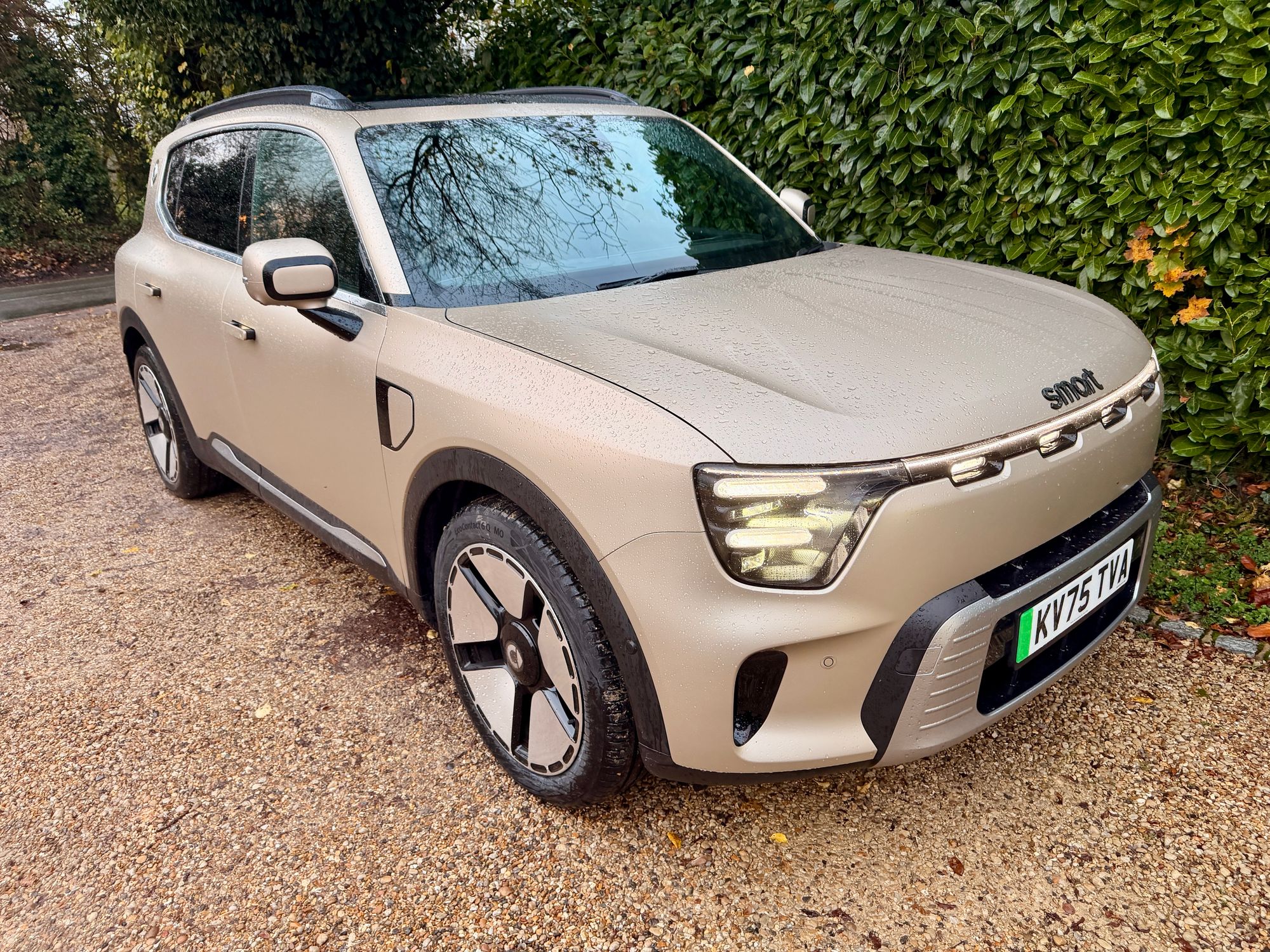
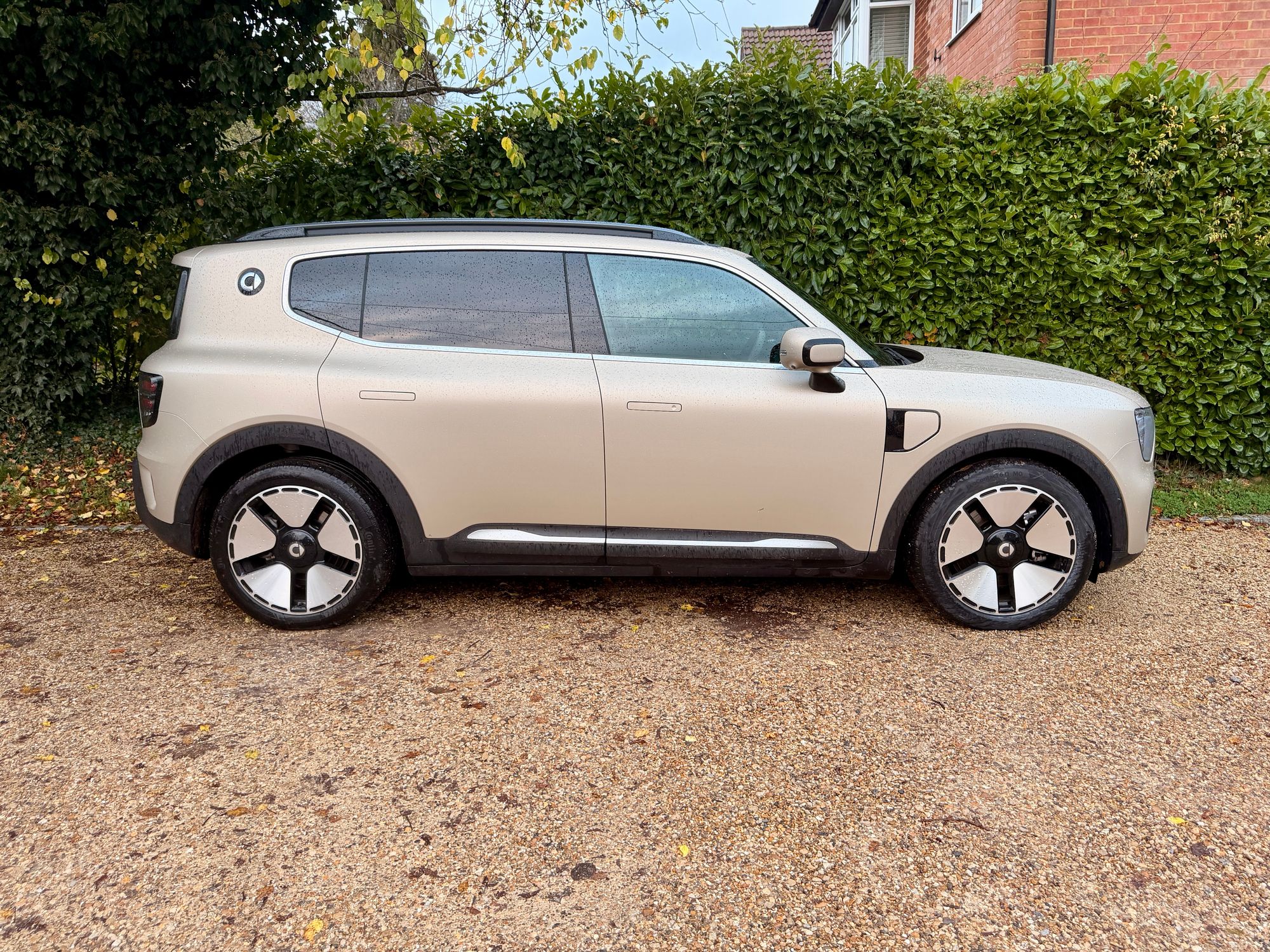
If your mental image of a Smart car is a tiny two-seater wedged into an impossibly small parking space, sometimes even having reversed in, prepare for a reset. The new Smart #5 is the brand’s biggest and boldest yet, a 4.7m-long family SUV that completes Smart’s transformation from microcar maker to a serious premium EV contender.
A joint effort from designers at Mercedes-Benz and Chinese giant Geely (that’s now bringing its own cars into the UK as well as owning Volvo, Polestar, Lotus and LEVC), the Smart #5 leverages its considerable size – you could park an original Fortwo within its wheelbase – to deliver a lavishly spacious, flat-floored cabin for five. It’s a world away from the brand’s quirky roots, but with cutting-edge 800V charging, a high-tech interior and impressive practicality, the #5 proves that Smart’s new, embiggened direction has substance.


How we tested
After initially driving the Smart #5 Brabus around Porto we lived with a Smart #5 for a week in the UK, using it for full family duties including trips out, station runs, shopping trips and everything in between. It’s fair to say the car’s tech, practicality, drive and efficiency got a very thorough workout.
Smart #5: Price £39,800, Smart.com
Independent rating: 8/10
- Pros: Spacious and premium cabin, good kit as standard, very fast charging (if you can get it), comfortable ride
- Cons: Screen-heavy interior, weak range on the entry-level Pro
Smart #5 specs
- Price range: From £39,800 (estimated)
- Battery size: 76kWh / 100 kWh
- Maximum claimed range: 366 miles
- Miles per kWh: 3.8
- Maximum charging rate: 150kW / 426kW
Battery, range, charging, performance and drive
The Smart #5 comes with two battery sizes. There’s the entry-level Pro with a 76kWh battery and 288 miles of range which will probably cost around £32,000. Move up to the Pro+ and beyond and you’ll get the 100kWh battery, which offers 366 miles in RWD rear-drive configurations and 335 in the 4x4 AWD car.
Those higher trims include the over-the-top Brabus version which could cost something in the region of £55,000. It does away with some comfort and efficiency to deliver a whopping 637bhp and nail a 0-62mph time of 3.8s – just in case that’s something anyone would ever want to do in a Smart car. That’s silly performance for an SUV of this heft and weight (and something few customers will choose) but thankfully the Smart #5 is fast in ways that matter, too.
Charging speeds are where the Smart #5 excels. The biggest battery will charge at speeds of up to 400kW in optimal conditions, taking the Smart #5 from 10 to 80 per cent in under 18 minutes. That’s quicker than the Porsche Taycan and the new Tesla Model Y, but you’re unlikely to find those optimal conditions in the UK any time soon – where typical motorway fast chargers currently top out at 350kW. The entry-level Pro edition won’t worry our current charging infrastructure, with 150kW charging speeds capable of getting from 10 to 80 per cent in under 30 minutes.
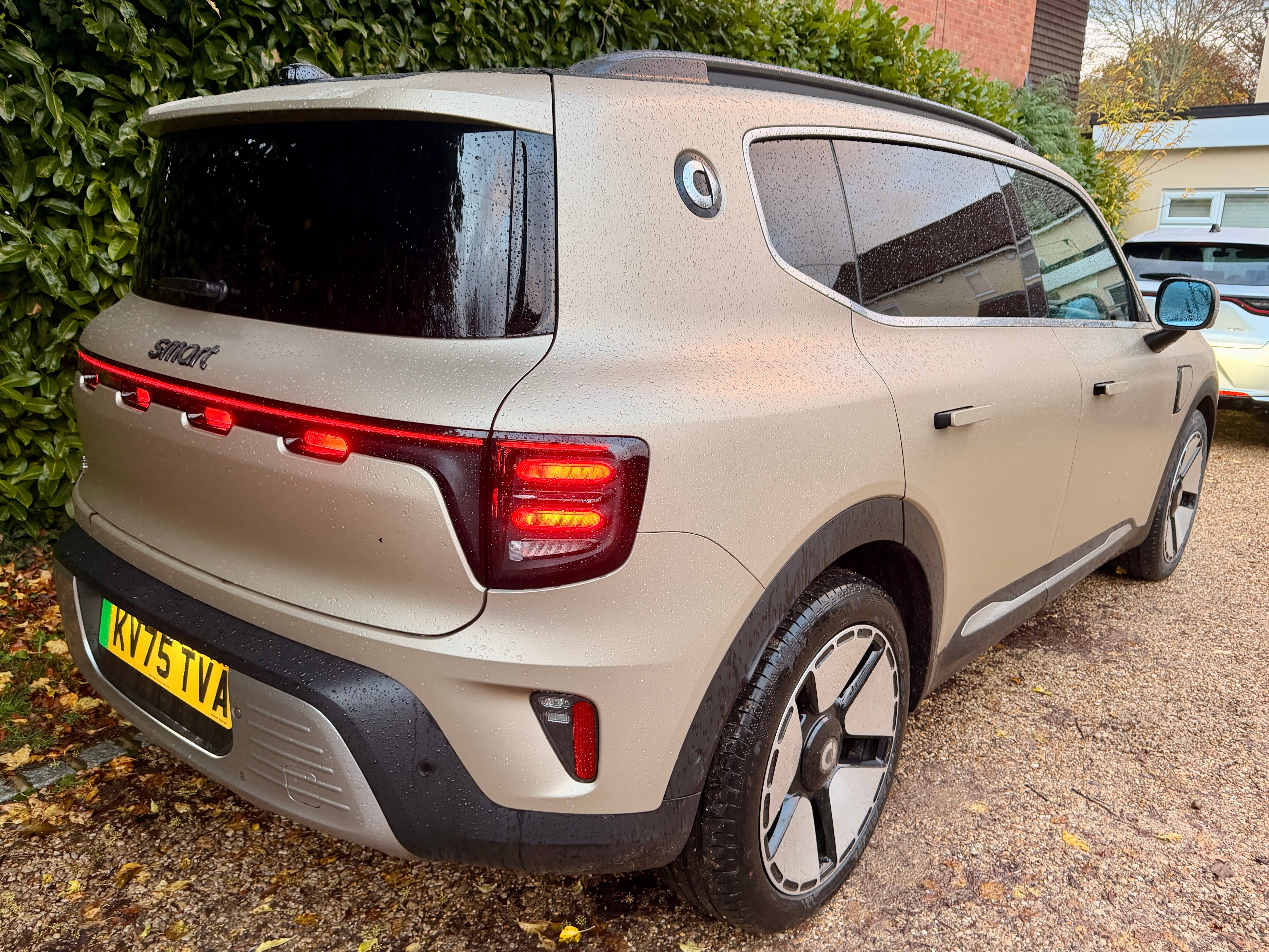
What impressed me most about the Smart #5 I drove in the UK, was just how comfortable it was. The ride was good over UK roads, and it just felt like an easy car to live with. When we test drove the Smart #5 Brabus which, even on its 21in alloy wheels, it felt composed and comfortable whether you’re crawling along cobbled streets or cruising at motorway speeds. The top-spec Brabus is incongruously powerful for an otherwise sensible family SUV, but switch to a less sporty driving mode and you’ll get something closer to the performance of lower trim models. Things gets more business-like then with nicely weighted steering and smoother, more predictable power delivery.
Ironically, city driving isn’t the Smart #5’s strong point. The 2.4 tonne SUV is more than comfortable in start-stop traffic, and the boxy body shape gives you excellent road visibility, but the car’s size and fairly unremarkable turning circle makes it naturally unsuited to squeezing around tight bends and out of tricky spots.
Interior, practicality and boot space
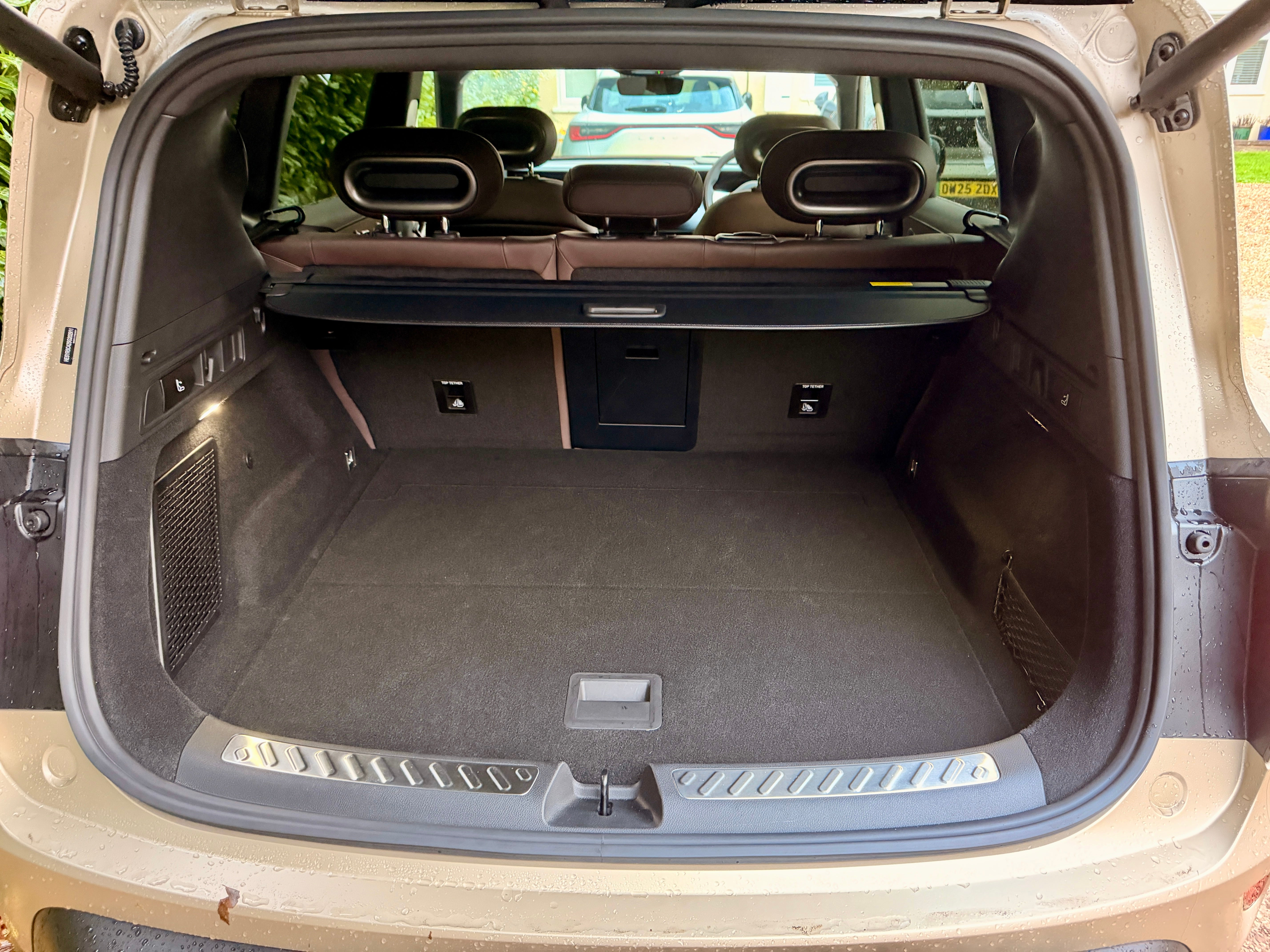
The Smart #5 is surprisingly cavernous. A flat floor and long wheelbase, coupled with the overall boxiness of the shape, creates a huge amount of headroom and legroom for even the tallest front and rear passengers. Boot space is generous at 630 litres, expanding to 1,530 litres with the seats down. There’s also 74 litres of space in the frunk, should you need it.
The Smart #5 comes with some decent kit as standard. Even the basic Pro gets a panoramic roof, plus heated driver seat, a 360-degree parking camera and climate controls for passengers in the back. Move up to higher trims and you get features like dual wireless charging pads for your phone, a touchscreen display for your passenger, a heat pump for better battery efficiency and an augmented reality head-up display.
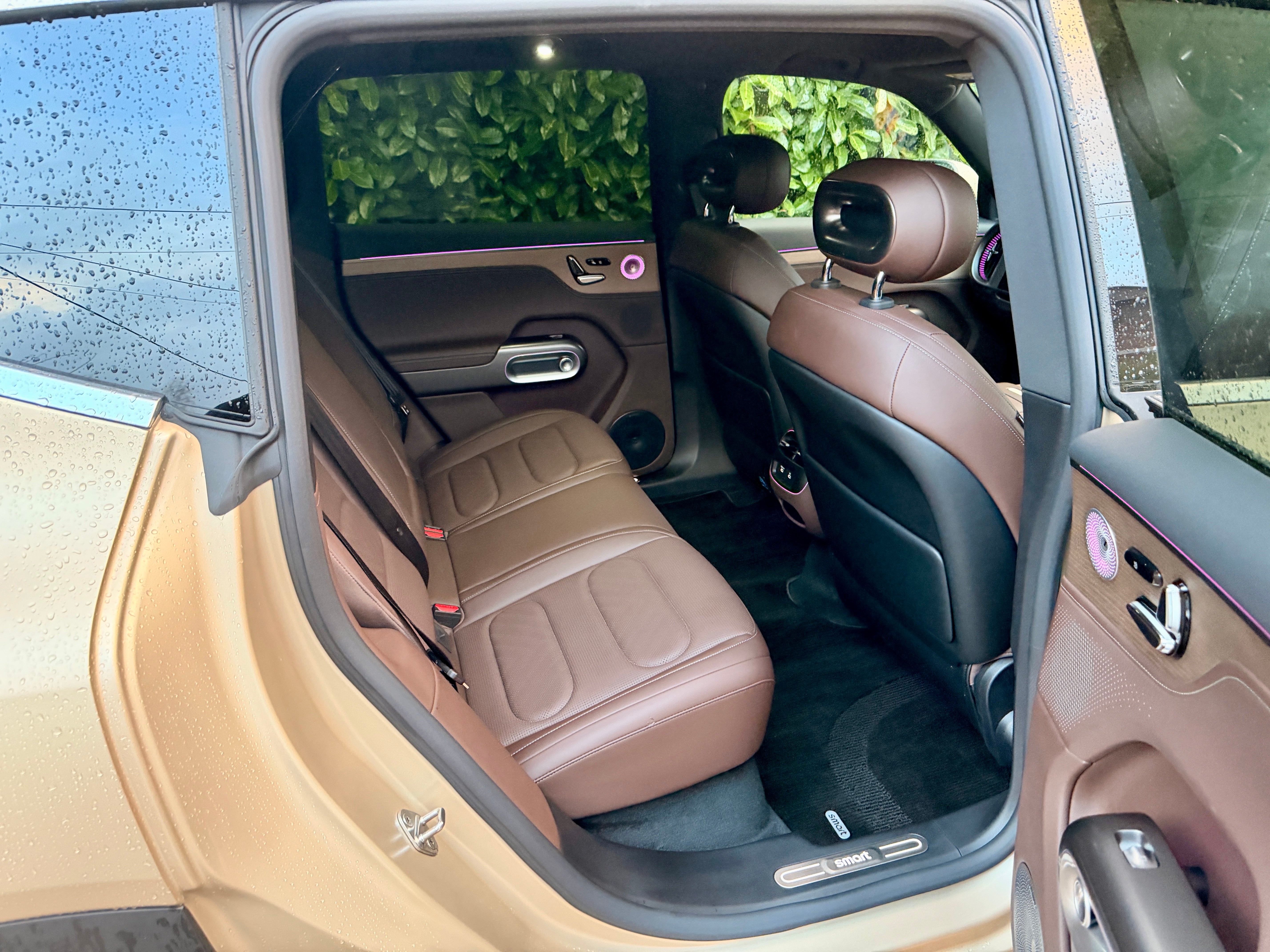
Rear space is good, too. The car’s boxy shape means there’s decent headroom, while knee room in the back is decent and access to the rear seats for passengers – or if you’re fitting a child seat – is good thanks to wide-opening doors. Visibility out is good, too, wherever you’re sitting, which is especially important for kids in the back.
Technology, stereo and infotainment
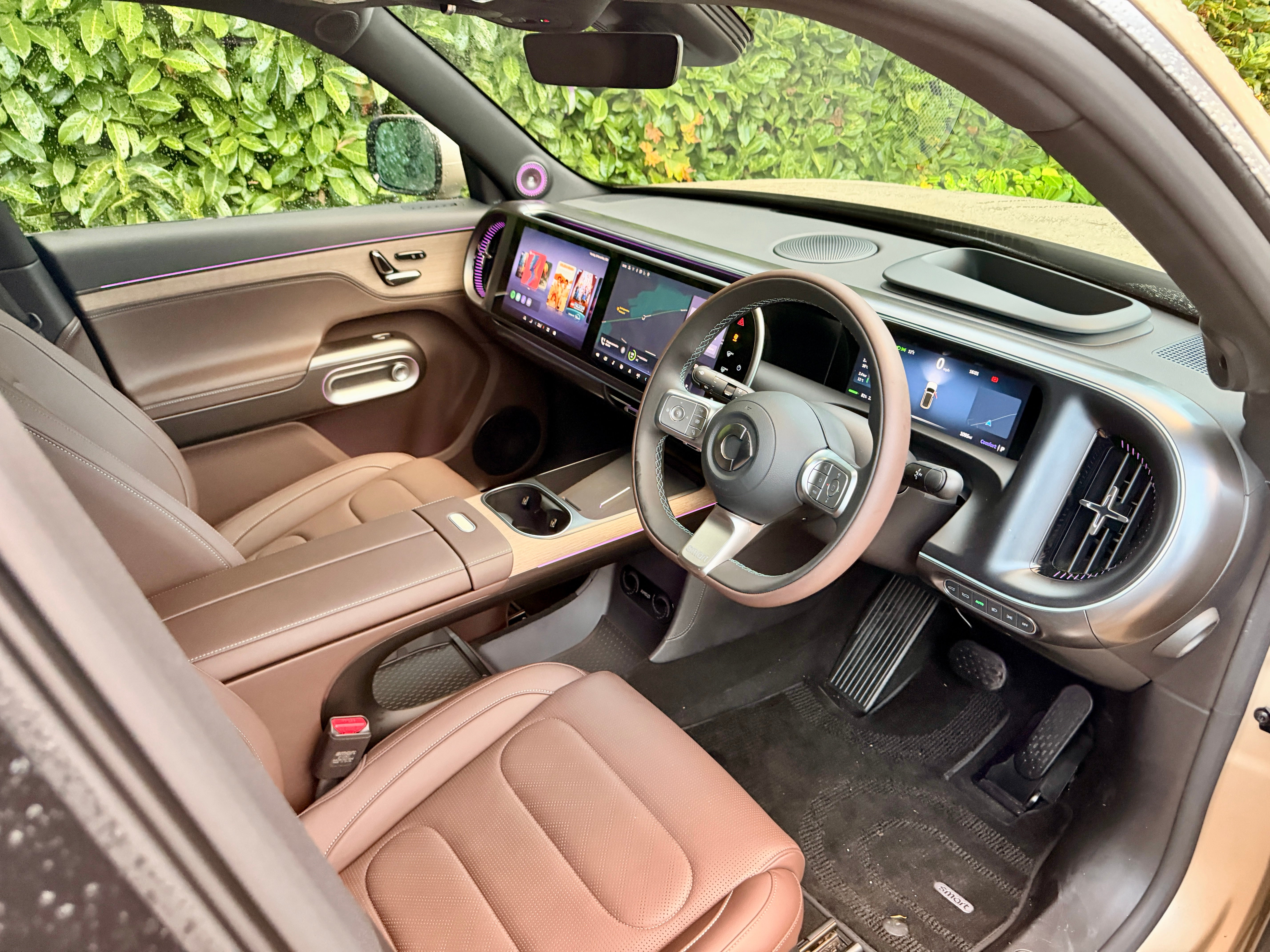
Smart has gone all-in on displays with the #5. The dashboard is dominated by a bright and responsive 13in OLED central touchscreen – it’s an impressive, pill-shaped panel that stretches all the way over to the passenger side on Pro+ models and above. Somewhat alarmingly, your passenger can watch movies on their side of the car if they’re sufficiently bored of your company – though Smart says the passenger display will disable if the driver tries to sneak a peek at whatever’s on.
The OLED display is vibrant, fast, isn’t overly fussy and intuitive to navigate. While you don’t get physical buttons on the display, you do get a few on the steering wheel and the most essential controls are always within reach on screen. Apple CarPlay and Android Auto work wirelessly and seamlessly, integrating neatly with Smart’s underlying interface.
You’ve got your usual list of driver assist systems, which as with many modern cars includes a few overly judicious safety warnings. Overtaking a truck on a motorway with ample space, for example, we received the rather stark message that the car was “taking evasive action”. Yawn just once and you’ll be told to take a break and grab a coffee. The car’s lane keeping can get a little jaunty with adaptive cruise control too, sometimes meandering in the lane like it’s looking for something.
Premium models and above get an impressive 20-speaker Sennheiser system with Dolby Atmos support, all 1,190 watts of which sound great in the the arena-sized cockpit of the Smart #5.
Prices and running costs
The Smart #5 looks and feels like a premium product and prices reflect that. The entry-level Pro starts at £39,800, with the Pro + £41,800, while the Premium and Pulse models both cost £47,300 depending whether you want to go posh or sporty, The top-spec Brabus model costs £51,800 – a lot of cash, but there’s a lot of performance and tech on offer at that money.
Efficiency is nothing special, but still decent at around 3.8 miles per kWh, meaning running costs will be typical for a large EV. That means cheap if charging at home on off-peak tariffs, but potentially pricey if you want to make regular use of the Smart #5’s impressive charging speeds at public chargers.
Smart #5 rivals


FAQs
How long does it take to charge?
Models with the 100kWh battery and 800V system can theoretically charge 10 to 80 per cent in under 18 minutes on a 400kW+ charger. The 76kWh Pro model takes under 30 minutes on a 150kW charger.
How much does it cost - is it worth it?
Estimated from £32k to over £50k. Mid-range models offer a strong blend of space, tech, and range for the money, making it a compelling premium EV choice if you can live with the screen-heavy interface.
Does Smart replace batteries for free?
Like most EV manufacturers, Smart will offer an 8 year/100,000 mile warranty on the high-voltage battery, covering significant degradation or failure.
Why trust us
Our team of motoring experts have decades of experience driving, reviewing and reporting on the latest EV cars, and our verdicts are reached with every kind of driver in mind. We thoroughly test drive every car we rate, so you can be sure our verdicts are honest, unbiased and authentic.
The verdict: Smart #5
I was impressed by the Smart #5. I wasn’t expecting it to be quite so easy to live with and comfortable, but it fitted into family life really well. As a big of a geek, I loved all the tech on board, too, although I can see how it might be a little overbearing for some. It’s a bit pricey, but if you fancy something that’s very much away from the norm and will have your friends asking lots of questions, then the Smart #5 is worth a look.
Join our commenting forum
Join thought-provoking conversations, follow other Independent readers and see their replies
Comments
Bookmark popover
Removed from bookmarks