The Independent's journalism is supported by our readers. When you purchase through links on our site, we may earn commission.
In Britain, Epstein will be remembered as an even bigger scandal than the Profumo affair
An establishment sex scandal involving powerful men, young women and a high-society fixer, which erodes public trust and ultimately brings down a government… the echoes of 1963 should send shivers through this Labour administration, says Anne McElvoy


Right now, Peter Mandelson is holed up in the Wiltshire estate in a cottage on the land of a wealthy friend, his political, diplomatic and business careers in tatters, shunned by those who long courted his company and advice as an acerbic wit and a tactical Labour seer. Today, Keir Starmer told the Commons that one of his most trusted allies “betrayed our country”.
Amid the rubble of a reputation destroyed first by an unwise and convoluted entanglement with the prolific financier, child sex abuser and trafficker Jeffrey Epstein, the revelations have broadened out into allegations of unseemly financial relationships. At the centre of this nexus in the UK were two people at the heart of politics and palace: Mandelson and the then prince Andrew, both brought low by their closeness to, and reliance on, Epstein (though both have denied any wrongdoing).
We are still in the foothills of what this will mean, for a government that ignored warnings and appointed Mandelson to the US ambassadorship, and for the royals, dealing with an apostate brother who has caused such enormous damage to the family into which he was born a prince, and now lives in the uneasy betweenlands as Andrew Mountbatten-Windsor.
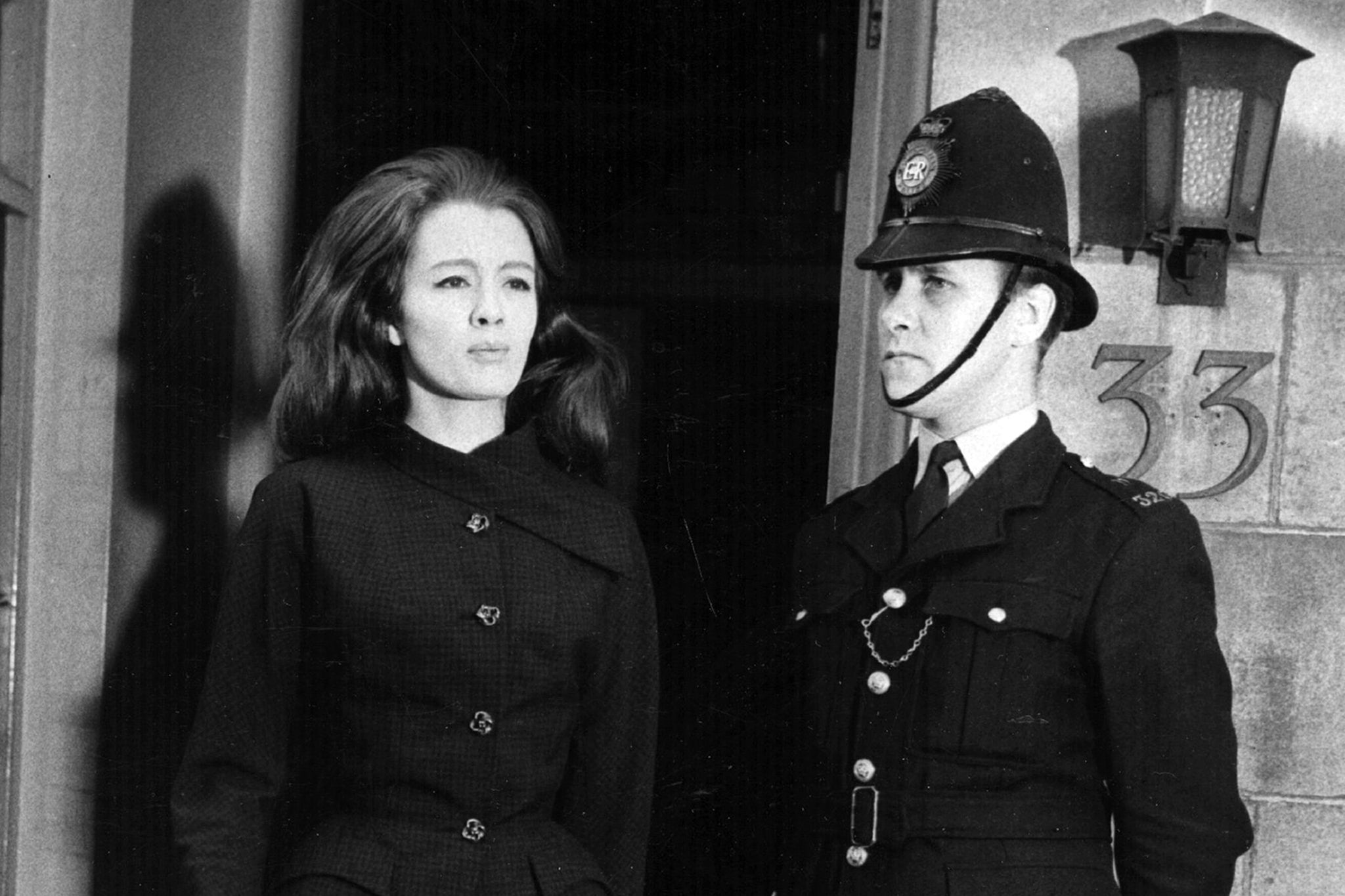
The political fallout – in terms of the way the public feels about elites and the theories, many justified and some conspiratorial, about the roots of misconduct and what lies behind them – has been compared to another epoch-defining scandal: the 1963 Profumo affair, which unveiled a world of seedy glamour in the relationships of Christine Keeler and Mandy Rice-Davies with men at the heart of “the establishment”, the MP John Profumo, secretary of state for war, and the aristocrat and then owner of Cliveden, Lord Astor.
The Profumo affair echoes today in another scandal of money, sex and a privileged class of people. But the more significant similarity is that both marked defining moments in social and political history – the merry-go-round of affairs among society figures who were interconnected by birth and privilege was, in essence, the end to a post-war culture in which privacy could be guaranteed and private sins stayed secret. The public became the audience to the Profumo-Keeler show, as we are today to the Maxwell-Epstein one.
Osteopathy is the random link between these stories. Stephen Ward – who in 1961 introduced 19-year-old Keeler to Profumo – was a society osteopath. Reinaldo da Silva, Mandelson’s husband, had his osteopathy training paid for by Epstein. (There are no allegations of wrongdoing against da Silva).
Mandelson maintains he was not sexually entangled, and – despite appearing in the Epstein files, in a photograph in his underwear in Epstein’s Paris flat, accompanied by a woman in a white dressing gown – insists he was wholly unaware of the oversexualised nature of Epstein and Ghislaine Maxwell’s circuit of young women permanently on hand for massages in skimpy bathrobes. The same miasma of dubious or downright mercenary characters attended the “Cliveden Set”, where the bohemian atmosphere was a thin cover for sexual licentiousness and exploitation.
Keeler’s other lover at the time of her affair with a minister – this was a crowded field – was the Soviet naval attaché Yevgeny Ivanov. Her friend Ward effectively set himself up as a dating agency – or, more crudely, a procurer of young women to introduce to powerful men, seeking off-grid diversion from their regular lives.
Reading Keeler’s testimony in 1963 feels especially haunting now, in what it reveals about the ghastliness of that side of the “swinging” decade, and her own delusion: “I never considered myself a prostitute or a call-girl,” she said. “Stephen said that you have to have the mentality of a prostitute, which I didn’t have, and it was not quite so wrong just once or twice sleeping with a man and having some money from him; a man I knew and liked.”
Like many of those recruited for sex by Epstein and Maxwell, Keeler also introduced girls she met to Ward: “I introduced them because he liked girls,” she told the court. “He used to tell me which girl he liked in a shop, and say [sic]: ‘Go and get her.’”
Read the memoirs of Virginia Giuffre, the Epstein victim who accused Andrew of having sex with her at 17 (he continues to deny the allegations, and of ever having met Giuffre), the same pattern is there: the impressionable and vulnerable, used and then used again, sent to recruit others. Here, the line between “young woman” and “girls” is, as always, as porous as it suited cynical sex predators to want it to be.
When the Keeler-Profumo affair ended, it was a paper trail – letters he had written to Keeler – that led to the bigger revelations. Now, the information emerges in glugs of files and releases of BlackBerry messages: even the tech used is another sign of a different time.
A mix of brazen entitlement and haughty naivety in those who have slipped the bonds of normal social behaviour is a common factor. Profumo lied to the Commons about the affair – and, once again, the Epstein story turns on many lies and half-truths told by those who consorted with him. Starmer told the House of Commons that Mandelson “lied repeatedly” during the process that appointed him US ambassador.
Politically, the Epstein scandal must now feel as treacherous for the government of the day, and for wider trust in those at the top of the tree, in politics and finance (many US financiers are implicated and will face growing pressure to testify), as the Profumo affair. Harold Macmillan was so badly dented by the scandal – in tandem with economic bad news, another parallel – that he left Downing Street before the end of 1963.
“Jack” Profumo, as he was known to his family and loyal friendship group, kept his silence about the case for the remainder of his life, but absolved himself with a long devotion to charity work in east London. It would be a monumental surprise if the main figures presently in the eye of the storm were to vindicate themselves in such a selfless manner.
In that regard, times are very different indeed.
Anne McElvoy is executive editor at ‘Politico’ and co-host of ‘Politics at Sam and Anne’s’
Join our commenting forum
Join thought-provoking conversations, follow other Independent readers and see their replies
Comments
Bookmark popover
Removed from bookmarks