Starmer must choose between ‘special relationship’ and Europe after Trump’s Greenland tariffs
Editorial: The US president’s confrontation with Europe has stripped away Britain’s diplomatic pretences. After courting Washington, the prime minister is now becoming isolated, exposed and short of options
What a difference a fortnight can make. After the enforced transfer of the Venezuelan president Nicolas Maduro and his wife from their Caracas palace to a New York prison, Sir Keir Starmer and his ministers devised an equivocation that avoided condemning the United States for what was a flagrant breach of international norms and allowed them to sit firmly on the fence. No tears would be shed for Mr Maduro, so the formula went, but the legal rights and wrongs were for the US to decide.
The UK, and the prime minister personally, had invested too much in securing the prized “special relationship” to have it upset by an episode that, awkward as it was, was confined to the other side of the Atlantic. Donald Trump’s ever more insistent claims to take over Greenland from Denmark, in contrast, seemed relatively simple to handle. It was up to the Danes and the Greenlanders to decide what, if anything, should change.
The assumption appeared to be that such a statement of the blindingly obvious would ruffle no feathers in Washington, and that change, if it came, would take a very long time to materialise. It would entail talks about leases for new military bases perhaps; about more money for Greenland’s defence, courtesy of Denmark and the European Union; and then, if the distasteful subject of a purchase remained on the table, well, that would be a way down the line.
Except that Mr Trump’s pace is different. Not liking the European response, he threatened to resort to his favourite tariff weapon. Denmark and those European countries taking its side on the Greenland question would be subject to extra trade tariffs, rising like a traffic fine, for as long as they resisted a sale. Nor was the UK spared. At a stroke, Greenland ceased to be the easy question for Sir Keir, confronting him instead with the worst of several bad worlds.
Sir Keir had done his level best to promote the “special relationship”, both at the political and personal level – and therein lay the problem. He had curried favour with the second-term president in ways that could seem to smack of subservience, starting with the special invitation, presented in person, for the “unprecedented” second state visit. So long as such investments paid off, so the justification went, so be it – and for a while they seemed to.
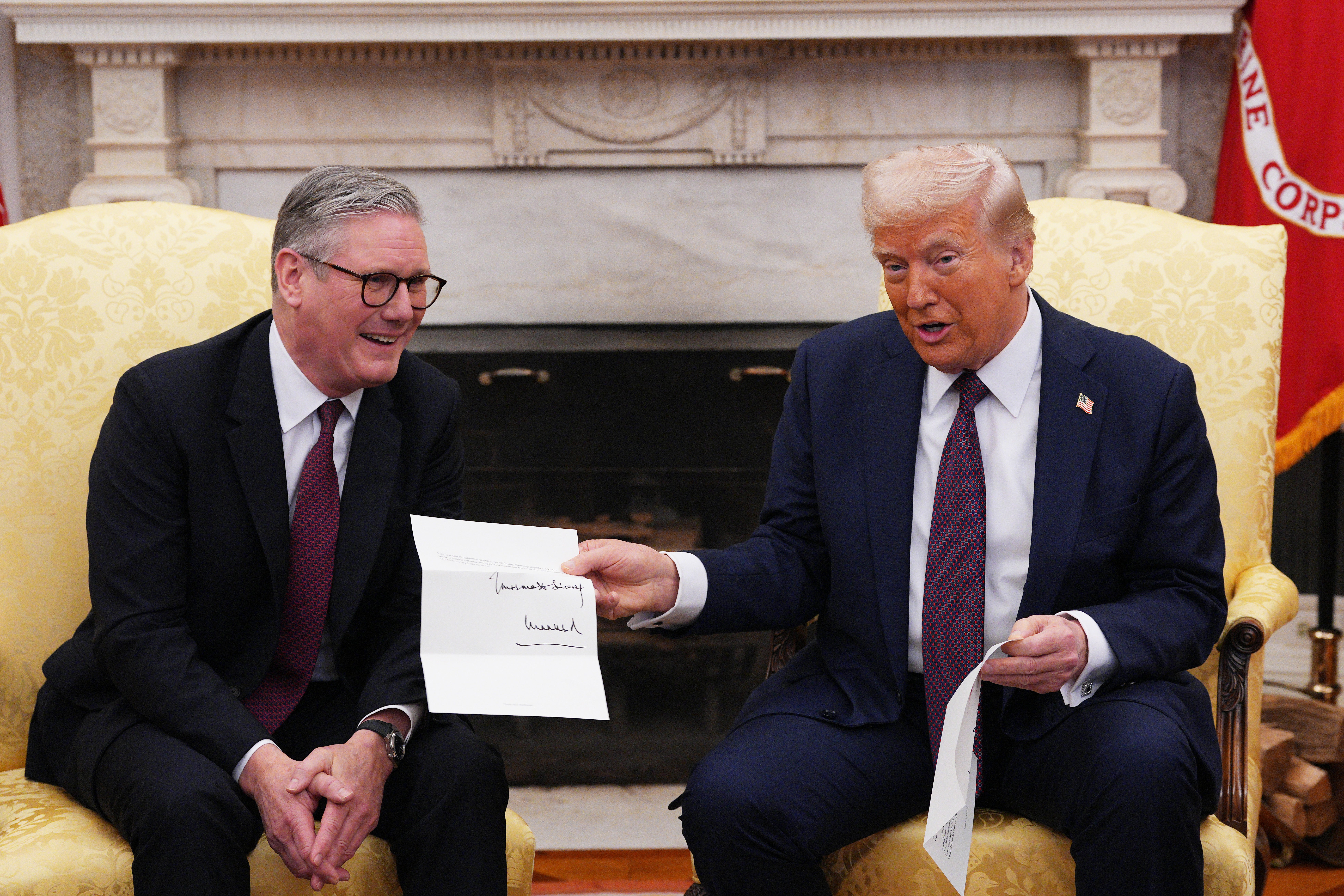
The UK avoided the worst of Mr Trump’s trade tariffs, striking – in the first instance at least – a more favourable deal than the European Union. One up, it could be argued, for Brexit. The UK also managed to get away with, or so it seemed, less precision about when and by how much it would raise its defence spending, compared with other Europeans.
The government also did its very best to compensate for its ambivalence over Venezuela by stepping up elsewhere. British troops supported the US capture of a Russia-flagged tanker in the northeast Atlantic and suggested that more such support could follow; they also joined recent US raids on Isis bases in Syria. All seemed set fair for a Royal visit to mark the 250th anniversary of US Independence, coinciding, perhaps, with the Fifa World Cup.
Now, in the light of what has rapidly become a transatlantic stand-off over Greenland, the UK’s buttering up of Mr Trump and its kid-glove approach to the Venezuela operation look, at best, unnecessary and, at worst, disingenuous. It is tempting to suggest that Sir Keir might have done better to dispense with the fawning and flattery, call out the military operation against a sovereign state for what it was – illegal – and preserve a measure of national dignity to boot.
Even this, though, understates the agony of the UK’s present dilemma. Leaving the EU brought with it a shift towards closer alignment with the US, particularly in the very areas of defence and security that are now foremost in the US challenge to the Europeans over Greenland – a challenge in which the UK cannot but take the Europeans’ side. And while Sir Keir has said he wants closer relations with the EU – closer that is short of joining a customs union or reversing Brexit – this is likely to be a long time coming and to reopen party and national divisions, even as the United States moves, in fact and philosophy, ever further away.
Thanks to the lethal combination of the Trump presidency and Brexit, the UK finds itself more desperately marooned mid-Atlantic than even many doomsters had forecast, and with no obvious remedy at hand. It is just possible that rescue, or at least respite, could come from political change in the United States – a president hobbled by the mid-terms this autumn, or with his tariffs struck down, say, by the US Supreme Court.
Alternatively, the government could consider a decisive turn towards a formal European defence alliance – the strategic autonomy long advocated by the French president, Emmanuel Macron. But that would raise hard questions about the UK’s nuclear deterrent, questions that it is not well prepared to face.
Like it or not, Mr Trump’s claim to Greenland has called into question the future of Nato itself. That cannot but prompt some particularly urgent rethinking on the part of the UK, given its post-Brexit exposure, alone in the middle. What is more, given the pace of events, speed and surefootedness – not noted strengths of this government – will be of the essence.
Join our commenting forum
Join thought-provoking conversations, follow other Independent readers and see their replies
Comments
Bookmark popover
Removed from bookmarks