Airport security rules: What you need to know about changes to 100ml liquid regulations
Passengers at Heathrow can now leave leave laptops, tablets and liquids inside their cabin baggage where new scanners are operational
Many airline passengers say the worst part of any journey is the airport security check. Worldwide, an average of half a million people pass through airport security every hour. At London Heathrow airport alone, the rate is around 7,000 per hour.
Travellers resent the limit on LAGs (liquids, aerosols and gels) in cabin baggage, as well as the obligation to extract electronics such as laptops and tablets from hand luggage.
The liquids rules were introduced hastily worldwide in 2006 as “a temporary measure” to protect against explosives. Despite repeated promises they remain in place.
In 2019 Boris Johnson vowed the rules would be eased at major UK airports by 2022, allowing larger quantities and eliminating the need to have liquids separately scanned. Rishi Sunak’s government then extended that deadline to 1 June 2024.
While some of the UK’s airports complied, at other locations the work was not fast enough to meet the deadline. And in any event, a week after the deadline, progress in aviation security actually went into reverse, with the Department for Transport (DfT) ordering airports with the new equipment to restore the old 100ml limit on LAGs. Airports were told they needed to apply individually to allow larger quantities.
Many British airports have now relaxed the 100ml limit – with the biggest, Heathrow announcing the completion of its £1bn security upgrade on 23 January 2026.
In addition, passengers can leave laptops, tablets and liquids inside their cabin baggage where the new scanners are operational.
But just because the airport you departed from allows liquids up to two litres, don’t assume you can do the same on the homebound flight.
Simon Calder, former security officer at Gatwick airport and current Independent travel correspondent, explains more.


Cabin baggage: what are the rules?
The list of items that cannot be taken through an airport security checkpoints in carry-on bags has increased over the decades.
All weapons, whether firearms, knives or explosives, are banned from hand luggage. But there are also strict rules about larger quantities of liquids, aerosols, gels, pastes, lotions and cosmetics, extending even to yoghurt, soft cheese and creme eggs.
The UK government says: “At most airports, you cannot take liquids in containers larger than 100ml through security. This still applies if the container is only part full.” At airports with the 100ml rule in place, the following stipulations apply:
- containers must be in a single, transparent, resealable plastic bag, which holds no more than a litre and measures approximately 20cm x 20cm
- contents must fit comfortably inside the bag so it can be sealed
- the bag must not be tied at the top
- you’re limited to one plastic bag per person
- you must show the bag at the airport security point
It adds that frozen liquids are banned, and warns: “Airport security staff will not let anything through that they consider dangerous – even if it’s normally allowed in hand luggage.”
How did the airport liquids rule come about?
In August 2006 the aviation industry – and baffled passengers – awoke to find security rules for passengers had tightened overnight. The government announced that it had uncovered a terror plot to blow up transatlantic jets from Heathrow to North America.
The perpetrators aimed to take the ingredients for improvised explosive devices on board a number of aircraft. The ingredients, derived from hydrogen peroxide, were intended to be smuggled aboard in soft drink containers.
The plotters aimed to assemble the bombs on board before detonating them and destroying the plane. They were later convicted of offences including conspiracy to murder and conspiracy to cause explosions.
The bosses of Britain’s airlines were called in the early hours of 10 August 2006 to be told their passengers would be banned from carrying anything more than a purse or wallet into an aircraft cabin. Even pens were banned from transatlantic flights, on the grounds that the ink they contained was a liquid.
One concession was made, for nursing mothers: they could take milk for their baby through the checkpoint, but only if they tasted it first in front of security staff to demonstrate it was the real thing.
Baggage systems could not cope with two or three times the normal number of items, and Heathrow airport ground almost to a standstill. Flight networks elsewhere in the UK and Europe were also affected.
Three months later, the rules were eased – but with strict limits that prevail today at most airports worldwide.
Why does the quantity matter?
The 100ml limit was selected as a sufficiently low volume to avoid an on board threat, when combined with the overall limit that everything must fit inside a resealable plastic bag, which holds no more than a litre.
Were they always intended to be permanent?
No. The limits were introduced as a “temporary measure” while airport security technology caught up. But progress has been painfully slow.
So what’s the technological solution?
Modern scanners using computed tomography (CT) – the same technology as medical scanners – to analyse the molecular structure of the contents of a passenger’s bag. The machines can detect potential threats and present security officers with a three-dimensional image of the contents.
They can also analyse whether laptops and other electronic equipment present a danger. At airports where the technology is installed, liquids in containers up to two litres can be taken through, and laptops rarely have to be removed.
The aim is that security should be enhanced, with more sophisticated assessment of potential threats. The amount of staff time consumed in “secondary searches” should be reduced, allowing officers to spend more time assessing passenger behaviour.
Travellers have a much easier experience: they no longer need deconstruct their cabin bags, and the whole airport process feels smoother and less stressful.
Are all airports on the same page?
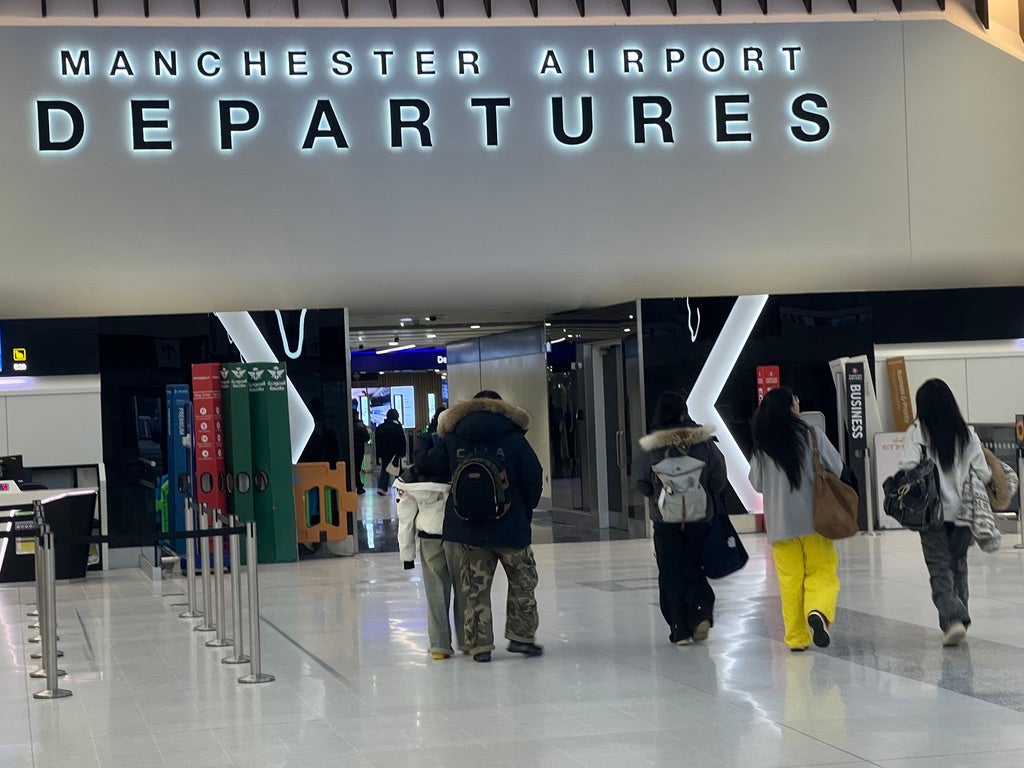
No. Almost all UK airports have the new kit. But The Independent has found some key airports, for example, Manchester, Stansted and Cardiff, where passengers can leave liquids in their bags – but the 100ml limit still applies.
Why was the 100ml rule reimposed at airports?
On 9 June 2024, airports that had ploughed tens of millions of pounds into meeting the government deadline were abruptly ordered to restore the 100ml limit. At London City and Teesside, for example, the new scanners had been working well for over a year, with passengers understanding that they could take anytig
It was not a complete reversal; passengers will still be able to leave liquids, aerosols, gels, etc, in their cabin baggage. They must, though, be in containers of 100ml or less.
It was described at the time by the Department for Transport as a “temporary move” to “enable further improvements to be made to the new checkpoint systems”.
There are two problems. One is misidentifying many innocuous items in passengers’ baggage as posing a threat. Sources have told The Independent that harmless liquids such as sunscreen have been misidentified as high-threat substances. Innocuous items such as books placed close to laptops, or bananas, have also triggered alarms.
The converse – and what alarms the aviation security industry – is that dangerous items could inadvertently be passed as safe.
Which airports have changed their airport security rules?
Since the summer of 2025, individual airports that satisfy Department for Transport (DfT) inspectors have been able to relax the 100ml rule.
The first major hub to do so was Birmingham, which is urges passengers to leave everything in their cabin bags:
- “Do not put your liquids, pastes and gels into plastic bags – please leave them loose in hand luggage
- “Do not take them out of your hand luggage when you're in the security search area
- “Leave all electricals in hand luggage during the security search”
Edinburgh airport was next to followed suit. Gordon Dewar, chief executive of Scotland’s busiest hub, said: “A whole generation of travellers have only known the 100ml rule to be the case, so it really is a momentous day as we become the first airport in Scotland to lift the rule since it was introduced in 2006.”
Gatwick, second-largest airport in the UK, has also relaxed the rule, saying: “If you do take liquids in your hand luggage, containers can now hold up to two litres. These containers can remain in your hand luggage for security screening.”
Heathrow is the latest big airport to be given the go-ahead. Chief executive Thomas Woldbye said: “Every Heathrow passenger can now leave their liquids and laptops in their bags at security as we become the largest airport in the world to roll out the latest security scanning technology. That means less time preparing for security and more time enjoying their journey – and millions fewer single-use plastic bags.”
Manchester is the third-busiest UK airport. Although it has new scanners installed throughout, the DfT has not yet given the go-ahead to relaxing the liquids limit.


When everyone has upgraded their scanning technology, will that be the end of problems?
No. Worldwide, lack of conformity is a key issue for aviation security professionals – and passengers. Always assume the old rules are in place unless you know for a fact that they have been relaxed.
At many airports liquids are limited but can stay in the traveller’s bag. Laptops and tablets such as iPads must be removed at some airports in the UK and many other countries, but in some nations they need not be.
The European Union (and wider Schengen Area) also reverted to the “old” rules at all airports from 1 September 2024, following concerns about the new equipment installed at some airports.
Of the 10 busiest hubs in Europe, only Dublin and Rome allow liquids up to two litres. The remaining eight all insist on a 100ml limit: Amsterdam, Barcelona, Frankfurt, Istanbul, Lisbon, Madrid, Munich and Paris CDG .
Passengers should not expect aviation security to be the same worldwide – or even UK-wide. At some small Scottish airports including Barra, Campbeltown and Tiree there have been no security checks since 2017.
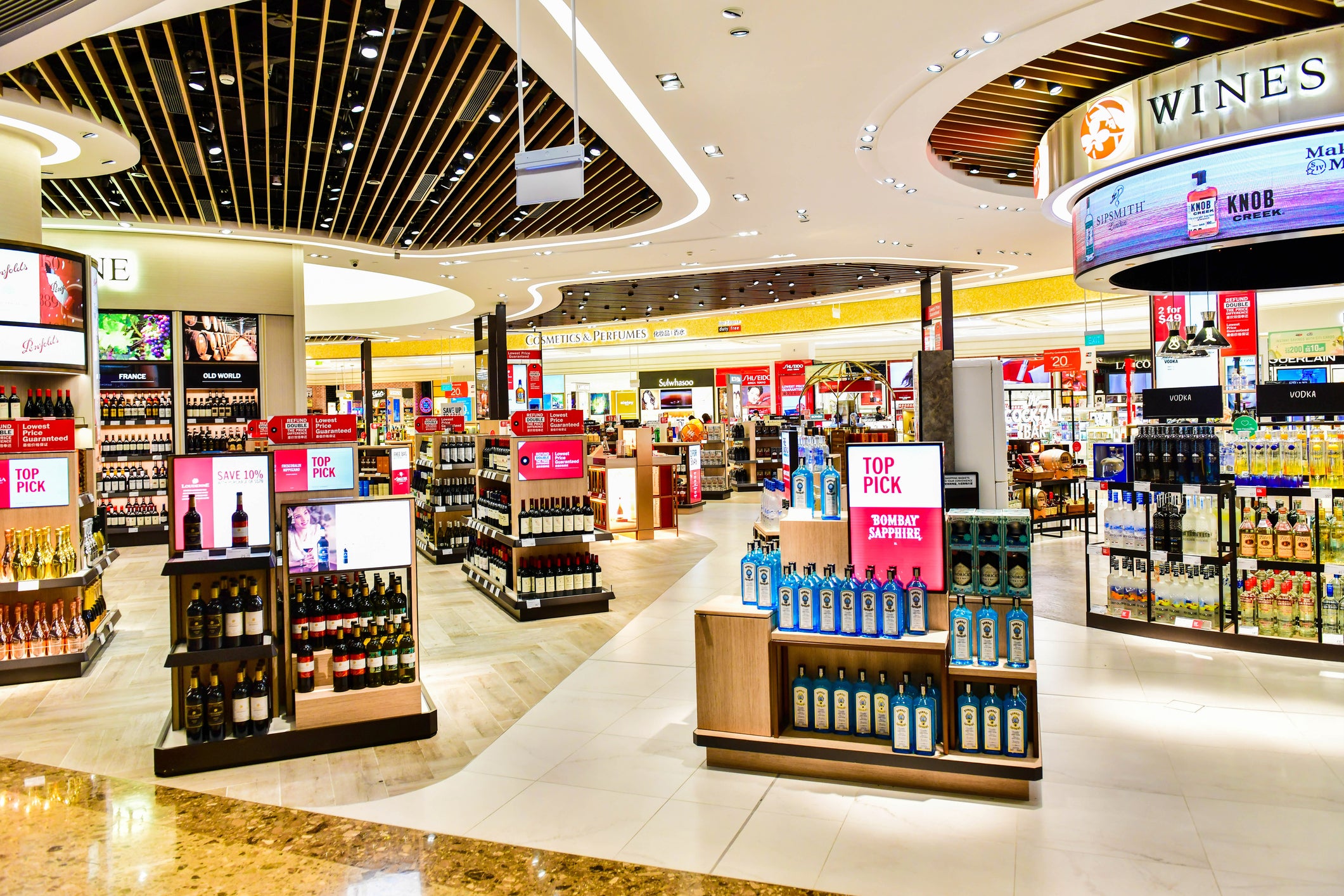
What about bottles of duty-free booze?
If you buy duty-free alcohol in airport A then fly to airport B for a connecting flight to airport C, you may be able to take it through the hub where you are changing planes.
At Dublin and Rome, for example, it’s easy: the relaxation of the liquids rule allows duty-frees under two litres.
In theory, a fair number of hub airports which maintain the 100ml rule allow passengers to airport purchases of drinks to be taken through checkpoints in a sealed “secure tamper-evident bag” (Steb). These clear plastic bags are designed not be opened in transit without it being obvious. The receipt should be placed in a position that allows security staff to read it and check the contents against it.
Even so, The Independent receives regular reports from passengers who are caught out – losing their expensive airport purchases at the connecting point.
For liquids you have bought duty-paid (eg beer or a brand of malt whisky not available at airport duty-free) and taken it through one of the UK airports with larger limits, you will definitely not have a Steb and are therefore particularly at risk of going thirsty.
Is there a duty-free solution?
Go for a direct flight. Or buy when you arrive. The UK Travel Retail Forum says more than 60 countries have arrivals duty free stores in place – including in Iceland, Norway and Switzerland in Europe, as well as both the Istanbul airports.
Dubai, Tokyo Haneda, Shanghai Pudong, Guangzhou, Hong Kong, Singapore and the main Australian airports all allow duty-free alcohol to be bought on arrival. Doha, hub for Qatar Airways, has arrivals duty-free – but not for alcohol.
America does security differently ...
While all other nations simply focus on outbound flights, the US imposes additional rules for passengers flying into American airports from abroad – on both liquids and “powder-like substances”. They cannot carry anything more than 100ml into the aircraft cabin, unless it is duty free in a secure tamper-evident bag.
In addition, the Transportation Security Administration warns: “If you are flying from any of the last-point-of-departure airports into the US, you may experience a more extensive screening process and should prepare for additional screening of your property and personal electronic devices.
“We encourage you to place powder-like substances over 350 ml in your checked bags. Powders in carry-on baggage may require secondary screening, and powders that cannot be resolved by security officials will be prohibited from the cabin of the aircraft.”
Is high-tech security going to cost me more?
The airports that are collectively investing billions of pounds will be seeking a return – and that could include raising fees. But the long-term aim is that new tech should cut staff costs, representing savings for airports.
Willie Walsh, director-general of the International Air Transport Association (Iata) – representing airlines worldwide – said: “Implementing this technology should not come with a big bill. In fact, simplified processes should deliver significant efficiencies.”
“Speedy deployment should be possible. The technology has already been used successfully and for a long time at various airports across the world with measurable improvements to the passenger experience.”
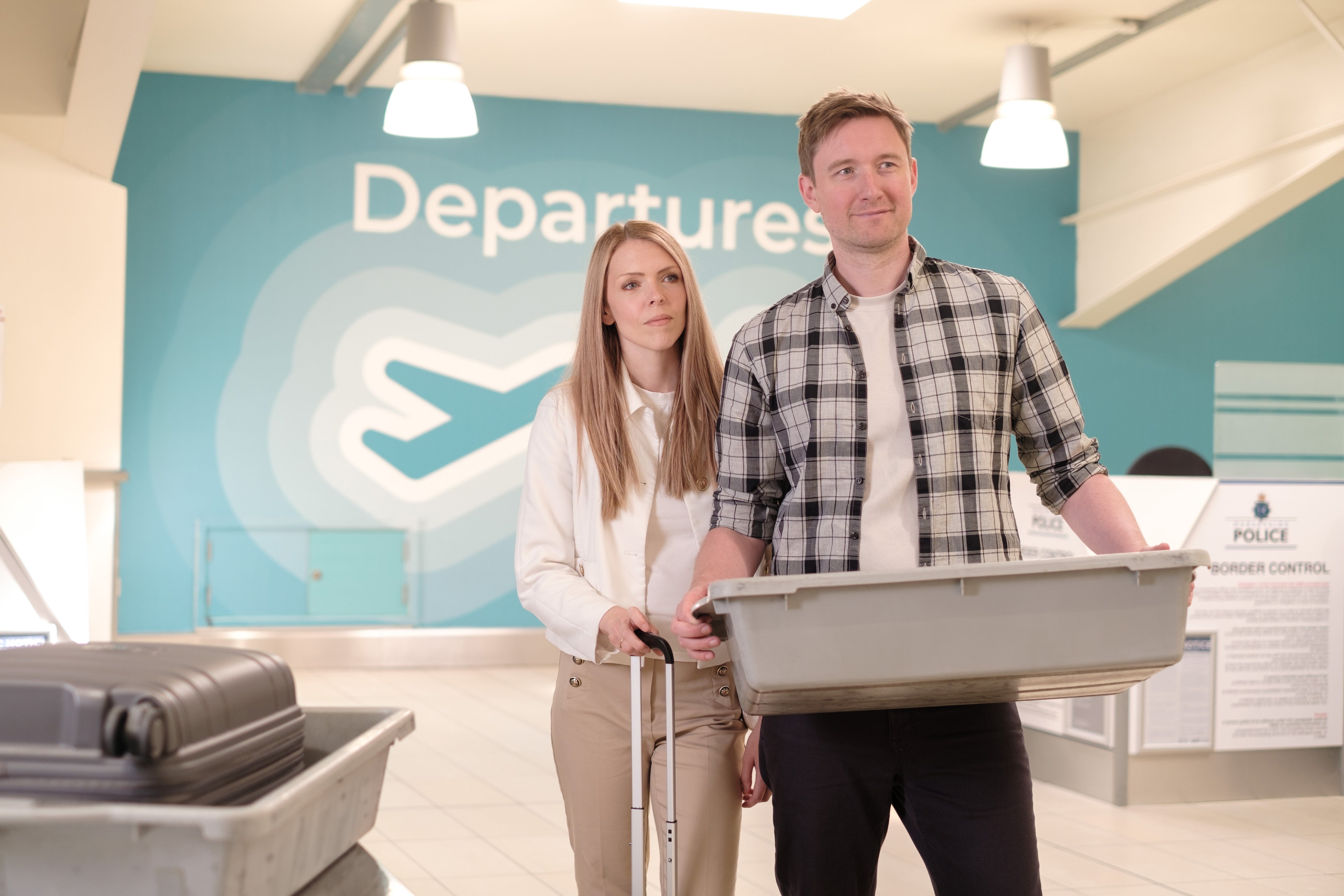
Will aviation security remain a permanent pain?
No. In 2019 Iata described the prevailing security situation as “no longer sustainable”. It has been working with airports for over a decade on a project called “Smart Security”.
Ultimately walk-through metal detectors and security pat-down of many passengers should be eliminated, with technology assessing possible threats more effectively than humans watching screens.
The passenger should be able to walk unchallenged along a corridor flanked by detectors, barely aware that they are being checked.
Checkpoints will still be staffed, but security personnel will be freed up to do what people do best, which is to study the behaviour of passengers and identify “persons of interest” for further investigation.
However, as the 2024 reversals at UK and EU airports show, there is a long way to go. And while new scanners are being installed across the US, the Transportation Security Administration is set on retaining the 100ml limit (3.4 ounces in local units).
This piece was first written in April 2023 and is kept updated with the latest information


Join our commenting forum
Join thought-provoking conversations, follow other Independent readers and see their replies
Comments
Bookmark popover
Removed from bookmarks