Why shouldn’t we fly supersonic again? Experts have their say
Plane Talk: Arguments against a successor to Concorde, from Flight Free UK
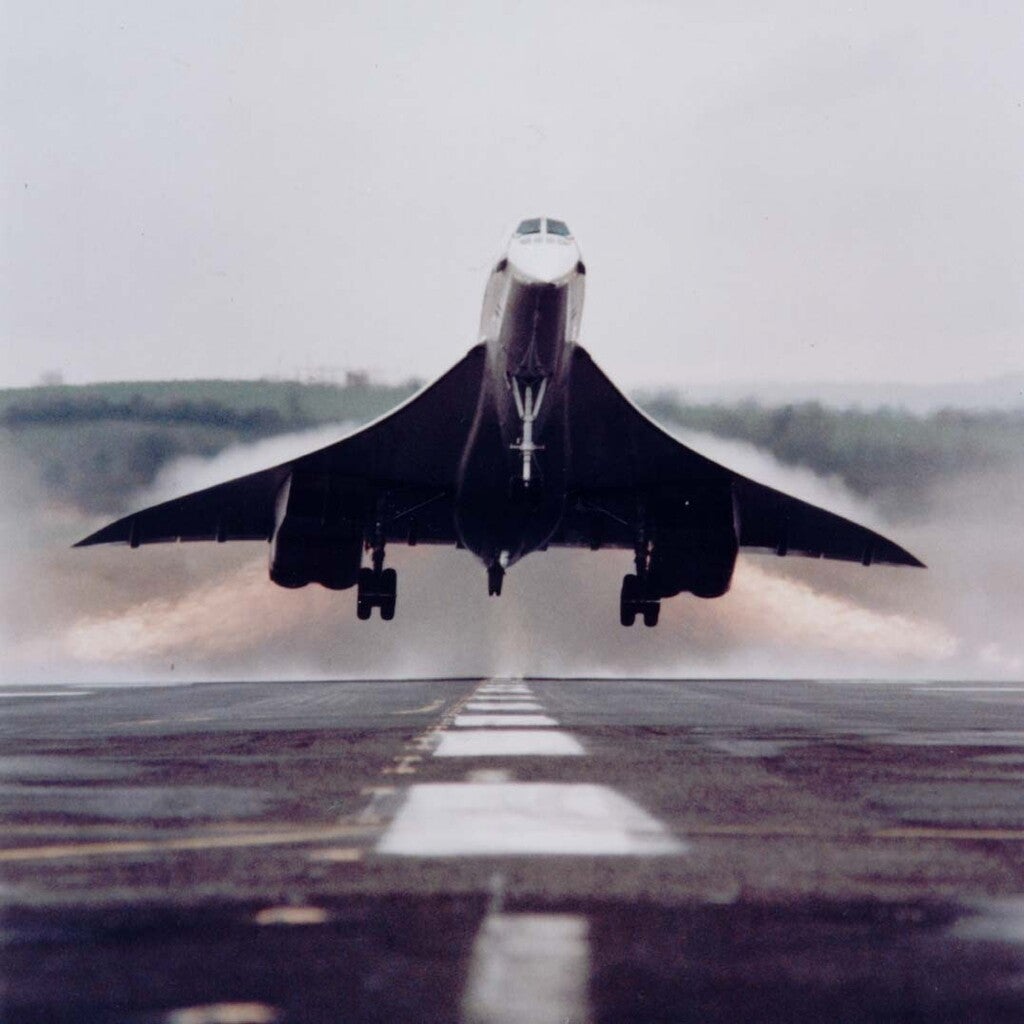
It was 50 years ago this week that Concorde first flew paying passengers: British Airways flight 300 from London Heathrow to Bahrain on 21 January 1976 marked the start of a 27-year career for the supersonic jet. Both BA and Air France grounded their Concorde fleets in 2003.
Boom Supersonic plans to bring back flying at around twice the speed of conventional aircraft in the shape of Overture. The aim of the plane is to fly up to 80 passengers at Mach 1.7: nearly twice the speed of sound, but slower than Concorde.
Founder and CEO Blake Scholl told The Independent: “We’re aiming to pick up where Concorde left off.”
Yet there are strong environmental arguments against reintroducing supersonic flight – articulated by Anna Hughes, director of Flight Free UK.
“There’s no denying that in the 1960s and 70s, developing something like Concorde was incredibly exciting and impressive”, she told The Independent’s daily travel podcast. “But now we’re 50 years on. The world has changed, and we’re now aware of what that type of travel does. Knowing that, we can choose not to do it. Maybe now we can leave it in the past.”
Zoom, not Boom, is her recommendation: “We can do things virtually. We can cut the number of in-person meetings in half just by connecting online. Those models of working are much better in terms of emissions, and actually better for business as well. It’s far cheaper to have a Zoom call than to get on a flight.
“So it really comes down to looking at the reasons we fly and asking: is it absolutely necessary?”

As the dozens of daily flights each way between London and New York testify, many people believe flying is essential. But Ms Hughes cautions against breaking the sound barrier: “The amount of energy required to go that fast is vast.
“When we’re looking at energy use and carbon emissions that need to come down, we really have to question whether supersonic flight should be a priority.”
Blake Scholl, developer of the Concorde successor, concedes: “Yes, flying faster takes more energy. But we’re optimising efficiency and designing for next-generation sustainable synthetic fuel. Overture will be capable of running on 100 per cent sustainable aviation fuel [SAF].”
Ms Hughes is unconvinced: “SAF still accounts for less than 1 per cent of aviation fuel use. The target was around 5 per cent by now, but we’re nowhere near that. Something is clearly blocking uptake: most likely, cost, because it’s far more expensive to produce than conventional jet fuel.”
As The Independent has explained, the amount of fuel burnt and carbon dioxide generated by an aircraft using sustainable aviation fuel is exactly the same as if normal Jet A1 kerosene had been used.
The saving in greenhouse gases happens over the lifecycle of the fuel. For example, converting household waste to SAF prevents it generating methane as landfill. Plant-based fuel has the merit that, while those plants are growing, they absorb CO2 from the atmosphere. But when powering an aircraft, they release it back.
“Even if we imagine a future where supersonic flights use 100 per cent SAF – which is unlikely given the cost and slow uptake – there’s still significant doubt about the actual emissions reductions,” says Ms Hughes.
“A lot of the industry narrative suggests we don’t need to worry because technology will solve everything. So far, that hasn’t happened, and there’s no strong reason to believe it will.”
Besides carbon concerns, environmentalists are alarmed at the noise generated during take-off and landing. By the 21st century, Concorde was far noisier than any conventional aircraft.
But Mr Scholl says that setting a maximum speed slightly slower than Concorde, and using modern technology rather than 1950s jet engines, enables Overture to be “no louder than subsonic aircraft during takeoff and landing”.
Then there is the sonic boom created by breaking the sound barrier – which meant Concorde could not fly supersonic over land. The Boom Supersonic founder says his firm has a technique for flying so that “the boom bends upward in the atmosphere, making a giant U-turn so no one on the ground hears it”.
Blake Scholl urges passengers: “Demand better – faster, more comfortable, more human travel. And if you’re an innovator, help make it happen.”
But Anna Hughes says the quest for speed is a relic from an earlier age: “Flying is extremely energy-intensive, but supersonic flight even more so.
“Fundamentally, what we need to do is fly less.”
Join our commenting forum
Join thought-provoking conversations, follow other Independent readers and see their replies
Comments
Bookmark popover
Removed from bookmarks