Emma Raducanu’s Australian Open exit leaves one damning conclusion
Raducanu’s admission of needing to ‘re-evaluate’ her game and wanting to play like she did when she won the US Open at the age of 18 follows a revolving door of coaches over the past four-and-a-half years
As Emma Raducanu acknowledged, winning the US Open as an 18-year-old qualifier was always going to set an extremely unfair level of expectations for an inexperienced player so early on in their career, with so much still to learn. But, four-and-a-half years after that night in New York, the British No 1 admitted the attempts to develop her game have not worked, that it’s time to take a step back, “re-evaluate”, and perhaps play more like she did when she was younger.
Raducanu’s second-round exit to Anastasia Potapova at the Australian Open followed a difficult off-season where the 23-year-old was limited by a foot injury. Making it to the start line in Melbourne, let alone playing five matches so far this season, she said, was pretty surprising. Raducanu said her foot has not been 100 per cent during the Australian Open and it will require further assessment once she returns home. Tricky court conditions, with a swirling wind around the grounds, didn’t help either.
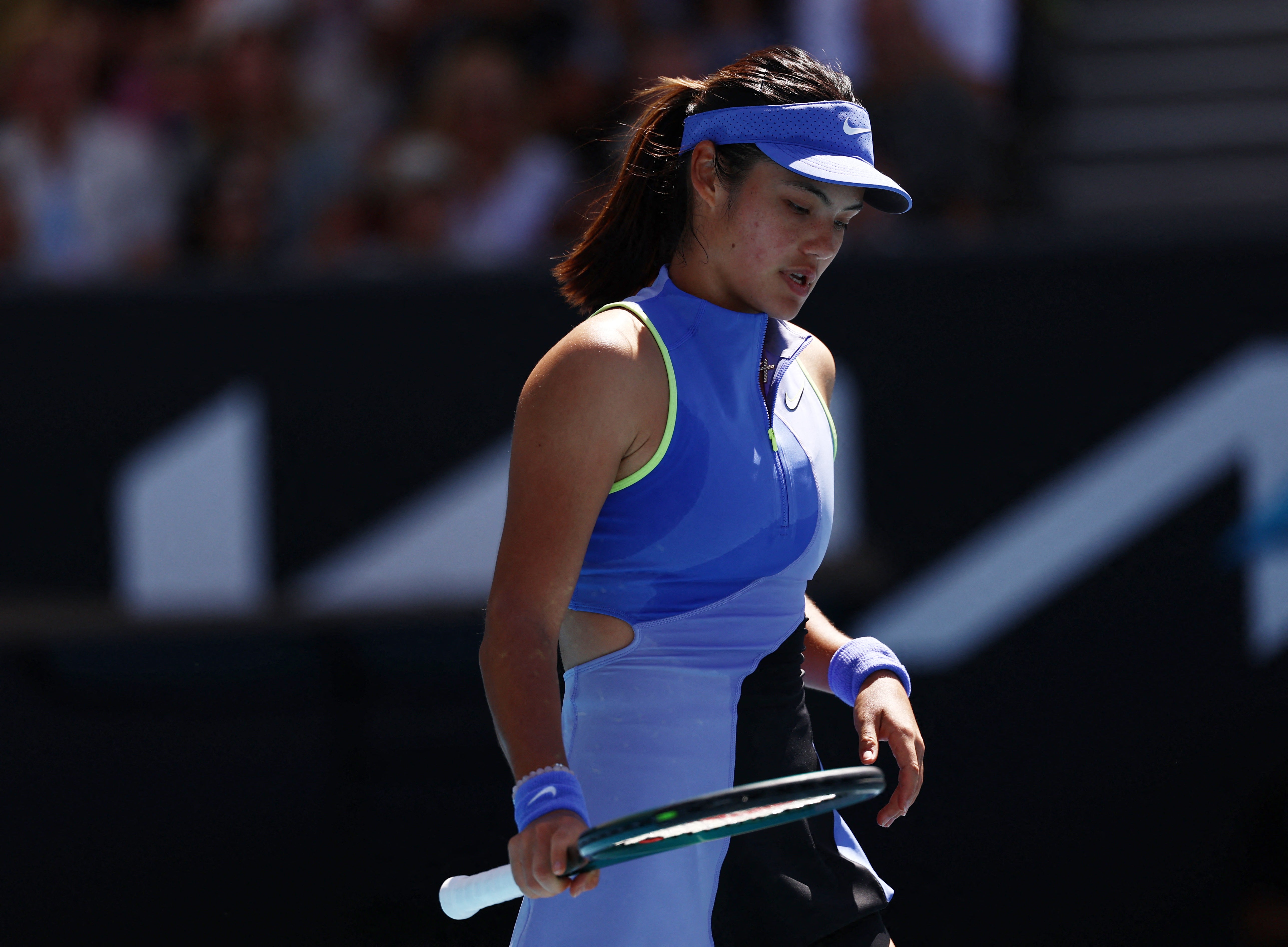
But the biggest problem Raducanu identified after her 7-6 (7-3) 6-2 defeat to Potapova, the world No 55, was the absence of what she called her tennis “identity”. Despite leading 5-3 in the opening set, Raducanu was erratic and tentative, played without confidence behind her attacking shots, and felt she had to scrap to survive. As the errors piled up, the weapon that made her perhaps the most unexpected grand slam champion of all time in 2021 – her big, early forehand strike – deserted her.
“At the end of the day, I just want to hit the ball to the corners and hard,” she said. “I feel like I’m doing all this variety, and it’s not doing what I want it to do. I need to just work on playing in a way more similar to how I was playing when I was younger. I always just changed direction, took the ball early, and went for it. I think I do have the ability to do many things on the court, but I feel like, as I’m learning all those skills, it’s like I need to stick to my guns a bit as well and work on that. For me, it’s pretty simple.”


Raducanu’s admission that she feels she has lost her way is perhaps not surprising given the revolving door of coaches that followed her shock grand slam breakthrough – “I think there are just many iterations that are going on and have gone on,” she said.
Raducanu had appeared to find some stability in Francisco Roig, the Spaniard who was part of Rafael Nadal’s team during a large chunk of his illustrious career. Yet Raducanu was particularly flat and subdued against Potapova, her head dropping after losing the first set, and there appeared to be little to no communication with her coaching box.
“I think I want to be playing a different way, and I think the misalignment with how I’m playing right now and how I want to be playing is something that I just want to work on,” she said, in an ominous sign that a further change could follow.
“I think there are definitely pockets of me playing how I want to play, and it comes out in flashes, which is a positive, and maybe more than certain times in my career in the last few years. But it’s not how I want to be consistently every day. It’s not going to fall into place straight away, but the more I work on how I want to be playing, it will be more of my identity every time I step onto the court.”
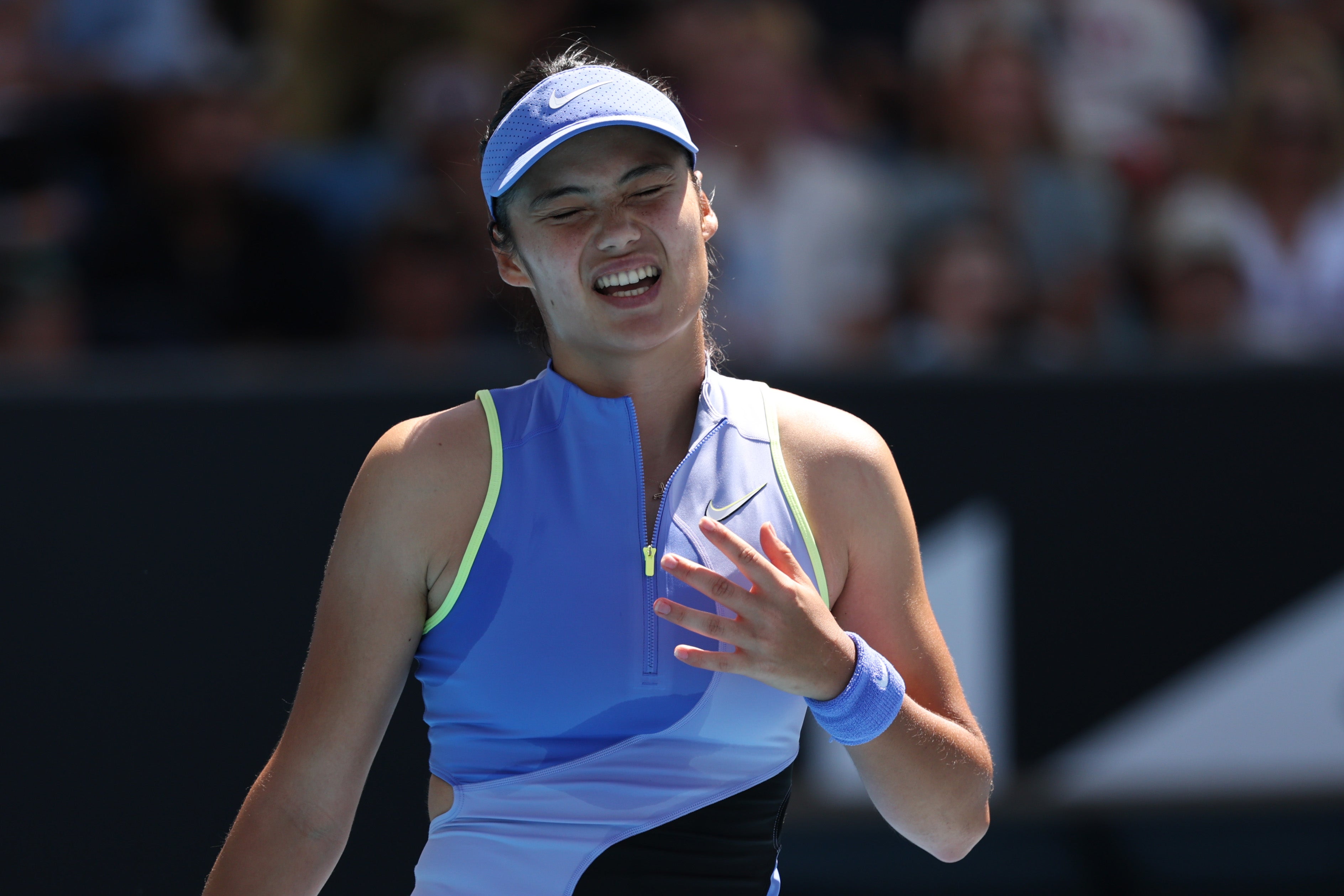
Perhaps the most concerning aspect of Raducanu’s dissatisfaction was her struggles with her forehand, which gave up 16 of her 28 unforced errors during the defeat. Before the Australian Open, Raducanu was asked about the different forehand swing she brought to Melbourne, which is now bigger and higher, taking more time to get around the ball, and pointedly said the changes were “not something that I really wanted to happen”.
Raducanu knows she is not the same player without her favourite strike. “I definitely want to feel better on certain shots before I start playing again,” she said, identifying that fixing the forehand will be more of a priority than her foot.
After a positive 2025 season, where Raducanu returned to the world’s top 30 and ensured she was seeded for a major for the first time in three years, being sidelined for the majority of the off-season undoubtedly stalled her progress. She was limited to static drills before flying to Australia and, at a time of the season when the majority of other players are fresh and ready to go, Raducanu did not feel set once the year began. Last season, her exits at the grand slams came to the very best players in the world, in Aryna Sabalenka, Iga Swiatek and Elena Rybakina. Still, another tough draw followed. Despite her seeding at the Australian Open, a third-round clash with top seed Sabalenka loomed large in Melbourne.
But Raducanu did not even make it that far. It is, in many ways, a backwards step, which in turn may lead to Raducanu returning to square one and winding back the clock in a bid to find the answers.
Join our commenting forum
Join thought-provoking conversations, follow other Independent readers and see their replies
Comments
Bookmark popover
Removed from bookmarks