Trump admin declares war... on added sugar with new dietary guidelines
New guidelines push Health Secretary Kennedy’s ‘Make America Healthy Again’ agenda
The Trump administration announced a new set of dietary guidelines for Americans that prioritizes protein and encourages consuming less sugar and processed foods.
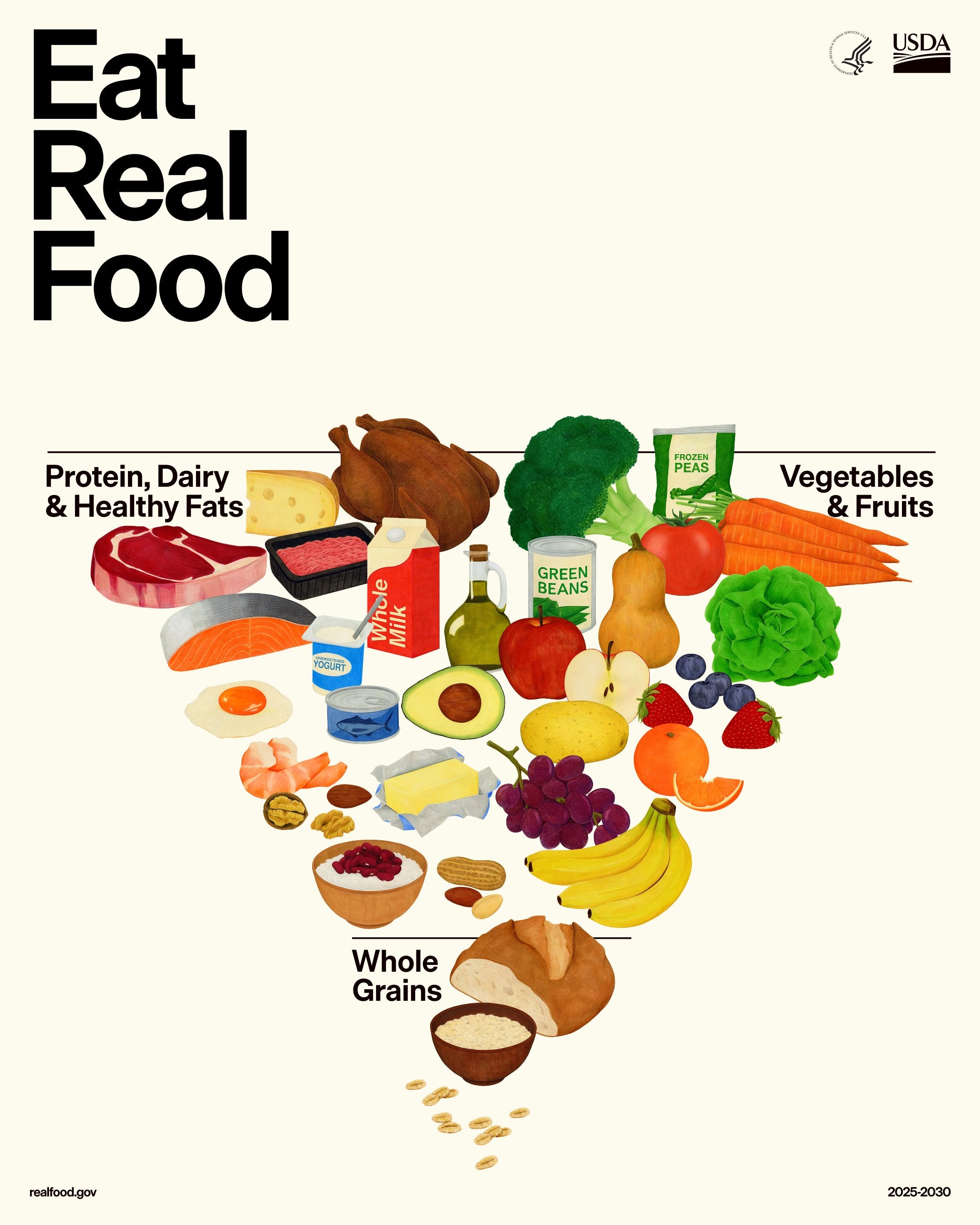
Health Secretary Robert F. Kennedy and Agriculture Secretary Brooke Rollins announced the 2025-2030 U.S. Dietary Guidelines for Americans on Wednesday. The new guidance provides recommendations for Americans to achieve a healthy diet and provides updated information for federal nutrition programs and policies.
The guidelines encourage eating fresh vegetables, whole grains and dairy, while also emphasizing some of the core beliefs behind Kennedy’s “Make America Healthy Again” agenda, like avoiding added sugar and ultra-processed foods.
“Today, our government declares a war on added sugar,” Kennedy said during Wednesday’s White House press briefing.
America’s new healthy eating plan takes aim at “highly processed” foods and refined carbohydrates, encouraging people to stay away from “packaged, prepared, ready-to-eat or other foods that are salty or sweet, such as chips, cookies and candy.” Large consumption of such foods has been linked to chronic diseases such as diabetes and obesity, key issues Kennedy and the “MAHA” followers hope to combat.

Kennedy said that following the new guidelines would lower the cost of healthcare for Americans.
“The new guidelines recognize that whole nutrient dense food is the most effective path to better health and lower healthcare costs,” Kennedy said.
While some of the new guidance includes changes promised by Kennedy, long-standing recommendations, like prioritizing fruits, vegetables and whole grains, have not been touched.
The guidelines also keep the longtime recommendation that saturated fat consumption should be at no more than 10 percent of daily calories. However, the new recommendations say that Americans should choose whole-food sources for their saturated fat consumption, such as meat, whole-fat dairy or avocados. Kennedy had previously said that the administration would push for more consumption of animal fats to end the “war” on saturated fats, a goal he seems to have walked back, The Associated Press reports.
Meanwhile, a more noteworthy change is the amount of protein recommended for Americans to eat each day.
Previously, it was recommended that Americans consume 0.8 grams of protein per kilogram of body weight. Now, health officials say 1.2 to 1.6 grams of protein per kilogram of body weight should be consumed to achieve optimal health.
The guidance also advises avoiding or limiting added sugars or non-nutritive sweeteners, saying “no amount” is considered part of a healthy diet. The updated suggestions say no meal should contain more than 10 grams of added sugars, or about two teaspoons.
Meanwhile, the old recommendations said Americans should limit added sugars to less than 10 percent of daily calories or less, which would be 12 teaspoons a day at most.

Many Americans may struggle limiting their sugar intake. According to the U.S. Centers for Disease Control and Prevention, most Americans consume about 17 teaspoons of added sugar each day.
The updated guidance also backtracks older recommendations to limit alcohol to one drink or less a day for women, and two or less for men.
Instead, it encourages Americans to “consume less alcohol for better health.”
While the guidelines touched on “highly processed” foods, it made no recommendations on “ultraprocessed” foods, as the FDA and Agriculture Department work to define “ultraprocessed.”
The country’s dietary guidelines are required by law to be updated every five years, even though research shows few Americans actually follow its recommendations.
The guidelines will eventually impact the federally funded National School Lunch Program, which is required to follow the guidance to feed nearly 30 million American school children each day.
However, the process takes several years. The latest school nutrition standards, which were proposed in 2023, will not be fully implemented until 2027, School Nutrition Association spokesperson Diane Pratt-Heavner said.
With reporting by the Associated Press.
Join our commenting forum
Join thought-provoking conversations, follow other Independent readers and see their replies
Comments
Bookmark popover
Removed from bookmarks