The real reason Donald Trump wants other leaders to call him Daddy
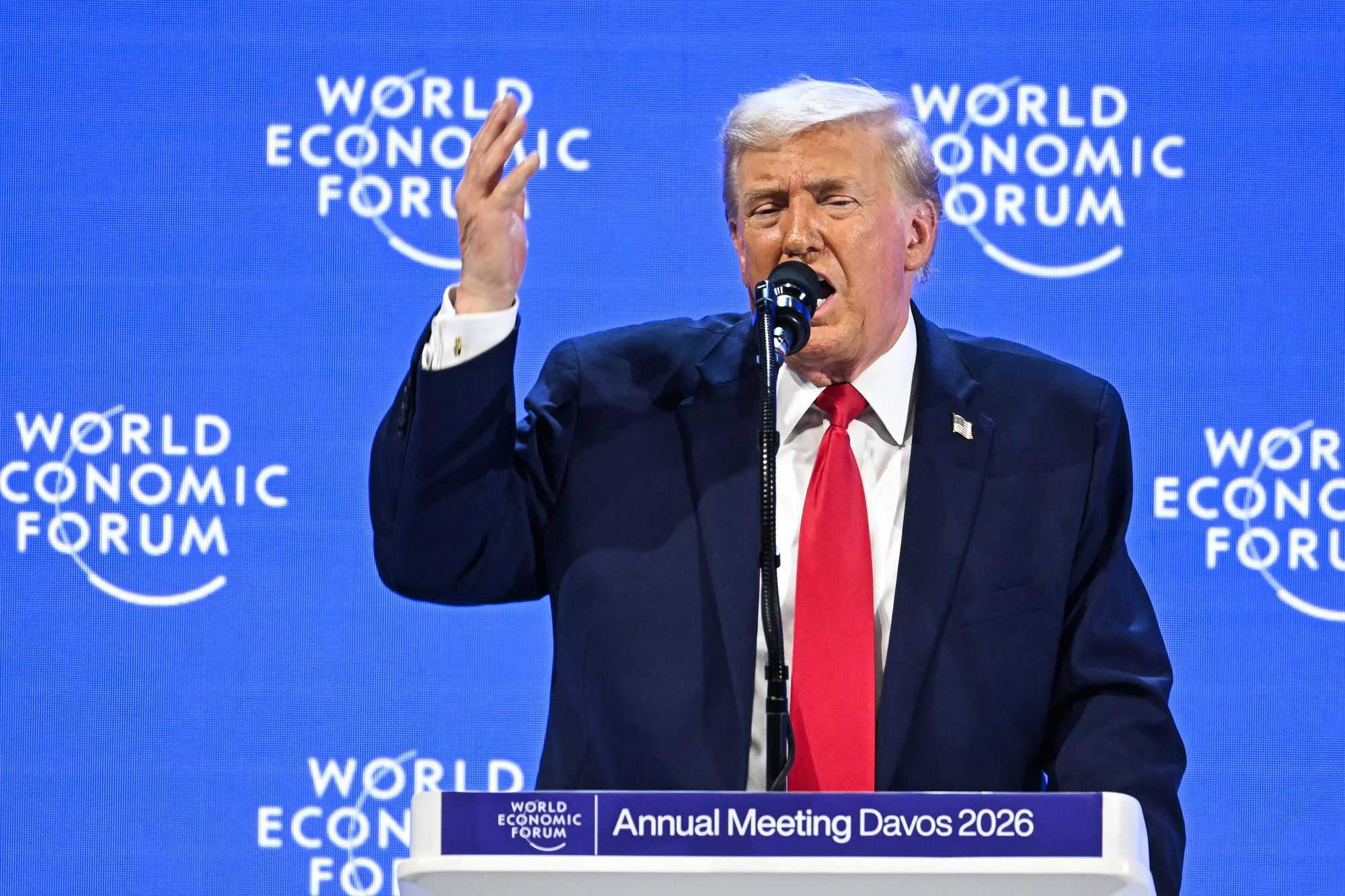
The US president stood on the stage at Davos last week, apparently revelling in his self-assigned role as daddy running the show. Here, parenting expert and therapeutic practitioner Tanith Carey looks at what Trump’s ‘daddy issues’ reveal about the man and what they could be hiding


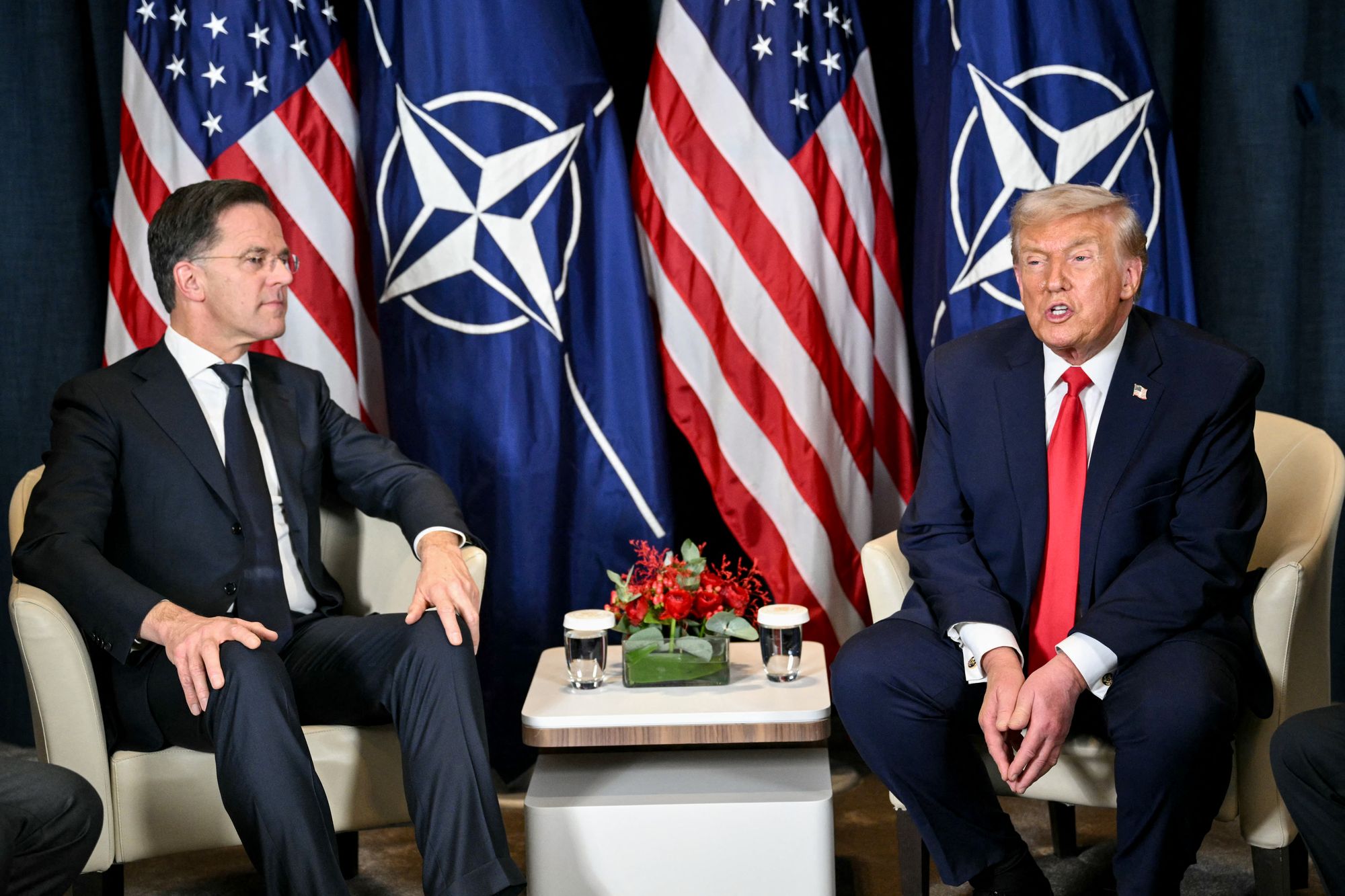
It’s hard to imagine how a single remark could unite a whole continent in one giant collective “ICK”. But Donald Trump seemed to have managed it this week when he told his Nato partners at Davos they should really be looking up to him and calling him “Daddy”.
Never mind that most of the European leaders in the room were more likely to view him as something closer to a rampaging toddler, grabbing at things that do not belong to him – like the entire nation of Greenland. Trump claimed he’d been “helping” Europe and Nato, before veering off topic, claiming “they loved me” until he tried to annex Greenland, which he incorrectly then named as Iceland.
In a rambling aside, referring to an offhand remark by the secretary general Mark Rutte six months ago, he went on: “They called me ‘Daddy,’ right? The last time? [A] very smart man said: ‘He’s our daddy. He’s running it.’”
He went on: “I was, like, running it. I went from running it to being a terrible human being.”
And it became clear: perhaps the US president was not so much addressing the global elite as performing for the spectre of his own father, whose “winner takes all” directives still seem to live rent-free in his head.
Trump’s vision is of a world in which he is the head of the household, footing the (defence) bills and therefore entitled to unquestioning loyalty and gratitude in return. It’s tempting to add his “call me daddy” moment to the growing list of things you cannot believe have come out of his mouth and move on. But look deeper and it becomes clear that this was no throwaway remark. This is a role he’s increasingly embracing and when you look at the psychological reasons behind it, it could offer a hint at why he behaves the way he does and the best way to handle him in return.
Trump’s behaviour is rapidly becoming more authoritarian, and he seemingly regards attempts to appease him by European leaders as weakness. One glance at his so-called “board of peace” and he appears to be much more comfortable when in the company of autocrats, dictators and other so-called strongmen.
In adopting this role, Trump is copying the man who influenced his worldview and behaviour more than anyone else: his own father, Fred Trump Snr. And, given that others in the Trump family have described Fred as a high-functioning “sociopath”, perhaps we should pay closer attention as Donald adopts the role of the world’s “daddy”.
As a psychology writer training in Gestalt psychotherapy, I appreciate that it’s never possible to diagnose anyone from afar. But, according to Trump’s own niece, and Fred’s granddaughter, the clinical psychologist Mary Trump, Fred was a sexist tyrant who pitted his five children against one another.
In a portrait that may feel familiar, she has described how Fred held a starkly black-and-white worldview in which you were either a winner or a loser, while Trump’s mother was often emotionally absent and did little to stand up to her husband.
Mary has also gone on to describe a heartbreakingly dysfunctional family in which Fred Snr mocked any sign of sensitivity among his children, particularly in her own father, Fred Jnr, the eldest son, who was expected to take over the family real estate business. “Softness was unthinkable” for Fred Trump Snr, according to Mary Trump in her book, Too Much and Never Enough: How My Family Created the World’s Most Dangerous Man.
Seven years younger and the next son in line, Donald had plenty of time to witness his older brother’s humiliation at the hands of their father and work out how to avoid it by aligning himself with Fred Snr as closely as possible. Like many children in families with this dynamic, little Donny appears to have protected himself from shame by over-identifying with his father.
Donald stepped up to become his father’s protege and heir to the family’s business, while Fred Jr turned to drink, became a maintenance man, and died of an alcohol-related illness in 1981, aged just 42. Meanwhile, although Fred Snr died in 1999 at the age of 93, his influence clearly did not.
As Tony Schwartz, who co-wrote The Art of the Deal with Donald Trump in 1987 and got to know him well, puts it: “There are two Trumps. The one he presents to the world is all bluster, bullying and certainty… the other, which I have long felt haunts his inner world, is the frightened child of a relentlessly critical and bullying father.”
For the most part, Trump usually praises his father as a hard-headed businessman, except for a rare moment of self-disclosure in 2008 when he is reported to have said: “That’s why I’m so screwed up, because I had a father that pushed me pretty hard.”
“From a psychological perspective, Donald Trump’s relationship with his father appears central to how he understands authority, masculinity and legitimacy,” says Tina Chummun, a UKCP-accredited trauma psychotherapist and founder of Care2Counse. “By claiming the role of the authoritarian father, Trump is also signalling that he is not prepared to broker disagreement. What he says goes. Fathers are not expected to explain themselves.” They Chummun says, “are obeyed.”
Trump began openly embracing the idea of being a Daddy figure to the world last June, after Nato Secretary General Mark Rutte jokingly compared Trump’s intervention between Israel and Iran to a moment when “Daddy has to sometimes use strong language to get them to stop”. It was a comparison Trump clearly enjoyed. Asked later at a press conference in The Hague whether he saw his Nato allies as his children, he appeared delighted by the framing, paraphrasing Rutte as saying, “Daddy, you’re my Daddy”, even though that wasn’t quite what Rutte had said.
No matter. Back in Washington, the White House quickly moved to capitalise on the moment, tweeting a montage of summit scenes with the tagline “Daddy’s home”, set to Usher’s “Hey Daddy (Daddy’s Home)”. Trump’s official fundraising machine soon followed. The Trump National Committee Joint Fundraising Committee released a $35 T-shirt emblazoned with the word “DADDY” in bold black letters alongside his mugshot. And it seems there was no shortage of willing buyers, with Republican supporters breaking into chants of “Daddy Don” and “Daddy’s home” at rallies.
.jpeg)
It helps, of course, that the nickname fits neatly with the strict father “yes-sir” ideal that underpins much conservative thinking in the US. The idea of Trump as “Daddy” works so well for his Maga base because it plays into traditional gender roles they love and the ideal of the authoritative male head of household, in a world that feels chaotically permissive to the American right.
“Daddy” has become shorthand for projecting Trump as the strong, disciplinarian father who will restore order and discipline unruly children, whether they are Democratic opponents, migrants, the LGBTQ+ community, or even America’s foreign allies.
Some right-wing supporters have dared to push it even further. Tucker Carlson and Mel Gibson have both introduced unsettling undertones by framing Trump’s return to the White House as Daddy coming home with everyone who has “misbehaved” due to get their punishment. Speaking to Sean Hannity, Gibson said: “It’s like daddy arrived and he’s taking his belt off.’”
So is it just a coincidence that the more Trump identifies as “Daddy”, the more authoritarian he becomes, with ICE (Immigration and Customs Enforcement) officers openly removing people they consider suspects from America’s streets? Or could it be that “Daddy” is on hand to sort out the mess, as his supporters want us to believe?
As his leadership ability comes under increasing doubt, reverting to the archetype of the unquestioned father may also help Trump feel that he is still in control. With a faltering economy at home, falling approval ratings and growing challenges to his authority, the role of the father who always knows best allows Trump to cling to certainty rather than face the pain of wondering whether he is getting it wrong.
For a leader identified by mental health professionals as showing signs of having narcissistic traits, Trump’s need for admiration and authority is unlikely to fade. If anything, experts on this kind of personality type have found that these tendencies tend to become more pronounced, particularly when status, health or independence begin to decline.
Psychologists describe this as a “narrowing” of identity, where thinking becomes less flexible and a person’s sense of self contracts down to a single, potent role.
“Under stress, people can return to early relational dynamics,” says Chummun. “In moments of challenge, individuals may revert to identity positions that once offered safety or control. Here, the father role represents dominance, certainty and unquestioned authority.”
There is also the possibility that Trump, now approaching his 80th birthday, may be grappling with his own mortality.
According to Dr Joy Conlon, a psychotherapist at Coyne Medical, ageing also tends to lead older people to think more about the legacy they want to leave behind. “In highly visible leadership roles, this can intensify the need to be seen as purposeful, protective and historically significant,” she says.
Seen this way, turning himself into “Daddy” may be Trump’s most effective emotional defence against the shame of failure. By becoming “Daddy”, he becomes the invulnerable authority who can’t be contradicted.
The problem for the rest of us is that what began as a little boy’s survival strategy to impress his scary father is no longer just his issue. Now that scared child has grown into the most powerful man in the world, what happened within those walls has started to carry real-world consequences for all of us.
Tanith Carey is the author of the ‘What’s My Child Thinking?’ series of books with Dr Angharad Rudkin, published by Penguin DK
Join our commenting forum
Join thought-provoking conversations, follow other Independent readers and see their replies
Comments
Bookmark popover
Removed from bookmarks