The oil tanker drama is a spectacular reminder the US doesn’t play by the rules
A day after a Russian-flagged vessel is captured in international waters, Donald Trump has scrapped dozens of treaty agreements – but, then, sticking to global concordats and conventions has more often been the exception than the rule for American administrations, says Mary Dejevsky


The United States marked the start of the new working year by announcing that it was leaving no fewer than 66 international groupings and treaties, including the parent convention of the 2015 Paris climate treaty. Secretary of state Marco Rubio said that it followed a comprehensive review that found they operated “contrary to US national interests”.
As well as the UN Framework Convention on Climate Change, other agreements and organisations affected include several related to regional issues, education and gender, including the protection of women and children, and one that might raise a few smiles in the light of recent events: the Regional Cooperation Agreement on Combating Piracy and Armed Robbery against Ships in Asia.
The announcement of the withdrawals, which the US said would take place as soon as possible, was widely condemned. Not only does it remove US representation from these bodies, but in many cases it will also remove a major source of funding, which will either leave other, often much poorer, countries to foot the bill or threaten their very existence. How much money the US will save in proportion to “soft power” lost, however, is another matter.
In some quarters, this mass withdrawal of the US from a broad swathe of global diplomacy might be seen as the international counterpart to the Department of Government Efficiency (Doge), delegated to Elon Musk at the start of Donald Trump’s second term. In others, it might be seen as a supplement, and one likely to affect procedure more than substance, to the dramatic actions taken, or mooted, by the US over the new year – including the enforced transfer to the US of Venezuelan leader Nicolas Maduro, the capture of an oil tanker sailing under a Russian flag and seen as part of a sanctions-busting “shadow fleet”, and the restatement by Trump and others of US designs on Greenland.
To judge this distancing by the US under Trump as a complete departure from decades of US policy, however, would be wrong. Membership – and active membership all the more so – of international organisations and treaties has rarely been a major part of US diplomacy.
Collegiality for the United States is, in fact, more the exception than the rule, and insofar as it agrees to be a participant, it is generally on its own terms.
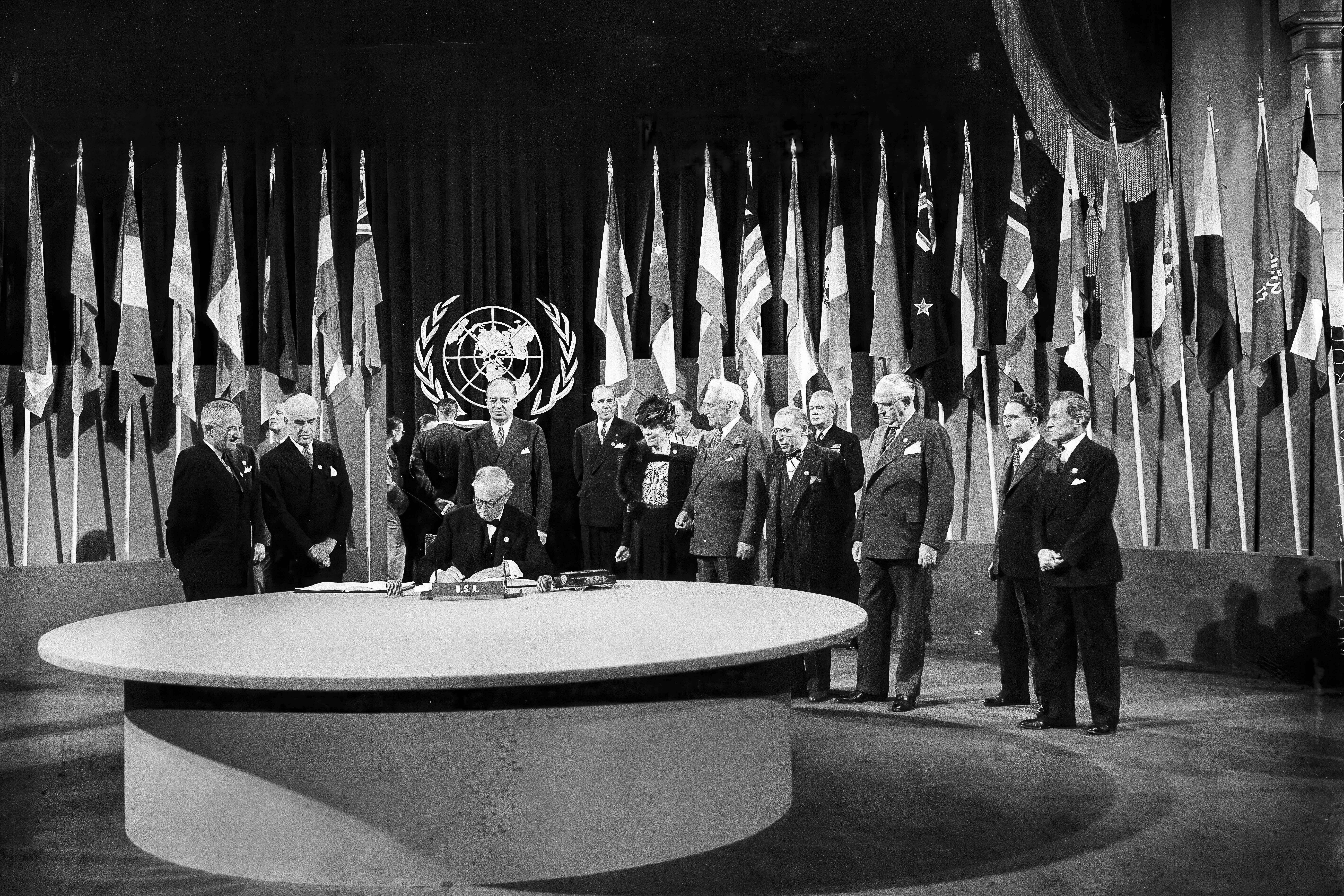
As a recent television documentary showed, the US had to be cajoled, and essentially bribed with a veto, to be part of the United Nations when it was founded after the Second World War. It has been one of 191 countries signed up to the 1968 Nuclear Non-Proliferation Treaty – but, as a nuclear power and permanent member of the UN Security Council, this came with no liabilities for US power.
It is also a member of the 1993 International Chemical Weapons Convention, but not one that has ever permitted spot checks on its installations of the sort that are obligatory for other members. The issue of inspections, it is worth recalling, is where both Iraq and Iran became liable to international – that is, US, or US-led – action.
Something similar applies to the 1982 International Law of the Sea. The US was part of the negotiating process and signed it, but has never ratified it. This rather limits the extent to which other countries, for instance, Russia, can accuse the US of violating international law by attacking its tanker. The US does not regard itself as governed by that law.
In other words, while there may be general surprise at the flagrant unilateralism of some recent US actions, it can rarely be described as a natural team player. And while most countries might be said to evince a sense of their own exceptionalism, especially those with a long history of being nation states – the UK among them – US exceptionalism, backed by its military might and the status of the US dollar as global reserve currency, goes a lot further in practice than most countries can afford.
A classic case might be the International Criminal Court. The US has never come near signing up to the ICC and has often taken an adversarial attitude to it as an institution, even as it can be heard citing its judgments with approval and pressing the need for others to be subject to its constraints.
The US was also an enthusiastic supporter of the special tribunal set up to try the late Serbian leader, Slobodan Milosevic. No such judicial process, however, was ever set in train to consider, for instance, the US-led invasion of Iraq, launched without UN say-so. A consequence is that the ICC can be seen, outside the West, as an example of not just victor’s justice, but justice administered on behalf of the rich world against the rest.
All of which is to say that, while certain actions by the Trump administration in recent weeks may be particularly brazen and risky, they are not a complete departure for the United States, which has long been seen as essentially the global police officer, while not being required to keep to its own rules. The real arbiter, in practice, was power.
The rise of China and the growing clout of the Brics countries, however, could be starting to change that, which is why it might be worth revisiting a theme of Bill Clinton’s presidency. At a time that might be seen as the height of US economic power, Clinton exhibited a rare multilateralist streak. The US, he argued, needed to use the power it then enjoyed to help set the international rules, with a view to a time when the US might no longer be “top dog”.
Future presidents may come to regret that, whatever success Clinton’s efforts might have enjoyed, they have largely been forgotten.
Join our commenting forum
Join thought-provoking conversations, follow other Independent readers and see their replies
Comments
Bookmark popover
Removed from bookmarks