I fear that Donald Trump is set to get exactly what he really wanted all along
With the panicking Europeans running scared of US tariff threats once again, the Arctic circle of Trump’s dealmaking would seem to be complete – and, worryingly, he seems even more pleased with himself than usual, writes Mary Dejevsky


Donald Trump is back to his self-defined peace agenda, presenting his Gaza “Board of Peace” with a platform full of national leaders and holding more talks with Ukraine’s hastily summoned president, Volodymyr Zelensky. In the light of such familiar scenes, it was almost possible to believe that Sunday to Wednesday, with the US threatening to annexe Greenland, had not happened.
But it did, and it was probably the most acute crisis for the transatlantic alliance since Suez – and arguably more serious, given that the alliance, and the UK’s post-war weakness, were then relatively recent phenomena. As such, the questions it has raised need to be answered and not expunged from the collective memory.
It may take days, months or even years to uncover what really happened here. Was it Trump’s overt threat of force against the territory of a European ally, coupled with threats of new trade tariffs, that allowed him to get most of his way? What did he really want, and how much of what he wanted did he actually get? Or did he retreat – as the European gloss would have it – in the face of their solidarity with Denmark and a realisation of the wider implications if the US invaded an ally?
As ever, the idea of Trump as an inveterate dealmaker may be the key, with brinkmanship at the outset and the apparent U-turn reflecting a perceived change in the actual situation in Iran, and/or a reappraisal of the risk-to-reward ratio in the context of the US national interest. But it is also worth noting that, whatever the terms of the “framework” said to have been negotiated by Nato secretary-general Mark Rutte, Greenland’s situation has changed. Nor is it likely that the Greenlanders and Danes will have the last word, as the UK, among other European countries, insisted.
As seen from Washington, at least some of Trump’s grounds for wanting the US to “own” Greenland are not without merit, including geography and the navigational security questions raised by the opening of Arctic trade routes. These take on added significance if, like Trump, you adhere to a latter-day Monroe Doctrine. An argument could also be made, perhaps, that the defence of Greenland, and of Nato in that part of the Atlantic, would be more effectively served if the territory were under direct US control, and that such a change could be enacted by agreement, without jeopardy either to Nato or to Danish sovereignty.
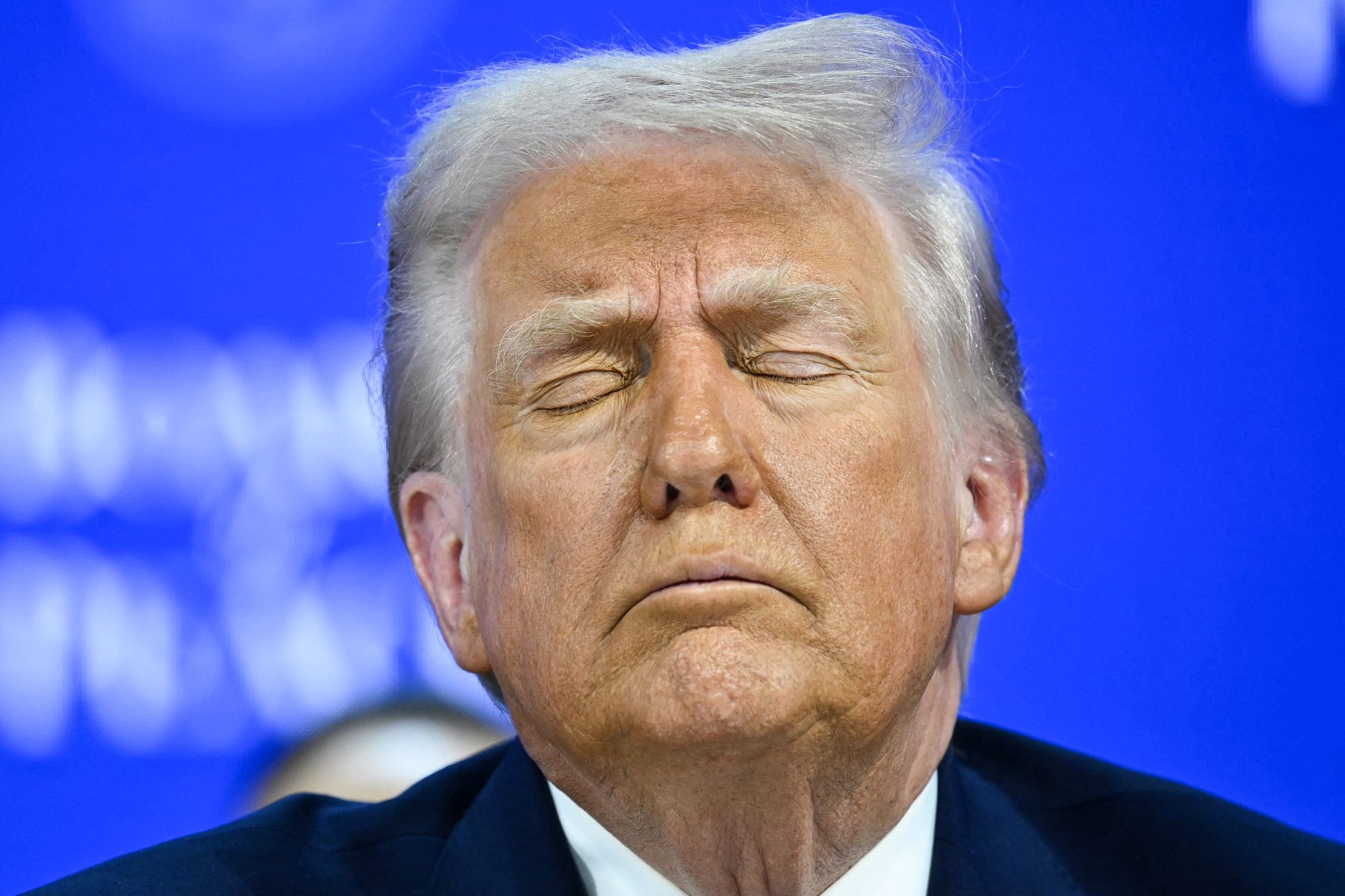
The sequence would appear to be the classic one. Trump set out his maximalist position as a bargaining chip, that was then overinterpreted by most Europeans as his last word, leading to panic in the ranks, an emergency military dash to Greenland on the part of the Europeans, and the intervention of Rutte, which calmed everything down and produced the deal, which is thought to entail long-term leases for the US of parts of Greenland territory.
From the European perspective, however, it was the implications for Nato that loomed largest and which cannot be dismissed even as the immediate crisis may have passed. The very suggestion that the US would even contemplate the use of force against an ally, along with the tone of US rhetoric that betrayed a degree of contempt for the Europeans, conveys several messages to Europe that need to be heeded.
Zelensky urged Europe to wake up and shift out of “Greenland mode” if it wants to be taken seriously. It is clear that Trump still has little faith in the Europeans’ ability to defend their continent or to perform their duties as allies, should that be required. Any reciprocity either way, as enshrined in the famed Article 5, must now be in extreme doubt. Trump’s passing reference to Denmark’s short-lived resistance to the Nazis shows that such ingrained historical truth outweighs the more recent Danish losses in the US-led intervention in Afghanistan – especially, but perhaps not exclusively, to Americans of Trump’s generation.
A logical conclusion from this is that the Europeans need to look to a time when the US security umbrella is no longer there, get their defence act together, or broach their own security arrangements for Europe. A more short-term response might rest in the hope that Trump and Trumpism are disempowered by a combination of Supreme Court judgments, the mid-term Congressional elections, and finally by a victory for a non-Trumpist president in 2028.
But such hopes are more likely to be vain. Trump has a democratic mandate and his view of Europe as in decline and a burden, the Western hemisphere as the US priority, and China, not Russia, as the potential threat, goes beyond his own Maga constituency. This is why it might be a better bet for the Europeans to prepare – at something like Trump-speed – for Macron-style strategic autonomy.
This will be particularly difficult, both for the UK, because of everything entailed in the special relationship, and for the “new” Europeans, whose faith in Article 5 was a big reason why they were so determined to join Nato. But it may have to be. A Greenland-shaped monument placed outside Nato HQ and the European Commission in Brussels, and even at the Ministry of Defence in London, might be a good reminder of the new reality.
Join our commenting forum
Join thought-provoking conversations, follow other Independent readers and see their replies
Comments
Bookmark popover
Removed from bookmarks