Politics on a plate: The hidden messages behind Donald Trump’s menu at the royal banquet
While commentators pore over the toasts and the seating plans of these evenings, they often miss the quiet symbolism of the food itself. From Windsor lamb to Norfolk chicken, Hannah Twiggs looks at what a royal menu tells us about British politics and where the power really lies

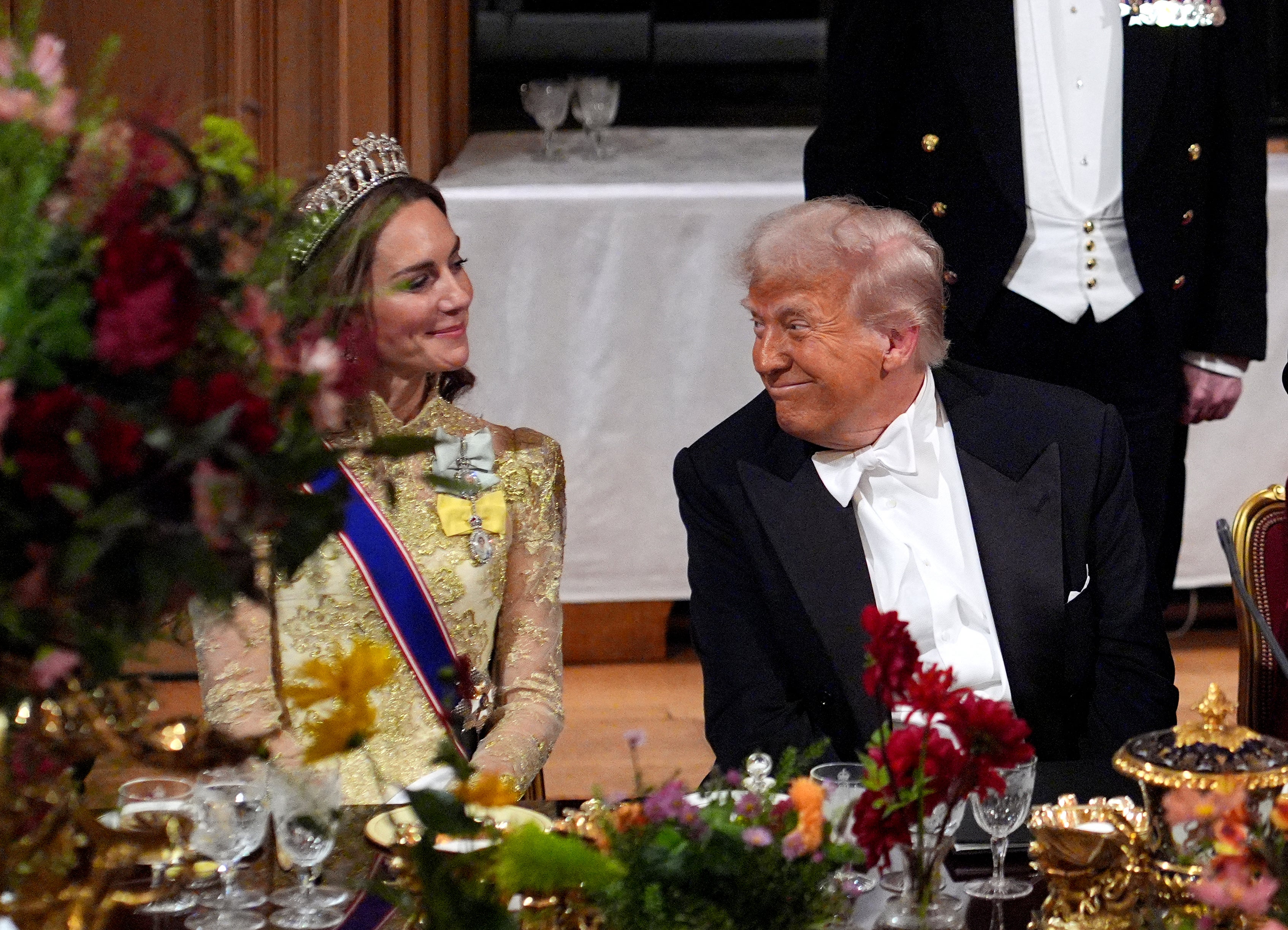
When Donald Trump sat down to dinner at Buckingham Palace in 2019, the spectacle was as much about politics as it was about pomp.
Queen Elizabeth II presided over a menu written in French, featuring Windsor lamb with herb stuffing and an elaborate strawberry sable. It was classic state banquet fare: rich, rooted in tradition, staged to project Britain’s centuries-old ability to lay a table of unrivalled grandeur that spoke louder than any speech in the Commons.
Six years later, under very different circumstances, Trump found himself back in royal company last night, this time greeted by King Charles III. The food, once again, was more than a list of dishes. It was a challenge laid on silverware, politics served up as dinner.
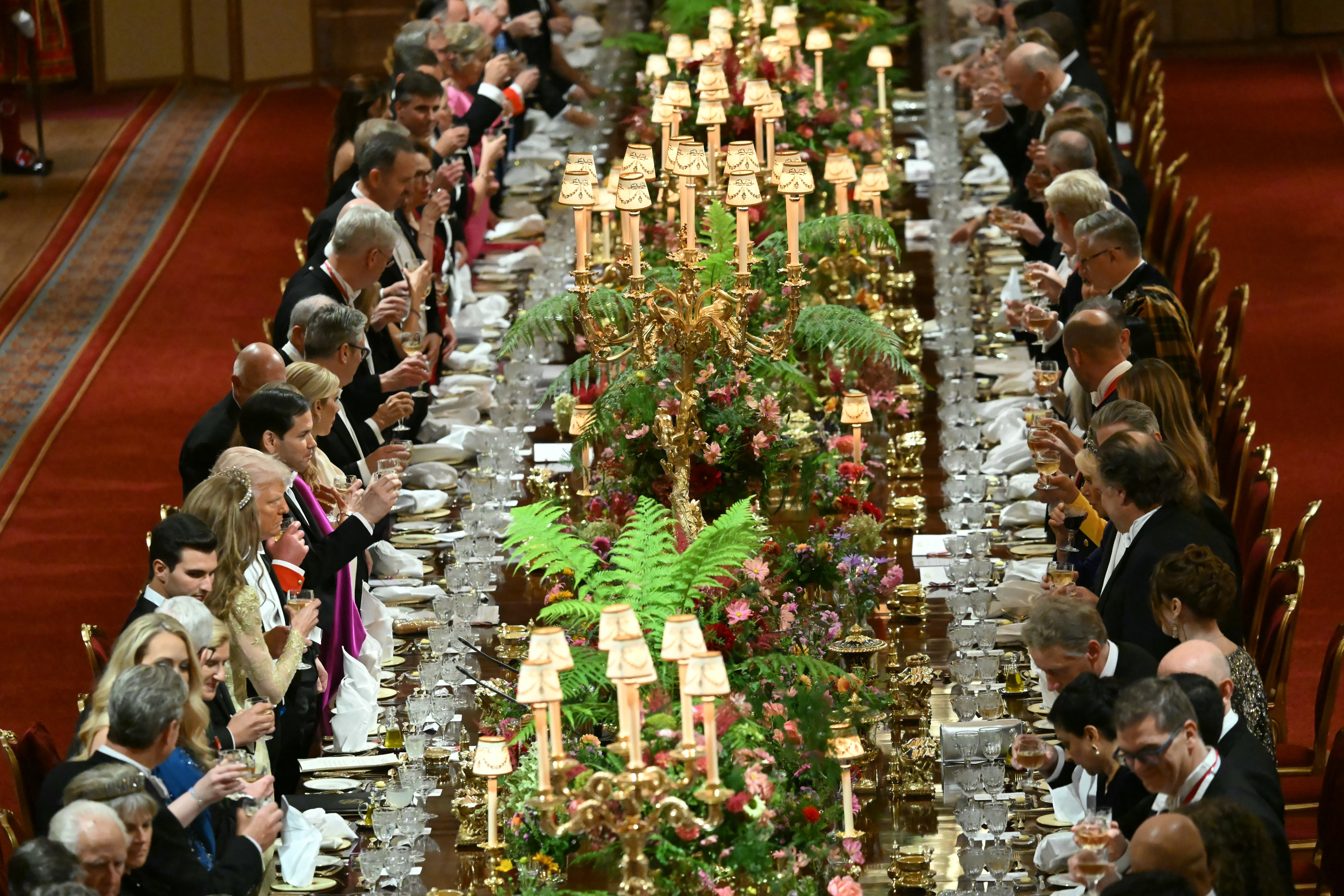
For the 160 guests gathered at Windsor Castle, the 2025 menu read like a love letter to British terroir. First came a Hampshire watercress panna cotta with parmesan shortbread and quail egg salad – light, modern, nodding to the King’s long-held belief in seasonal produce and sustainable farming.
Then, an organic Norfolk chicken ballotine wrapped in courgettes, perfumed with thyme: not the red-blooded beef, venison or lamb that often anchors such occasions, but a subtler bird, elevated by precision and restraint.


Dessert was a vanilla ice cream bombe hiding a Kentish raspberry sorbet, served with gently poached Victoria plums.
Even the wines told their own story: English sparkling from Wiston Estate, a Corton-Charlemagne from Burgundy, an American Ridge Monte Bello and a venerable Pol Roger. A geographical spread, yes, but also a diplomatic one – Britain, Europe and America all represented in the glasses raised to toast the alliance.
Menus like these are not conceived in a vacuum. They are the product of months of planning by the royal household, designed to impress without overwhelming, flatter the guests while showing off the host’s finest wares. They are also, quite deliberately, political documents.
When Charles served up Norfolk chicken last night, he was doing so at a time when British agriculture is fighting to define itself in a post-Brexit, post-Common Agricultural Policy world. The choice of organic British poultry also carried a pointed resonance: since the referendum, fears of chlorinated chicken and lower welfare imports from the US have loomed large. Here was royalty signalling, on the grandest stage, that Britain’s own standards were nothing to compromise on.
State banquets have always functioned as a kind of edible diplomacy. Queen Victoria used them to demonstrate the power of the empire, laying on endless courses of game, seafood and sugar sculptures that dazzled foreign dignitaries. During the Second World War, menus were pared back to reflect rationing: guests still dined on white tablecloths, but their plates carried simple fish or stews, a reminder that Britain would not compromise on appearances even in austerity. Nelson Mandela’s visit in 1996 was marked with dishes that acknowledged both British tradition and South African influences, underscoring a new era of global partnership.
Trump’s two visits offer a neat prism through which to see how this tradition continues. In 2019, Britain was adrift in Brexit negotiations, Theresa May’s government teetering, Boris on the horizon. Hosting Trump was less about gastronomy than about asserting continuity: the late Queen, then ageless and unshakeable, presiding over roast lamb and strawberries in June, as if the political chaos outside were merely a storm in a teacup.
Fast forward to 2025, and Britain is led by a king with his own well-documented views on climate change and sustainable farming. That the main course was not beef – so often the default symbol of luxury – but organic chicken, swaddled in courgettes, feels telling. This was Charles signalling a quieter kind of opulence: one rooted in husbandry, in seasonality and in the idea that elegance can be found in restraint.
Consider the opening dish: a panna cotta built around Hampshire watercress. It’s a quintessentially British ingredient, grown in chalk streams and long associated with health and vigour. To serve it to a president known for his fast-food preferences is both a flourish of culinary patriotism and perhaps a gentle rebuke. Standing in marked contrast to the American dining stereotype – a nation so often caricatured for excess, fast food and supersized portions – seeping into Britain.
The dessert, meanwhile, was pure theatre: a bombe – one of the most classical French presentations – concealing Kentish raspberries and Victoria plums. The message: Britain may not be as sophisticated as Paris, but it will not be outdone when it comes to the produce of its own soil.
Wine lists, too, carry layers of meaning. The Wiston Estate sparkling, an English vintage, has won acclaim in recent years, seen by many as evidence that Britain is now producing wines to rival champagne. Pouring it first was a proud statement of self-sufficiency. The Corton-Charlemagne brought gravitas from Burgundy, while the Ridge Monte Bello was a nod across the Atlantic, a bottle that would have felt familiar and flattering to American guests. And the Pol Roger – Churchill’s favourite – was pure symbolism: the wartime leader invoked at a dinner designed to underline the enduring “special relationship”.

To Trump, famously a teetotaler since his youth after witnessing his brother’s struggles with alcohol, much of this would have been lost. Reports suggest he often opts for cola or other soft drinks at formal occasions, a reminder that while the wines were freighted with meaning, they were aimed more at the room – and the cameras – than at the guest of honour’s palate.
To read these menus alongside each other is to see a shift in emphasis, not in scale. Both banquets were sumptuous, both carefully stage-managed. But where Elizabeth’s 2019 dinner leaned on heritage and continuity, Charles’s 2025 version leaned on produce and subtlety. One projected a Britain that was immovable, the other a Britain trying to be relevant and responsible. In their own ways, both succeeded.
State banquets, after all, are pure theatre. The 1,452 pieces of cutlery counted out for the 2025 dinner are part of the spectacle, just as the endless gilded candelabras and floral arrangements are. Guests are meant to be dazzled not only by the surroundings but by the precision of the service, the sense that they are part of something ancient, immutable.
Yet the menus – short, in contrast to the marathon feasts of the 19th century – tell us the monarchy is attempting to balance pageantry with modernity. Fewer courses, lighter dishes, less ostentation.
Looking back through history, it’s clear this balance is constantly recalibrated. Edward VII’s banquets were notoriously decadent, running to 10 or more courses with vast amounts of wine. The post-war years brought restraint, with the palace mindful of the ration books still in the kitchens of ordinary Britons. In the 1980s, as Britain repositioned itself on the world stage under Thatcher, banquets once again leaned into lavishness.
Trump’s two state visits bookend an era of transition. The Queen, embodying permanence, serving lamb from Windsor’s own fields; the King, embodying conscience, serving organic chicken and English wine. What unites them is the understanding that every detail matters, that food is a language as eloquent as any speech.
When commentators pore over the toasts and the seating plans of these evenings, they often miss the quiet symbolism of the food itself. To serve watercress, chicken and plums is to speak in the idiom of Britain’s soils and seasons. To pour English sparkling alongside American cabernet is to sketch an alliance in glass.
And to do it all under the chandeliers of Buckingham Palace and Windsor Castle is to remind the world that Britain still knows how to play the oldest game of all: politics on a plate.
Join our commenting forum
Join thought-provoking conversations, follow other Independent readers and see their replies
Comments
Bookmark popover
Removed from bookmarks