Who is Yoon Suk Yeol? First South Korean president to be jailed for life
Former leader threw his country into political turmoil by briefly declaring martial law in late 2024
Yoon Suk Yeol has become the first president of South Korea to be arrested and sentenced to prison after he was charged with insurrection for declaring martial law in 2024 and throwing the country into political turmoil.
Though the prosecutors had demanded the death penalty for the former leader after being found guilty of declaring martial law in a subversion of the constitutional order, the Seoul Central District Court handed down a life sentence on Thursday.
Yoon, 64, was arrested on 15 January 2025 and taken to the Corruption Investigation Office for questioning.
The president was impeached by the National Assembly over his short-lived martial law declaration on 3 December and suspended from office.
Yoon denied the charges against him, calling the case politically motivated. The former president argued that he had the constitutional authority to declare martial law as a counter to what he called obstruction of his administration by opposition parties.
Yoon, wearing a dark suit and noticeably slimmer since his arrest a year ago, stood ashen-faced listening to the verdict. His lawyer protested against it and said the defence team would discuss with the former president whether to appeal.
Appearing defiant in a video message recorded for his supporters at the time before he was taken in for questioning, Yoon said he had decided to comply with the arrest warrant but that the “rule of law has completely collapsed in this country”.
“When I saw them break into the security area using firefighting equipment today, I decided to respond to the CIO’s investigation – despite it being an illegal investigation – to prevent unsavoury bloodshed,” he said in a statement.
Insurrection is one of the rare offences for which South Korean presidents are not granted immunity. The offence carries severe penalties that may include life imprisonment or even the death penalty.
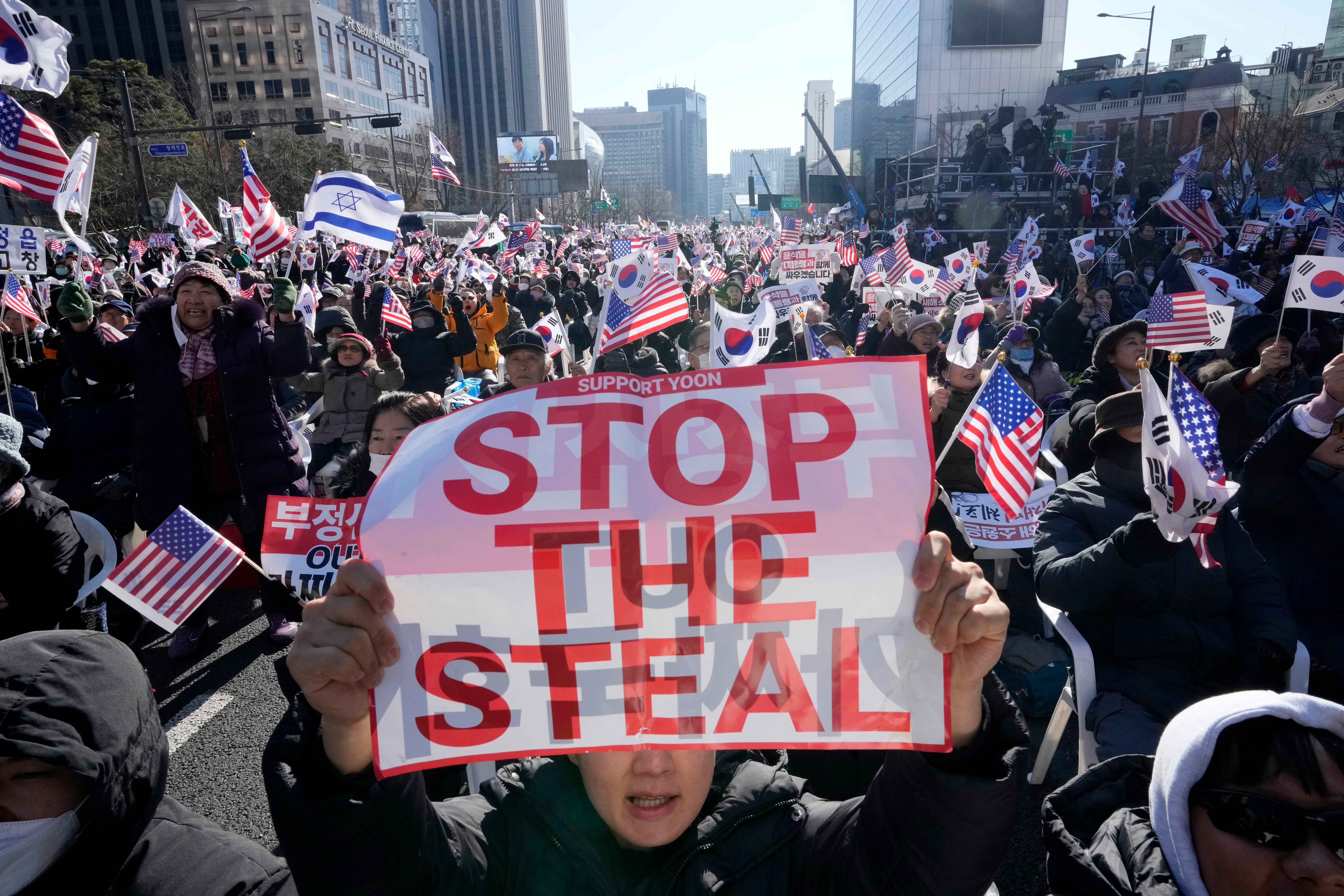
The arrest came a day after the Constitutional Court began proceedings to rule on the validity of Yoon’s impeachment by parliament. If the court clears the parliamentary action, Yoon would be removed from power and a presidential election would be held within 60 days.
If found guilty of insurrection, Yoon could receive a maximum sentence of life imprisonment, with the death penalty a highly unlikely but potential outcome as well.
An embattled leader
Yoon, who narrowly won the presidency in 2022, has been facing mounting unpopularity since taking office. Already weakened by a crushing parliamentary election defeat for his party earlier this year, his approval ratings had plummeted to 17 per cent before this week’s events.

The chaos began when Yoon justified his martial law declaration citing threats from North Korea and the need to eliminate “anti-state elements”.
But the move was widely interpreted as an attempt to consolidate power in the face of his domestic struggles. Within hours, lawmakers, some from his own People Power Party, rushed to the National Assembly to block the order, while thousands of protesters took to the streets in Seoul.
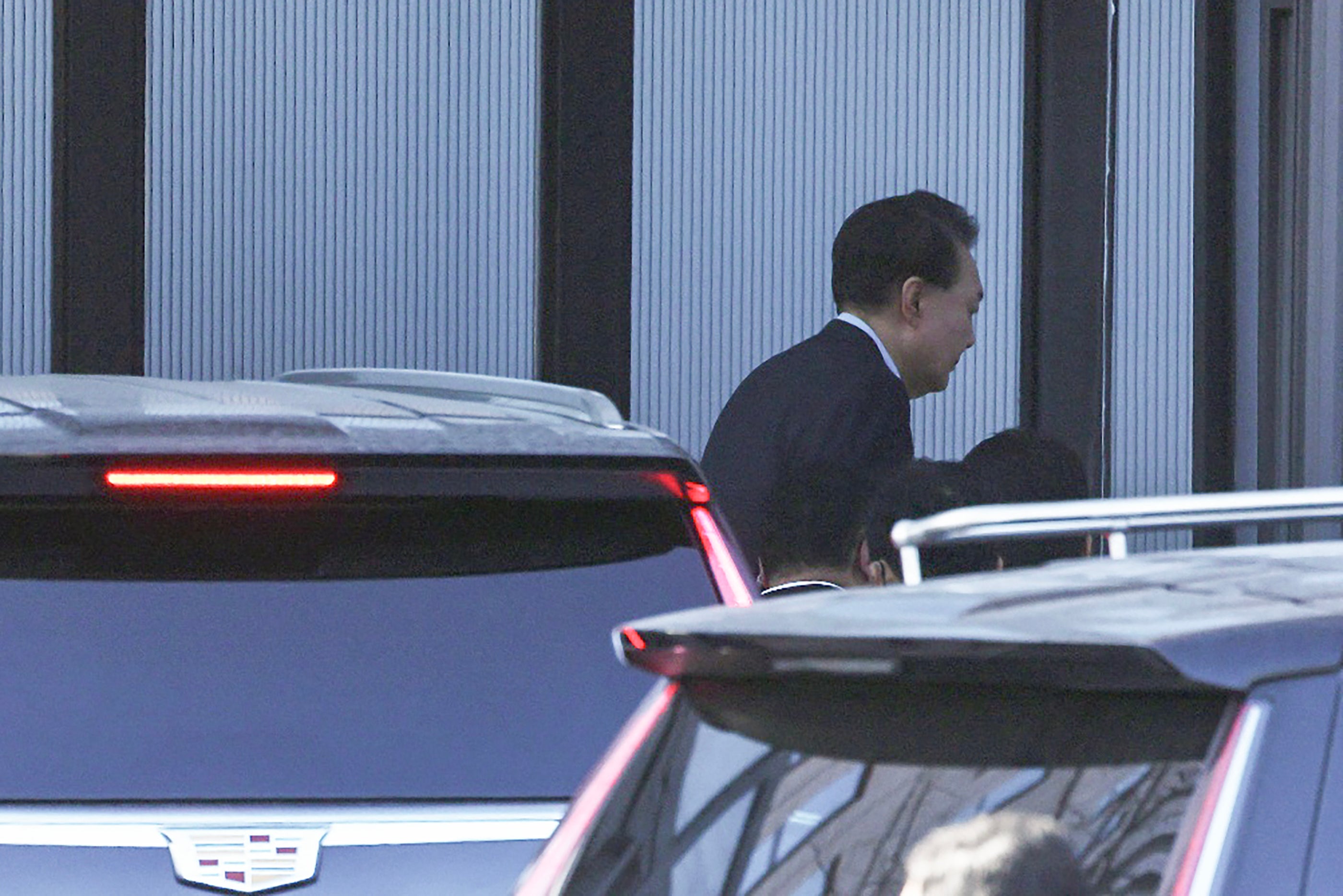
By the time Yoon withdrew the decree, the protesters outside the National Assembly were cheering, but the damage to his presidency appeared irreversible.
Yoon’s declaration of martial law was a “legal overreach and a political miscalculation”, Prof Leif-Eric Easley of Ewha Womans University in Seoul told BBC News.
“He sounded like a politician under siege, making a desperate move against mounting scandals, institutional obstruction, and calls for impeachment.”
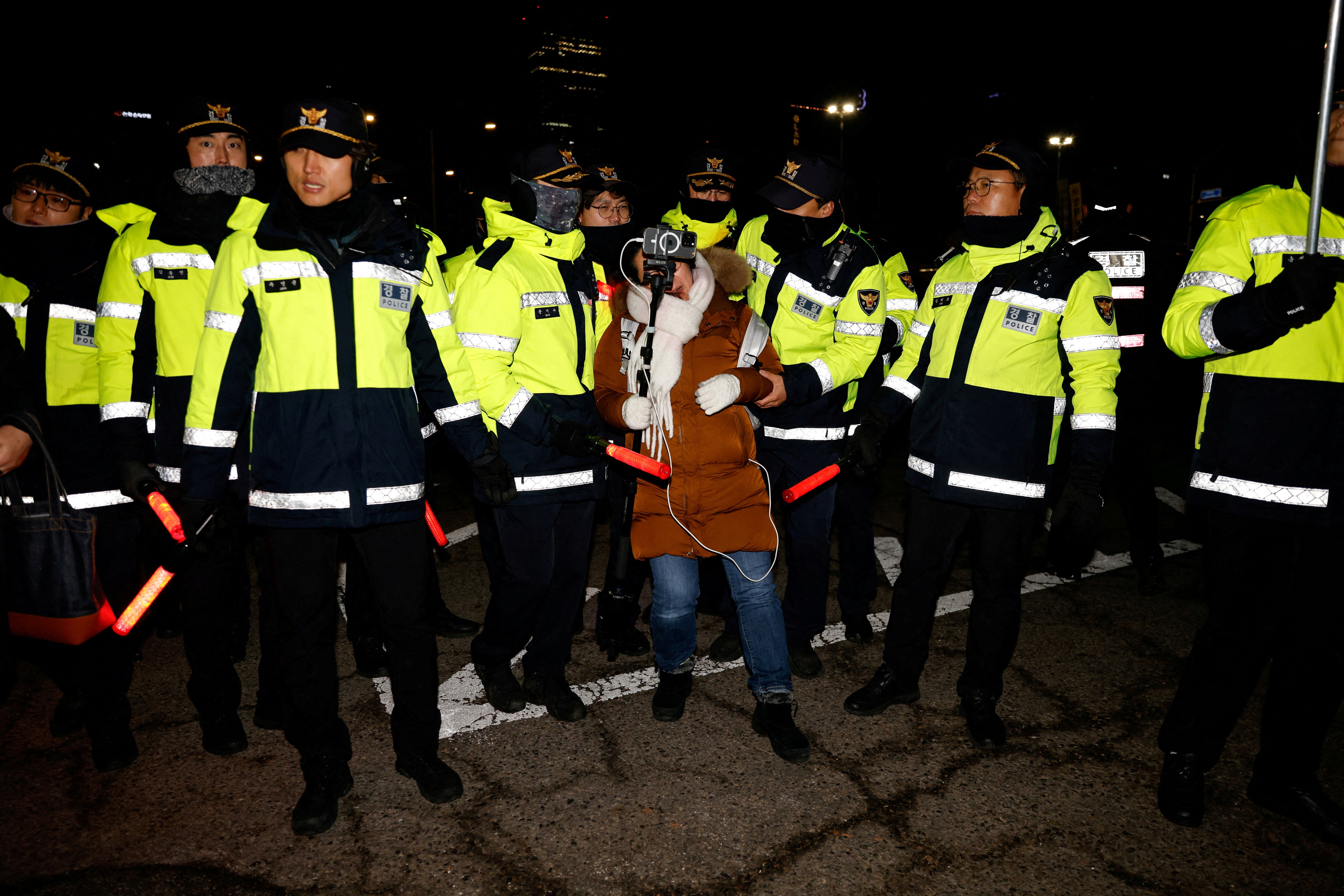
A presidency marred by controversy
As a prosecutor who investigated two incumbent presidents, Yoon became a household name.
"Yoon Suk Yeol was the most powerful prosecutor-general ever," said former judge Han Dong Soo, who was part of the prosecutor’s office under Yoon.
"He used the office to carry out his plan to become president and in doing so, his actions were daring."
By 2022, after leading a graft investigation of the justice minister, he had become a darling of conservatives frustrated with the liberal policies of then-president Moon Jae In, setting him up to become their candidate for president.
But once in office, he became increasingly embittered by unrelenting battles with opponents that a former prosecution rival, Lee Sung Yoon, said drew out a recklessness that had been Yoon's defining trait.
His lack of political experience was evident after he narrowly defeated liberal candidate Lee Jae Myung in 2022.
While Yoon’s campaign resonated with younger male voters due to its anti-feminism rhetoric, public hopes for “principle, transparency, and efficiency” under his leadership were soon dashed, Prof Don S Lee from Sungkyunkwan University told the British broadcaster.
Yoon’s tenure has been plagued by scandals, many centring on his wife, Kim Keon Hee, who has faced allegations of accepting a luxury Dior handbag and stock manipulation. In November, Yoon apologised for her actions but rejected demands for a formal investigation.
Meanwhile, his frequent gaffes – he was caught on a hot mic apparently insulting US lawmakers and praising former dictator Chun Doo Hwan – further eroded his credibility.
Chun led tanks and troops into Seoul in December 1979 in the country’s second coup after dictator Park Chung Hee’s death. The next year, he orchestrated a military crackdown on a pro-democracy uprising in the southern city of Gwangju, killing at least 200 people.
However, Yoon praised him for being “good at politics”.
Strained relations at home and abroad
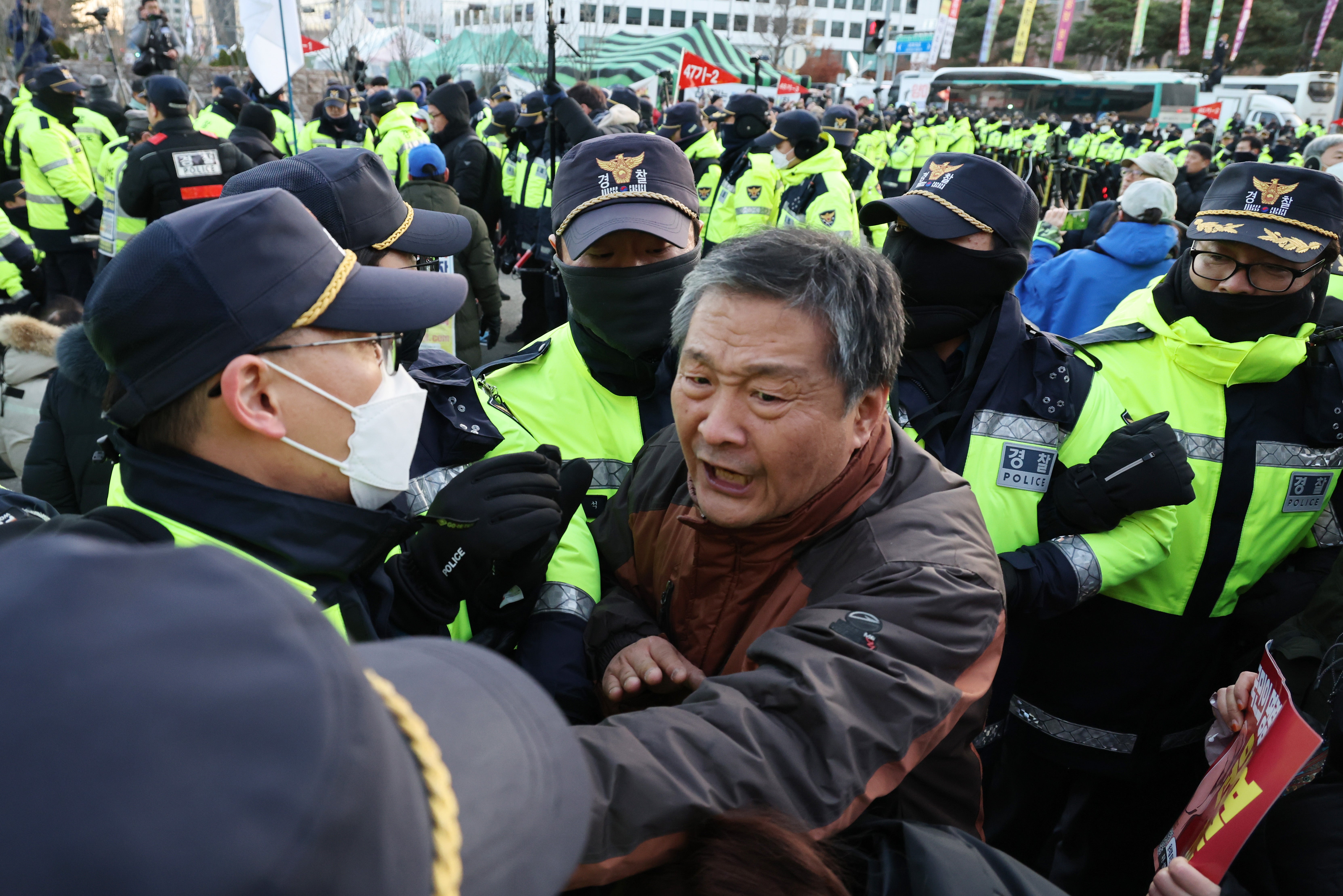
Domestically, Yoon struggled to navigate a parliament controlled by the opposition Democratic Party. Opposition lawmakers repeatedly blocked his legislative agenda, forcing him to veto bills at an unprecedented rate.
Amidst these political setbacks, Yoon’s approval ratings remained dismal, with growing calls for impeachment. Opposition leader Lee Jae Myung called the martial law declaration a “decisive opportunity to break the vicious cycle and return to normal society”.
Internationally, Yoon’s presidency was a mixed bag. While he strengthened ties with allies like the US and Japan and provided aid to Ukraine, his hardline stance on North Korea escalated tensions with Pyongyang.
Critics also accused him of jeopardising relations with China, South Korea’s largest trading partner.
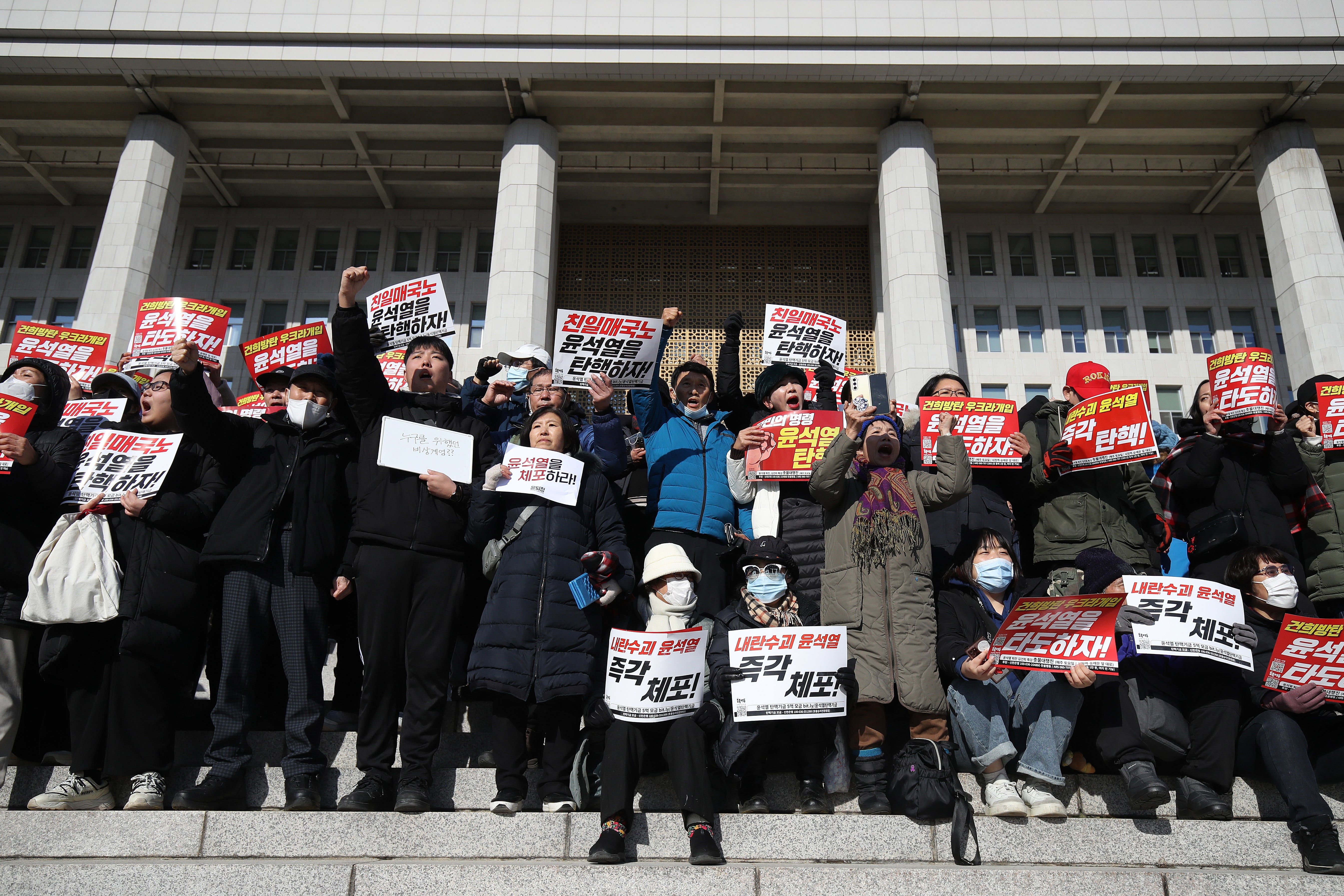
Yoon Suk Yeol’s road to jail
A Seoul court on 29 December issued an arrest warrant sought by prosecutors investigating whether the president’s declaration of martial law amounted to insurrection.
The warrant was approved after Yoon ignored multiple summons to answer charges of insurrection and abuse of power, accusations that his lawyers called “unlawful”.
But an attempt to arrest Yoon was blocked by his security services, with the Corruption Investigation Office saying the “execution of the arrest warrant was virtually impossible due to the continued standoff”.
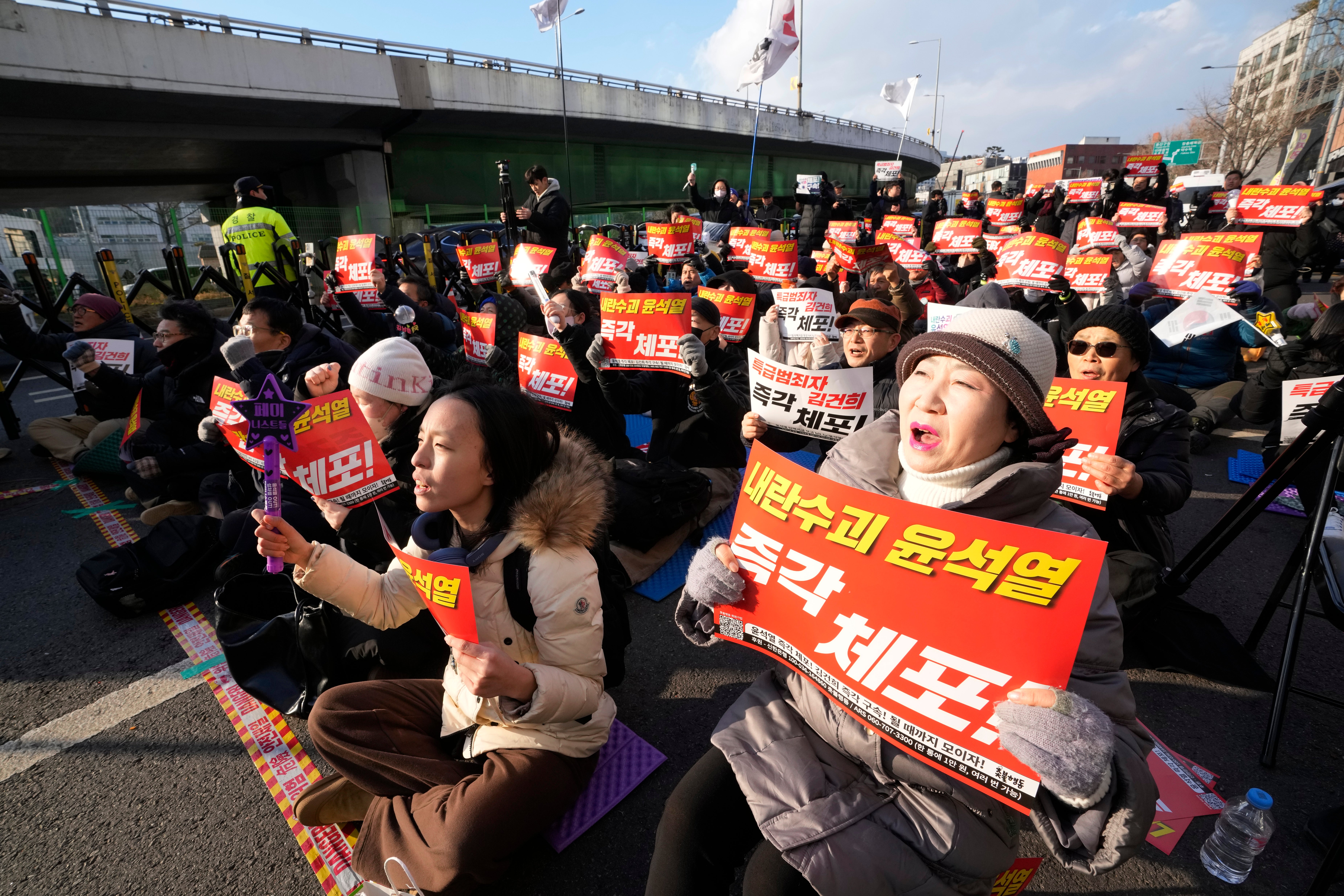
The warrant was extended again on 7 January 2025 and the investigators detained him on 15 January after a three-hour standoff with his security guards.
The anti-corruption agency has 48 hours to conduct an investigation. Afterwards, it can either release him or seek a warrant for his formal arrest.
The parliament impeached Yoon on 14 December, concluding that his declaration of martial law violated the constitution. He was suspended from his presidential duties before being removed from office by the Constitutional Court. The began the court proceedings that culminated in his life sentence.
Join our commenting forum
Join thought-provoking conversations, follow other Independent readers and see their replies
Comments
Bookmark popover
Removed from bookmarks