Edinburgh Fringe 2025 defied storms and Oasis disruption to deliver something fresh and essential
Alice Saville reviews a pick of the offerings at this year’s Fringe festival, a place where nothing is too weird, or too niche

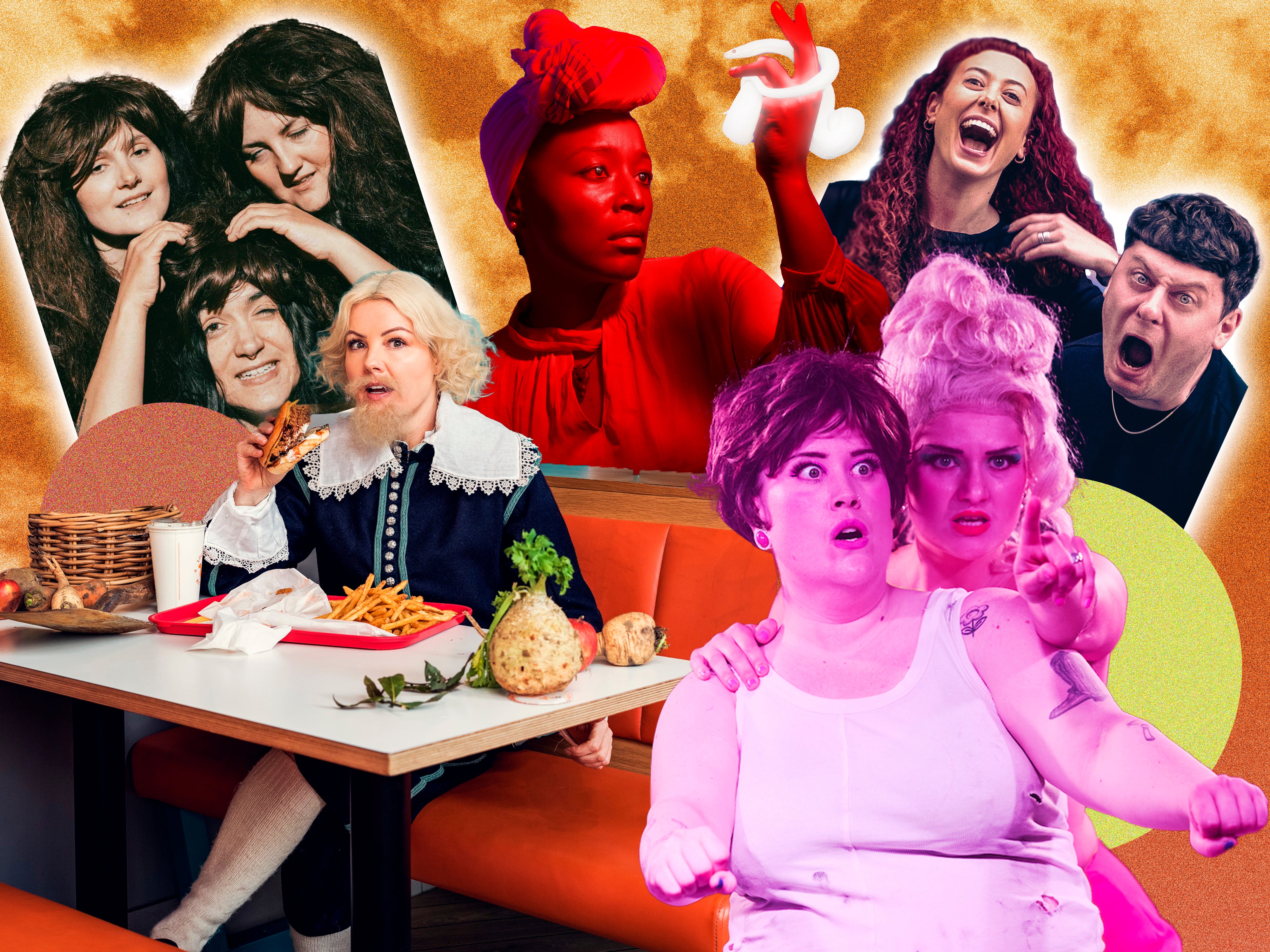
It’s a middling sort of year,” a few people warned me en route to the Edinburgh Fringe – as though reports of show cancellations due to Storm Floris, and audience-deterring road closures around the city’s massive Oasis gig hadn’t been ill portents enough. So I went in with a spirit of defiance. Perhaps I wasn’t going to unearth the talent of the century. Perhaps the streets wouldn’t be packed with quite as many buzzing theatregoers. But I did want to find the shows that were fighting their way out of despondency and shaking off mediocrity to serve up something fresh – and 2025’s embattled arts festival more than delivered.
This year, I found artists that were rebelling against the pressure to serve up traumatic narratives to eager audiences – and were critiquing the festival’s tough capitalist landscape, too. This was a festival in conversation with itself, with artists offering direct or oblique commentaries on the pressures they, and audiences, face in a tough commercial climate.
At a time when the Gallagher brothers’ ill-scheduled gig has made them their fair share of theatrical enemies, it was both surprising and refreshing to begin with Irish playwright Gina Donnelly’s Anthem of Dissatisfaction at Summerhall, which issues a passionate defence of Britpop. For two siblings growing up in poverty, Oasis means everything: a chant of working-class solidarity loud enough to drown out the scornful mockery of TV’s Benefits Street or Little Britain’s Vicky Pollard. Simon Sweeney and Emily Lamey burst and fizz with energy as these teenagers, capturing the way that music lends glamour and meaning to confined city childhoods. But there’s a sting in the tail of this story. They want to go to Bruce Springsteen as a family, but like many working-class culture fans, they’re priced out. So they eat stadium-style snacks on the carpet, staying loyal to the heroes who’ve forgotten them.
Fringe artists strive for originality, sweating to create shows that’ll lure audiences through the door. The writers of Netflix’s phoned-in but wildly popular festive movies have no such trouble. So it’s refreshing to see writing and performing duo Linus Karp and Joseph Martin poke fun at rubbish Christmas movies in The Fit Prince at Pleasance Courtyard – a royal gay love story set in Swedonia, a knock-off Nordic kingdom famous for its legendary band BAAB and their hit songs “Dunkirk” and “Movement Man”. Only trouble is, they don't have budget for a cast. So they recruit audience members to play everyone else, reading lines off an autocue in makeshift costumes. This choice gives the show an eerie slowness, like being on a glitching Zoom meeting – long pauses between lines, frantic sideways glances, nervous laughter when things go wrong. But it’s packed with enough in-jokes and celeb cameos to make it an infectiously fun hour, even if you don’t get to clamber on stage.
Fringe regular Victoria Melody doesn’t have punchy pop culture references to sell her show Trouble, Struggle, Bubble and Squeak at Pleasance Courtyard so she’s visibly delighted to have a packed audience, in a year where many shows have been struggling to draw crowds. She even has to spin around twice before she's calm enough to start her story. It’s the kind of impulsive, naive moment that makes her shows so consistently charming. In each one, she flings herself into a different scene, from pigeon-fancying to beauty pageants to funeral directing. This year, it’s historical civil war reenactments: “Everyone deals with divorce in different ways,” she deadpans.


This background of heartbreak contextualises her need to throw herself into a niche hobby. But it’s not the full story. Melody’s message here is about the importance of not giving up, not quitting the community that sustains you – such as the Diggers, the 17th-century protesters who reclaimed the land that fed them. On Brighton’s beautiful Whitehawk council estate, edged by ancient, living chalkland, Melody stages a reenactment of one of their fights against dastardly landlords. Then tells us all about it, surrounded by vegetables knitted by community-minded estate locals (“Look at the gradient on that leek!” she says proudly). It is a story of everyday goodness and community action that’s deeply medicinal in a time that can feel hopeless.
Iconoclastic punk trio In Bed With My Brother have a different kind of cure to administer in Philosophy of the World at Summerhall, a wild, messed-up blast of late-night fury. Nominally, they’re telling the story of cult 1960s girl band The Shaggs, whose delusional dad trapped them in a basement, forcing them to sweat and struggle their way into musical brilliance. But really, this is a horror story where a zombie-like father becomes a stand-in for all the things that drive and oppress us: capitalism, patriarchal cruelty, fame. He’s shot and beaten, again and again, but keeps on staggering to his feet in jolting blasts of sound and light. This is an hour with the opaque, distancing quality of contemporary art: I left unsure if it was a rallying cry for creative freedom – or a bleak exposé of how art destroys its creators, imprisoning them just like those lonely girls in a basement.
Alex-Brenner_(_93_6079_dx)_s.jpeg)
There’s a more lucid kind of punky prowess on offer at Fag Packet’s drag-inspired debut show Dyke Systems LTD at Pleasance Courtyard. Here, Kheski Kobler and Holly Wilson-Guy are dressed as 1980s American businesswomen in bright suits, eyes painted neon, mouths constantly agape in orgasmic glee as they inculcate us into the erotic joys of making money. Or tr to. It quickly transpires that their business is a pyramid scheme, and the audience are its victims. Then, their ruse devours its creators, too, making way for a gorgeous, stylised Thelma and Louise-inspired ending, where a sweet, queer love story sings out from the rubble of their car-crash careers. It’s all simultaneously massively high concept and gleefully stupid. This show satirises the impossible dream that the Fringe sells its artists as they thrum with unrequited yearning for success – while demonstrating just how much fun it is to be silly, to tease an audience who’s in love with the weird, sexy world you’ve created.
Edinburgh’s small spaces let artists create little universes, immersing their audiences far more effectively than high-budget West End experiences. And Patrick McPherson’s Scatter at Underbelly is a case in point: this follow-up to his hit 2019 sketch show The Man is a masterclass in atmosphere, with the venue’s dank, dark stone cellars rumbling to the sounds of hidden speakers as he crafts his tall story from a mouldering armchair. It’s a tensely woven, wittily written tale of a family curse, following two brothers through the Welsh countryside as they attempt to scatter their father's ashes. But ultimately, it performs the cardinal sin of any ghost story – it unfolds the secrets of its spooks too early, robbing the ending of surprise, even if it is enjoyably nasty.
Zimbabwean playwright Chiedza Rwodzi’s impressive debut play, Strangers and Revelations at The Space, offers a rather more persuasive twist. At first, it seems like a slick, amusing dating comedy, with disarming Malcolm trying to charm his way into self-assured Zodwa’s affections over a glass of South African wine. Soon, Rwodzi's language darkens and deepens like a slow-cooked stew; the play builds into a chilling exercise in African gothic, as the pair debate the old country’s tales of three-metre wide snake gods who tint rivers red with their blood. If this shoestring production in a tiny, curtained-off corner of Surgeon’s Hall doesn’t quite have the scale to build to the required crescendo, the writing and performances do – delivering both thrills and a heightened perspective on the gendered horrors of life for Zimbabwean women.
Alex-Brenner_(_93_8649_dx)_s.jpeg)
On the surface, Edinburgh Fringe shows seem to explore every theme under the sun. But dig deeper and you’ll see missing perspectives. The initiative Fringe of Colour compiles the works, such as Rwodzi’s, that centre global majority artists – making up less than 10 per cent of the total. And another absence is harder to quantify: the voices of the female artists and performers who gradually drop off as they reach their thirties, forties or beyond, their time taken up with caring responsibilities while their male counterparts keep on pursuing their dreams. Chunky Jewellery at Assembly is a brilliant, interdisciplinary statement of intent. Natasha Gilmore and Jude Williams are both single mothers, and their collaboration is born both from their friendship and a passionate desire to share their realities. But it’s an exercise soaked in shame and self-doubt, too, as they wrestle with feeling that their struggles are too mundane, too shameful to be heard.
One of the funniest, most heartbreaking moments is when Williams tries to coach Gilmore through the process of asking for help: she contorts her mouth in agonised shapes, getting stuck on a horrified chant of “hell, hell, hell,” before she manages to add the “p”. When she asks for real, Williams drops everything to clear up porridge bowls and throw a kids’ birthday party for her broken friend, even though she’s got a crying baby of her own. But the lighter moments shine just as bright: like when they vamp their way through “Then He Kissed Me” to an accompaniment of children's musical instruments, or when Williams unleashes a glorious, husky-voiced rendition of Carole King’s “Natural Woman”. It’s a reminder of what the Edinburgh Fringe offers that nowhere else can: a platform where nothing is too much, too weird, too niche. And it’s a furiously powerful cry to be heard, at a Fringe where artists must fight harder than ever to be listened to.
Join our commenting forum
Join thought-provoking conversations, follow other Independent readers and see their replies
Comments
Bookmark popover
Removed from bookmarks