Have we truly become a country that patrols its borders with large nets?
The ever-increasing hardening of the UK’s borders is a boon for the far right. By borrowing the language, logic and cruelty of Reform UK, ministers are not neutralising Nigel Farage’s views; they are legitimising them, says Labour MP Olivia Blake


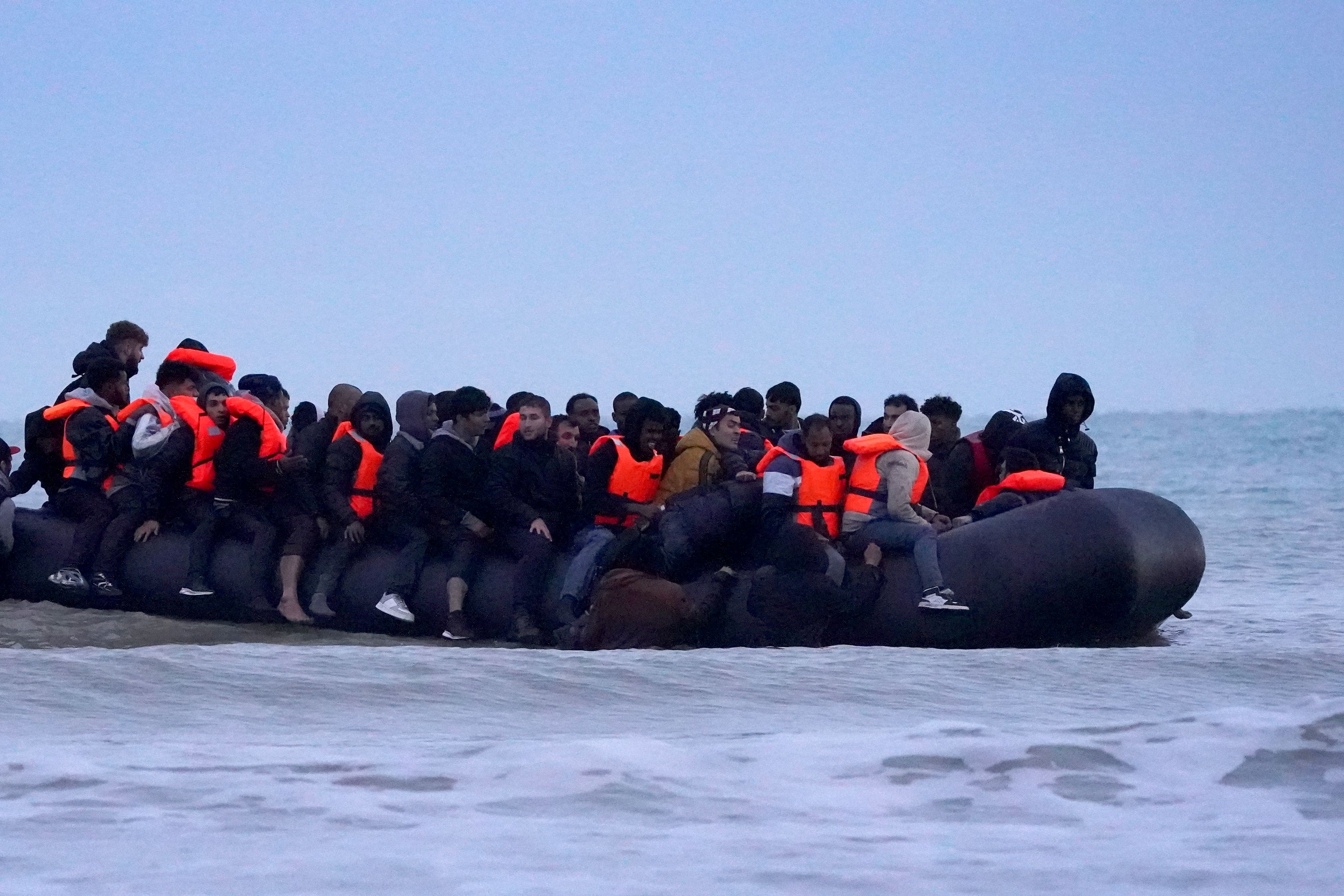
This morning’s headlines were dominated by the news of French police using large nets to stop small boats crossing the English Channel. This marks the next step in an ever-increasing hardening of the UK’s borders. I’ve been to Calais and seen at first hand the tools that the French police are deploying. All too often, these measures lead to even more dangerous crossings whilst doing nothing to reduce numbers.
This follows the Labour government’s asylum reforms, announced earlier this week, which are more than a policy error. They are deeply cruel, exacting a heavy human cost. Beyond this, they are an extraordinary act of political self-harm.
By borrowing the language, logic and cruelty of Reform UK, ministers are not neutralising Nigel Farage’s views; they are legitimising them.
When a Labour government begins to sound indistinguishable from the hard right on immigration – when its spokespeople parrot phrases like “golden ticket” and boast about making life harder for refugees – this is not triangulation. It is capitulation, and it represents a profound betrayal of Labour values.
The “golden ticket” rhetoric is particularly revealing. It treats desperate people as opportunists, as though fleeing torture, war or persecution is some kind of luxury.
You have not won a prize when you run for your life. You are not playing a game when you are forcibly removed from your home. You are not lucky if your country is persecuting you. This language of winners and losers is not just ugly; it is dehumanising, and lifted straight from Farage’s playbook.
The deeper problem is the governing philosophy that now sits behind the policy: engineered destitution. Ministers know that asylum seekers cannot work, cannot access mainstream housing, cannot claim benefits and, under these proposals, will be denied the right to own assets. This is not an accidental by-product of a failing system. It is the system. Destitution is the policy. Misery is the deterrent. And it is being pursued despite every serious study showing that deterrence strategies simply do not work.
Instead of rebuilding the asylum system, these proposals will create permanent limbo. Under the new plans, refugees would wait 20 years before applying for indefinite leave to remain. Their status would be reviewed every 30 months, with the threat of removal hanging over them should the Home Office suddenly decide their country is “safe”. Family reunion will be restricted by income thresholds that many British citizens themselves could not meet. Even the statutory duty to protect asylum seekers from destitution is set to be revoked.
This is bureaucracy at its worst: expensive, pointless and cruel. The Refugee Council estimates that forcing people to reapply and be reassessed on this scale could create 1.4 million review cases by 2035, and cost at least £872m. A system that is already slow and overwhelmed will be deliberately inundated.
And for what? To keep refugees in a state of perpetual insecurity – unable to plan a future, unable to integrate, unable to belong. Children growing up under these rules will know nothing but uncertainty and fear that their lives could be uprooted by a bureaucratic decision. This is no way for a confident, compassionate country to behave. It is certainly no way for a Labour government to behave.
The government is taking inspiration from Denmark’s immigration system, but this is a profoundly misleading example. Denmark’s policies are explicitly punitive and overtly racist. The UK is not Denmark: economically, socially and historically, our context is very different, meaning that importing similarly brutal measures is unlikely to stop small boat crossings or relieve pressure on the asylum and immigration system.
A more constructive comparison is Spain, which has a history of high immigration and, like the UK, has an extensive colonial past. Spain has focused on integration through language support, long-term residency rights and access to employment, allowing refugees to contribute socially and economically.
Indeed, polling shows that the public is supportive of legal asylum numbers increasing if alternatives to hazardous boat journeys are provided – a strategy the UK could implement instead of replicating Denmark’s failed, punitive model. Importantly, the Danish example also demonstrates that harsher policies do not neutralise far-right pressures; the immigration debate continues to be dominated by demands for ever-greater restrictions, proving that cruelty only fuels extremism.
If the government genuinely wanted to reduce asylum pressures responsibly, we already know what works: investing in processing claims; expanding legal aid; clearing the appeals backlog; expanding safe routes; allowing people to work so they can support themselves and contribute through taxation; and providing a realistic move-on period so newly recognised refugees do not fall straight into homelessness.
Introducing amnesty for applicants from countries where asylum claims are overwhelmingly successful would reduce the backlog and let people move on with their lives. A humane, efficient system would enable dignity and contribution.
Instead, ministers are building one that forces people into dependency and then blames them for it.
Meanwhile, the government speaks as though Britain is uniquely generous. The opposite is true. France and Spain both provide refugees with the same access to social welfare as their own citizens, and they allow asylum seekers to enter the workforce more quickly than the UK. The UK already offers a near-poverty existence; these proposals would make it even harsher, while reinforcing Reform’s core lie that Britain is some overflowing safe haven. We are not. Even Denmark gives more money to asylum seekers. This is not principled policymaking. It is political panic masquerading as pragmatism.
When Labour repeats Reform’s talking points, voters do not desert the far right – they desert the party imitating them. Across Europe, centre-left parties that adopt racist framings soon discover that trust collapses and the right wins.
And we are already witnessing the consequences. Far-right activist Tommy Robinson greeted these measures by declaring that “the Overton window has been obliterated”. Labour should see that for what it is: a warning, not an endorsement.
A better way is possible. A system built on safe routes that prevent dangerous crossings. A system that prioritises integration over exclusion. A system grounded in fairness, efficiency and humanity.
This requires moral courage and political clarity. It requires recognising that the real cause of deprivation in our communities is not people seeking safety, but those who profited from division while spending 14 years stripping our public services to the bone.
Large nets aren’t going to deter the number of small boat crossings. Britain does not need a Labour government that speaks with Nigel Farage’s voice. It needs a Labour government that stands up to him, defends human rights, and restores integrity and humanity to our asylum system.
Olivia Blake is the Labour MP for Sheffield, Hallam
Join our commenting forum
Join thought-provoking conversations, follow other Independent readers and see their replies
Comments
Bookmark popover
Removed from bookmarks