This mysterious ‘drone attack’ shows paranoid Putin will never be a peacemaker
Reports of an unlikely aerial raid on Putin’s residence remind us that the Russian president sees endless conflict and confusion as the best means to control, says Mark Almond – he fears victory over Ukraine almost as much as defeat


Hardly had Donald Trump finished his press conference with the Ukrainian president in Florida, during which he repeatedly emphasised that Vladimir Putin wanted peace, than the Kremlin announced a supposed dastardly attempt to assassinate the Russian president at his official residence.
Russia’s foreign minister Sergei Lavrov accused Kyiv of launching 91 drones at Putin’s Valdai residence and indicated that Moscow would alter its negotiating position as a result. He produced no evidence for the claim.
Why Volodomyr Zelensky would choose that moment to shatter Donald Trump’s peace plan and turn Washington against him has not been explained. More obvious is the Russian leader’s lack of enthusiasm for stopping the war now.
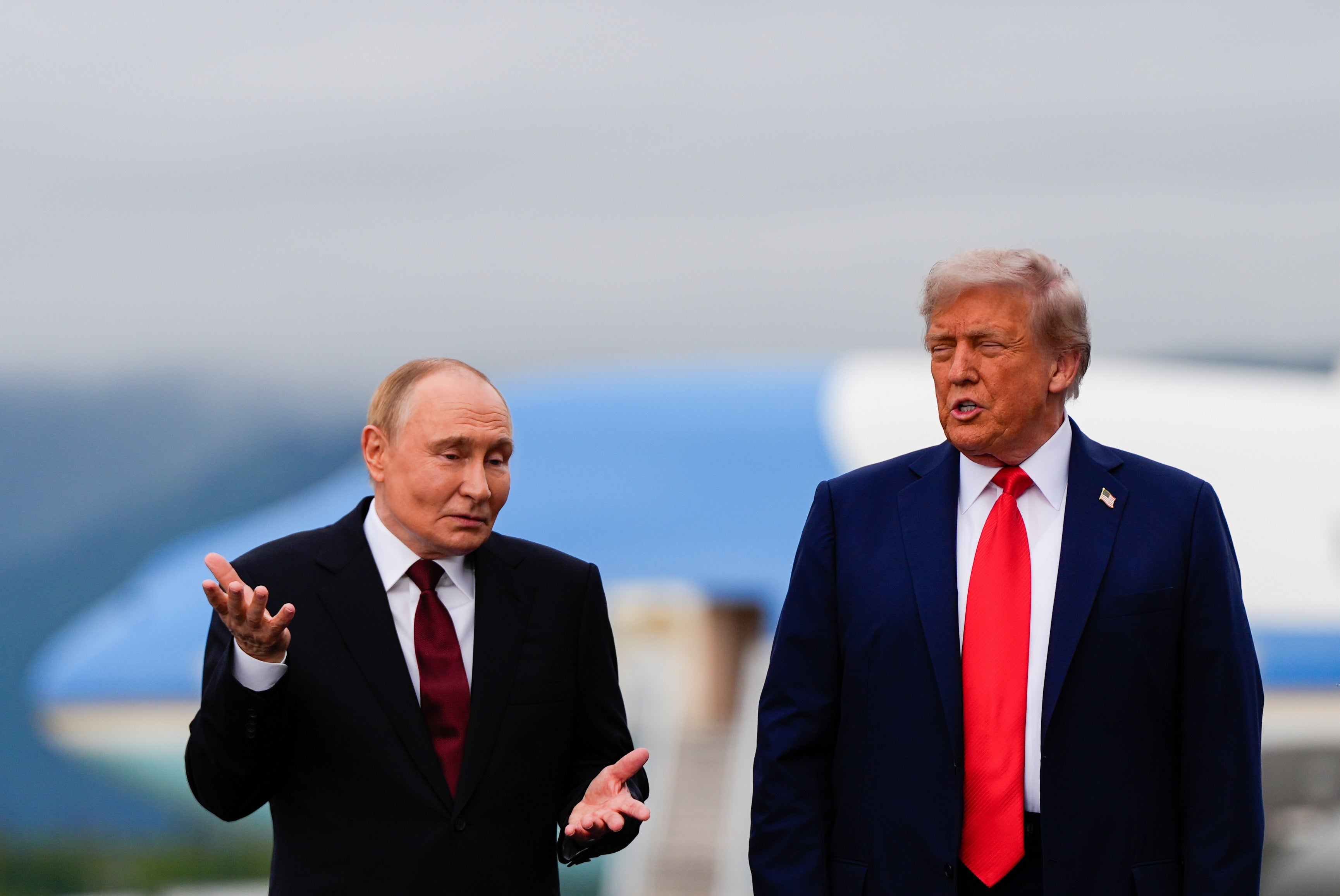
A win on points mediated by the US is not enough for Putin. It would be almost humiliating to let Trump steal the glory – as he certainly would. But more importantly, Westerners fail to see that peace, even a victorious one, holds snares for Russian rulers.
Putin frequently places his regime in a longer historical context than just the Communist episode in the 20th century.
Let’s leave aside the “historical” territorial claims that he uses from Catherine the Great’s era 250 years ago to justify seizing her “New Russia” in the south of modern Ukraine. It is the lessons of war and particularly peace for his regime today from the Russian past which should concern us.
Westerners tend to assume that peace is automatically a good thing. Certainly, for ordinary people – cannon fodder – it is. But even a victorious peace can pose a threat to authoritarian rulers.
Putin – known for his long rambles on his country’s history – remembers that after Russia’s greatest westward surge in defeating Napoleon and capturing Paris in 1814, the Tsarist regime faced growing pressure for liberalisation from the very officers who had won that victory. People then, and probably now, think the war effort deserves a peace dividend for them.
Putin's view of history is different. This month is the 200th anniversary of the Decembrist revolt against Tsar Nicholas in 1825. The botched mutiny passed almost unnoticed in Putin’s Russia. In Soviet days, the army officers who rebelled against the archetypal Romanov autocrat were celebrated as heroic forerunners of the revolutionaries led by Lenin. A recent Putin-era film about the Decembrists portrayed them as idiotic subversives, serving Western, Russophobic interests. Liberalisation, even after a triumph, is seen as a destabilising sellout by Putin.
In 1945, veterans of the Red Army’s defeat of the Nazis, like the young Lieutenant Aleksandr Solzhenitsyn, presumed Stalin would recognise their loyalty and sacrifice for the Soviet regime and relax his iron grip on society. Solzhenitsyn’s deportation to the Gulag was one of umpteen examples of how Stalin tightened control after routing his foreign enemies.
Donald Trump seems to assume that Vladimir Putin would want to bask in the glory of a victorious peacemaker, but peace is probably a threat to Putin and his system.
Our focus on Putin tends to obscure the network of senior security figures, regional bosses and rich Russians who support his war on Ukraine and his rule in general because they both benefit from them and share his outlook on Russia’s role in the world.
Continuing to fend off a world of anti-Russian enemies is arguably a vital way of stabilising Putin’s system even after the septuagenarian leaves the Kremlin one last time.
Of course, after Stalin, there was the Khrushchev “thaw”, but the destabilising consequences of that liberalisation and Gorbachev’s suicidal glasnost haunt today’s Russian elite. Yes, Putin and company came out on top a decade after 1991’s Soviet collapse, but that is no reason, in their minds, to liberalise today – or tomorrow.
What Putin is trying to do now is navigate between the need to keep Donald Trump on board as a de facto partner in geopolitics, while frustrating the US president’s ambitions to be a peacemaker worthy of a Nobel Peace Prize by ending the world’s worst war, which could release social tensions inside Russia – and maybe also in Ukraine, but destabilisation there is fine by Putin.
Keeping the upper hand in an endless war is a good strategy for regime survival in Russia.
Join our commenting forum
Join thought-provoking conversations, follow other Independent readers and see their replies
Comments
Bookmark popover
Removed from bookmarks