Hang it in the Louvre: Why ex-Prince Andrew’s taxi photo is so dangerous for the royal family
A public that actually once celebrated Andrew Mountbatten-Windsor’s marriage with street parties has (rightly) lost any shred of deference for the royals – and now openly mocks them, says Victoria Richards


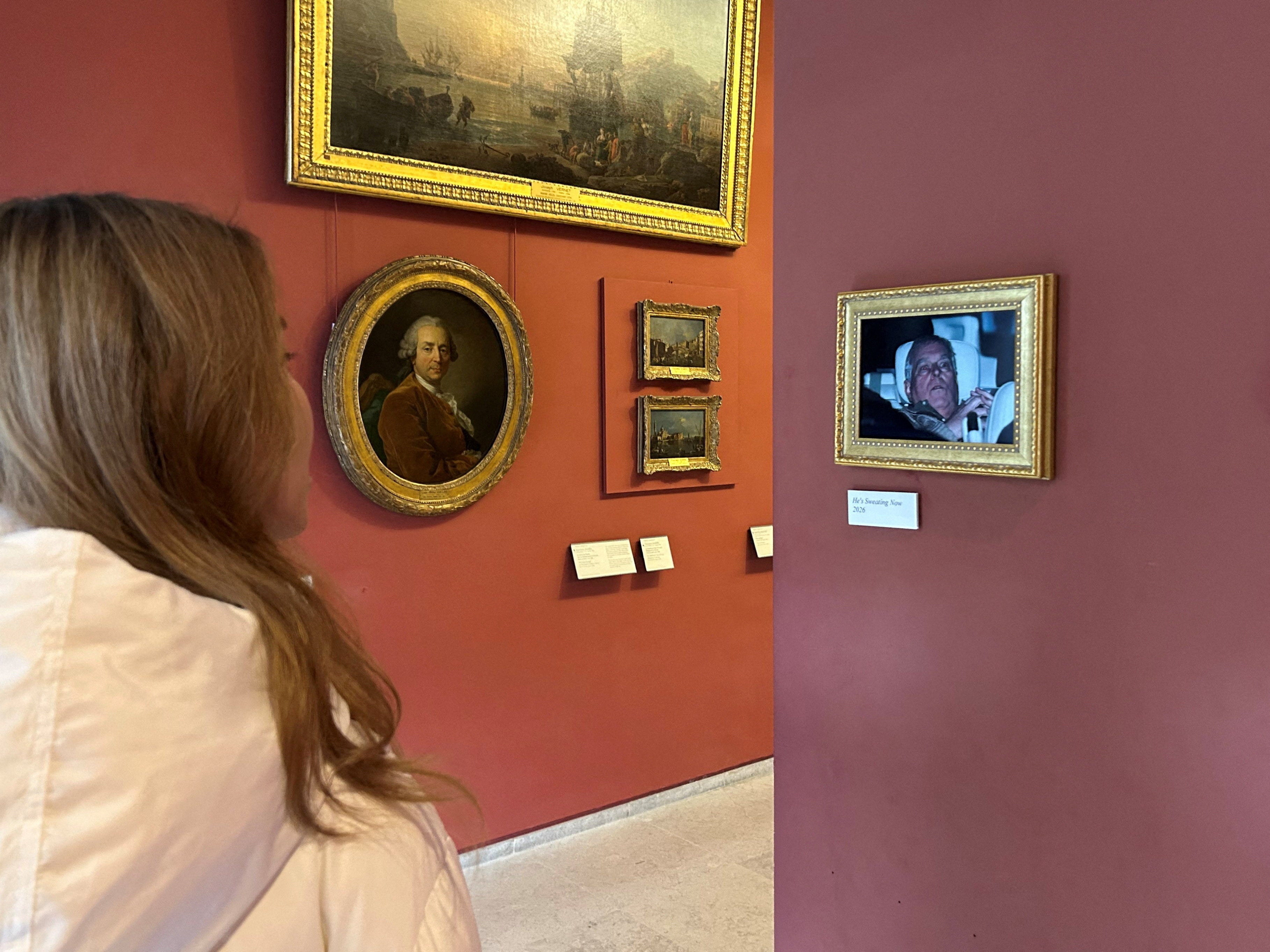
In ex-Prince Andrew’s taxi mugshot, taken right after his arrest, we see his mouth gaping open like Edvard Munch’s The Scream, one eye red and wild and lowered in rage like Alexandre Cabanel’s The Fallen Angel (which depicts, interestingly, the Devil after his fall from heaven – eyes emoji on that). And in a perfect example of life imitating art (as well as simply giving us all a good LOL), activists have done exactly that: they’ve hung Andrew Mountbatten-Windsor in the actual Louvre.
Campaign group Everyone Hates Elon, who are reportedly responsible for the simple (yet brilliant) stunt, say they secretly placed the photograph in the Paris museum shortly after the former royal’s arrest on suspicion of misconduct in public office over allegations he sent confidential government documents to convicted sex offender Jeffrey Epstein (Mr Mountbatten-Windsor has since been released and has consistently denied any wrongdoing). But there’s a very basic reason that the Louvre mischief works: it is because it’s funny – and therefore, completely humiliating.
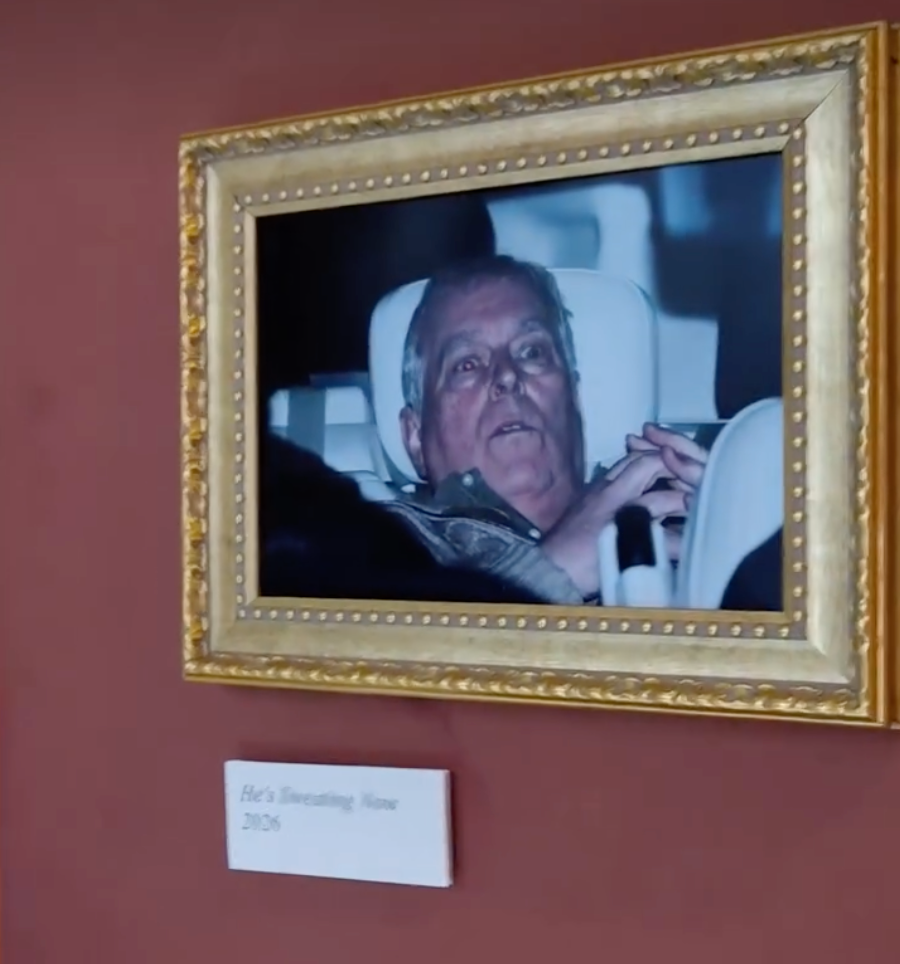
Just as South Park “got” Harry and Meghan three years ago with one simple, brutal episode where they rip into the couple’s move to California – and “got” Donald Trump, too, in their Epstein-related season finale last December (as well as apparently infuriating the White House with one very NSFW episode about his penis in July) – it just goes to show that the old adage is always right: the human race has only one really effective weapon, and that is laughter (h/t Mark Twain). In other words, if you really want to get to someone, take the p**s out of them. Mr Mountbatten-Windsor being hung in the Louvre does exactly that. It’s simple, beautiful and effective – just like great “art” should be.
It cements his coup de grâce as a moment so seismic and so momentous that it marks a turning point not just for him personally, but also for the world of rulers and kings and aristocracy altogether. It proves that nobody is too big and too powerful to be ridiculed. Nobody. Not presidents, not politicians – and certainly not princes.
The after-effects will be devastating. This week, we learned of ongoing discussions to remove Mr Mountbatten-Windsor from the line of succession to the throne (he is currently still eighth after the families of William and Harry). Searches are continuing at his former home in Windsor, and Met Police officers are asking his protection officers to come forward with information following suggestions they may have turned a blind eye to what went on at sex offender Jeffrey Epstein’s island.
We’ve also heard salacious new claims that Mr Mountbatten-Windsor may have charged taxpayers for “massage services” while working as a trade envoy, which all sounds very Toulouse-Lautrec, to me (the artist, lest we forget, immersed himself fully in the cabaret culture of Montmartre, Paris, in the late 1800s, where he documented the nightlife and brothels of the Belle Époque before dying at 36 of alcoholism and syphilis, showing that our past always catches up with us in the end... hey, Andrew?).
But I think the Louvre stunt also shows something deeper, darker and more dangerous for the monarchy in Britain – something that no amount of casting Mr Mountbatten-Windsor aside or branding him the “black sheep” will change now: the era of deference is over. Long gone are the days of respect for kings and queens and epic, days-long queues to see the body of her highness; of bowing at coronations and waving flags at #PlattyJubes parties. I can remember when the marriage of Prince Andrew and Sarah Ferguson was celebrated with street parties up and down the country. It’s hard to imagine that happening again.
Our entire democracy is literally built on this culture. Parliament’s clerks had, until last year, vetoed every attempt to raise concerns about Mr Mountbatten-Windsor and other royals. The defence has always been that Erskine May, the “bible of parliamentary procedure” that MPs have scrupulously followed for two centuries, prevents discussion of the monarchy and of any matters that reflect on the sovereign or royal family “personally”. Surely, not any more?
Mr Mountbatten-Windsor’s arrest – his excoriating fall from grace, his dramatic climbdown from propriety amid the stain of potential illegality – signals we are in a new epoch, now. It is a post-royal period, a raucous and distinctly republican rumble. The age of irreverence (an ir-revolution?) has begun – and fittingly, it has started in France. We have done away with deference, by way of a snigger at South Park and a LOL at the Louvre.
The idea that an image is so iconic, so meaningful that it is, truly, a work of art has, perhaps fittingly, become a meme in the age of the internet; “Hang It In the Louvre”, they say, about a snapshot of a moment that transcends the moment, that becomes something bigger than itself and changes the world of forever. Remember that shot of Muhammad Ali standing over Sonny Liston in 1965? It’s so iconic, so meaningful – Ali with his mouth open, screaming at Liston to “get up and fight” after knocking him down with a phantom punch just one minute and 44 seconds into the first round in Maine. You can practically smell the blood and sweat and talc. Indeed, it paints so legendary a picture that it could, quite literally, “hang in the Louvre”. Well, now there’s another one.
So, when I look at Mr Mountbatten-Windsor’s mugshot, I think of all the other “great” works of accidental art: Diego Maradona’s “Hand of God” 1986 World Cup goal (hang it in the Louvre). Pele, on the shoulders of his teammates when he won the World Cup in 1958 (hang it in the Louvre). Michael Jordan’s 1988 slam dunk (hang it in the – OK, you get the picture). And the fallen prince, expelled from heaven.
Join our commenting forum
Join thought-provoking conversations, follow other Independent readers and see their replies
Comments
Bookmark popover
Removed from bookmarks