If anyone refuses to take Nigel Farage seriously, they must think again
Reform has overtaken Labour to have the biggest party membership in Britain, a key marker in its progress, writes John Rentoul


Many people in politics think Nigel Farage is like the flame on a Christmas pudding: all show and over in a minute. I meet Conservatives who think he will have blown himself out by the end of this parliament and that they will have re-established themselves as the party of sound money.
Labour people are different. Those who are dismissive of Farage tend to be “hung parliamenters”. They say they recognise that Farage is a threat, but they take refuge in the comfortable fudge of an inconclusive next election and a continued Labour government with Liberal Democrat support.
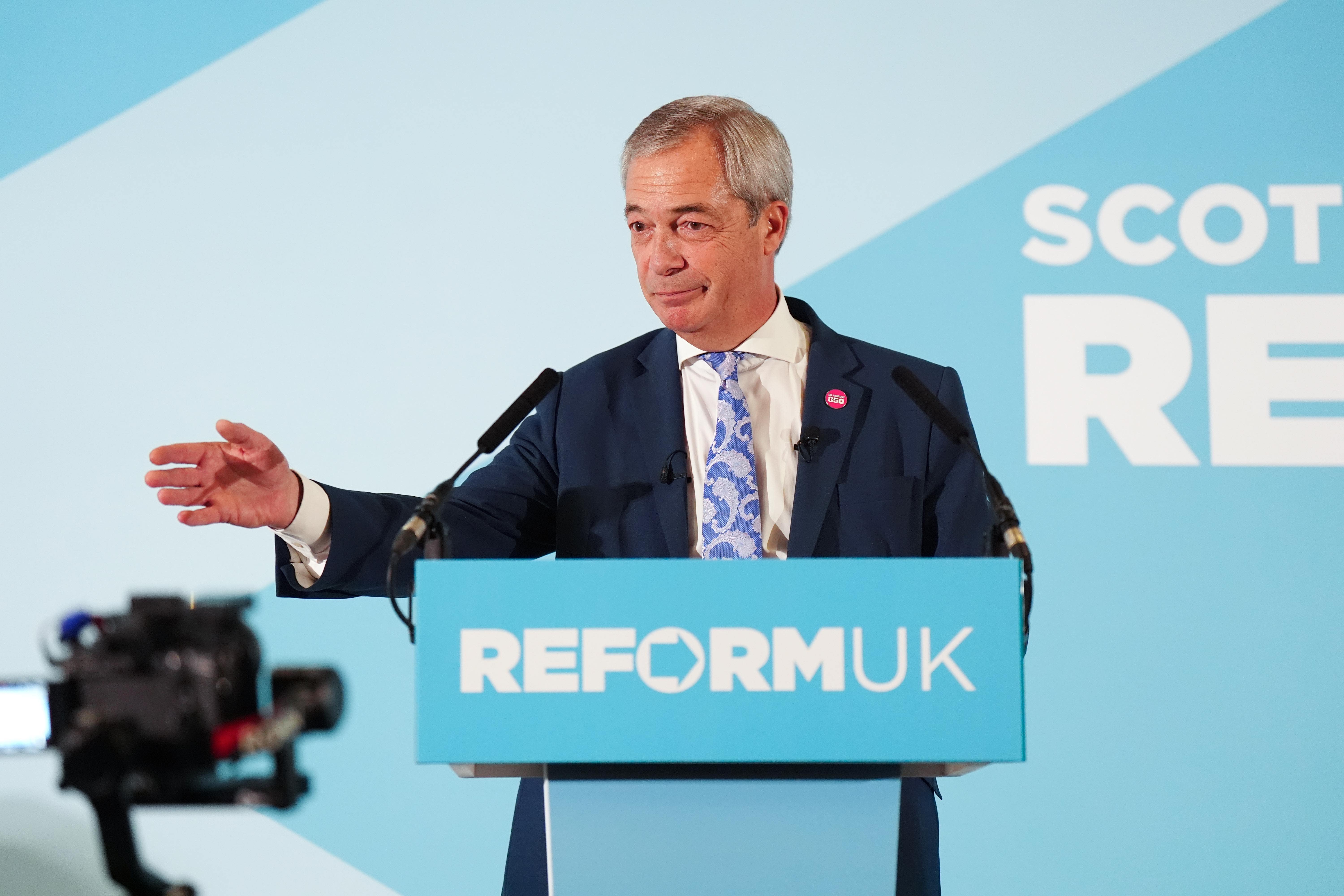
Both types need to learn to count. Reform’s online membership ticker passed 270,000 this morning, as leaked figures revealed that Labour has fewer than 250,000 members. Reform is now the largest party in Britain, and that matters.
Some Farage doubters point out that Labour had half a million members when Jeremy Corbyn was leader, and he didn’t win. Which is true, but the point is that he nearly did in 2017, when a large and enthusiastic membership helped to compensate for the weaknesses of his policies.
What is significant about Reform overtaking Labour is not that Labour’s membership has fallen. That happens to parties in government. Labour had 405,000 members when Tony Blair was leader of the opposition, which declined when he was prime minister, even though he was a popular one for some time.
The Conservative Party has also paid the price of a long period in government. It has been hollowed out as a membership organisation. Under Kemi Badenoch, it is being sustained by the inertia of a few rich donors, but Christopher Harborne’s £9m donation to Reform has turned the terms of trade on that too.
What matters is that Reform has established itself as the biggest vehicle for enthusiastic grassroots opposition to the government. Its members are animated by hostility towards the Tories’ betrayal on immigration when they were in power as much as they are by Labour’s failings in government. It is hard to see how the Tories can come back from their recent record in office, even if Badenoch is having the time of her life savaging Keir Starmer at Prime Minister’s Questions every week. They are going to be out-organised, out-leafleted and out-spent by Reform all the way to the next general election.
“It is not members that matter, it is votes,” is another comforter for those who are dismissive of Farage. On current voting intentions, that doesn’t help. Reform is also hoovering up “real votes in real ballot boxes” in local council by-elections, and is likely to do well at the expense of both Labour and the Tories in next May’s local elections.
There is one response to Reform overtaking Labour that is even more wrong-headed than playing down Farage’s prospects, however. It came from the “interim council” of Mainstream, the soft-left faction that used Andy Burnham’s name to launch itself and which sounds like the provisional wing of Lucy Powell’s leadership campaign. It is probably only one person with a Mailchimp account, but whoever it is issued a statement saying Labour’s “plummeting membership” showed that its “top-down model has failed”.
The solution sounded familiar: “The answer is to democratise, open up, and empower members. A vibrant, member-powered Labour party is the only way to win – for our party and the country.”
This is the worst idea in the long history of wrongness on the so-called left, as has just been demonstrated to destruction by Corbyn and Zarah Sultana.
Such thinking is common among Labour, Lib Dems and Greens, but it has spread to the Tory side of politics too. Kwasi Kwarteng, chancellor for “five Fridays”, came to talk to my students at King’s College London on Thursday and explained why he didn’t resist those of Liz Truss’s ideas with which he disagreed. “I thought she had a mandate from the members,” he said.
A mandate? From one of the most unrepresentative subsets of the population? It is no wonder it went wrong so quickly.
Party members should not decide policy, and they should not elect leaders. Large party memberships arise in response to “top-down” messages that go down well with a significant section of the wider electorate; they reflect successful leadership, but should not be allowed to reflect their distorted and extreme version of that leadership back up to the top.
Members matter, not because of some soft-headed theory of party democracy, but because they are an indicator of enthusiasm. Reform’s numbers suggest a party that can sustain a level of motivation until the general election. There is a side-benefit in that it helps to have an army of canvassers, leafleters and local champions. But the one thing that Farage would – rightly – never do would be to give his members any power.
Join our commenting forum
Join thought-provoking conversations, follow other Independent readers and see their replies
Comments
Bookmark popover
Removed from bookmarks