Don’t panic! The end of New Start won’t trigger a new arms race (… any time soon)
The expiry of the last nuclear weapons treaty between the United States and Russia is no immediate cause for alarm – long-range arms controls have been rendered all but irrelevant by a new generation of weaponry and defence systems, as well as the emergence of other superpowers including China, says Mary Dejevsky


It was supposed to be the end of an era, and the Cold War era at that. On Thursday 5 February, the last remaining arms control treaty between the United States and Russia expired.
But at the very moment that New Start – as nuclear weapons controls go, how perverse does that name sound? – came to an end, prompting rising fears that the world was about to enter a new arms race, the US let it be known that it was, in fact, talking to Moscow about rolling over the treaty, which sets maximum numbers for long-range nuclear missiles and warheads, for an as-yet-unspecified period.
Maybe – just maybe – another New Start is on the horizon. A new New Start, if you will.
There is an argument to be made that the entire nuclear arms control process was a Cold War and post-Cold War phenomenon that has limited, or no, relevance today. That view might be supported by the general lack of alarm around the world as the New Start expiry date neared. After all, all of the other nuclear arms treaties had been abrogated or expired, including – most pertinent for Europe – the Intermediate-Range Nuclear Forces (INF) treaty of 1987.
So what difference would the demise of the last such treaty, a 10-year agreement signed in 2010 by the then US president Barack Obama and Russia’s Dmitry Medvedev, really make – other than perhaps saving both sides the considerable financial costs of a nuclear weapons free-for-all?
Many of the old constraints have simply become irrelevant with the development of whole new classes of weapons, including Russia’s much-vaunted hypersonic missiles, and the sophistication of satellite surveillance. Everyone can now see what everyone else is doing, in far greater detail and with far higher accuracy than before. Are actual treaties needed to police that?
The context has also changed. The Yalta principles that had governed the Cold War peace in Europe were rendered void by the fall of the Berlin Wall and the collapse of the Soviet Union, although the designation of Russia as the Soviet Union’s successor state allowed the arms control treaties to continue – for a while. The breakup of Yugoslavia saw Nato and Russia ranged on either side, a process intensified by the enlargement of Nato to include the Baltic states and most of the former Warsaw Pact countries, which also upset some of the missile-counting arithmetic.
Perhaps the biggest change in the context, however, has been the rise of China and the exponential growth of its military power, including its nuclear capabilities. Every now and again, a US official suggests that if there is to be any return to nuclear arms control, it makes no sense not to include China. How much enthusiasm for this there might be in Beijing, however – or, indeed, in Russia, which still sees itself as the single superpower counterpart to the United States – is hard to judge.
And what of those countries, such as India and Pakistan, that are relative newcomers to the nuclear club but not part of any arms control arrangements? Their example might even suggest that nuclear capability may act as a constraint in itself, as both sides recognise the risk of what, all those years ago, was termed mutually assured destruction, or MAD for short.
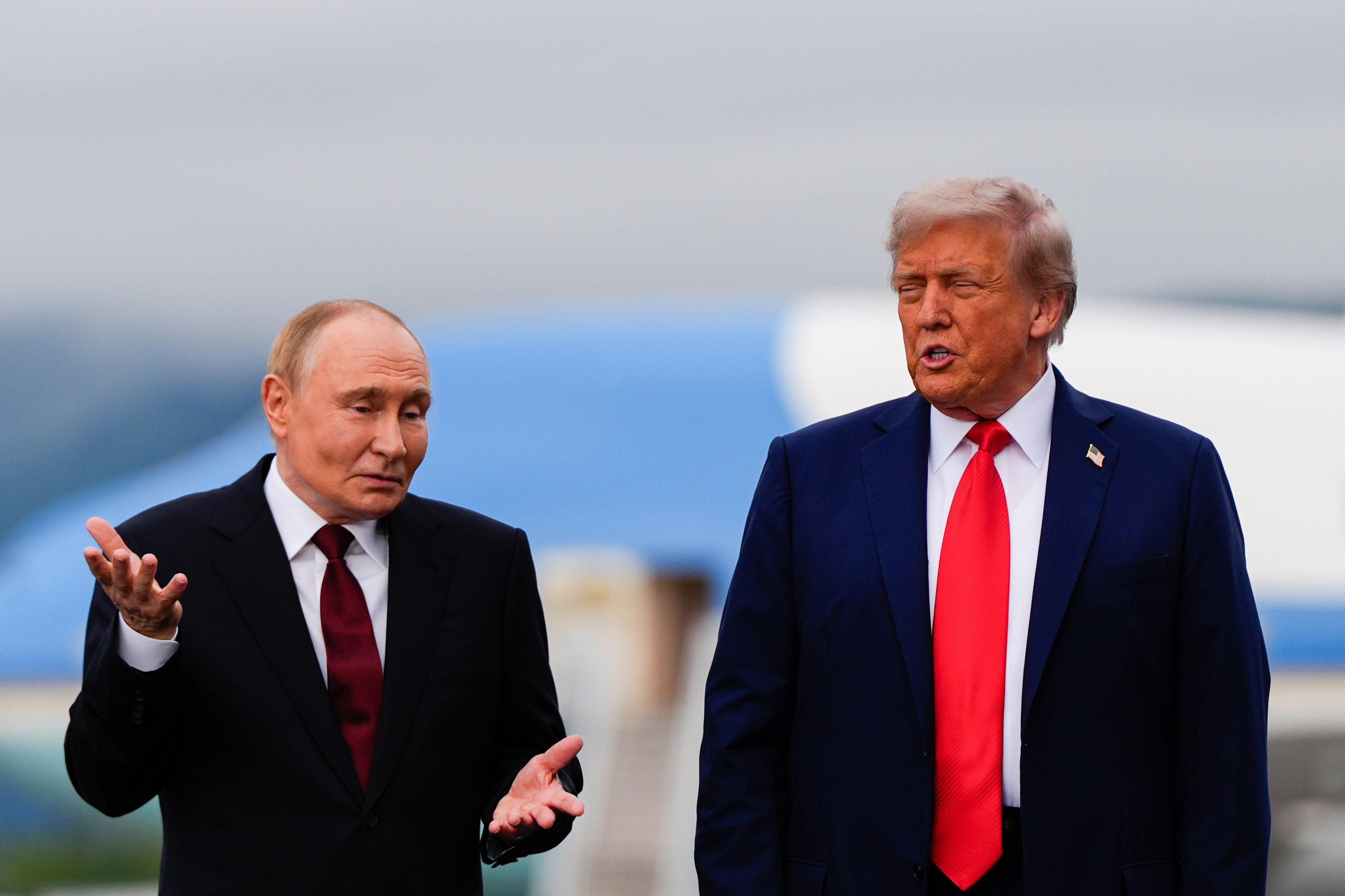
However, US engagement in last-minute talks broaching an extension of New Start – surely Donald Trump’s decision – suggests that even this ultra-realist sees something in what remains of the nuclear arms control process that could be worth saving, at least for now.
First, and perhaps the chief short-term consideration, is the message that it sends to Moscow. The US is not rebuffing a Russian proposal out of hand: it wants to keep relations on an even keel. There is little diplomatic or any other cost to the US in agreeing to talk and keep the treaty in force for that time. If it helps to make Russia feel safer within its own borders, so much the better.
Second, weapons control has helped sides to formalise channels of communication since the height of the Cold War. When there was no common ground on anything else, talks about nuclear arms have provided the pretext to talk. It was where the relationship between Ronald Reagan and Mikhail Gorbachev began, with the signing of the INF treaty in Washington, and it was the official subject for what became the controversial Helsinki meeting between Trump and Vladimir Putin in Trump’s first term, as the so-called “Russiagate” allegations swirled in the background.
Arms control, and security arrangements more generally, have been back in the frame of US-Russia talks since the start of Trump’s second term. Arms control is the old standby when relations are fraught.
A third consideration is more nebulous, but may be pertinent. The start of the Ukraine war heard some very loose talk – on both sides, as well as from Europeans and others – about the possible use of nuclear weapons, with an actual weapons strike being bandied about in some quarters as nothing to fear.
Of course, what seemed like a shockingly cavalier attitude to nuclear weapons may reflect nothing more than the fading of memory – about the reality of Hiroshima and Nagasaki, the terror spread by the Cuban missile crisis, and the mass peace movements these fears spawned. For those who remember such days, however – and they would include 79-year-old Trump – the last vestige of nuclear arms control could seem just a little too precious to be jettisoned before more thought has been given to what might follow.
Join our commenting forum
Join thought-provoking conversations, follow other Independent readers and see their replies
Comments
Bookmark popover
Removed from bookmarks