Finally, a stirring Starmer speech. But what will voters think?
The prime minister has shored up his party’s ailing morale at a stroke, but it will take much more than fine words and little flags to win back the wider electorate, writes John Rentoul


It was a fighting speech that went down well in the hall, which probably means that it will not be so well received outside it. But if the first aim of Keir Starmer’s conference speech was to shore up Labour morale, he succeeded.
The delegates loved it – so much that Starmer had to appeal repeatedly for the applause to stop so that he could make progress (“thank you, conference”) and even shout over the rising cheers to deliver his two most dramatic passages.
One was a list of the government’s achievements so far, which can only sound convincing if shouted into a wall of noise. The other was the bit where he finally identified “the enemy”.
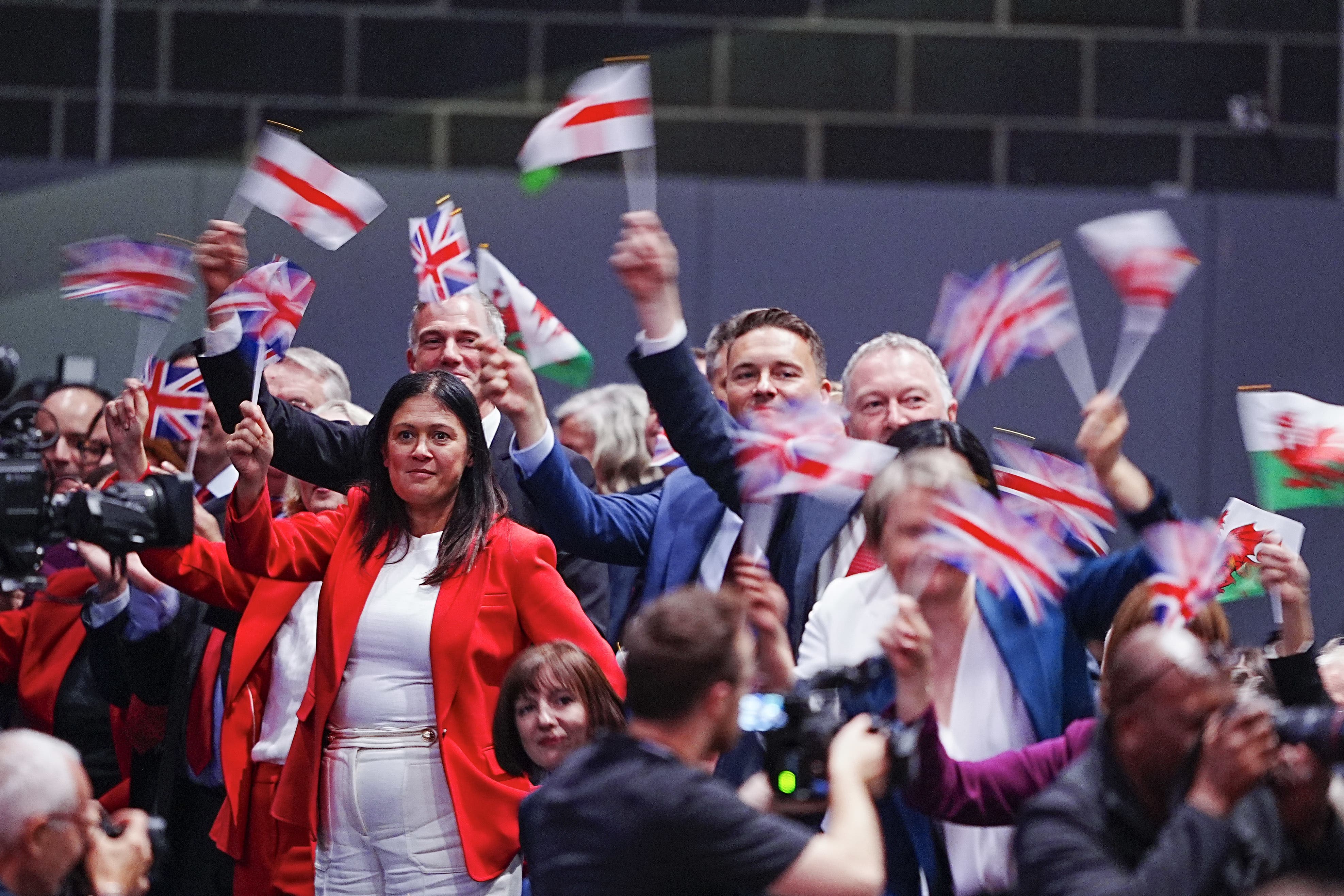
This was when he said: “If you say or imply that people cannot be British because of the colour of their skin, if you say they should be deported ... we will fight you with everything we have, because you are the enemy of national renewal.”
After so much of the speech had been devoted to attacking Nigel Farage but trying to draw a cautious distinction between him and his voters, delegates were brought to their feet by a clear and ringing denunciation of racism.
In the hall, the contradictions that ran through the speech were happily ignored by a crowd that had surprised itself by being in good heart despite the government polling in the high teens and the prime minister being the most unpopular since records began.
One message was of bringing the country together, while condemning a party that has the support of 30 per cent of voters, and accusing its leader of having “crossed the line”.
The worst thing about Farage, apart from his racism, was that he complains about Britain being broken, Starmer suggested. This introduced a fine passage of his speech in which he listed a lot of good things that people were doing around the country and asked: “Is that broken Britain?”
But it was only 15 months ago that Starmer fought an election campaign claiming that Britain was broken, and since then he has pleaded for patience in dealing with the problems of a “broken” NHS, “broken” asylum system, “broken” transport network and “broken” welfare system.
Those were, of course, all broken by the Conservatives. But the Tories were mentioned only twice in Starmer’s speech. Once, I think, by mistake, when he talked about working people “paying the price of Tory decline”, and once when he made a joke about not having mentioned them – “the Tories, do you remember them?”
But it was the idea of “broken” Britain that took us to what should have been the heart of the speech: Starmer’s plea for time and a chance to set out his plan for national renewal. He had an excellent passage attacking unspecified snake oil salesmen for offering easy, instant solutions to difficult problems. He started by criticising the idea of “tax cuts that pay for themselves”, attacking an unnamed Liz Truss. He didn’t make it explicit, but this is also one of Farage’s weakest fronts, as Reform propose huge tax cuts with no idea of how they will be paid for.
Instead, Starmer turned it into an attack on Andy Burnham and the “soft left”, saying that unfunded spending promises were just as bad as unfunded tax cuts, and mocking the snake-oil solution of “a wealth tax that pays for everything”.
The defence of fiscal responsibility as the foundation on which measures for social justice are built was an important part of the speech, as was the defence of a “tough” immigration policy as the condition of an open, tolerant society.
But what they wanted to hear in the hall was an all-out attack on the evils of Farage. They wanted the chance to wave their small flags in order to “reclaim the flag from the racists”, although the conference organisers had failed to supply Ukrainian flags for that rather effective paragraph of Starmer’s speech underlining Britain’s solidarity with the Ukrainian people in their struggle against Vladimir Putin’s aggression.
Outside the hall, though, the implied rebuke to voters who fly the flag for the “wrong” reasons might mean that the speech will not be so well received there. Many people outside the hall still think that Britain is broken, and are not going to listen to the most unpopular prime minister since Ipsos records began in the 1970s telling them otherwise.
Join our commenting forum
Join thought-provoking conversations, follow other Independent readers and see their replies
Comments
Bookmark popover
Removed from bookmarks