The Independent's journalism is supported by our readers. When you purchase through links on our site, we may earn commission.
Inside LA’s Koreatown: Where tradition meets a new generation of creativity
From soju bars to community-run clubs, Yvette Cook explores what makes K-town one of California’s most dynamic districts
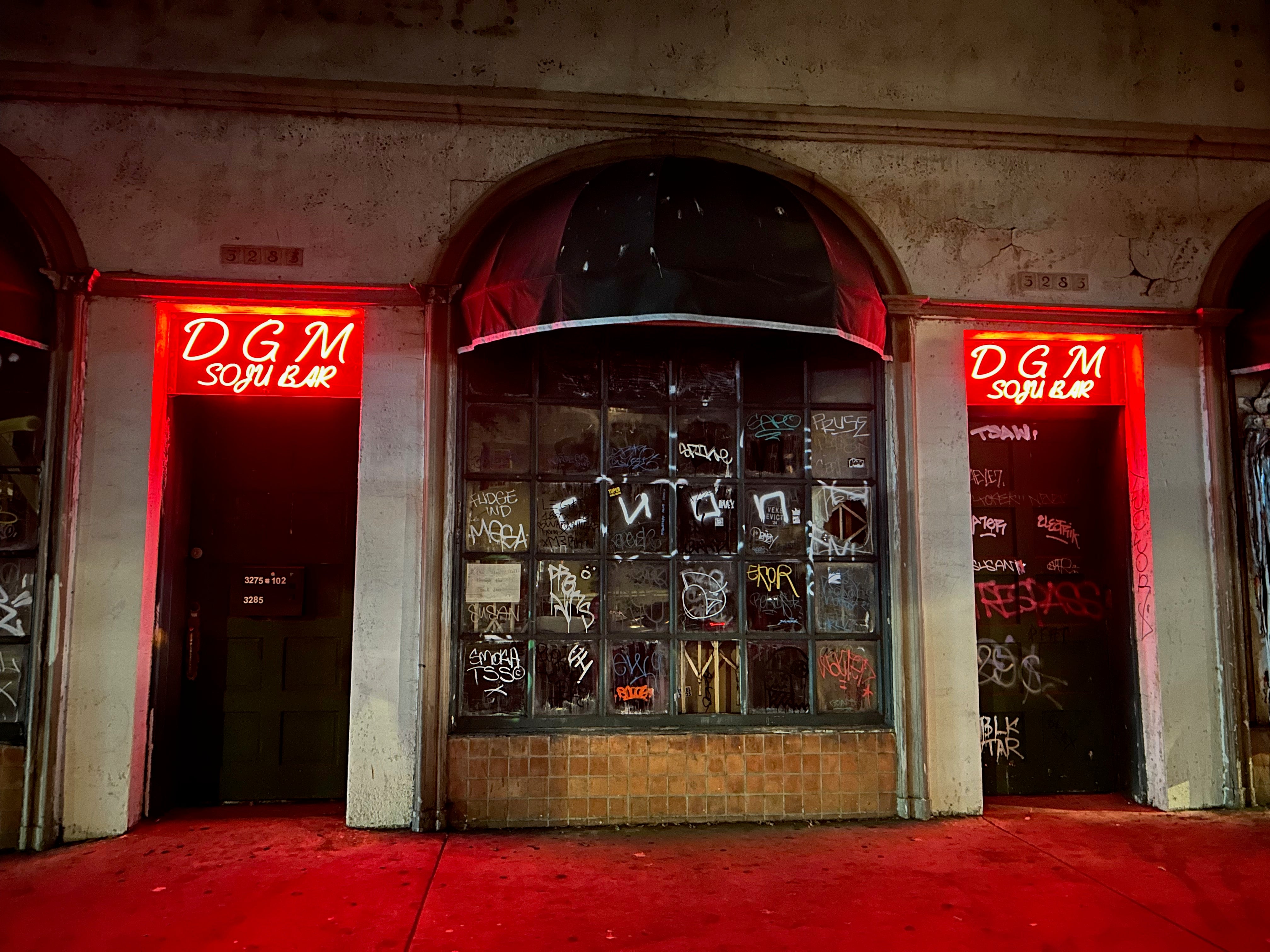
As I stand nervously in the dark, a street lamp flickers and the sound of a car exhaust echoes down the empty six-lane street. Stepping back from a locked green door, I glance up at the red neon sign reading “DGM Soju Bar” and wonder how to enter. A young Korean-American greets his friend on the corner, eyeing me with quiet suspicion.
Sensing they are heading to the bar, I follow them on a convoluted route around the back, my shoes clicking on the aluminium stairs. Chasing aromas of garlic and chilli through a dim corridor, relief washes over me as I emerge into a courtyard strung with fairy lights, filled with chatter and clinking glasses of soju, Korea’s rice spirit.
Heading inside feels like stepping into an alleyway in Seoul with wooden booths under corrugated iron roofs and young Korean Americans perched on low plastic stools, sharing plates of kimchi pancakes and black bean noodles. Between sips of Korean beer and peach-flavoured soju, it becomes clear to me that this bar is anything but ordinary.
Read more: Best hotels in LA for beach views and Hollywood glamour


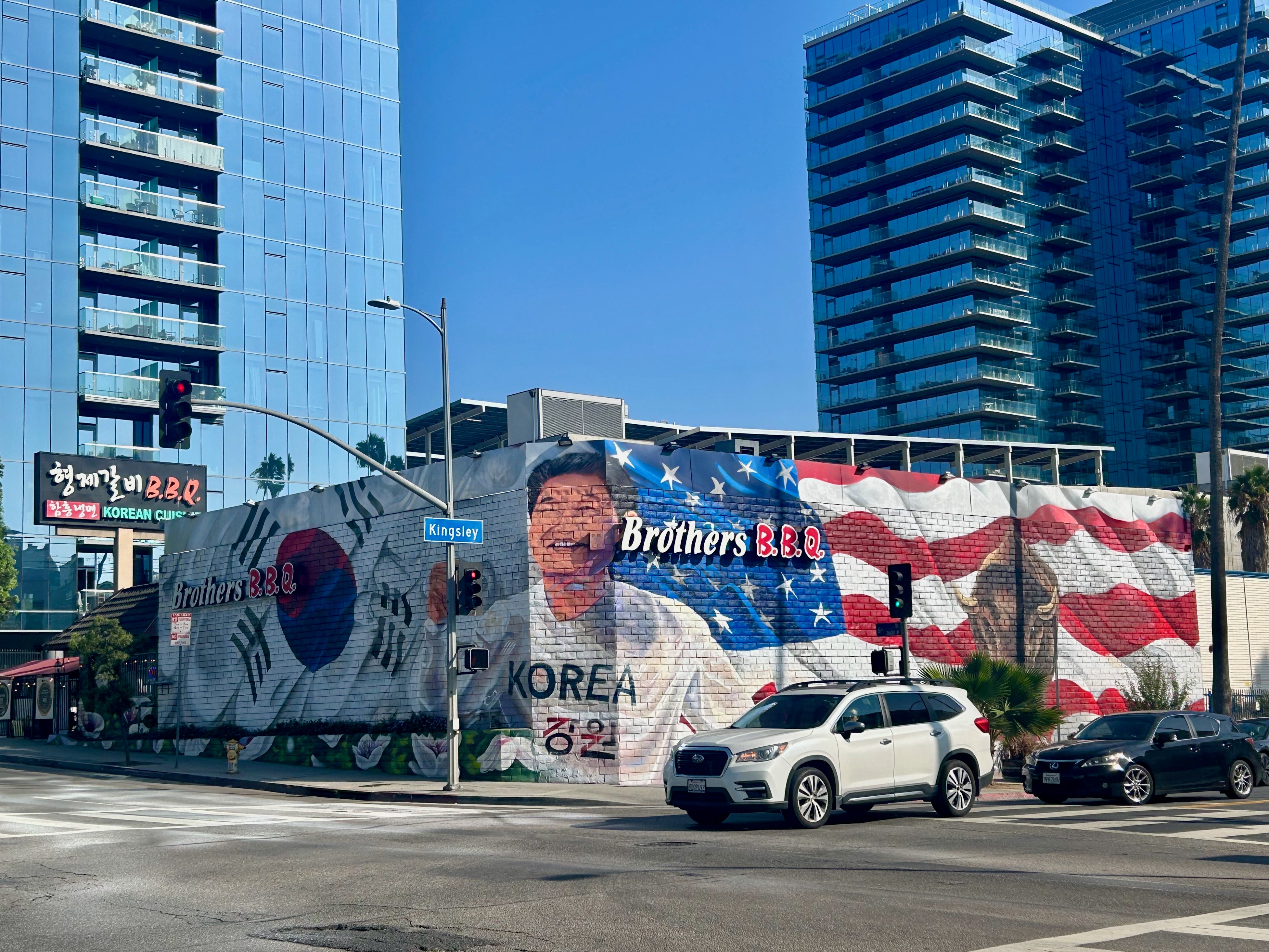
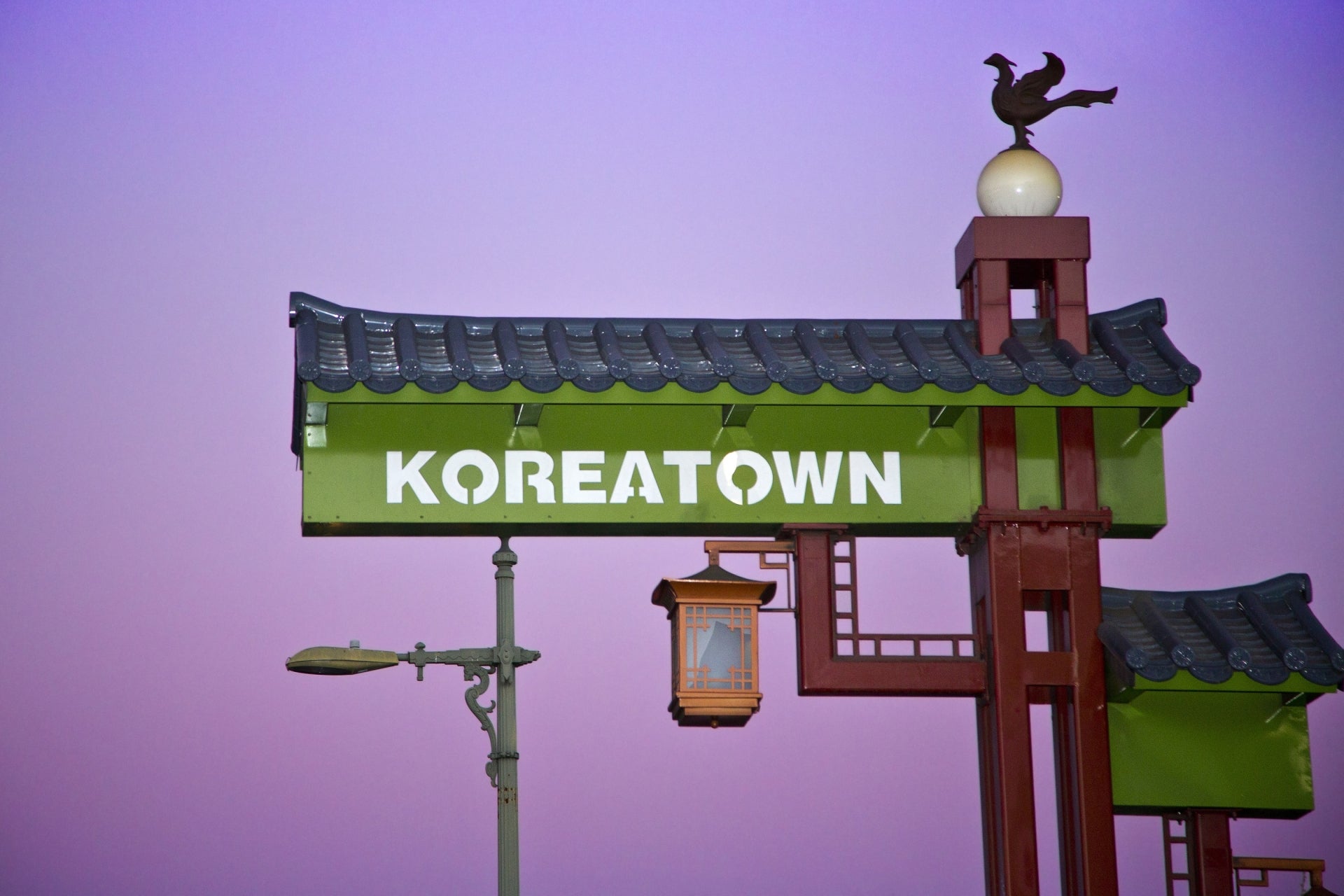
I’m in Koreatown, three miles west of Downtown Los Angeles. As a regular visitor to LA, it’s a neighbourhood I’ve previously only driven through. Spread across a dense three-square-mile grid with no clear centre, it’s always felt impossible to know where to start. Yet, as home to the largest Korean community outside of the country, it's a vibrant microcosm of its global cultural rise with the energy of K-pop, the allure of Korean cinema and the irresistible flavours of its barbecue and street food scene.
With a new generation of Korean Americans giving their heritage a modern twist, I’ve come to discover a side of Los Angeles that lies beyond its museums, beaches and Hollywood attractions.
Starting at The Line Hotel in the centre of Koreatown, I wander the streets, disorientated by traffic-choked roads, car park plazas plastered with Korean signs and fast food delivery robots that seem to tail me.
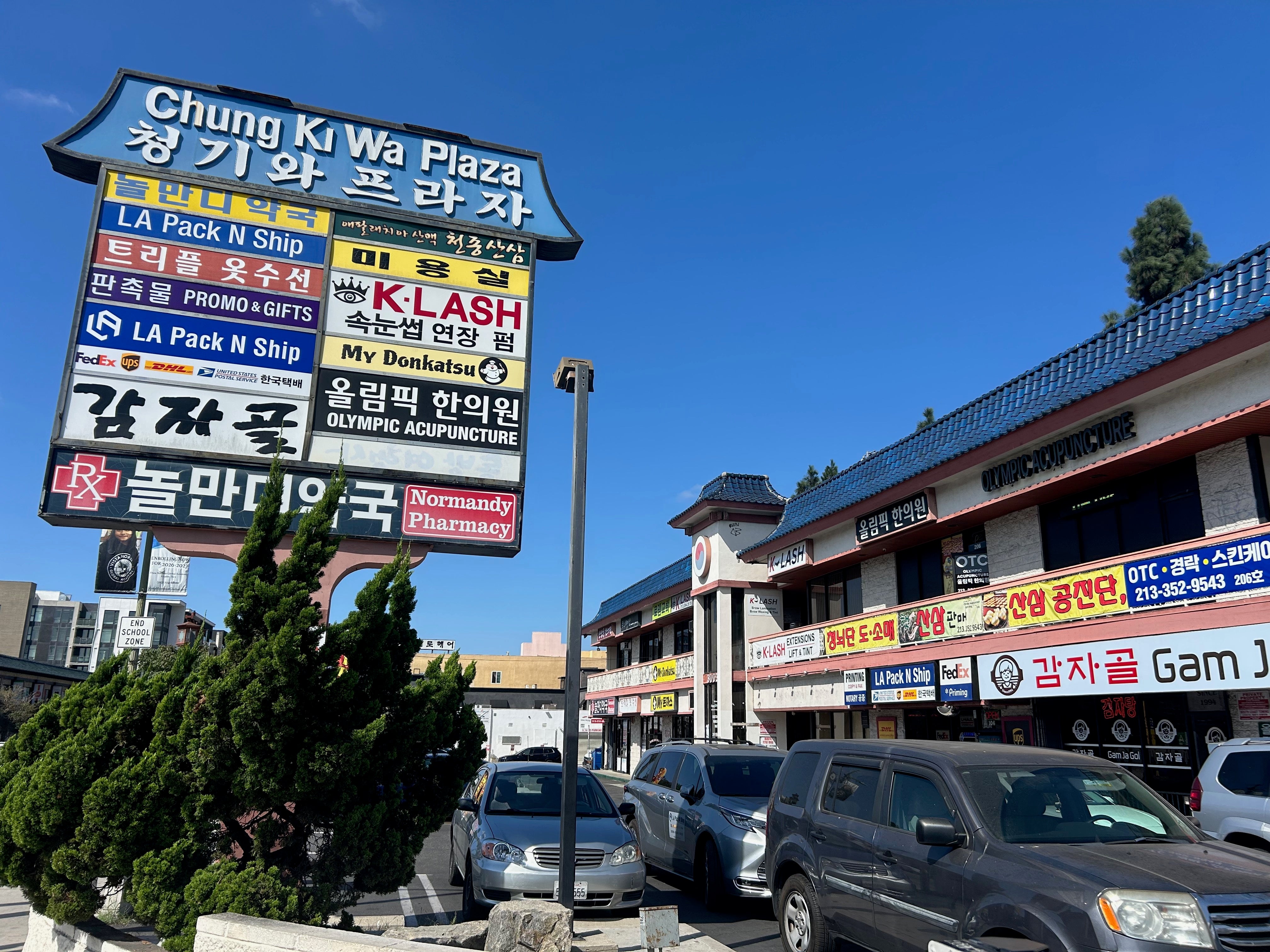
I’m relieved when I meet Sally Tiongco, the owner of Six Taste Food Tours. “We want people to fall in love with our city, and the best way to do that is to feed you,” she says, leading me along Sixth Street, the same route I’d stumbled through an hour earlier. She adds: “We're not known as a walkable city, but we’re trying to change that.”
Sally points out what I’d missed, including the historic Chapman Plaza, the city’s first drive-through market, and Elorea, a Korean perfume shop that curates drinks based on your preferred fragrance. At H Mart, she introduces the building blocks of Korean cooking, including dried anchovies, soybean paste and endless varieties of kimchi.
Read more: Best things to do in Los Angeles
When my stomach growls, Sally steers me into Chang Hwa Dang, famed for its Korean mandu (dumplings) and tteokboki (pronounced tok-bo-kee), rice cakes in a red, spicy sauce. As multi-generational families and friends crowd around shared plates, using the other ends of their steel chopsticks to serve one another, Sally smiles. “Koreans are a communal eating community – you just share,” she tells me.
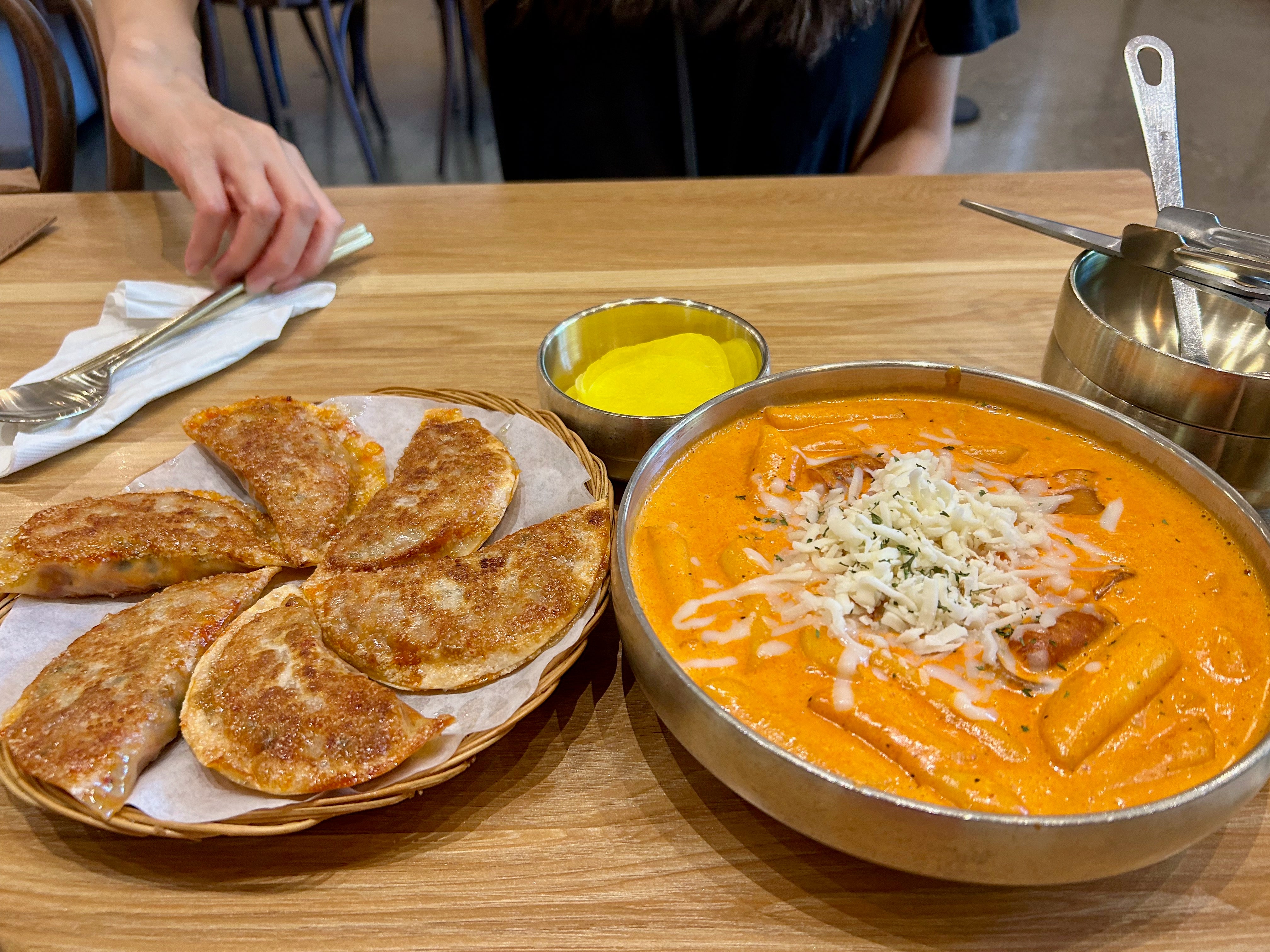
A spiral of fried kimchi mandu arrives alongside rose tteokboki; it is more orange and creamier than I expect. The chilli tingles on my tongue and I realise that Korean rice cakes resemble dense pasta. Sally explains: “Adding cheese to tteokboki gives it an earthy, smoky flavour and makes it more photogenic.” These small twists on tradition mean the restaurant appeals to all generations who want to eat out together.
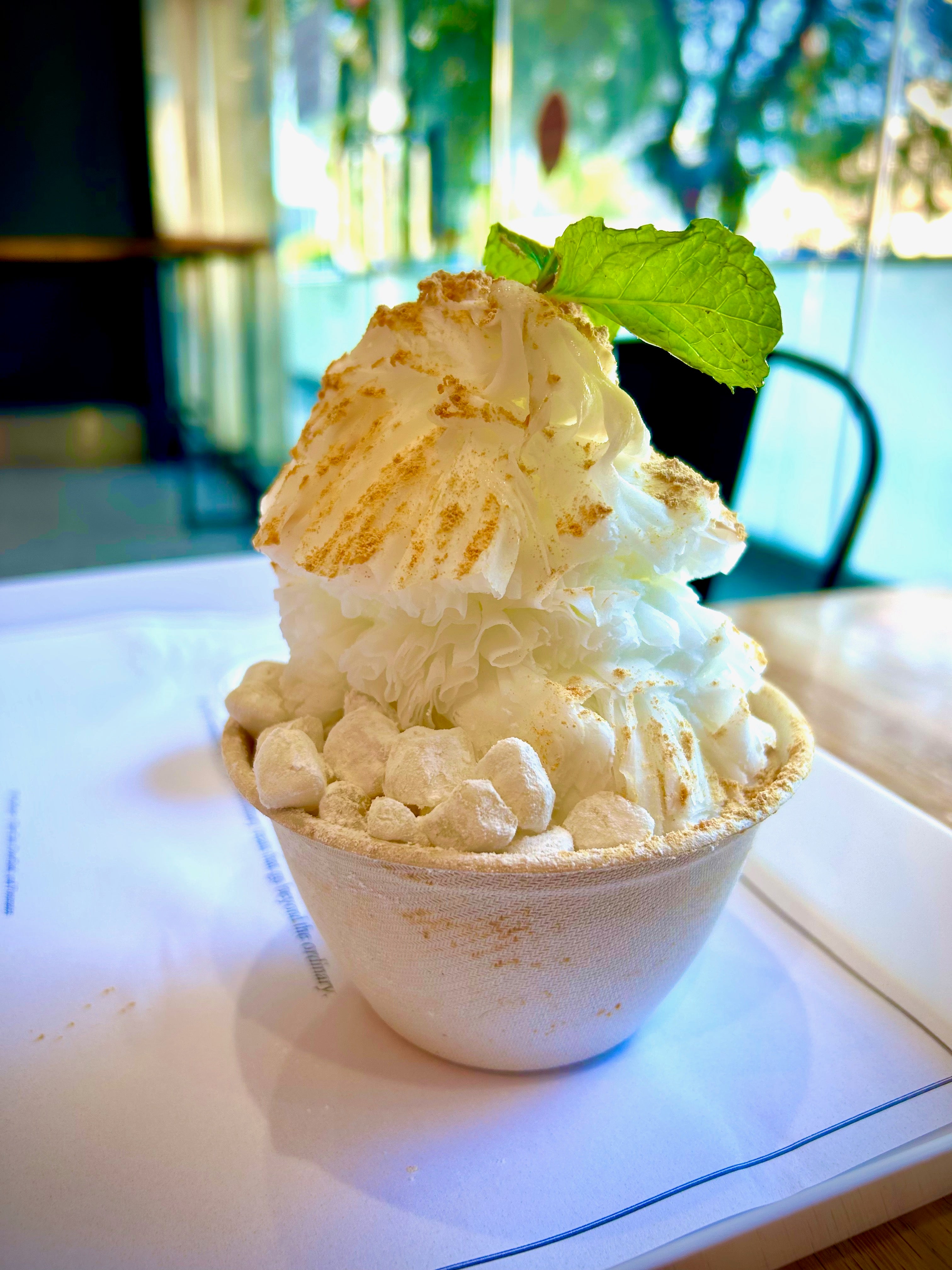
After experiencing a traditional barbecue of sticky pork ribs and soybean stew at Ham Ji Park, Sally shows me Koreatown's evolving dessert scene. At Oakobing, single portions of shaved iced-milk, known as cup bingsu, are the latest craze.
As Sally pours condensed milk over my injeolmi cup, she says: “I see younger people here all the time, not just for the taste, but because of the incredible presentation.” Topped with mochi and layers of roasted soybean and sweet red beans, I dig in. Its light, nutty and subtly sweet flavour is the perfect finale to the tour.
With food as my gateway into Koreatown, I meet Jennie Wright in The Line Hotel’s lobby, which she fondly calls “the living room of my neighbourhood”.
A local resident and the hotel’s brand manager, Jennie explains how younger Korean Americans are creating new trends, beyond the soju bars with inventive flavours and noraebang (karaoke) bars blasting K-pop hits. “They're really leaning into third or community spaces, like board game nights at Open Market, a sandwich bar that hosts mahjong parties,” she says.
Speakeasies are another growing trend, driven by the allure of hidden entrances and craft cocktails, including kimchi soju. Jennie grins as she reveals: “We actually have two here, one is Kiss Kiss Bang Bang, a glamorous disco behind the cash machines on Wilshire Boulevard, and the other is Break Room 86, a retro karaoke bar hidden through the back.” Suddenly, I understood why I couldn’t find them the night before.
Koreatown isn’t just about its top-notch food and nightlife. After spending a considerable amount of time in Koreatown’s Plaza and Galleria malls, browsing music shops, collectible stores and tucking into noodles in neon-lit food courts, I realise the neighbourhood’s real charm lies in the everyday.
Still, Koreatown runs much deeper, as Michael Pak, owner of burger joint Love Hour and dedicated community organiser, tells me. Having moved from Virginia over a decade ago, he recalls: “The generosity I received in the beginning from incredible people meant I learned so much about how to be Korean American.”
Inspired to give back, he has founded community initiatives such as Bicycle Meals (delivering free homecooked meals to unhoused people) and Excel the Youth (a community partner organisation that runs arts, music and sports programmes for kids and teens), as well as the Koreatown Run Club, which is as much about connecting over a shared love of the area as it is about running.
“It seems like everyone wants to showcase their Korean roots now,” Michael tells me. “You're seeing creatives carving out their own space, making soju and makgeolli, which I'm not only proud of, but love to support.”
Before heading to the airport, I squeeze in one last Korean ritual, a jimjilbang at Wi Spa, a traditional bathhouse where friends and family come to unwind together. Beyond the women-only baths, I enter a warm, pine-scented hall, slippers scuffing across heated tiles, among soft chatter and the hiss of steam from five themed saunas.
I drift between burying myself in clay beads, soaking in the gentler jade sauna and braving the icy chill of the cold sauna. Resting my head on a pillow in the communal hall, I feel a deep sense of calm, a shared silence bound by a ritual and rest.
Some visitors think of LA as being superficial, but just twenty four hours in Koreatown dispels that notion. Its quiet mysteries makes every discovery feel all the more rewarding. Sally hopes that “people will understand LA has so much to offer – it’s such a large and diverse city. And that the World Cup and Olympics will benefit the small business in Koreatown”.
Read more: Seoul city guide: Where to stay, eat, drink and shop
Tradition lies at its core, yet a new generation, proud of their roots and their Korean American identity, is redefining what it means to belong here. For me, that blend of heritage and reinvention is what makes Koreatown so captivating. As I leave, Michael’s words linger: “I want the whole world to know that Koreatown exists and that it shows nothing but love.”
Yvette Cook was a guest of the Los Angeles Tourism and Convention Board.

.jpeg?quality=75&width=230&crop=3%3A2%2Csmart&auto=webp)

How to do it
British Airways fly to Los Angeles three times daily from London Heathrow from £486 return.
Six Taste Food Tours cost £70 per person for three hours.
Where to stay
Doubles at The Line Hotel start at £155 per night. Housed in a mid-century building alongside Koreatown's pre-1940 brick buildings, the stay has a shop from art and design collective Poketo and an outdoor pool.
Join our commenting forum
Join thought-provoking conversations, follow other Independent readers and see their replies
Comments
Bookmark popover
Removed from bookmarks