Winter Olympic ban of war victim helmet a win for Russian propaganda, says Ukrainian skeleton star
Heraskevych was disqualified for insisting on wearing the helmet, despite meeting with IOC president Kirsty Coventry
Vladyslav Heraskevych accused the Winter Olympics of promoting Russian propaganda after he was thrown out of the Games for refusing to give up his war memorial helmet.
The Ukrainian skeleton racer met with International Olympic Committee (IOC) president Kirsty Coventry on Thursday morning but insisted on wearing the helmet, which features images of some of the war victims in his home country.
The IOC reiterated it contravenes Rule 50 of the Olympic Charter and Heraskevych was disqualified less than an hour before he was due to compete.
The 26-year-old said giving in would be a betrayal to those who have lost their lives and was prepared to abandon his medal chances, despite clocking the fastest time in training yesterday.
Russia have been banned from the Olympics since invading Ukraine nearly four years ago but have 13 athletes at these Games competing under a neutral flag.
“I believe this Olympic Games is playing along with Russian propaganda,” said Heraskevych, who intends to appeal to the Court of Arbitration for Sport. “We already saw a lot of Russian flags on a fence, on an athlete’s helmet, in the news, it’s everywhere.
“Because it really makes a huge impact on Ukraine, I also watched Russian news to understand what’s going on there.
“The IOC not allowing us to compete in this helmet was treated very well in Russia. Olympic champion [Alexander] Tikhanov said in Russian media that we are not even a nation, and we do not exist as a nation.
“And I believe, now, when our rights are pressed, that this situation also plays alongside this propaganda.”
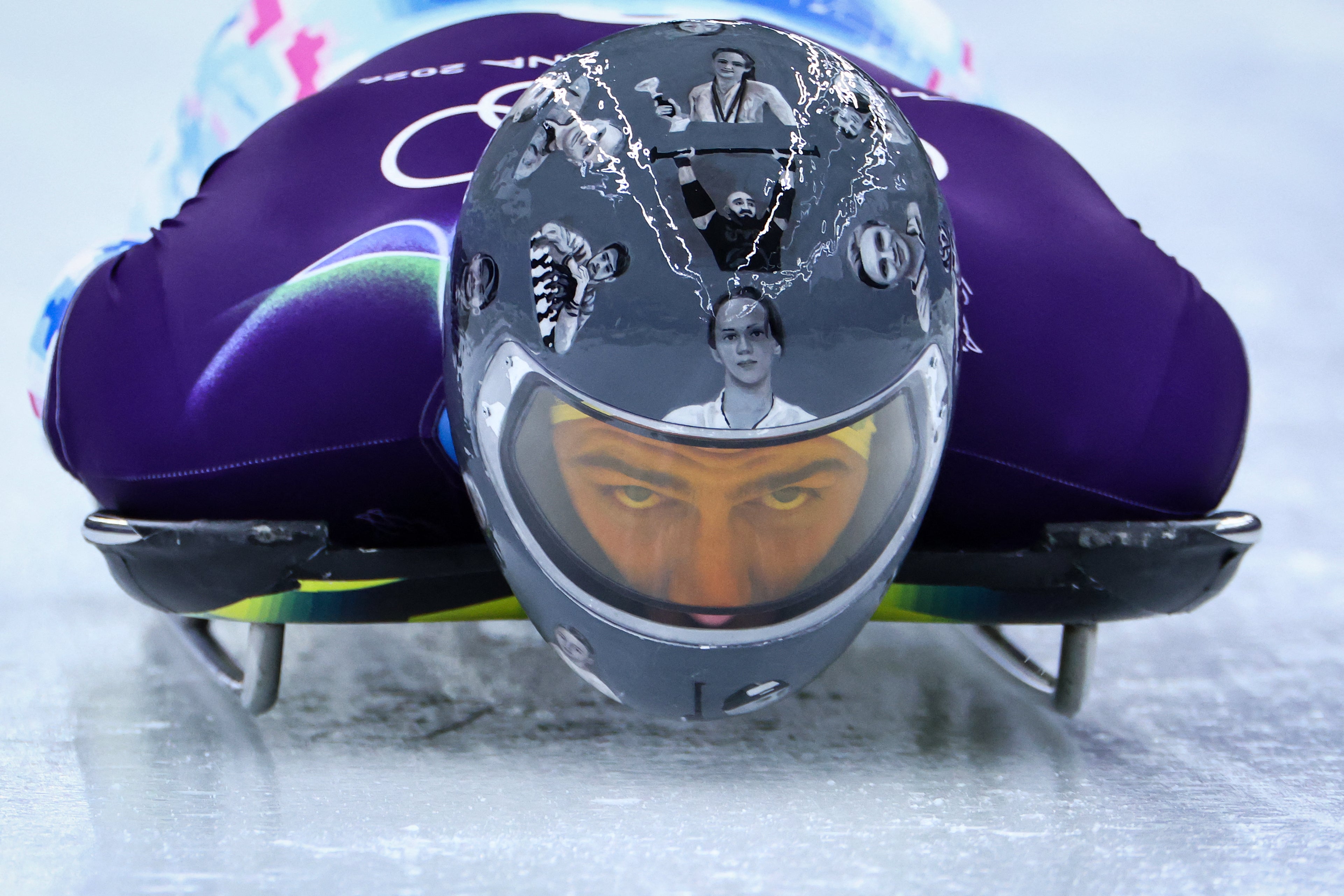
Heraskevych’s helmet features athletes, including teenage weightlifter Alina Peregudova, boxer Pavlo Ishchenko and ice hockey player Oleksiy Loginov, who have died in the conflict.
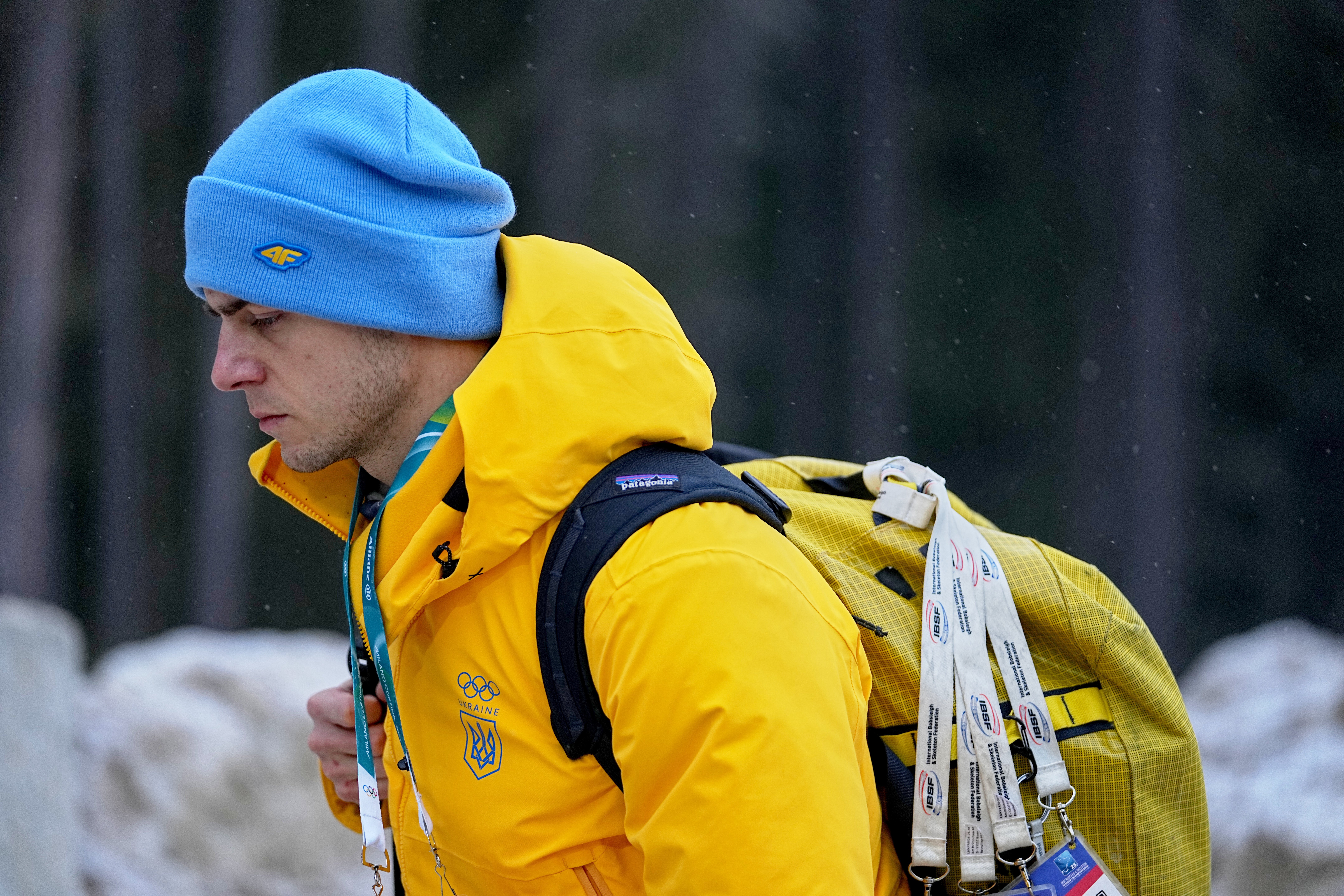
IOC boss Coventry visited Heraskevych and his father at the Cortina Sliding Centre on Thursday morning. She was photographed leaving the meeting in tears after pleading with Heraskevych to instead wear a black armband and then show-off the helmet after competing.
“I was not meant to be here, but felt that it was really important to come and talk to him face-to-face,” she said. “I think this is a difficult situation that we are all in. Again, I don’t think anyone is disagreeing with the messaging.”
Rule 50.2 of the Olympic Charter states: “No kind of demonstration or political, religious or racial propaganda is permitted in any Olympic sites, venues or other areas.”
Heraskevych reiterated his request for the IOC to allow him to compete, publicly apologise for causing him stress and provide electrical generators for Ukrainian sports facilities suffering from daily attacks from the Russian army.
He also accused the IOC of double standards, and that his tribute is no different to figure skater Maxim Naumov. The American held up a photo of his parents, who were among 67 people killed in a plane crash in Washington DC, while waiting for his score to be announced on Tuesday.
“Many people told me don’t do it, and that I have proved my point, but I can’t betray others,” he added. “I feel emptiness. I think she [Coventry] was nervous about the situation. I want to believe that because she felt sorry.
“I still believe that we didn’t violate any rules.”
The IOC were first made aware of Heraskevych’s helmet on Monday and told him it was breaching rules on Tuesday. Heraskevych revealed his plan to defy rules in a press conference in Cortina town centre.
“I want peace in my country, and I believe we should honour people who sacrificed their lives,” he continued.
“I was at many funerals when I was in Ukraine, and it’s truly, truly terrible tragedy, and young people at such a young age were killed by the state. I believe for nothing, they were killed for nothing.
"I believe that they deserve to be here. I want to honour them and honour their families. What do you consider as expression? Many athletes here in this arena have helmets with different paints, that is also expression.
“Some have national symbols, that is also expression but for some reason their helmets weren’t checked. They are allowed to compete but not me. I could be among the medallists in this event.”
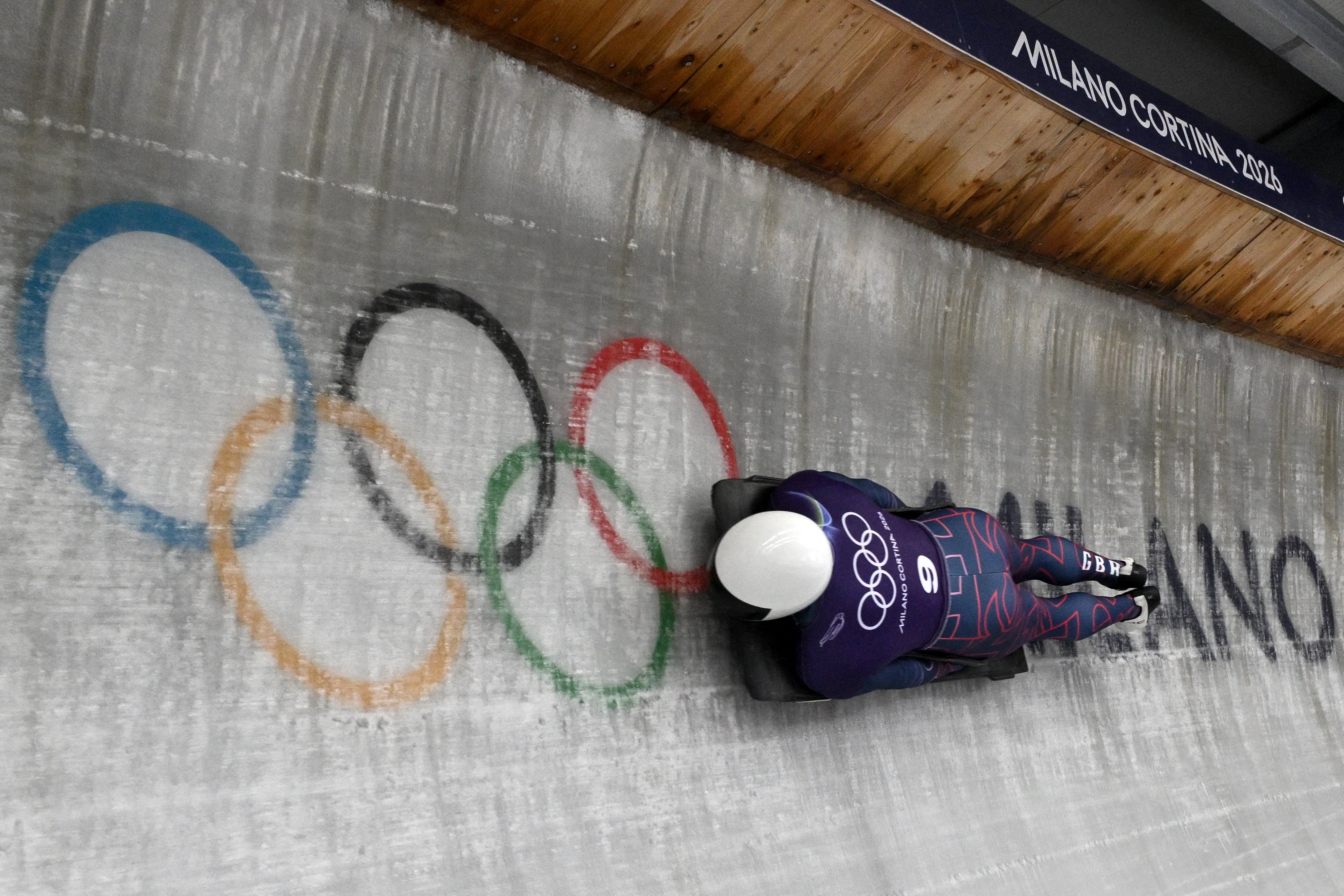
Great Britain’s Matt Weston holds the halfway lead by 0.30s from Germany’s Axel Jungk.
“On a personal level, I’m really sad that he’s missed out on being able to compete. I think that’s gutting for anyone,” Weston said.
“I chat to him all the time and he’s kind of a big personality within the circuit.”
The IOC said athletes are able to “express grief with dignity and respect” at multi-faith centres in the Olympic villages.
It added the decision to “withdraw his accreditation” was “taken by the jury of the International Bobsleigh and Skeleton Federation (IBSF) based on the fact that the helmet he intended to wear was not compliant with the rules”.
TNT Sports on discovery+ will be the go-to destination in the U.K to watch everything of Milano Cortina 2026 live all in one place, with over 850 hours of action from every sport, venue, and medal event.
Sportsbeat
Join our commenting forum
Join thought-provoking conversations, follow other Independent readers and see their replies
Comments
Bookmark popover
Removed from bookmarks