
Terence Crawford’s coach reveals intense training regime for Canelo as he predicts ‘Spence Part Two’
Crawford simultaneously built strength, speed and muscle throughout camp to rise up two weight classes. His strength and conditioning coach Chet Fortune tells Harry Bullmore how the pair accomplished this complex goal


In 2008, Terence ‘Bud’ Crawford entered the world of professional boxing – no one has beaten him in the 41 fights that followed. For the last decade of this unbeaten run, strength and conditioning coach Chet Fortune has been responsible for helping the fighter maintain a belt-winning physique.
On September 13, Crawford will face Canelo – a clash which sees two of the world’s top pound for pound boxers go toe to toe. This represents Bud’s biggest challenge to date, and Fortune’s too.
Crawford needs to move up two weight classes to meet Canelo in the super middleweight division, adding 14lbs of muscle after fighting at 154lbs last time out. Fortune needs to take him there while maintaining the sharpness that has seen Bud heralded as the best boxer of his generation.
Below, Fortune reveals how the pair have achieved this, alongside the unexpected performance perks of gaining weight and the reason Crawford’s team “haven’t been worried about Canelo one bit”.
Subscribe to DAZN now to watch over 185 fights a year
 9 best kettlebells for building strength and fitness at home, tested by our expert
 The daily non-negotiables that transformed Conor Benn’s health and mindset in 70 days
 11 best protein powders for supporting your fitness goals, tried and tested by our fitness writer
.jpg?quality=75&width=230&crop=3%3A2%2Csmart&auto=webp) Footballers, stop running 5K in pre-season – do these expert-approved drills instead for match-ready fitness
Footballers, stop running 5K in pre-season – do these expert-approved drills instead for match-ready fitness
Terence Crawford’s workout routine
“A typical week involves tonnes of rope work, he swims, he boxes every day, and there’s strength and conditioning in some form every single day,” says Fortune. However, the intensities of these activities undulate to allow Crawford to recover and adapt.
He does intense strength and conditioning sessions three times per week, each lasting roughly 90 minutes – including a lengthy warm-up, stretching and movement work.
“In one of our harder sessions, we might do kettlebell work, but we’re also doing barbell work, dumbbell work, then we’re mixing that in with some speed work, fast-twitch muscle [fibre] activation, sled work, movement with bands – I think the hardest thing these days is the incorporation of it all,” Fortune explains.
“We utilise 90 minutes. It’s not necessarily a case of doing as much as we can; there’s always a focus. It’s not just to get him tired, there has to be a method to the madness.”
On less intense training days, Fortune’s goal is to keep Crawford’s body conditioned and feeling good with some lighter work.
“We do a lot of altitude training in Colorado, so we usually have one day per week where we’re doing the Manitou Trail [a sharp incline which rises 2,000ft in a little under a mile],” Fortune adds. “Then, if we’re not in Colorado, it might be a long-distance incline walk or something to keep his body going without really overdoing it.”
Read more: The surprising change in Terence Crawford during Canelo camp that has shocked his own team
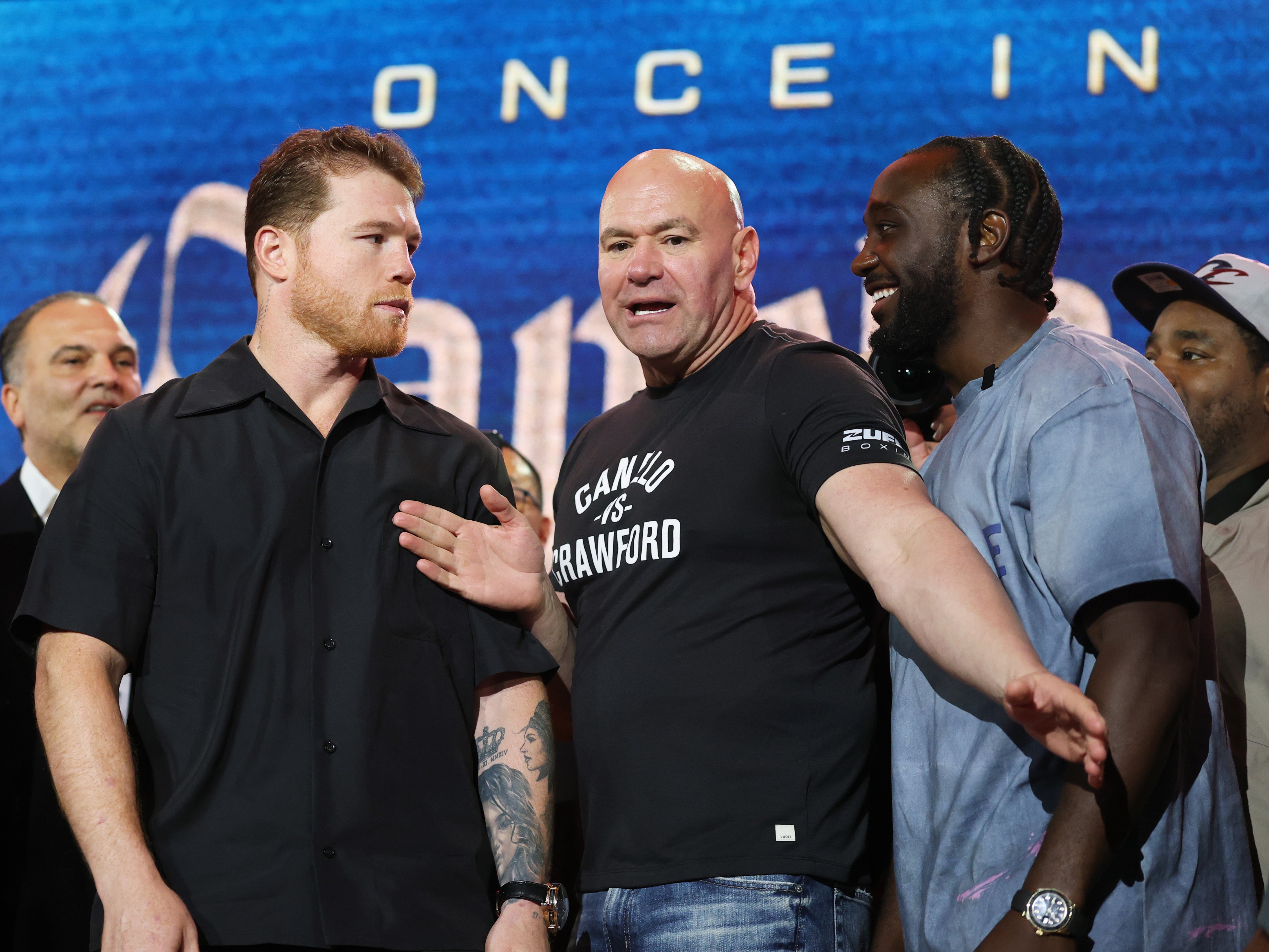
How to train like Terence Crawford
Crawford shares fleeting glimpses into his camp via social media. From the insights he provides, it can be best summarised in two words; intense and varied.
Videos show him performing deadlifts, side crunches, kettlebell swings, dumbbell chest presses while lying on a medicine ball, sled pushes and pulls, back extensions, box jumps, pull-ups, chest-supported rows, swimming, Assault bike sprints and a lot of work with a weighted vest, whether that is skipping, shadow boxing or otherwise.
Fortune reveals how these exercises tie together, and the focus of their camp.
“The main concern is building power and strength endurance while not sacrificing speed,” he tells me. “There’s no cookie cutter solution for any fighter. I’ve been with Terence for a little over 10 years now. Seeing that fighter, day in, day out, I’m always assessing and analysing his needs, and they change every single day.”
Fortune is understandably coy about the specific focuses he has identified to work on during Crawford’s camp for Canelo. But there are areas he has paid added attention to as his fighter steps up a couple of weight classes.
“I’ve always been a proponent of good core work,” he says. “Even in my bodybuilding days, before I broke my spinal cord four years ago, I was squatting 675lbs, and it wasn’t because I had the strongest legs – it was because every day I focused on core activity.
“Obviously, Canelo has a lot of power, so for this fight we’re going to make the core and the neck as strong as possible. That’s something that helps a fighter take that impact.”
Canelo’s well-publicised attributes did not directly impact the way Fortune structured Crawford’s strength and conditioning choices, the coach says. His aim was simply to create a physique that would thrive in a super middleweight fight.
“People don’t realise it about Bud but, naturally, his main sparring partners are 168lbs or 175lbs, so it’s not like I felt like we needed to change a lot for Canelo,” he adds. “But Canelo is going to be throwing mostly power punches, so we focused on heavy core activity and a lot more weighted neck work to make sure these areas are as strong as possible.”
Crawford’s core work is varied and completed across several sessions throughout each week. Fortune likes to add resistance to classic exercises like sit-ups and crunches through cables and bands, as well as including other moves such as Pallof holds and indirect abdominal work through compound exercises like the Romanian deadlift.
Read more: Inoue, Davis, Nunez: The 10 world champions with the highest knockout ratios
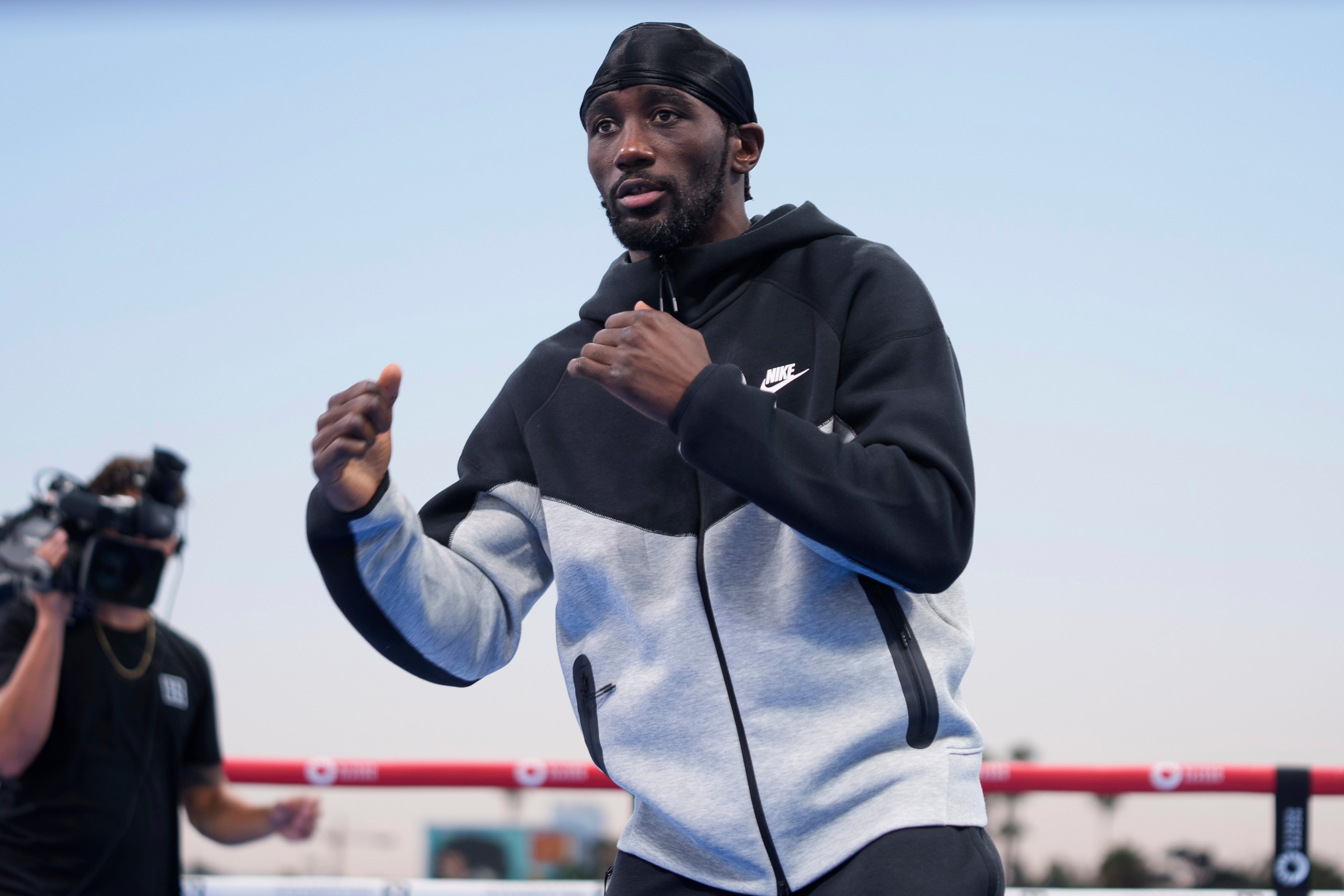
Terence Crawford’s training technique for strength and power
Complete three sets of the sequence below:
- Barbell back squat x3-5
- Max height box jump x3-5
- Rest 3-5 minutes
“I don’t like to sacrifice upper body speed, so I’ll save my heavier lifts for the legs, then still incorporate some fast-twitch movements,” Fortune says.
“If you can focus on a lot of leg work, the majority of the power in combat sports is going to come from the hips and legs.”
This is the source of a fighter’s power, which is then transferred through the core and into the upper body through the body’s kinetic chain – a term used to describe the body’s interconnected system of bones, muscles and other tissues.
The protocol above is an example of a technique popularised by sports science pioneer Yuri Verkhoshansky called contrast training – a heavy exercise performed back to back with an explosive, biomechanically similar movement. For example, Fortune will also have Crawford go straight from a heavy sled push into a band-resisted sprint.
“The physiological underpinnings are based on the phenomenon of post-activation potential (PAP),” an article by the National Strength and Conditioning Association reads. “This refers to the enhancement of muscular performance following maximal or near-maximal muscular contractions.”
In simple terms: in the moments after lifting heavy, it is proposed you can generate more power – force times velocity. Therefore, contrast training not only provides a time-efficient way to develop both strength and power, but it could also lead to greater desired training adaptations as a result of the latter thanks to the increase in power output.
Read more: When is Canelo vs Crawford? Date, fight time, undercard and how to watch
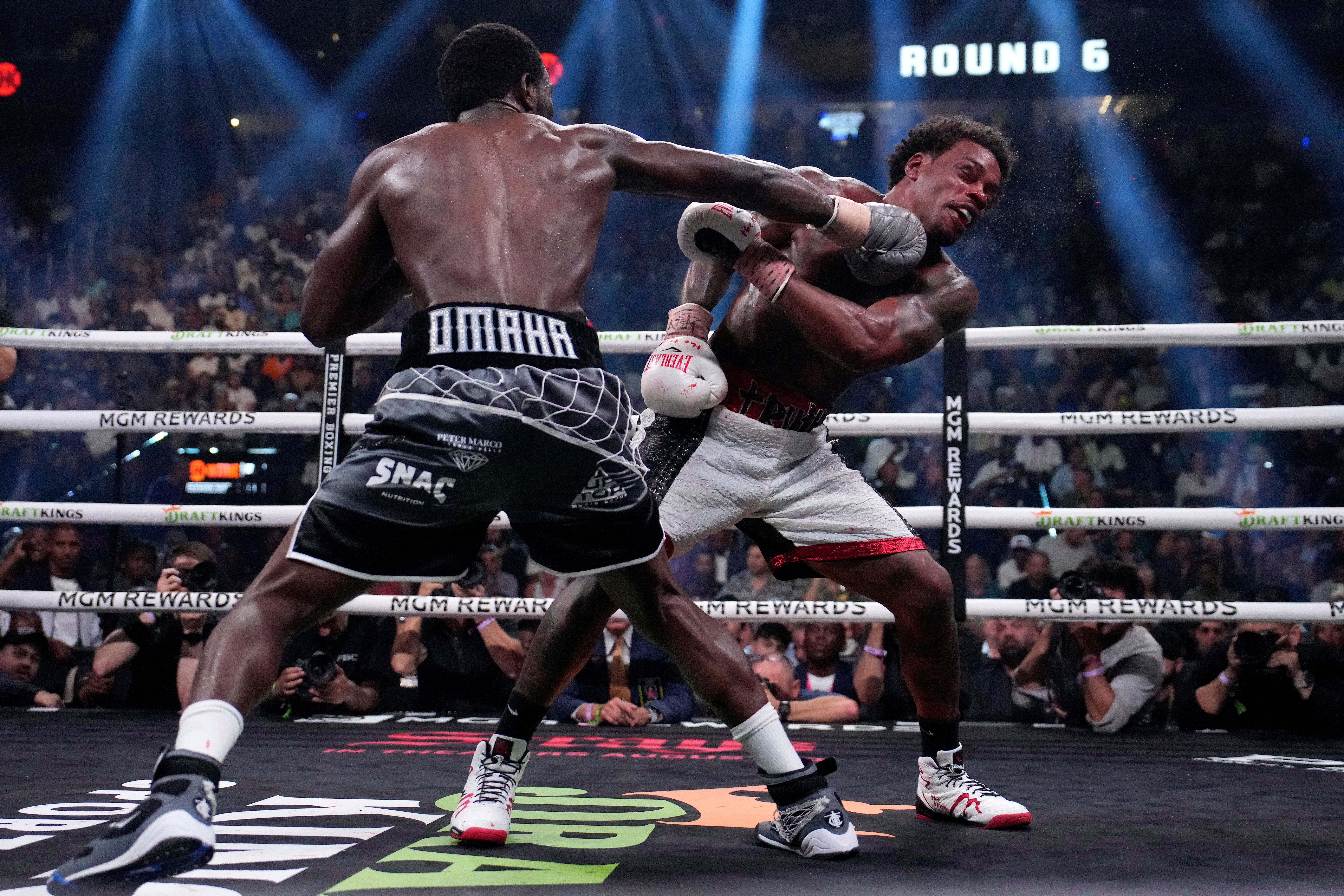
How is Terence Crawford gaining weight for Canelo fight?
This is arguably the biggest challenge facing Crawford and Fortune ahead of the Canelo fight: How can they add 14lbs of muscle to Crawford’s frame while acclimatising him to this new, heavier body and maintaining the attributes that place him among the world’s best?
Fortune does not see this as an issue, and neither does Crawford, who has found the increased food intake has actually left him more energised for his training.
“Putting on muscle doesn’t actually mean that you’re going to be slower, but you punch a little harder,” the fighter recently told Netflix documentary crews with a wry smile.
“Now, whether he’s sparring or doing his boxing work, it looks like he’s got more speed,” Fortune adds. “He has more muscle, but it’s not significant enough to slow him down.
“His upper body is bigger, his shoulders are obviously a lot broader, his back is more muscular, but I think he’s naturally a 168lb kind of guy.”
Crawford also has the edge in height and reach over Canelo – “In the ring, he’s not going to look like the smaller guy.”
Helping Crawford reach his new fighting weight has been a team effort. His coach ensures his strength and conditioning sessions are at an optimal volume and intensity so that Crawford can recover from them and build muscle effectively. Doctors, scientists and nutritionists then ensure an appropriate diet is in place to facilitate the desired weight gain.
“They understand what he needs from his diet, and they can keep it exciting for him – the food tastes good to help him eat it,” Fortune says. “Having the proper nutrition to fuel it [his performance and weight increase] is key. We all understand he has to be eating enough and getting enough nutrition.
“He trusts his team, and he has these people in place for a reason. They’re following the protocol, and if you do that you’re going to see great results. That’s what has happened during this camp.”
Read more: The two exercises that give Moses Itauma ‘the edge’ over most opponents
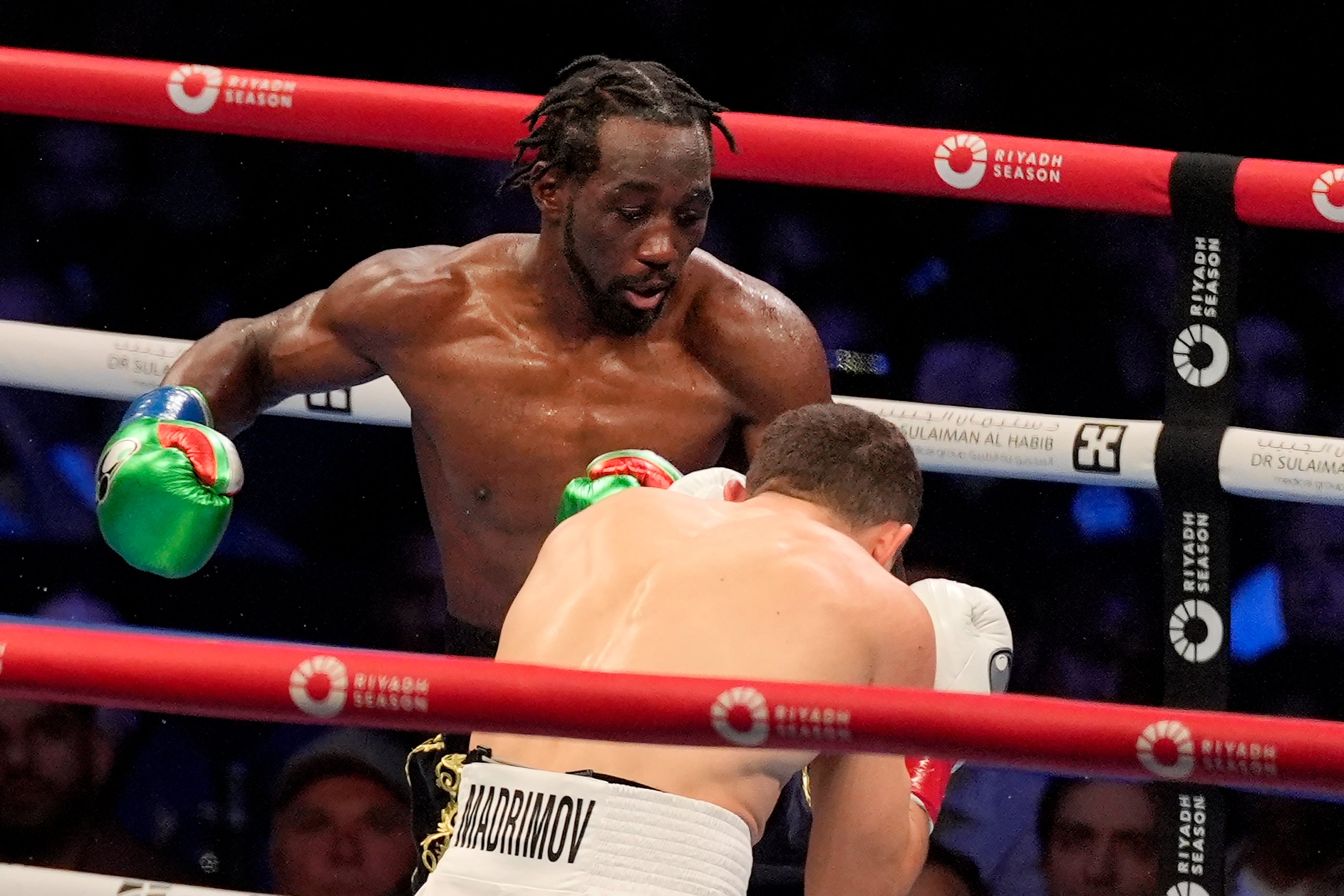
How does Terence Crawford’s camp progress over the weeks?
The human body cannot maintain its athletic peak all year round, and training to achieve this would be unsustainable. In this regard, Bud is somewhat anomalous – “He comes to camp pretty dialled in; he doesn’t really let himself go, he’s working out all year long.”
But even an elite athlete like Crawford needs a variety of different training phases and intensities to ensure he is at his best come fight night, and his camp reflects this.
“We usually have a pre-camp lasting four weeks, and that involves a lot of heavy lifts for three to five reps,” Fortune says. “Then, as we get to the mid-point of camp, sets usually have closer to eight to 12 reps.
“You want your athlete to be strong, and you want to incorporate that power training. But if you just focus on the same reps for too long, overloading and progressing the weight, you’re talking more about [training for] aesthetics than speed endurance.”
Later in camp, Fortune introduces a deload phase, dropping the target number of reps per set to “avoid overloading the body”, then introducing more explosive elements into Crawford’s strength and conditioning sessions. For example, wall ball slams or side throws for six to eight reps.
“The sessions look different depending on where we are in camp,” he explains. “At this point in camp, 11 days out, my whole focus is on making sure Bud shows up fully recovered and can fight healthy.”
Read more: The best exercises for developing knockout punching power, according to leading boxing coach

The training goals for Terence Crawford during Canelo camp
Each day, Fortune watches Crawford train both in and out of the ring. The coach then uses this information to inform his training.
“I’m analysing and assessing everything; the way his legs are moving; how much energy he has; the pop in his punch,” Fortune says. “That dictates what we’re doing the next day.
“There’s a lot of resistance training, when it comes to [gaining] weight, but there are also a lot of explosive movements. This might be box jumps with dumbbells or broad jumps and sled work.”
Sprints also appear frequently in various forms, whether that’s running while a partner resists your movement with a long resistance band, completing short, all-out intervals on an Assault Bike, or pushing sleds.
“Sleds just have this way of being difficult, no matter who you are,” says Fortune. “The workout never gets easier; you can always add more weight, so you just get stronger.”
Perhaps stemming from his bodybuilding background, another element Fortune pays close attention to is how Crawford’s body looks.
“Aesthetics isn’t the focus, but as I’m analysing everything I’m seeing what needs work – it’s almost like a piece of art, and you’re chiselling away.”
Complementing Crawford’s status as the sport’s best switcher, Fortune believes the body works optimally when symmetrical, and uses this criteria to identify areas to work on.
“You can’t just work on your arms because you want a harder punch, you have to consider the whole kinetic chain,” he says.
Read more: Top strength and conditioning coach reveals the three exercises no boxer should be without

What to expect from Canelo vs Crawford
Fortune’s answer to this question is short: “Spence part two.”
Given Crawford delivered one of the most one-sided meetings of two established, undefeated boxers in his bout with Errol Spence Jr, it is fair to say his coach is feeling confident.
“For Canelo, in every fight he fights, he’s the cash cow,” he says. “I just don’t see the hunger; his legacy won’t be as impacted. If he beats Terence, he will get some accolades, but you’ll get people saying: ‘You should have beaten him – he was two weight classes lower.’
“For Bud, they’ll be calling him the greatest of all time, and I know he knows that’s on the line. It’s not just a big payday, it’s the legacy that can be built from it, and that’s his mindset going into this fight.
“I see it being a show, and I see it being very lopsided. Styles make fights, and I don’t think Bud’s style is good for Canelo. Maybe we’ll see something different, but the confidence is there for everybody on this team – we haven’t been worried about Canelo one bit.”
DAZN is the home of combat sports, broadcasting over 185 fights a year from the world's best promoters, including Matchroom, Queensberry, Golden Boy, Misfits, PFL, BKFC, GLORY and more.
An Annual Saver subscription is a one-off cost of £119.99 / $224.99 (for 12 months access), that's just 64p / $1.21 per fight.
There is also a Monthly Flex Pass option (cancel any time) at £24.99 / $29.99 per month. A subscription includes weekly magazine shows, comprehensive fight library, exclusive interviews, behind-the-scenes documentaries, and podcasts and vodcasts. For pricing in your country, more information and to sign up, click here.
Join our commenting forum
Join thought-provoking conversations, follow other Independent readers and see their replies
Comments
Bookmark popover
Removed from bookmarks