How this quiet nation could be the next target in Trump’s power struggle
While America is focused on Greenland, there is another country that is crucial to Nato and Arctic security. Could this be the reason why Trump is picking a fight with the Norwegian prime minister over the Nobel Peace Prize? Richard Williams, who is based in Stavanger, reports on the escalating tensions and what Norwegians fear could come next


Just a few days before Danish officials held high-profile talks with a White House delegation about Greenland last week, the leader of a European country and Nato member state was offering some novel advice to the Americans, had they been listening.
The autonomous territory of Denmark, which Donald Trump was demanding be handed over to US control, was “useless”, said Croatian president Zoran Milanovic. In remarks that garnered vanishingly little media attention beyond his home country, Milanovic suggested that the US should instead turn its attention to Svalbard in Norway.
“I just don’t know if the American administration has seen it on the map yet... It belongs, in principle, to Norway,” he said. “Here, I gave them a topic to think about,” he added, before concluding: “This is proof that international law does not exist, even as a fiction.”
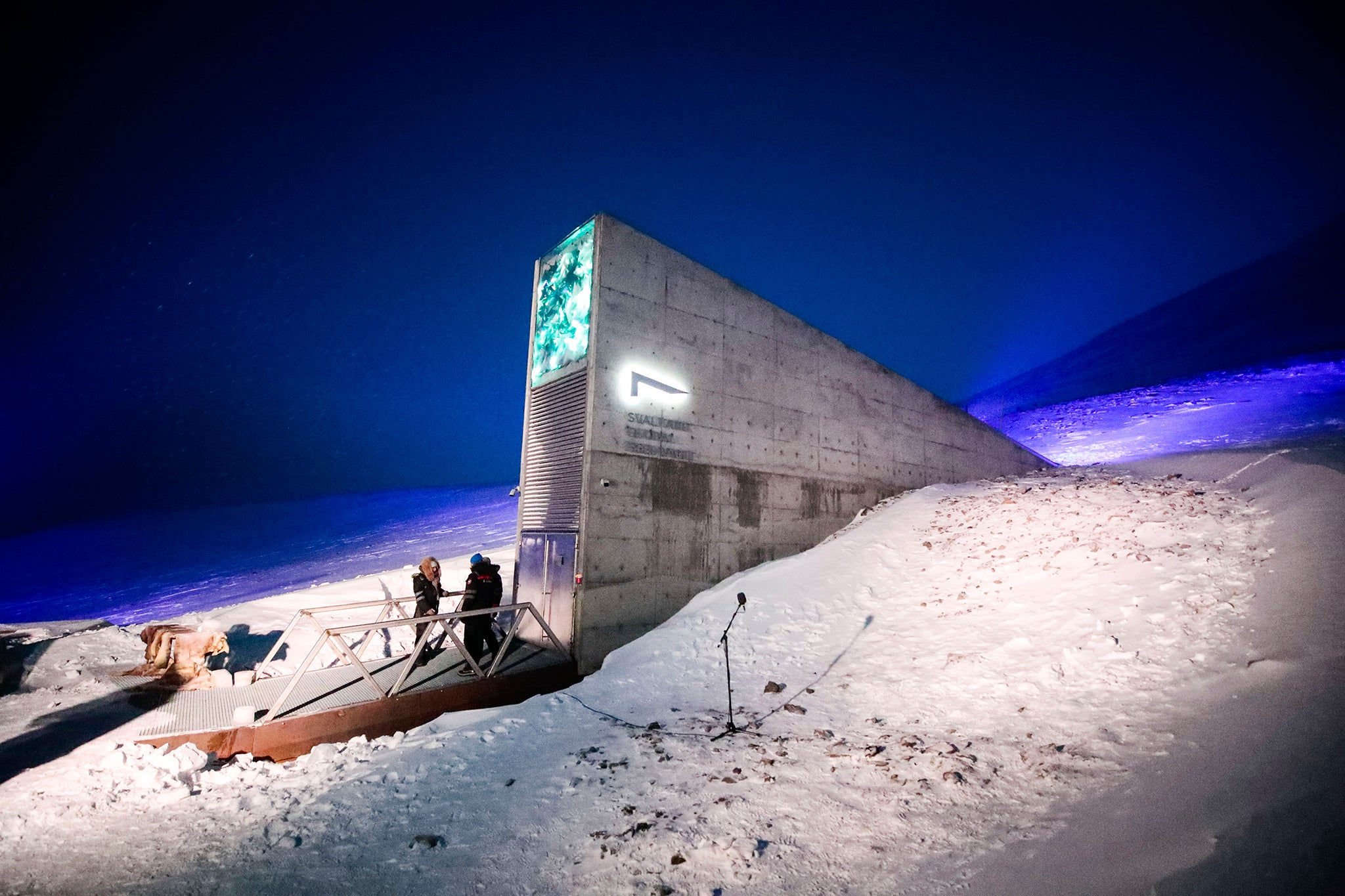
Svalbard is home to the Svalbard Global Seed Vault, often called the “Doomsday Vault”, which stores backup samples of seeds from around the world to protect the global food supply in the event of war, climate change, or natural disaster. But more interesting to the US – and to Russia – is that Svalbard lies in the strategically sensitive Arctic corridor between Europe and the North Pole. It is close to Russian naval routes and undersea communication cables, making it as significant as Greenland in the context of Nato-Russia relations and Arctic security.
On 9 February 1920, a treaty was signed granting Norway full and absolute sovereignty over the Svalbard archipelago – one of the northernmost inhabited areas in the world. The end of the First World War provided the necessary impetus for an agreement over the international legal status of this 23,956-square-mile collection of Arctic islands.


A treaty for the strategically important territory was considered crucial in ensuring a lasting peace in Europe and it has since existed as a unique example of enduring international cooperation, a reality that has persisted throughout even the tensest periods of the Cold War.
Almost 106 years since the treaty came into force, however, the dramatically shifting geopolitical situation in the continent could thrust the territory and its population of around 2,900 into the global spotlight again.
As a member of Nato, Norway has provided extensive support for Ukraine since its full-scale invasion in 2022 by Russia – with which Norway shares a 123-mile border. Donald Trump’s return to the White House in January last year then preceded a marked shift in what had been a largely unshakeable commitment to Nato on the part of the US.
In Norway’s own general election four months ago, the governing Labour Party benefited from a dramatic turnaround in its fortunes after former Nato secretary general Jens Stoltenberg made a surprise return to the cabinet as finance minister. The party recovered from polling figures that had sunk to around 18 per cent, surging to victory with roughly 28 per cent of the vote.
In a sentiment widely echoed among the oil-rich nation’s increasingly anxious citizens, one acquaintance here in Stavanger – who might otherwise have cast their vote for an opposition party – told this correspondent: “Now is not the time to change things.”
He was right. Soon afterwards came Trump’s renewed campaign of demands that the US be allowed to take control of Greenland. This represented the first and most visible example of the growing power struggle in the Arctic, as the region becomes more accessible thanks to the rapid shrinking of ice caused by global warming.
The various developments mean that Norway now finds itself in a relatively unusual position of international prominence, with decades of relative affluence and tranquillity upended.
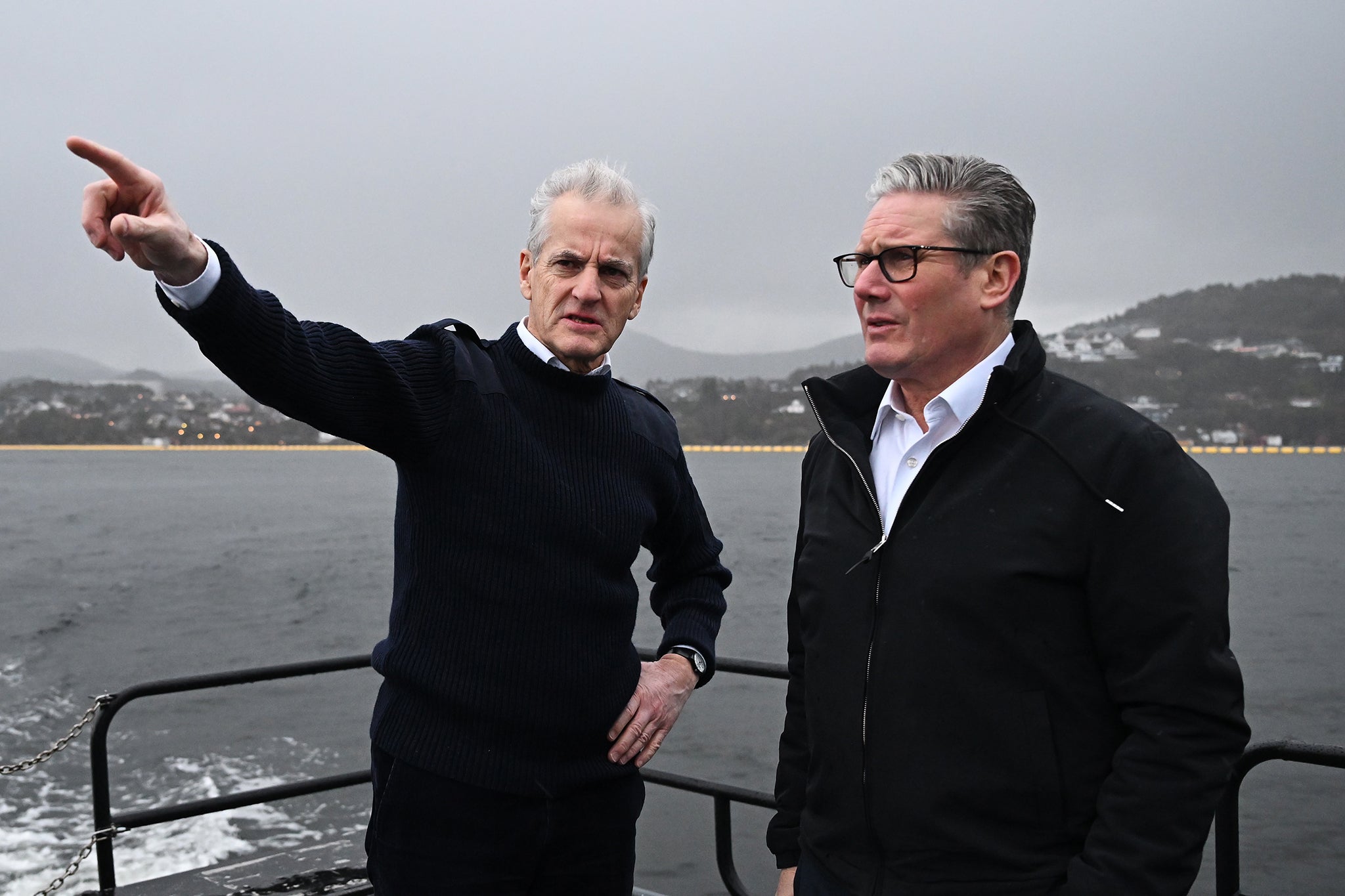
This focus was undoubtedly intensified by the publication of a text message sent by Trump over the weekend to Norwegian prime minister Jonas Gahr Store, in which the US president suggested his ongoing push to take control of Greenland was linked to his failure to win the Nobel Peace Prize.
“Considering your country decided not to give me the Nobel Peace Prize ... I no longer feel an obligation to think purely of Peace,” Trump said.
In his response, Store repeated a point that has been widely and frequently made: that the prize is awarded by an independent body over which the government has no control. Was there another underlying reason for such untethered aggression? Perhaps of more concern in relation to Svalbard – particularly given the capricious nature of the US leader’s approach to foreign policy – were the Croatian leader’s comments.
While Trump has not spoken publicly about Svalbard, and it remains unclear whether the 79-year-old is even aware of its existence, in the current climate it feels like anything could be possible.
For those living in the territory, any perceived threat has historically come from the East, and Russia. The 1920 treaty allows people and companies from signatory countries the same rights as Norwegians for commercial activities such as mining and fishing, while scientists from pretty much anywhere in the world have equal access for research activities.
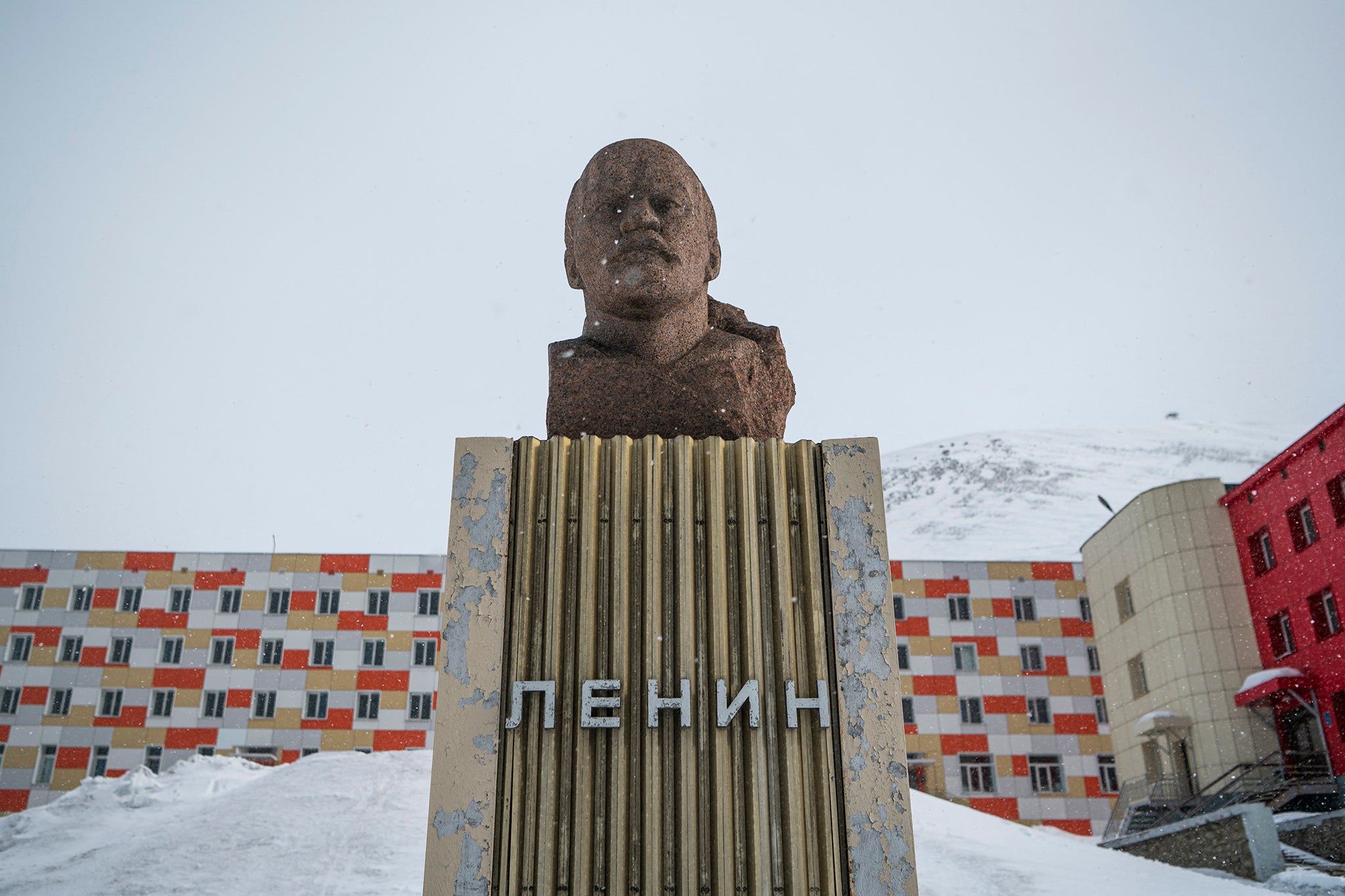
Barentsburg is the last remaining Russian coal-mining settlement of three that were established under the Soviet Union. Now barely functioning, its population has shrunk from more than 1,000 to 297. But Moscow’s continued interest in the colony is seen by some as evidence of the Kremlin’s determination to strengthen its ties with Svalbard. Russian lawmaker Sergey Mironov proposed last year that Svalbard be renamed the “Pomor Islands”, invoking historical ties to justify a possible move.
The Russian foreign ministry also said it had expressed its concern over what it described as Norway’s growing militarisation of the archipelago. Norwegian officials privately stress that while the terms of the 1920 treaty state that military activity is restricted, as a sovereign territory of Norway – and therefore part of Nato – Svalbard is not demilitarised.
Mironov’s comments followed remarks made by another Russian official, who worryingly seemed to suggest that Moscow has the same duty to protect Russian speakers in Svalbard as it does in Ukraine – a claim that was among the pretexts for Russia’s 2022 invasion of its neighbouring country.
Arne O Holm is editor of High North News, a bilingual Norwegian-English newspaper covering the eight Arctic states. He tells The Independent that fear is now an omnipresent feature of life for Svalbard’s inhabitants.
“The people in Svalbard are living under stress,” he says. He points to the fact that there have previously been disputes about the details of the 1920 treaty – including with the Soviets during the Cold War – but that Trump’s actions mean that the situation now is “completely different”.
“Trump has effectively opened up the possibility for Putin to expand his territories by saying he wants to take Greenland,” says Holm. “If Trump is saying this, then what is stopping Russia from doing the same with other places?”
He says it should be noted that neither Russia nor the US has spoken publicly about Svalbard, and that “all the speculation comes from other places”. “Russia is saying the same things that it has said for the last 50 years,” he adds.
But during a recent lecture to around 160 people in the territory’s largest settlement, Longyearbyen, Holm asked those present how many were scared by the existing state of affairs and the threat they pose to Svalbard. “Most put their hands up to say they were not afraid. They are tough people,” he says. “I also asked how many of them had discussed the situation in the last 24 hours. Everyone raised their hands.
“People used to discuss on their lunch break, maybe, ‘Where shall we go out on the snowmobile later’, ‘Where are we going to party?’ Now it is ‘What is going happen?’”
Russia has heavily invested in icebreaker technology for the Arctic as part of its long-term strategy to control and develop the region. To ensure its dominance, Russia now operates one of the world’s largest icebreaker fleets, including multiple nuclear-powered vessels such as the Arktika, the Sibir, the Ural and the Yakutia – some of the most powerful icebreakers ever built.
Asked about the likelihood of Russia attempting to seize Svalbard, Holm says there are two ways to look at the discussion. “Both Greenland and Svalbard have strategic importance, but, unlike Greenland, there is not a big military presence in Svalbard,” he explains.
“Of course, it’s possible – and it would be pretty easy – for Russia to take it, but the question is, why would they want to? So it would seem unlikely. But then, when we look at the invasion of Ukraine, things change, and the so-called experts have not always been so clever in the last few years.”
He says he believes that in the case of Svalbard, Russia is more likely to continue the form of hybrid warfare it has been conducting across much of Western Europe, where several countries have reported airspace violations by Russian aircraft and a number of airports have been disrupted by drone flights widely considered to be linked to Moscow.
“We have already seen a lot of that here,” says Holm. “They are placing a lot of stress on officials, with constant requests.”
The Norwegian government has repeatedly acknowledged the shifting geopolitical circumstances facing the country in general, and is on record as saying: “Norway now finds itself in the most serious security situation since 1945.”
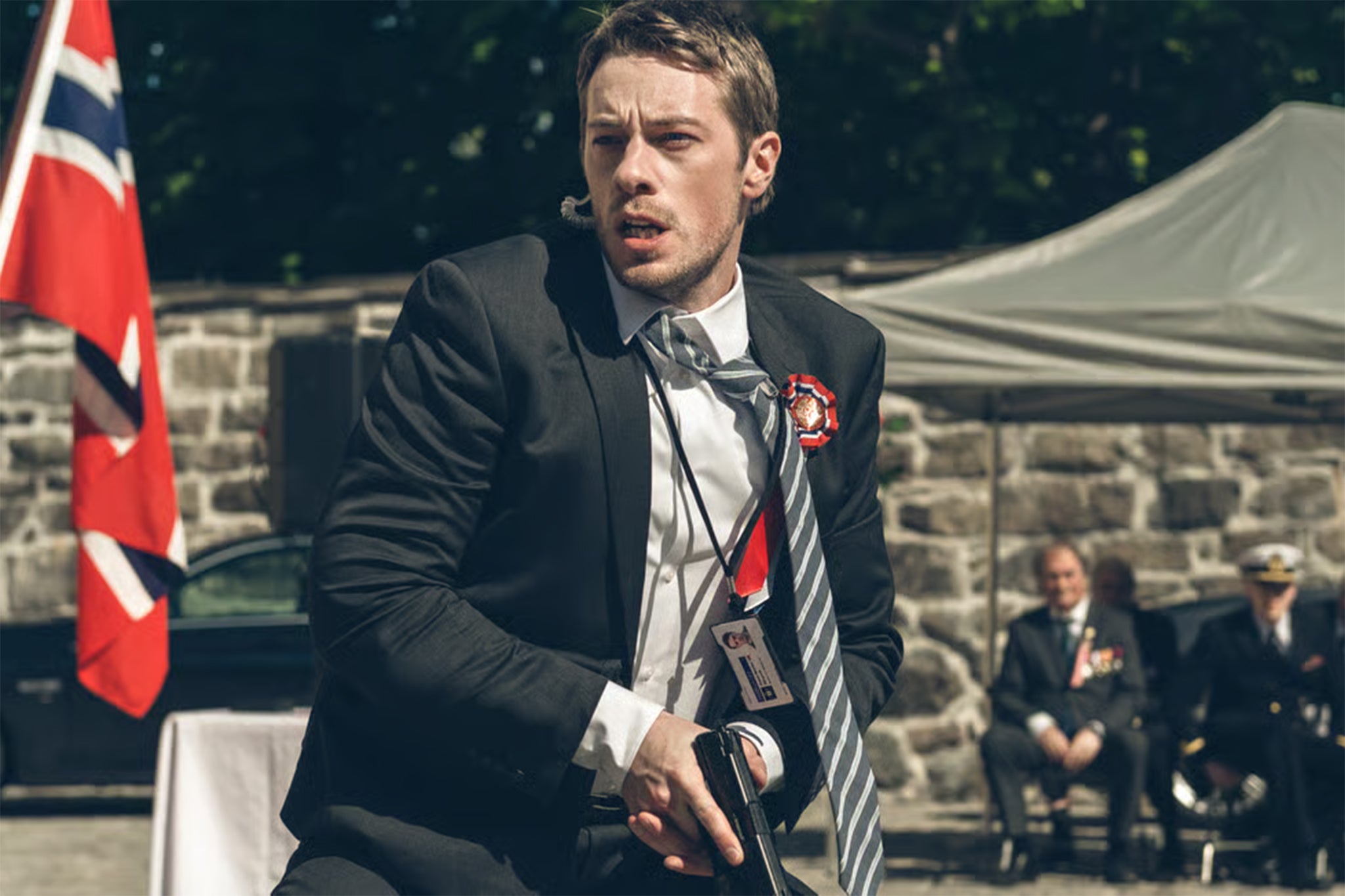
In 2015, Norwegian broadcaster TV2 aired a political thriller series created by Jo Nesbo, titled Occupied (in Norwegian, Okkupert), whose central premise concerned a near-future geopolitical crisis in the Arctic and Europe. While it was controversial at the time, today it feels strangely prescient given the current atmosphere.
However, Norwegian officials are at pains to emphasise that any parallels drawn between Greenland and Svalbard are misguided, and have sought to play down the potential for an increase in tensions surrounding the archipelago.
“We have a century of experience in dealing with first the Soviets, then the Russians, in Svalbard,” Norway’s secretary of state at the ministry of foreign affairs, Eivind Vad Petersson, tells The Independent.
“Discussions around the territory have come up on many occasions during this time, so the fact that some people are talking about it now is not new.”
The Norwegian government is, however, also keen to stress the country’s sovereignty over the islands. “Svalbard is Norwegian sovereign territory,” Petersson says. “This is not in dispute. It is as much part of Norway as [major cities] Oslo, Bergen and Trondheim.”
Such a definitive message is reflected in a number of measures implemented by the Norwegian government in recent years.
Foreigners in Svalbard are no longer allowed to vote, the sale of land to people overseas is now banned, and Chinese students have been barred from the city’s University Centre – with Norwegian intelligence agencies saying they could present a security risk.
Given the major world powers that Svalbard – and Norway as a whole – finds itself at the relative mercy of, which poses the biggest threat – the US or Russia?
“I have been asked this recently, and just the fact that you have to ask that question says a lot,” says Holm. “Who do you fear most, your Nato ally or Russia? That is not an easy reality for people here to live with.”
Join our commenting forum
Join thought-provoking conversations, follow other Independent readers and see their replies
Comments
Bookmark popover
Removed from bookmarks