Psychiatrists warned about Trump – and now we can see why
In ‘The Dangerous Case of Donald Trump’, dozens of mental health experts warned that aspects of his personality could pose a danger in high office. A year into his second term, some of those observations feel more relevant than ever. Alex Hannaford speaks to social psychiatrist and the book’s editor, Bandy Lee, about who, if anyone, can rein him in


Seconds. That’s how long it took for Donald Trump’s carefully choreographed visit to the Ford Motor Company factory in Dearborn, Michigan, to unfold into mechanical failure. After speaking to the press in front of whirring, clanging machinery, the president was exiting via an elevated walkway when an auto worker shouted, “Paedophile protector!” from the factory floor – a reference to the still-to-be-released Epstein files.
Trump’s reaction was instantaneous: he raised his middle finger at the worker – or “flipped him the bird”, to use the American vernacular – a gesture the White House later described as an “appropriate and unambiguous response”.
But at least one person there, inconspicuous among the men flanking the president in their peacock blue suits, may have shaken her head and thought: here we go again.
Susie Wiles, the White House chief of staff and Trump’s former campaign manager, responsible for securing his second term, had for so long been a study in tactical silence. To some, Wiles is the only person capable of tethering Trump to reality; to others, she is the master enabler, standing by in the shadows as the norms of the presidency are dismantled one hand gesture at a time.
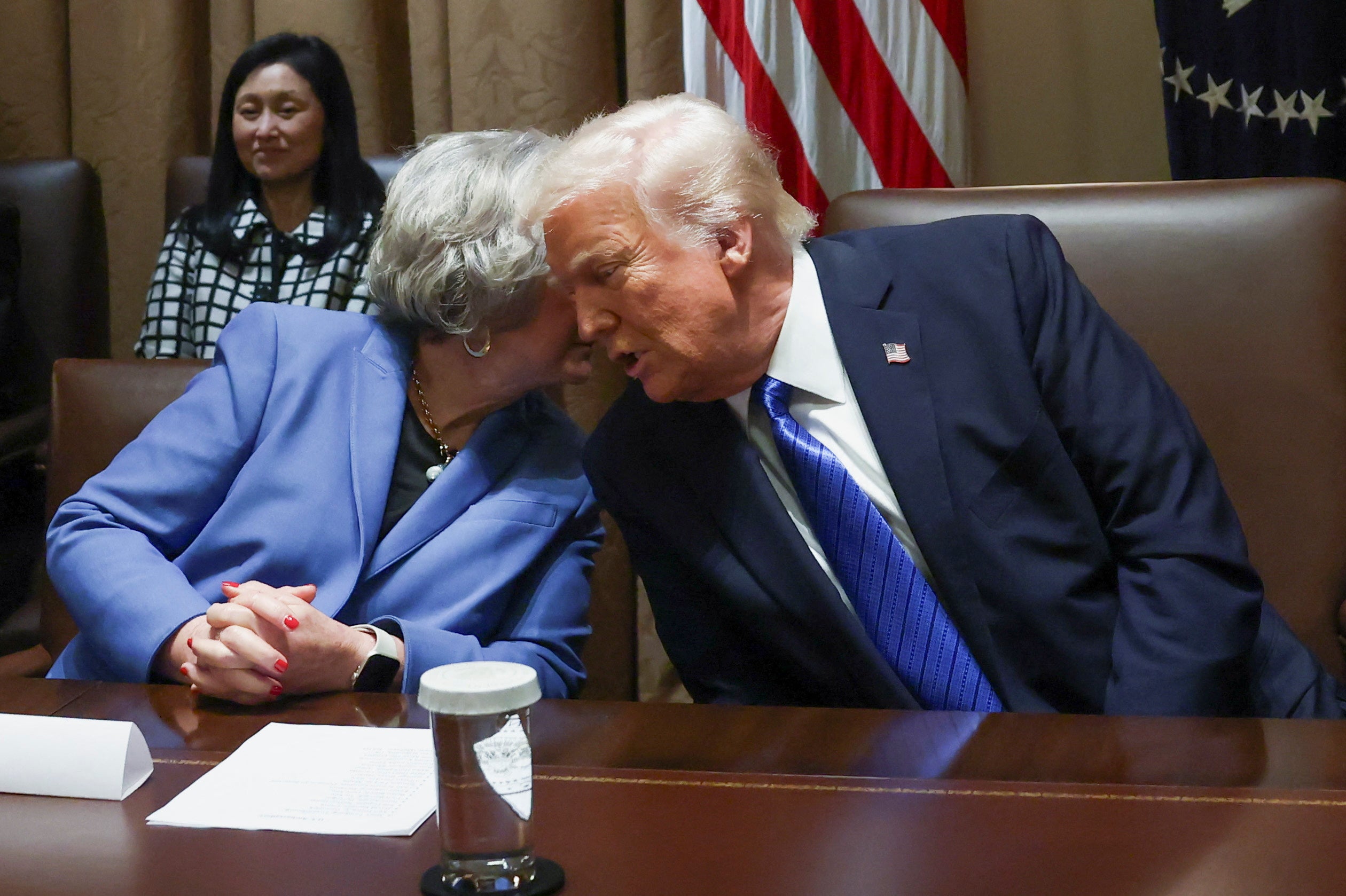
But the quiet discipline that has defined Wiles’s career was recently fractured by an explosive story in Vanity Fair at the end of last year, for which she gave a series of interviews to journalist Chris Whipple that offered a level of candour Whipple described as “astonishing”. In the profile, the woman who usually shuns the limelight was suddenly on the record, characterising vice-president JD Vance as a “conspiracy theorist”, labelling Elon Musk an avowed ketamine user, and, most provocatively, suggesting that Trump, despite his teetotalism, possesses an “alcoholic’s personality”.


Wiles attempted to walk back the damage, claiming the context of her remarks had been “disregarded”. Whipple, however, insisted everything was on the record and likened the administration’s reaction to a Watergate-style non-denial denial, noting that not a single factual assertion had been formally challenged.
Perhaps most revealing was Trump’s own reaction. Rather than the customary “You’re fired” for such a breach of loyalty, he rushed to Wiles’s defence, telling the New York Post, “She’s done a fantastic job.” It was a moment that underscored Wiles’s unique standing: she is perhaps the only person in Trump’s orbit who can speak the unvarnished truth about the “big personalities” in the room and remain indispensable. The Vanity Fair story could have unceremoniously ended her tenure. But it didn’t.
I wrote about Wiles for The Independent before she became headline news herself. At the time she was seen, as The Hill put it, “the most powerful Republican you don’t know”. And to really understand the machine operating within the West Wing for Trump’s second term, you can arguably look no further than the “Golden Girl” of Jacksonville.
At 68, this cake-baking, bird-watching grandmother has seen it all. She has navigated the high-stakes egos of Ronald Reagan and New York congressman and conservative icon Jack Kemp, but it was her role as the saviour of Trump’s Florida operation – the data-driven machine she built to turn the USA’s most volatile swing state into a red fortress – that cemented her reputation as a political savant and Trump’s most-trusted matriarch.
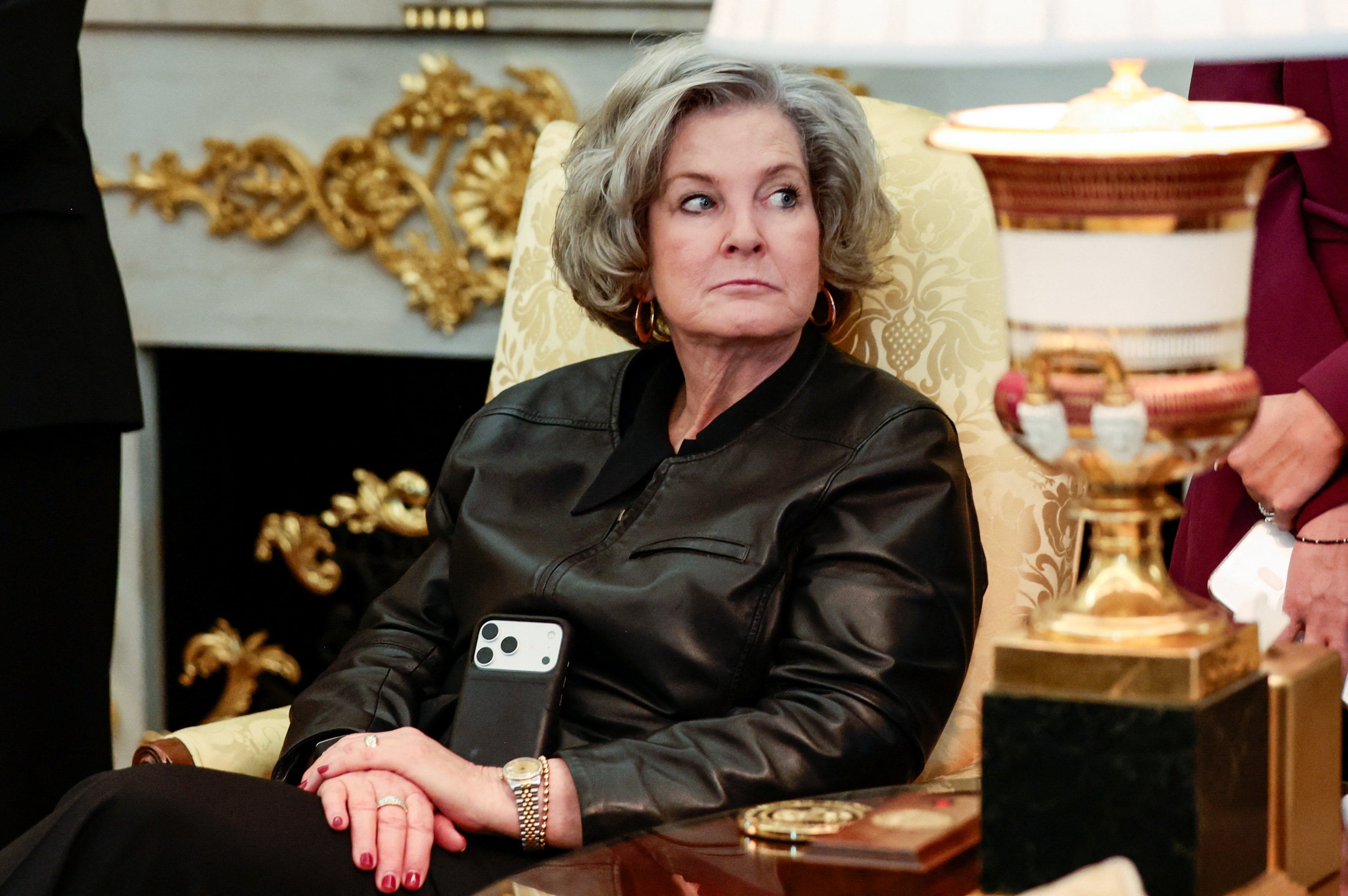
Those who have known her for decades describe a woman who operates with a velvet glove. Peter Schorsch, publisher of Florida Politics, told me that while she possesses a “Southern grandmotherly kindness,” her professional boundaries are iron-clad. “Susie does not f*** around,” Schorsch said. “There is no other way to say it. It’s not that she’s hard, it’s not that she’s mean, but if you try to promote yourself, flimflam, or you’re not honest about something, Susie will knife you herself.”
Yet the central mystery remains: how does a practising Episcopalian, described by former Jacksonville mayor John Delaney as a “really nice person” who would “bring over a casserole” if you were sick, reconcile her personal moderation with the chaotic firebrand she now serves? Delaney, who hired Wiles as his own chief of staff in the 1990s, suggested that Wiles is the ultimate pragmatist, able to overlook a candidate’s delivery for the sake of the broader conservative agenda – “an absolutely brilliant political savant with incredible instincts about what the public thinks”.
But after the latest wildcard moves and flare-ups from Trump, which are threatening the very foundation of Nato, has the time come for her to stand up to the boss?
Psychiatrist Bandy X Lee, who has long warned of Trump’s volatility, sees Wiles as more than just a gatekeeper; she views her as a figure with the unique capacity to “lead, activate, or encourage any path toward reining in a dangerous person”.
Lee is a global authority on violence prevention, taught at Yale, and edited the New York Times 2017 bestseller The Dangerous Case of Donald Trump, in which more than two dozen mental health experts argue that the president’s state of mind poses a clear and present danger. While it was controversial at the time, as none of the medical professions had had any direct access to their subject, Lee says that psychiatrists have an “obligation to improve society and to better public health. [And] this includes protecting its safety and acting, as we always do, if anyone is a danger to society.” In this case, she says, they’re not treating the person as a patient but fulfilling their duty to society at large.
Lee emphasises that in addition to diagnosing private patients, mental health professionals also have a responsibility to keep society safe and it’s on that basis that she has been speaking out about Trump. So, who, if anyone is equipped to rein in his worst traits?
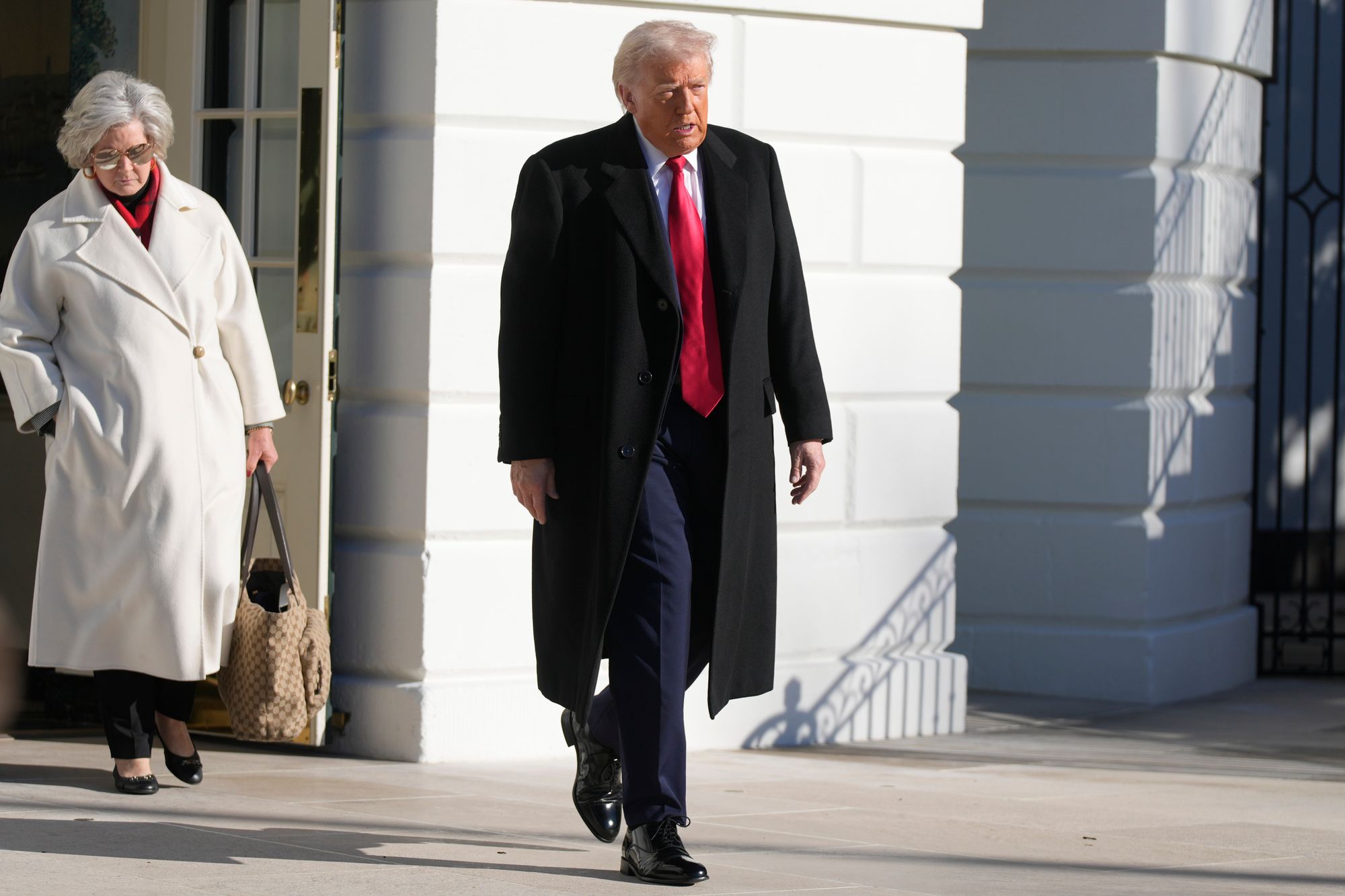
“At this point, it is better [for Wiles] to be low-key because Donald Trump has been immensely emboldened and also has become highly aggressive, as we basically allowed him to balloon in his expectations by giving him unlimited power. That is always very dangerous because reality never meets expectations, and he will always be angrier, more enraged, and more paranoid and vengeful against the world. This is why mental health experts felt it was so urgent to come out and warn the public back in early 2017 when I held my conference and published the book.”
Lee notes the CIA has a whole division that analyses the psychology of foreign leaders, “…but we ourselves are not doing it regarding our own erratic leader.” She’s referring to the Center for the Analysis of Personality and Political Behaviour, a division of the agency founded in the late 1960s. In this department, the FBI uses “at-a-distance” profiling, scrutinising speech patterns, dissecting childhood influences, and reading the “tells” in body language.
Their most famous proof of concept came during the 1978 Camp David Accords to navigate the clashing egos of Israel’s Menachem Begin and Egypt’s Anwar El-Sadat. President Jimmy Carter managed to broker a peace that many thought impossible, and he later noted that the CIA’s assessments were so uncannily accurate, he wouldn’t have altered a single word.
I believe Trump is developmentally wounded in a way that he seeks out parental figures, which is why he’s drawn to strong men and why he disparages women
Jerrold Post, founder of the division, contributed a chapter to Lee’s 2017 book on the president. “I believe Trump is developmentally wounded in a way that he seeks out parental figures, which is why he’s drawn to strong men, why he disparages women, [why he] continues to replace those around him with those who will either echo or buttress his own psychological defects, [but] at the same time is looking for a mother figure,” Lee says.
When it comes to his relationship with his own mother, Mary Anne, Trump often portrays her as the counterbalance to his father, Fred Trump, who was known to be tough, disciplinarian and transactional. But that is not to say his mother didn’t have a strong personality of her own. A Scottish immigrant, she wasn’t passive; she was proud and capable of standing her ground, and Trump has said she “adored” him and encouraged his ambition.
Wiles, too, is a senior woman, highly experienced, adept at quietly exerting her authority in a male-dominated room. Could that explain their relationship and inform how Trump responds to her?
“She would have to have robust psychological health in order to resist the kinds of temptations, manipulations, and exploitation that these individuals engage in,” Lee says. “But she would also have to take steps to insulate herself from what I’ve called ‘Trump contagion’, because when you’re continually exposed to an individual with severe mental pathologies, it’s not the healthy individuals who make the impaired person well. It’s that the severe symptoms tend to spread. His way of viewing the world will have spread and resonated with people who have now been conditioned into his way of thinking. And that’s what we’re seeing.”

So, as those around Trump for his second term seem to do his bidding with blind loyalty, could Susie Wiles, the first woman in history to hold the position of White House chief of staff, be the one person to calm the chaos?
If so, she will be able to succeed where those ahead of her failed. A former chief of staff, John Kelly, a retired four-star Marine general, was brought in to impose discipline on a chaotic first-term White House. While Trump initially praised him as a stabilising, authoritative figure, the pair fell out spectacularly when Kelly tried to enforce procedures and curb impulsive decision-making.
Trump resented what he saw as control and obstruction and fired him after 17 months, whereas Kelly said he resigned and went on to become one of the president’s most outspoken critics, saying his former boss met the definition of a “fascist”. He warned that Trump was unfit to serve again – a rare and striking statement from a former chief of staff.
“Susie Wiles could buttress her efforts by consulting with mental health experts,” Lee says today, “so she could know more about how to apply these techniques.” John Kelly apparently used the book as a guide in his attempts to deal with Trump’s irrational behaviour, though it didn’t necessarily play out as he might have wished.
With Wiles’s Vanity Fair observations about Trump’s personality hanging in the air, it suggests she is as knowing as she is loyal. But as she disappeared into the shadows and drove away from the Ford plant last week, maybe she also knew that, realistically, she couldn’t change the nature of the man – only manage the fallout.
Join our commenting forum
Join thought-provoking conversations, follow other Independent readers and see their replies
Comments
Bookmark popover
Removed from bookmarks