US official says Trump’s attacks on Europe are ‘a warning, not an insult’
The Trump administration has turned its focus back to Greenland and the Americas while isolating Europe against Russia
The Trump administration has renewed its criticism of European allies after claiming the continent faces “civilisational erasure” over its policies on migration and censorship.
The US National Security Strategy sent shockwaves through Brussels when it was published last month, offering a bleak forecast for “weak” partners on the continent and lending support to far-right political parties.
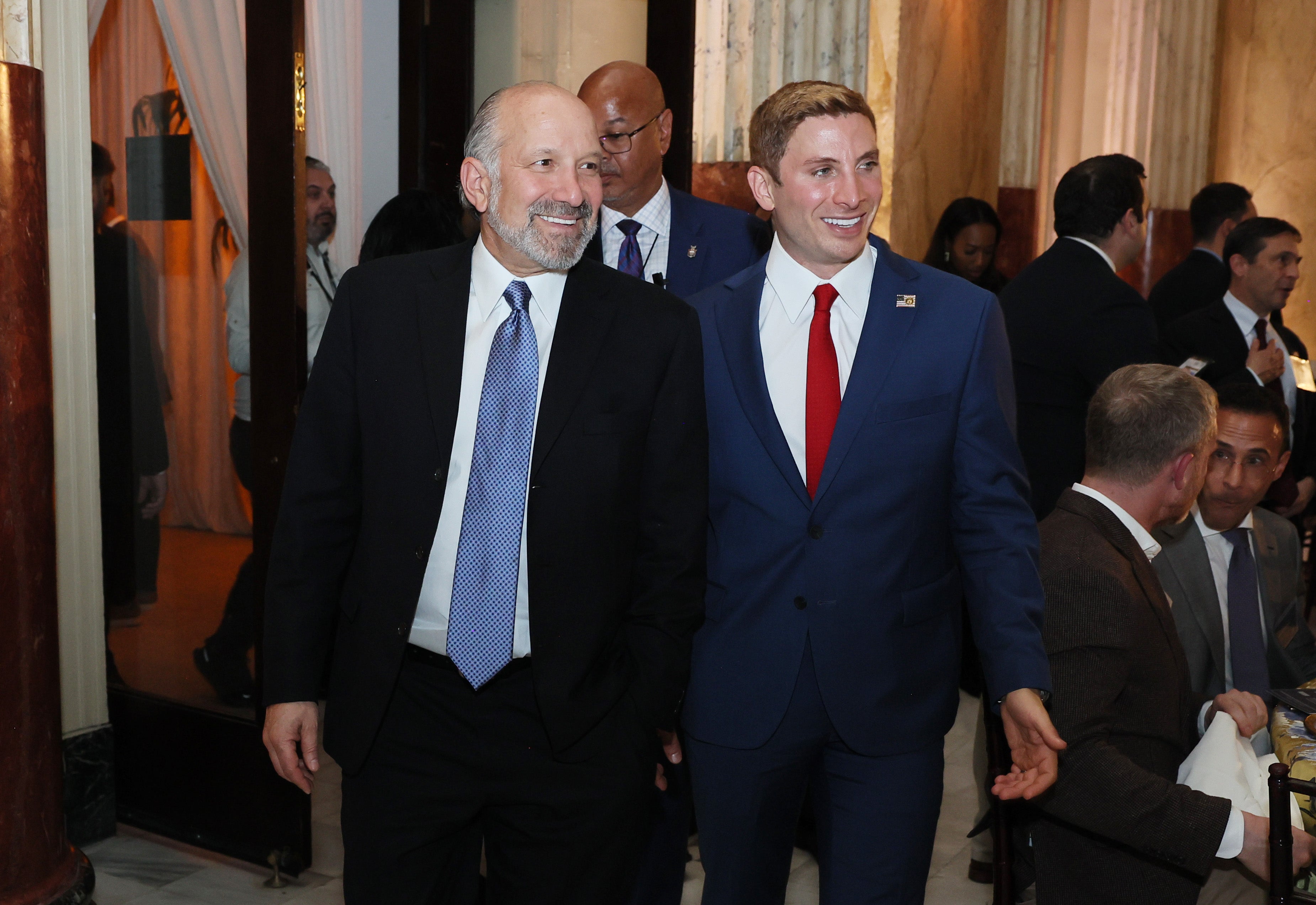
Jacob Helberg, the US under secretary of state for economic affairs, said on Monday the document was intended as a warning and not an insult, and claimed that Washington wanted to see a strong and prosperous Europe.
“I know that the national security strategy, the language around Europe and around civilisational erasure drew a lot of attention in Europe,” he said.
“What I’d like to highlight is that that language is a warning. It’s not an insult … There is a growing sense of concern and alarm in the United States about the fact that Europe’s economic, relative economic decline as a share of the global GDP is a crisis.”
“There is a degree of alarm in Washington about the need for serious reforms in order to jolt the European economy back to life,” he added. “We think it’s possible with the right reforms.”
Helberg emphasised that the US welcomes European discussions on slashing regulation and opening up to foreign investment.
Asked about EU policies aimed at reducing strategic reliance on the US, Helberg reiterated: “We want Europe to be strong. In order to – a condition for European strength is for Europe to really accelerate the need to deregulate and reduce its reliance on powers that are outwardly adversarial to Europe.
“Whether Europe chooses to partner with the US to deepen supply chains or other powers, we want to make sure that Europe doesn’t partner with countries that will coerce it and blackmail Europe every single day of that partnership.”
Donald Trump suggested Europe’s future as an ally of the US “depends” on future ideology in a wide-ranging interview with Politico last month.
“They want to be politically correct, and it makes them weak. That’s what makes them weak,” he said, before launching into attacks on Paris, Sweden and London mayor Sadiq Khan over European migration trends.
American relations with Europe have soured in recent weeks with the resurgence of Trump’s rhetoric on a possible takeover of Greenland.
Following the capture of Venezuelan president Nicolas Maduro last week, Trump told reporters he would “talk about Greenland in 20 days”. He has long suggested that the semi-autonomous territory of Nato-ally Denmark should be under US control for national security reasons.
The issue now threatens to fracture solidarity within the alliance, as the EU prepare to defend against a hostile takeover.
Denmark’s prime minister Mette Frederiksen rallied support as she said on Monday that she believes Trump is serious about his threats.
"Unfortunately, I think the American president should be taken seriously when he says he wants Greenland," Frederiksen told public broadcaster DR, adding: "If the United States attacks another NATO country, everything stops.”
German foreign minister Johann Wadephul added that Nato could discuss strengthening Greenland’s protection if necessary to deter US aggression.
Even Britain, which has avoided criticism of Trump over Maduro’s capture, reportedly to avoid offending Trump at a critical time for foreign policy, including over Ukraine, said it would stand with Denmark in its defence of the territory.
“Greenland and the Kingdom of Denmark must determine the future of Greenland and nobody else,” prime minister Keir Starmer told reporters on Monday.
The Trump administration has separately been working with partners in Europe to hammer out concrete security guarantees to end the war in Ukraine and provide a backstop against future Russian aggression.
US special envoy Steve Witkoff and Trump’s son-in-law, Jared Kushner, are to meet with the so-called Coalition of the Willing in Paris on Tuesday to agree an outline for future assurances.
Ukrainian president Volodymyr Zelensky revealed last week that the US had offered a guarantee for just 15 years - far short of the 50 he had asked for.
The Trump administration has called on Europe to spend more on its own defence, withdrawing direct support for Ukraine at a crucial time in the now four-year conflict.
Join our commenting forum
Join thought-provoking conversations, follow other Independent readers and see their replies
Comments
Bookmark popover
Removed from bookmarks