Ukraine-Russia war latest: Kyiv drone strikes hit Black Sea ports ahead of crucial US-backed peace talks
Another round of US-brokered peace talks will take place on Tuesday and Wednesday in Geneva
Huge fires raged at a Russian port on the Black Sea following a Ukrainian drone strike on Sunday, regional officials said, as Kyiv and Moscow prepared for fresh talks in Geneva aimed at ending the war.
More than 100 people were drawn in to put out fires at the port, which handles Russian oil products, grain, coal and commodities, as both sides resumed strikes on each other’s energy infrastructure.
Two people were injured as an oil storage tank, a warehouse, and terminals were damaged in Volna village, the site of the Taman port, according to governor Veniamin Kondratyev.
The attacks came ahead of another round of US-brokered talks on Tuesday and Wednesday in Geneva, just before the fourth anniversary of the all-out Russian invasion.
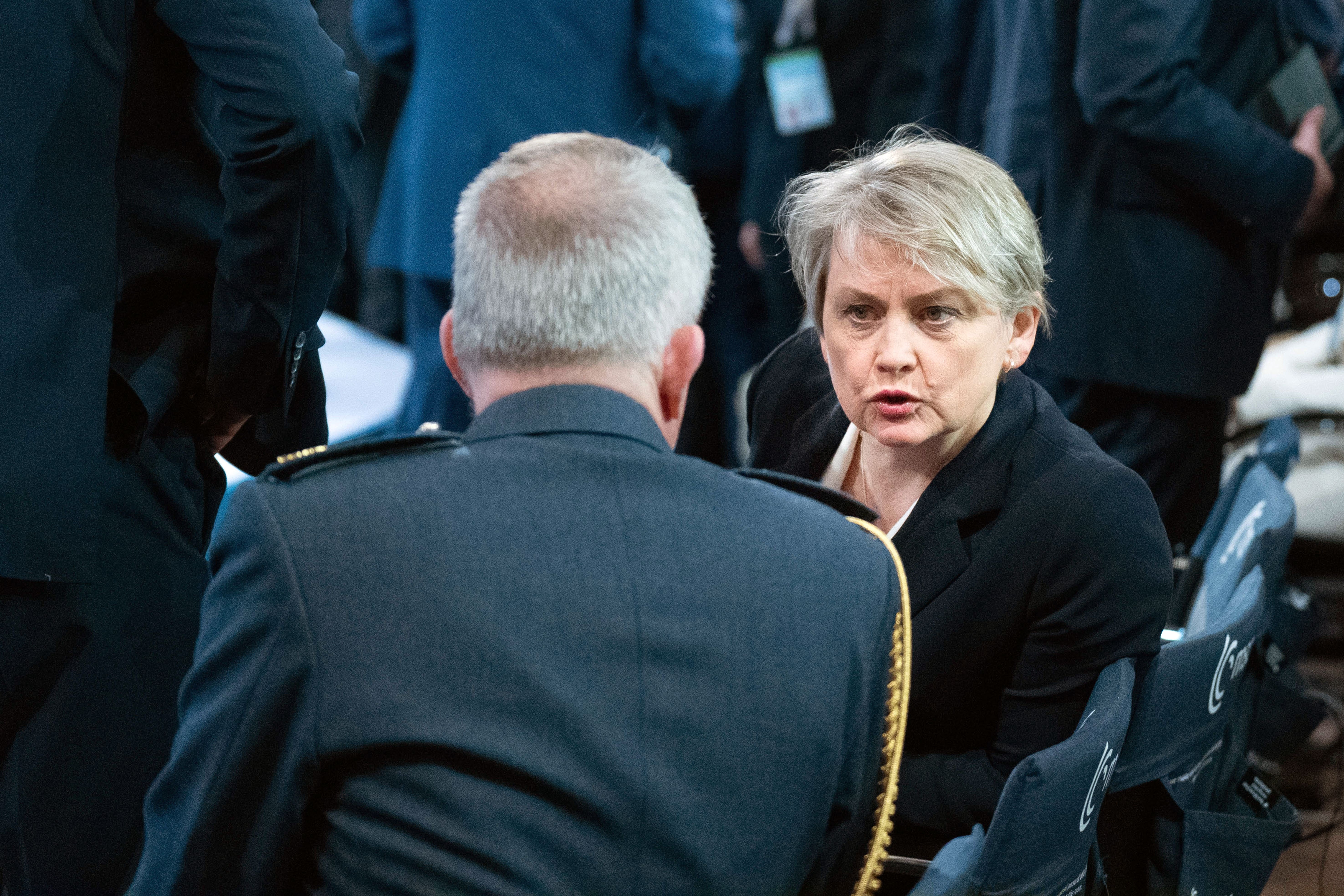
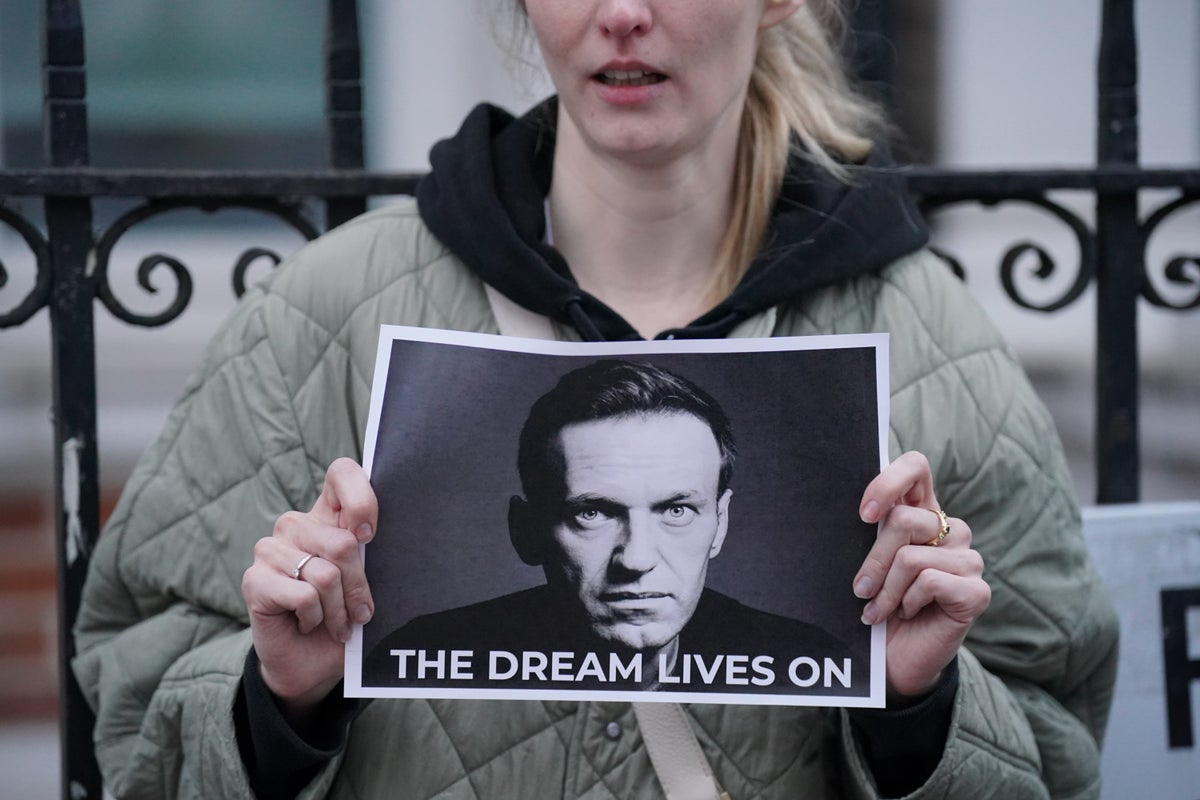
Earlier on Sunday, UK foreign secretary Yvette Cooper said the UK and its allies had exposed a “barbaric Kremlin plot” to poison opposition leader Alexei Navalny as she suggested new sanctions against Moscow could follow.
The Russian embassy in London has denied Moscow was involved in Mr Navalny’s death.
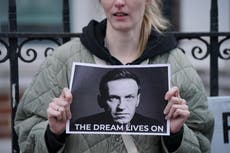 Truth is the most ‘dangerous weapon’ against Russia, UK says as it hits back at denial over Navalny’s death
 A critical point for Ukraine – and for Europe
 Inside the vast underground bunkers ready to protect Helsinki from Putin
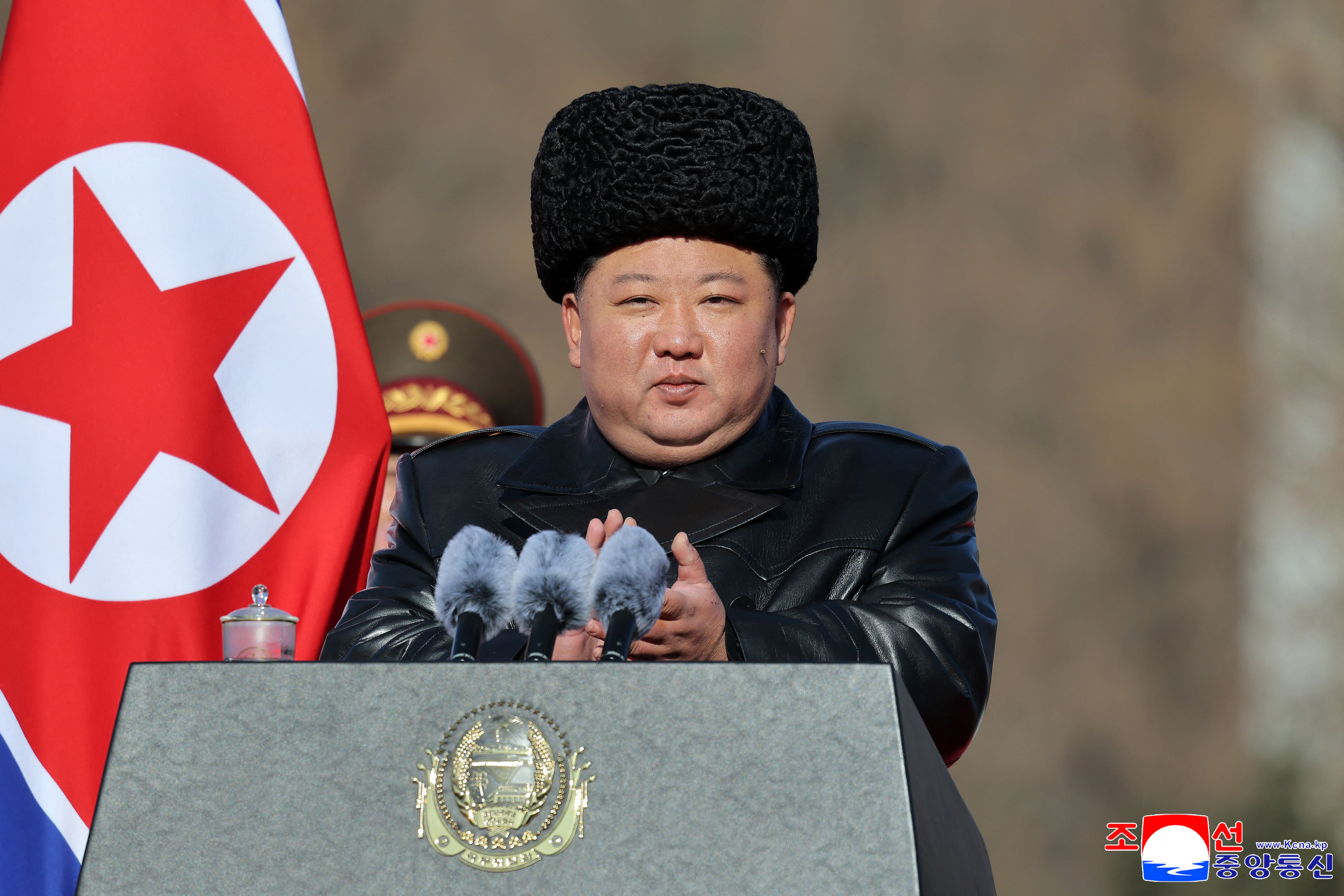
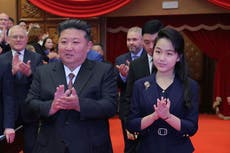 Kim Jong un opens new housing district for families of North Koreans killed in Ukraine war
PM 'weighs hiking defence spending' to meet emerging threats
Sir Keir Starmer is weighing a increase in defence spending, the BBC reported today, as a major security conference concluded in Munich.
The prime minister’s aides told the broadcaster that he is considering bringing forward spending targets, though no decision has yet been taken and it remained unclear when a boost could come.
The PM has already promised to bring expenditure to 2.5 per cent of GDP by April 2027, followed by an “ambition” to increase it to 3 per cent in the next parliament.
At the Munich Security Conference over the weekend, he signalled that more spending would be needed to meet emerging challenges.
“To meet the wider threat, it’s clear that we are going to have to spend more, faster,” he told leaders.
Ukraine says former energy minister is suspect in kickback case
A Ukrainian former energy minister has been detained as a suspect in a high-profile kickback case for crimes such as money laundering and participation in criminal activity, anti-graft prosecutors said on Monday, but did not name him.
Earlier reports confirmed the minister arrested is German Galushchenko who was held while trying to cross the border out of Ukraine. He served the war-hit nation last year and resigned in November, when a number of Ukrainian ministers were forced out after a money-laundering scheme came to public light.
Ukraine's previous two energy ministers resigned amid fallout from the so-called "Midas" case, centred on an alleged $100m kickback scheme at the state atomic agency that ensnared senior officials and business elites, including a former associate of president Volodymyr Zelensky.
The scandal also claimed the job of Zelensky's chief of staff, and all three have denied wrongdoing.
"We are talking about the former energy minister of Ukraine (2021 to 2025)," special anti-graft prosecutors said. "He is charged with money laundering and participation in a criminal organisation."
The former minister was detained over the weekend while attempting to leave Ukraine, the prosecutors said.
"During the suspect's tenure... the criminal organisation received more than $112m in cash from illegal activities in the energy sector," Ukraine's National Anti-corruption Bureau (NABU) said in a statement.
Materials obtained in Ukraine and through international cooperation with the competent authorities of a number of countries furnished the basis for its conclusion, the bureau added.
.jpg)
What is dart frog toxin, the poison linked to Alexei Navalny’s death?
Epibatidine, the highly potent toxin Britain has linked to the death of Alexei Navalny, is reportedly 100 times more powerful than morphine.
This extremely toxic, nicotine-like compound originates from the Epipedobates genus of poison dart frogs, found exclusively in northern South America. Crucially, these amphibians are not indigenous to Russia.
Species such as the brightly coloured Anthony’s poison arrow frog and the Phantasmal poison frog secrete this substance onto their skin. Researchers theorise that the frogs acquire the toxin through their diet, as captive-bred animals lack it, and wild populations exhibit varying levels depending on their habitat.
Read more about the toxin here:
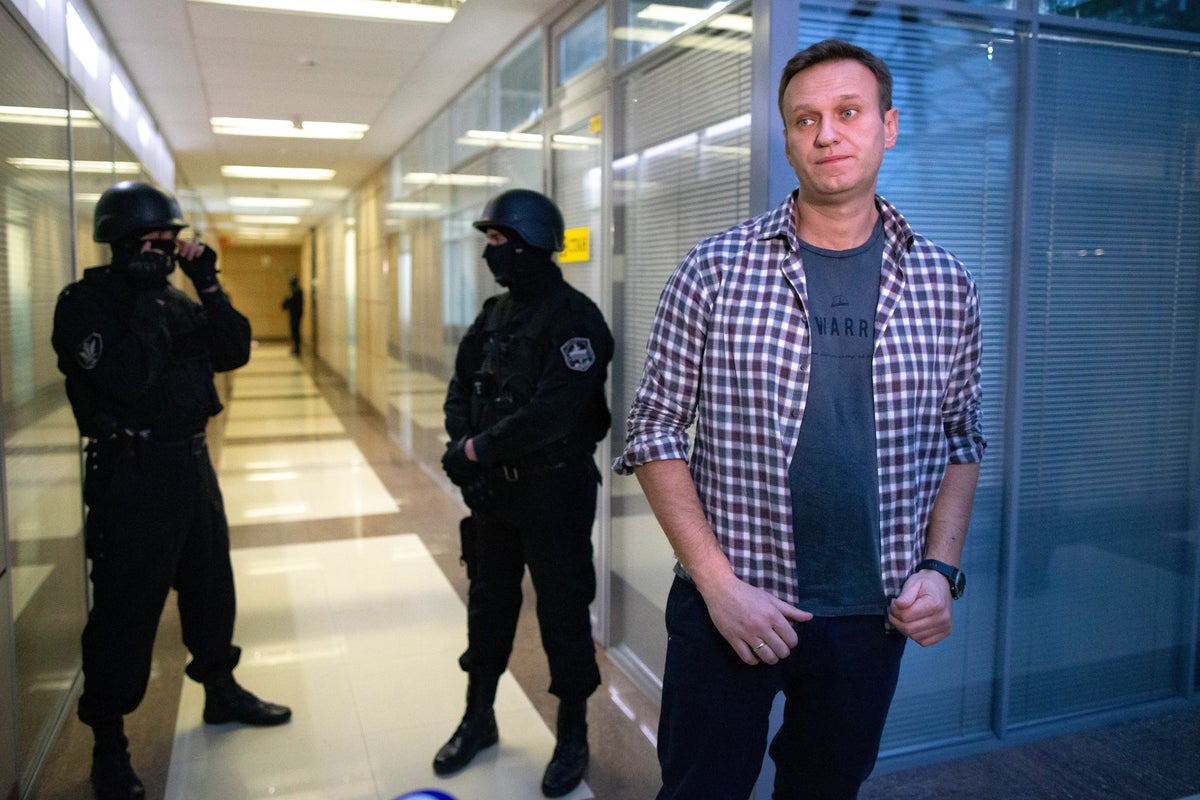
What is dart frog toxin, the poison linked to Alexei Navalny’s death?
Foreign secretary considers more sanctions after Navalny accusations
New sanctions against Moscow could follow after Britain and its allies blamed the Kremlin for poisoning Russian opposition leader Alexei Navalny, foreign secretary Yvette Cooper said.
Speaking to the BBC’s Sunday With Laura Kuenssberg programme, Cooper hit back at the Russians for dismissing the Navalny report, insisting the accusation was “deeply serious”.
She said: “The statement that we made yesterday shows that we have the evidence.
“We continue to look at co-ordinated action, including increasing sanctions on the Russian regime,” she said.
“As you know, we have been pursuing this as part of our response to the brutal invasion of Ukraine, where we are also coming up to the fourth anniversary of that invasion as well.”
North Korea honours families of Ukraine war dead with new housing district
North Korea announced completion of a new housing district in Pyongyang for families of North Korean soldiers killed while fighting alongside Russian forces in Ukraine, the latest effort by leader Kim Jong Un to honour the war dead.
State media photos showed Kim Jong Un walking through the new street — called Saeppyol Street — and visiting the homes of some of the families with his increasingly prominent daughter, believed to be named Kim Ju Ae, as he pledged to repay the "young martyrs" who "sacrificed all to their motherland”.
In recent months, North Korea has intensified propaganda glorifying troops deployed to fight in Russia's war against Ukraine, such as establishing a memorial wall and building a museum. Analysts see it as an effort to bolster internal unity and curb potential public discontent.
Rubio explains why US did not back assessment on Navalny's poisoning
When Britain, France, Germany, Sweden and the Netherlands declared that Russia poisoned opposition leader Alexei Navalny, the US did not add its name to the list of countries confirming the analysis.
The report stated that analyses of samples from Navalny's body "conclusively" confirmed the presence of epibatidine, a toxin found in poison dart frogs in South America and not found naturally in Russia.
On being asked why the US did not join the statement, US secretary of state Marco Rubio said the assessment "just wasn't our endeavour".
“Those countries came to that conclusion. They coordinated that. We chose - Doesn't mean we disagree with the outcome. We just, it wasn't, our endeavour. Sometimes countries go out and do their thing based on the intelligence they've gathered," Rubio said.
“We're not disputing or getting into a fight with these countries over it. But it was their report, and they put that out there," he added.
Russian opposition leader Navalny died in an Arctic prison colony in February 2024, after being convicted of extremism and other charges, all of which he denied.
Fire after drone attack at Russia's port of Taman put out, officials say
Local authorities in Russia's Krasnodar region said that a fire at the Black Sea port of Taman, which handles oil products, grain, coal and commodities, had been extinguished.
The port was damaged by a Ukrainian drone attack on Sunday.
British and German defence chiefs call for defence spending to prevent war
The defence chiefs of the UK and Germany have made a rare public plea to Europeans, asking them to support increased defence spending if they want to prevent war with Russia.
Germany’s chief of defence, Gen. Carsten Breuer, and the UK’s chief of defence staff, Air Marshal Sir Richard Knighton, wrote in a joint article in The Guardian and Die Welt that European nations “must now confront uncomfortable truths” about the continent's security and make “hard choices”.
“Moscow’s military buildup, combined with its willingness to wage war on our continent, as painfully evidenced in Ukraine, represents an increased risk that demands our collective attention,” they said.
“Moscow’s intentions range wider than the current conflict,” the pair wrote, arguing that the pubic must get behind increased defence spending, even if it means other public service programmes – the “peace dividend” from the end of the Cold War – might suffer.
A critical point for Ukraine – and for Europe
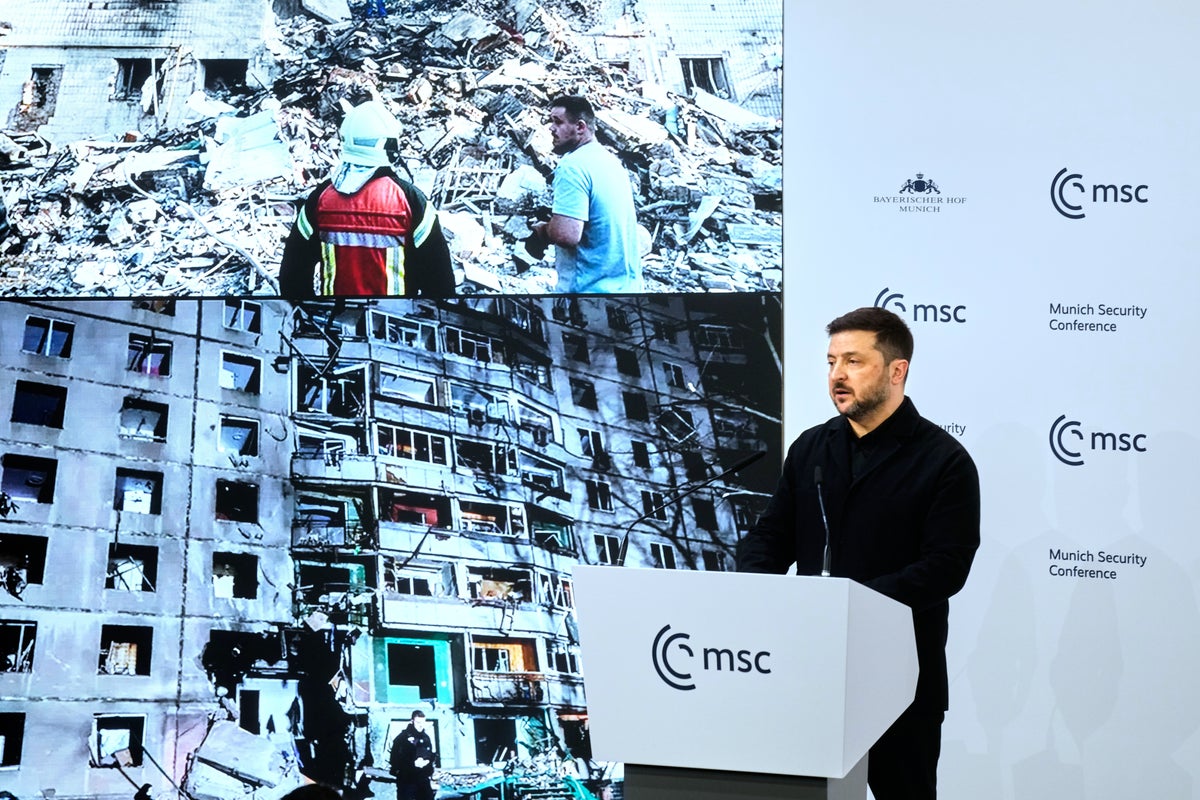
Almost four years after Russia’s full-scale invasion of Ukraine, the situation on the ground and in the diplomatic arena has become critical.
Our report from Kyiv graphically depicts the plight of so many residents in Ukraine’s capital city, who face nightly Russian air raids, targeting primarily civilian power supplies, in mid-winter.
The intensity of the attacks, the damage sustained for want of sufficient air defence, and the winter temperatures have all been markedly worse than in previous years.
The human aspect, as ever, is the most poignant: nursery-age children who have learned to distinguish outgoing from incoming fire; a parliamentarian relieved that his family lacked the money to buy a flat in an adjacent high-rise that turned out to be more vulnerable than his ground-floor flat in an older building; no hot water, no heating or power, for all but two of 24 hours, all detrimental for wellbeing and morale.
If this is what it is like living an MP’s relatively privileged life in Kyiv, the conditions for others, including those living further east, in the actual battle zone, must be many times worse.
Read The Independent View here:
A critical point for Ukraine – and for Europe
UK dismisses Russia's denials over Navalny killing
Foreign secretary Yvette Cooper has said Russia is in possession of the toxin used to kill opposition leader Alexei Navalny and the UK is aware of it.
"This is a particular chemical. It can be produced synthetically. It can also be found in this particular frog in Ecuador,” Ms Cooper told Sky News.
"And we do know that the Russian regime has had possession of this particular chemical. It is obviously not one that is found naturally in Russia,” she said.
Britain and its European allies said on Saturday that the opposition leader had died after being poisoned with a lethal toxin found in dart frogs in South America.
After the findings were announced by Navalny’s widow, Yulia Navalnaya, the foreign secretary pinned the blame squarely on the Kremlin and said only Russia had the “means, motive and opportunity” to carry out such an attack.
‘Truth is a dangerous weapon’: UK hits back at Russia’s denial over Navalny’s death
Join our commenting forum
Join thought-provoking conversations, follow other Independent readers and see their replies
Comments
Bookmark popover
Removed from bookmarks