Judge quotes Orwell’s 1984 as she orders Trump to restore slavery exhibits in Philadelphia
Judge compares president’s attempts to erase history to the dystopian Ministry of Truth
A federal judge on Monday compared the Trump administration to George Orwell’s Ministry of Truth from 1984, quoting the fictional dystopian agency’s motto “Ignorance Is Strength” in her simmering order to restore all mentions of slavery that were removed from a Philadelphia landmark.
In her ruling, District Judge Cynthia Rufe ordered the federal government to return all exhibit materials at Philadelphia’s President’s House on Independence Mall.
“As if the Ministry of Truth in George Orwell’s 1984 now existed, with its motto ‘Ignorance is Strength,’ this Court is now asked to determine whether the federal government has the power it claims — to dissemble and disassemble historical truths when it has some domain over historical facts,” she wrote Monday. “It does not.”
In January, days before the beginning of Black History Month, the National Park Service removed any mention of slavery and all information about enslaved people who lived at the site.
The removal followed President Donald Trump’s executive order “restoring truth and sanity to American history” at the nation’s museums, parks and landmarks, joining the administration’s sweeping efforts to sanitize or remove entirely from public view the nation’s history of enslavement.
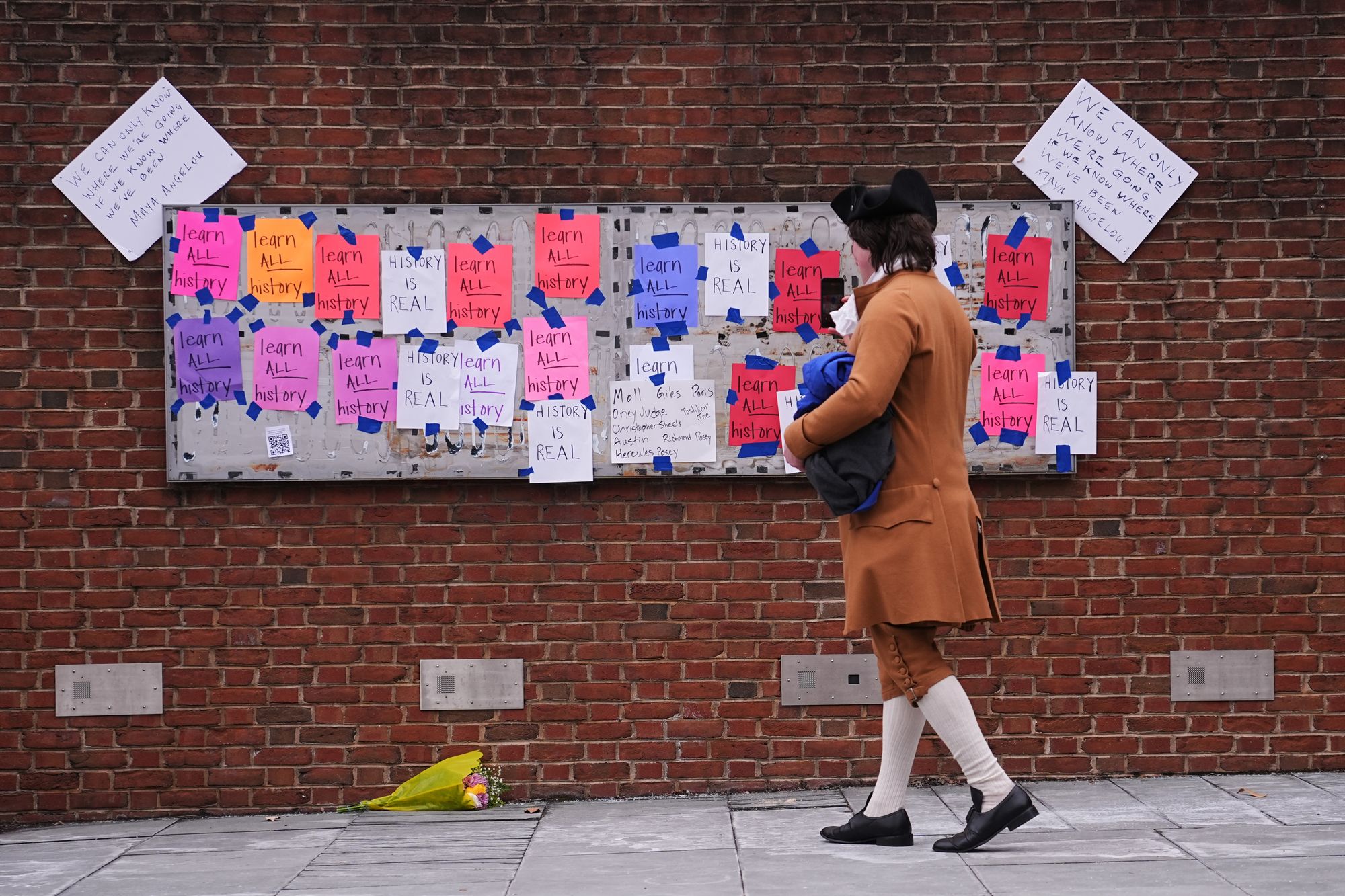
Trump’s executive order directed his administration to review the nation’s museums and historical sites that depict “founding principles and historical milestones in a negative light.”
As a result, several exhibits about the brutality of slavery and the nation’s legacy of injustice and fight for civil rights were removed.
The president, meanwhile, issued a belated proclamation recognizing Black History Month, which begins February 1, with a statement that makes no mention of the fight to end enslavement or combat discrimination. Days later the president posted a video depicting Barack and Michelle Obama as apes.
The president has also railed against the Smithsonian Institution for focusing on “how bad slavery was” instead of the “brightness” or “future” of America and threatened to pull federal funding from museums that “portray American and Western values as inherently harmful and oppressive.”
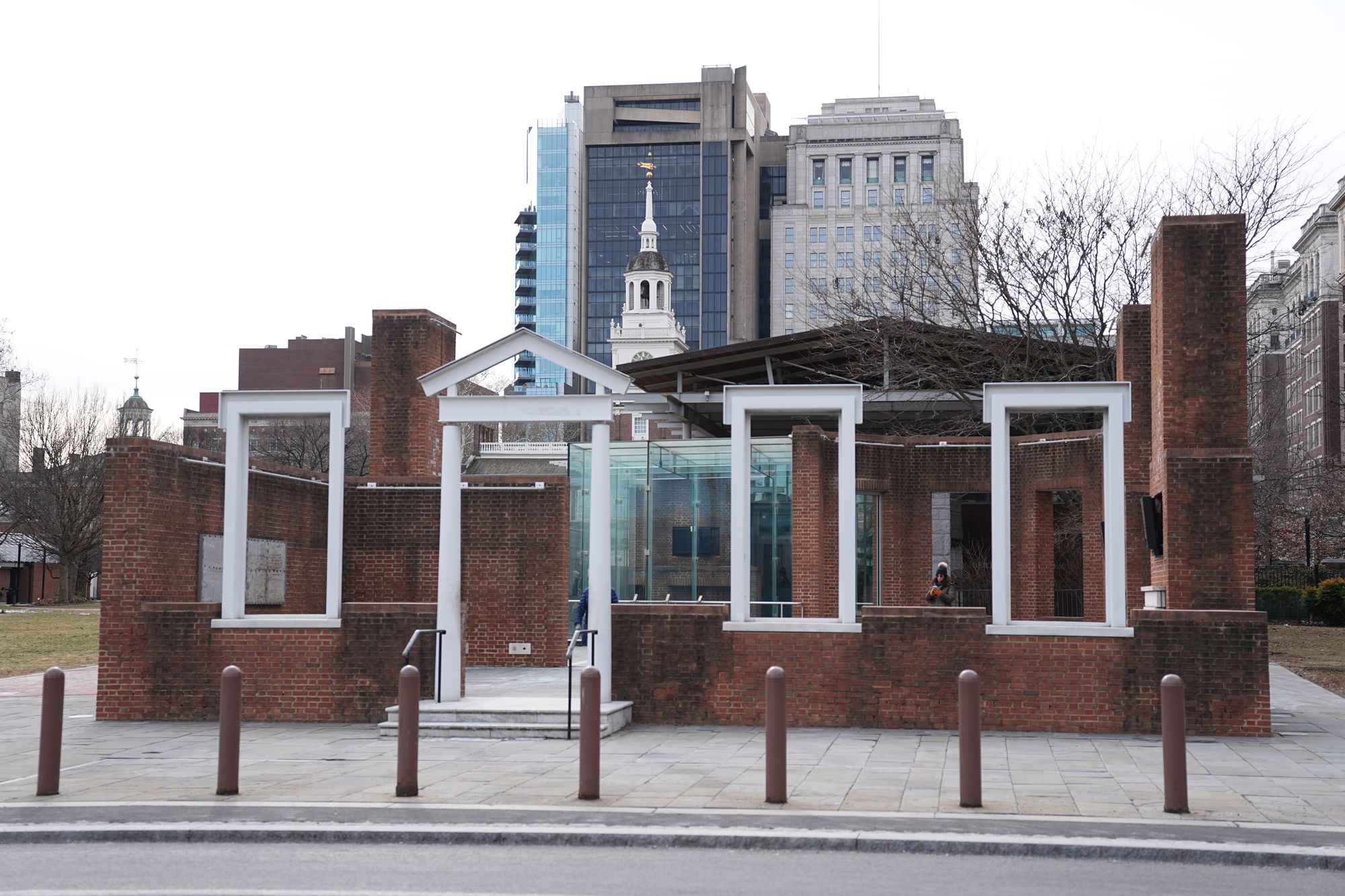
In a hearing last month, a lawyer for the Department of Justice argued that “the government gets to choose the message it wants to convey.”
Judge Rufe, who was appointed by George W. Bush, sharply rebuked the government’s “dangerous” and “horrifying” arguments.
“That is a dangerous statement you are making. It is horrifying to listen to,” she said at the time. “It changes on the whims of someone in charge? I’m sorry, that is not what we elected anybody for.”
“You can’t erase history once you’ve learned it. It doesn’t work that way,” she said.
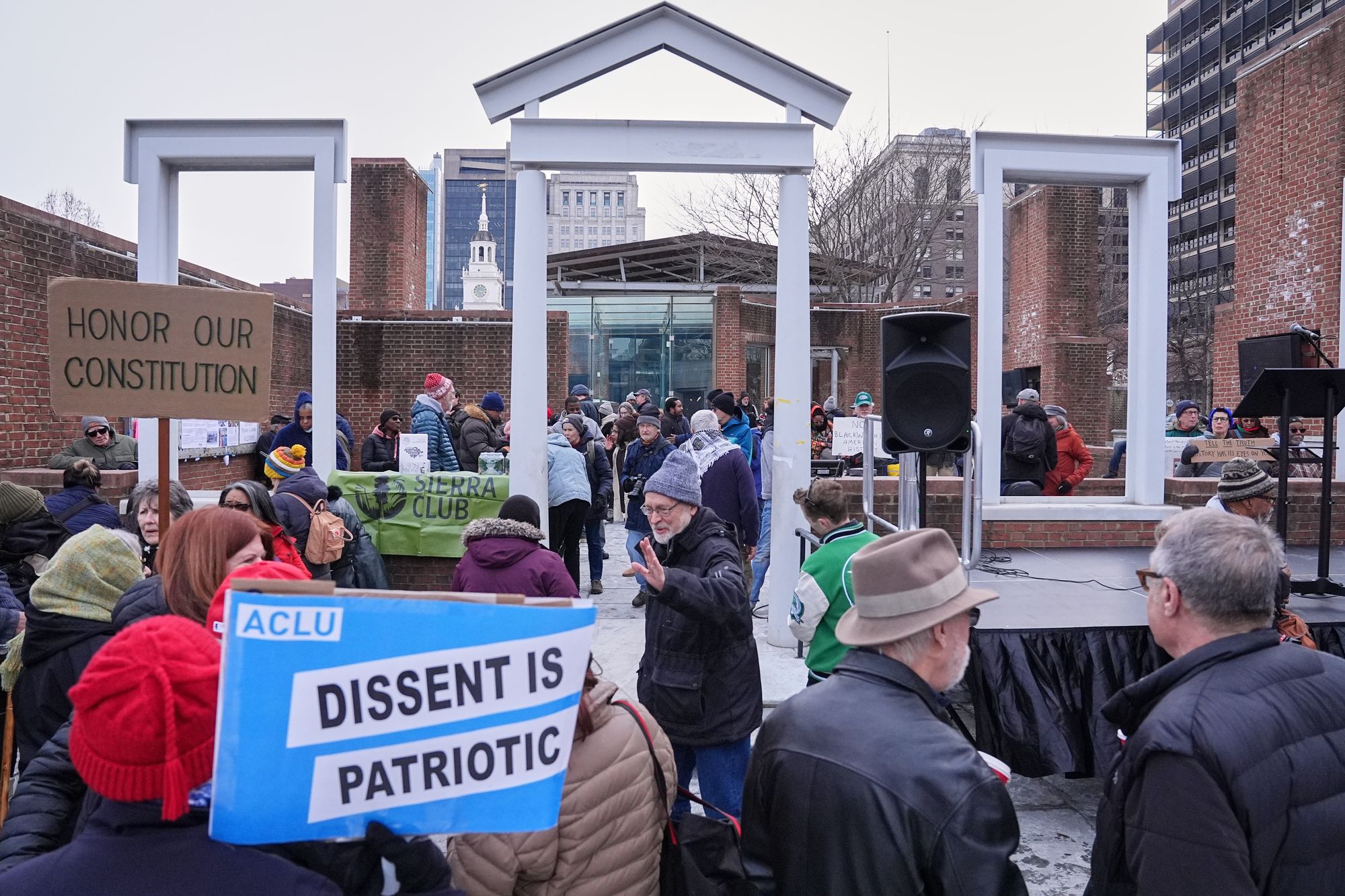
The President’s House in Pennsylvania, which is part of the Independence National Historical Park, commemorates the site of the first official presidential residence and the people who lived there,including people enslaved by President George Washington.
The exhibit includes biographical details about nine enslaved people who lived there.
After the Trump administration removed all materials about them, only their names — Austin, Paris, Hercules, Christopher Sheels, Richmond, Giles, Oney Judge, Moll and Joe — remained engraved in a cement wall.
Last month, people were seen using crowbars to remove several panels from an outdoor display, including one that reads “The Dirty Business of Slavery.”
"Removing the exhibit is an effort to whitewash American history. History cannot be erased simply because it is uncomfortable,” Philadelphia council member Kenyatta Johnson said in a statement after the exhibits were taken down.
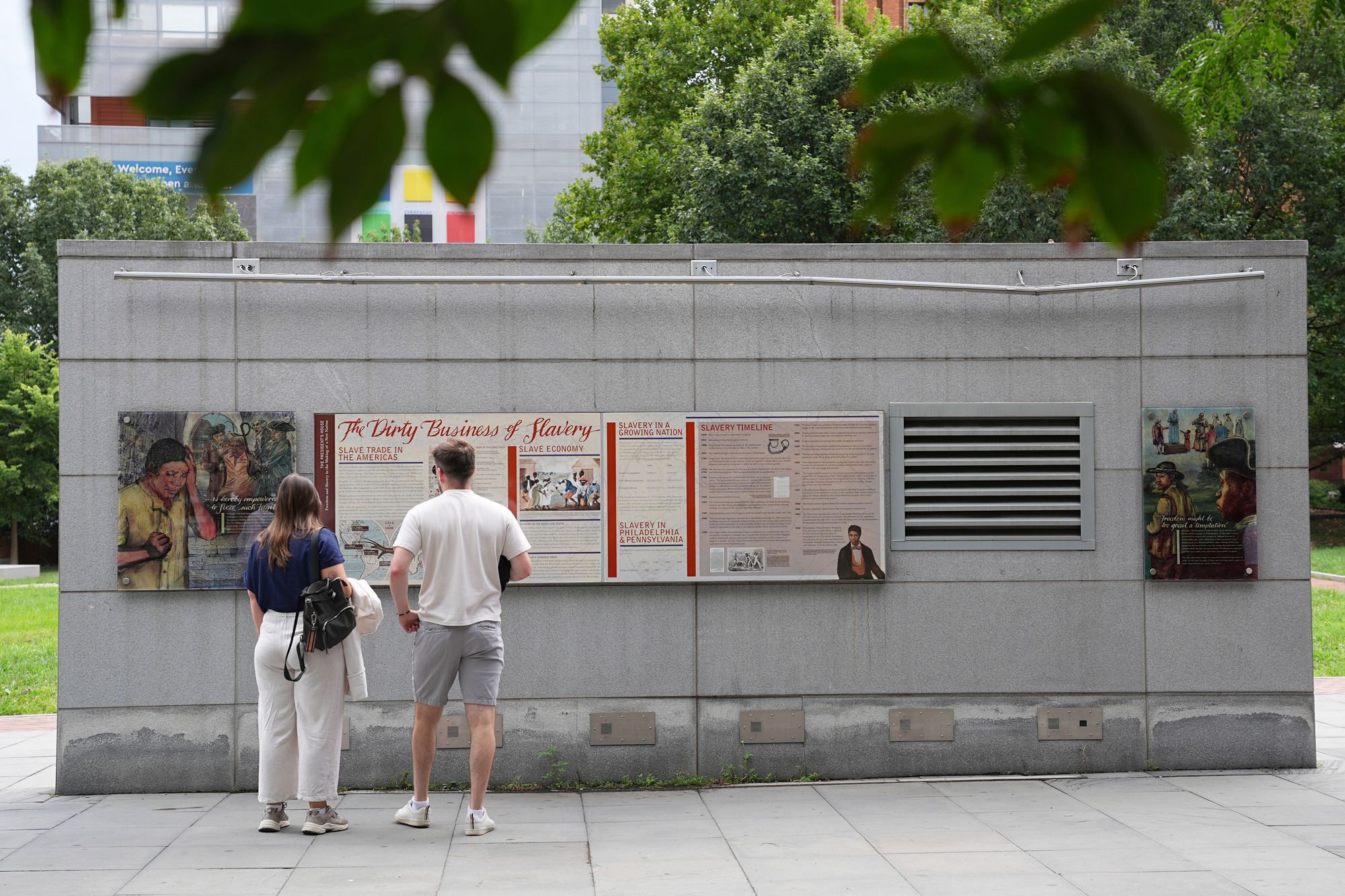
“Removing items from the President’s House merely changes the landscape, not the historical record,” he said.
Their removal “is an insult to the memory of the enslaved people who lived there and to their descendants,” according to the National Parks Conservation Association.
“Few stories are more integral to the fabric of this country than the story of American independence, and there is nowhere better to learn that story than Independence National Historical Park,” according to Ed Stierli, the group’s Senior Mid-Atlantic Regional Director.
“But being proud of our independence does not mean we should hide the mistakes of our past. National parks should help us grapple with the truths, complexities and contradictions of our history,” he said in a statement last month.
Removing that material “sets a dangerous precedent of prioritizing nostalgia over the truth,” he added.
The Independent has requested comment from the Interior Department and National Parks Service.
Join our commenting forum
Join thought-provoking conversations, follow other Independent readers and see their replies
Comments
Bookmark popover
Removed from bookmarks