National park to remove exhibit of famed photograph showing former slave’s scarred back, says report
The famous photo is among dozens of exhibits on slavery said to be nixed by the Trump administration
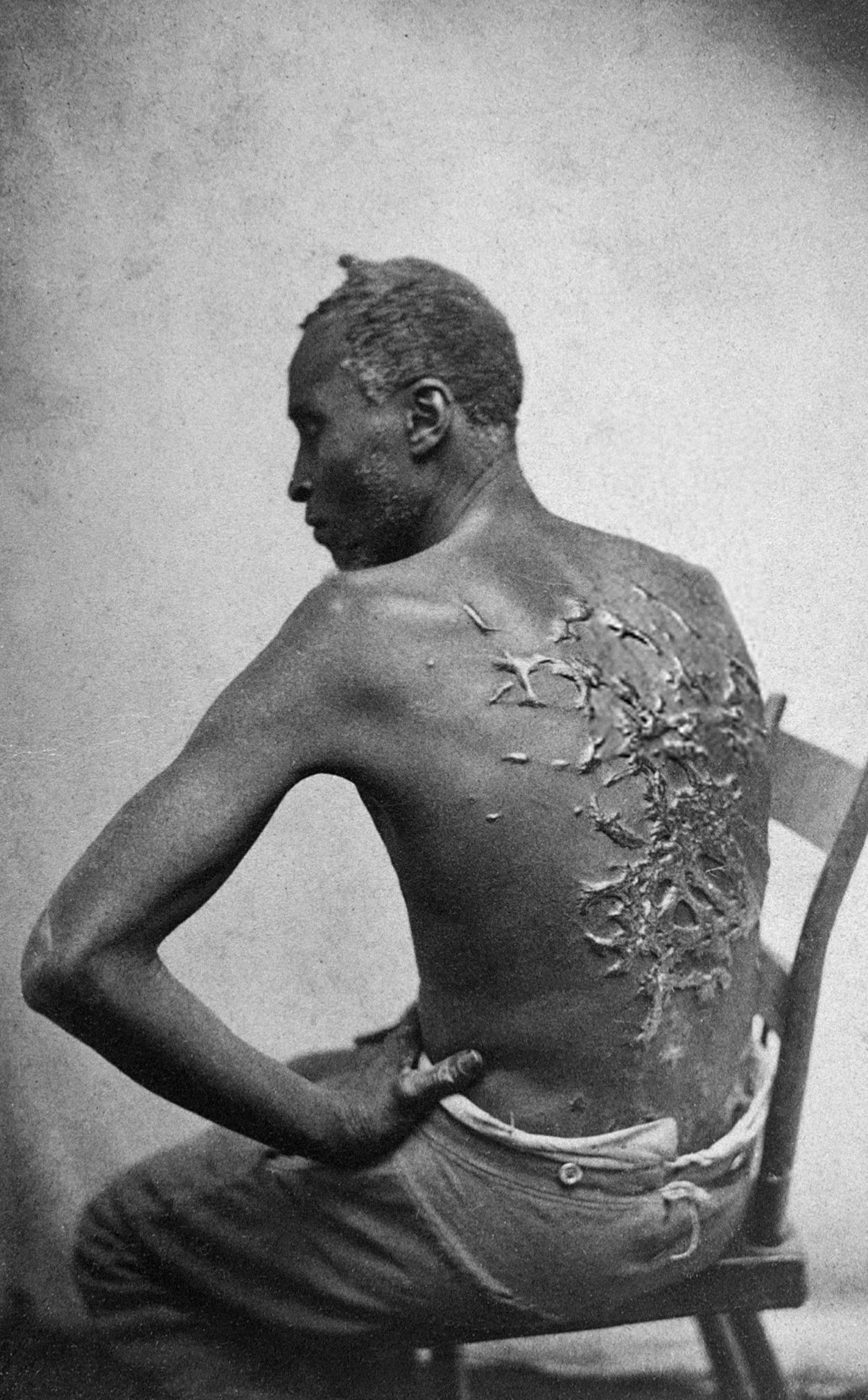
In 1863, at the height of the Civil War, two Baton Rouge photographers captured an image of a former slave's horrifically scarred back that shocked white Americans across the Union.
Now that photo is among dozens of exhibits about slavery at several national parks, which have reportedly been ordered removed by the Trump administration.
According to The Washington Post, National Park Service officials have taken exception to various signs and displays at the Harpers Ferry National Historic Park in West Virginia and George Washington's old house in Philadelphia, where the first U.S. president kept nine slaves.
All were deemed to violate Trump's executive order on "Restoring Truth and Sanity to American History" in March, which ordered the Interior Department to purge national monuments and historic sites of any content that "inappropriately disparage Americans past or living".
The order accused the Biden administration of indulging a "corrosive ideology" that sought to cast the U.S. as "inherently racist, sexist, oppressive, or otherwise irredeemably flawed."
The Post reported that these orders were being interpreted "broadly" to include "information on racism, sexism, slavery, gay rights, or persecution of indigenous people", citing anonymous inside sources and leaked documents.
A spokesperson for the Department of the Interior told The Independent: “The Washington Post continues to rely on anonymous sources and unverified claims to drive a false narrative. We caution against reporting on false claims that are not grounded in verified facts.
“In accordance with Secretary’s Order No. 3431, Restoring Truth and Sanity to American History, all interpretive signage in national parks is under review. Anyone reporting on anything but the facts are spreading misinformation to the American people.”
The National Park Service previously told the Post: "Interpretive materials that disproportionately emphasize negative aspects of U.S. history or historical figures, without acknowledging broader context or national progress, can unintentionally distort understanding rather than enrich it.”
It is the latest in a long series of erasures by the Trump administration, which has seen famous Black, Hispanic, and female veterans removed from official military history websites (although some were later restored) and the word "transgender" scrubbed from the Stonewall National Monument in New York City.
Meanwhile, Trump himself has inveighed against the Smithsonian Institution and even against specific paintings of himself hung in official buildings, while putting a MAGA loyalist in charge of the Kennedy Center for the Performing Arts in Washington, D.C.

This month's reported removals focused on George Washington's official residence in Philadelphia, which predates the building of the White House, and the small town of Harpers Ferry, where abolitionist guerrilla leader John Brown helped spark the American Civil War in 1859 by attempting to start a slave revolt.
At one national park, officials have reportedly ordered the removal of a famed photo of a formerly enslaved man known as 'Peter', taken by William D. McPherson and J. Oliver in 1863, after Union forces occupied Louisiana.
Contemporary accounts claim that Peter had escaped a local plantation and fled to Baton Rouge, where Abraham Lincoln's presidential proclamation abolishing slavery was now in effect.
Peter's photo has had an influential afterlife, featuring in discussions about systemic racism after George Floyd's murder in 2020 and in Steven Spielberg's 2012 film Lincoln.
This story was updated after publication to include a statement from the Department of the Interior.
Join our commenting forum
Join thought-provoking conversations, follow other Independent readers and see their replies
Comments
Bookmark popover
Removed from bookmarks