Iran retaliation fears as hospitals and power plants on high alert for cyberattacks
The Trump administration attacked three main nuclear sites in Iran late Saturday
American hospitals, water dams, and power plants are reportedly on high alert for potential Iranian cyberattacks after President Donald Trump attacked the nation’s nuclear sites.
Hospital executives have contacted the FBI about the potential threat level from Iran, while the U.S. power grid’s cyberthreat-sharing center is monitoring the dark web for Iranian-linked activity, CNN reports, citing sources familiar with the situation.
Iranian-backed hackers have previously targeted American hospitals and water facilities, according to CNN.
“Iran’s kinetic retaliation is already in motion, and the digital dimension to that may not be far behind,” said Adam Meyers, senior vice president of cybersecurity firm CrowdStrike. “This cyber element is what lets them extend their reach, and there’s an air of deniability to it.”
These concerns come after Trump’s administration attacked the nuclear sites Fordow, Natanz, and Isfahan late Saturday. Trump claimed the attacks “obliterated” the sites, but an early intelligence report from the Pentagon suggests it only set back Iran’s nuclear program by a few months.

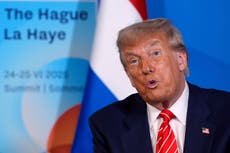


On Tuesday, Trump announced a ceasefire deal between Iran and Israel.
“It was my great honor to Destroy All Nuclear facilities & capability, and then, STOP THE WAR!” Trump wrote on Truth Social.
Israel first launched attacks against Iran on June 13, claiming the country was on the verge of developing nuclear weapons. Iran then retaliated with its series of airstrikes. The two countries have continued to trade attacks since.
Throughout the 12-day war, an estimated 28 people were killed in Israel while 1,000 were wounded, according to the Associated Press. In Iran, at least 1,054 people were killed and 4,476 were hurt, the AP reports, citing the Human Rights Activists group.
Trump then compared the attack to the Hiroshima and Nagasaki bombings on Japan in 1945, which killed an estimated 150,00 to 246,000 people, mostly civilians.
“That hit ended the war. I don’t want to use an example of Hiroshima. I don’t want to use an example of Nagasaki, but that was essentially the same thing, that ended that war. This ended that with the war,” Trump said from the NATO summit on Wednesday.
Trump went on to downplay the report that contradicted his claim that the strikes “obliterated” the nuclear sites.
“The intelligence says, ‘We don’t know, it could have been very severe.’ That’s what the intelligence says,” he said. “So I guess that’s correct, but I think we can take the ‘we don’t know’. It was very severe. It was obliteration.”
Join our commenting forum
Join thought-provoking conversations, follow other Independent readers and see their replies
Comments
Bookmark popover
Removed from bookmarks