Where is Venezuela’s opposition leader Maria Corina Machado? The Nobel peace laureate scorned by Trump
Venezuelan politician has been in hiding amid threats to her life
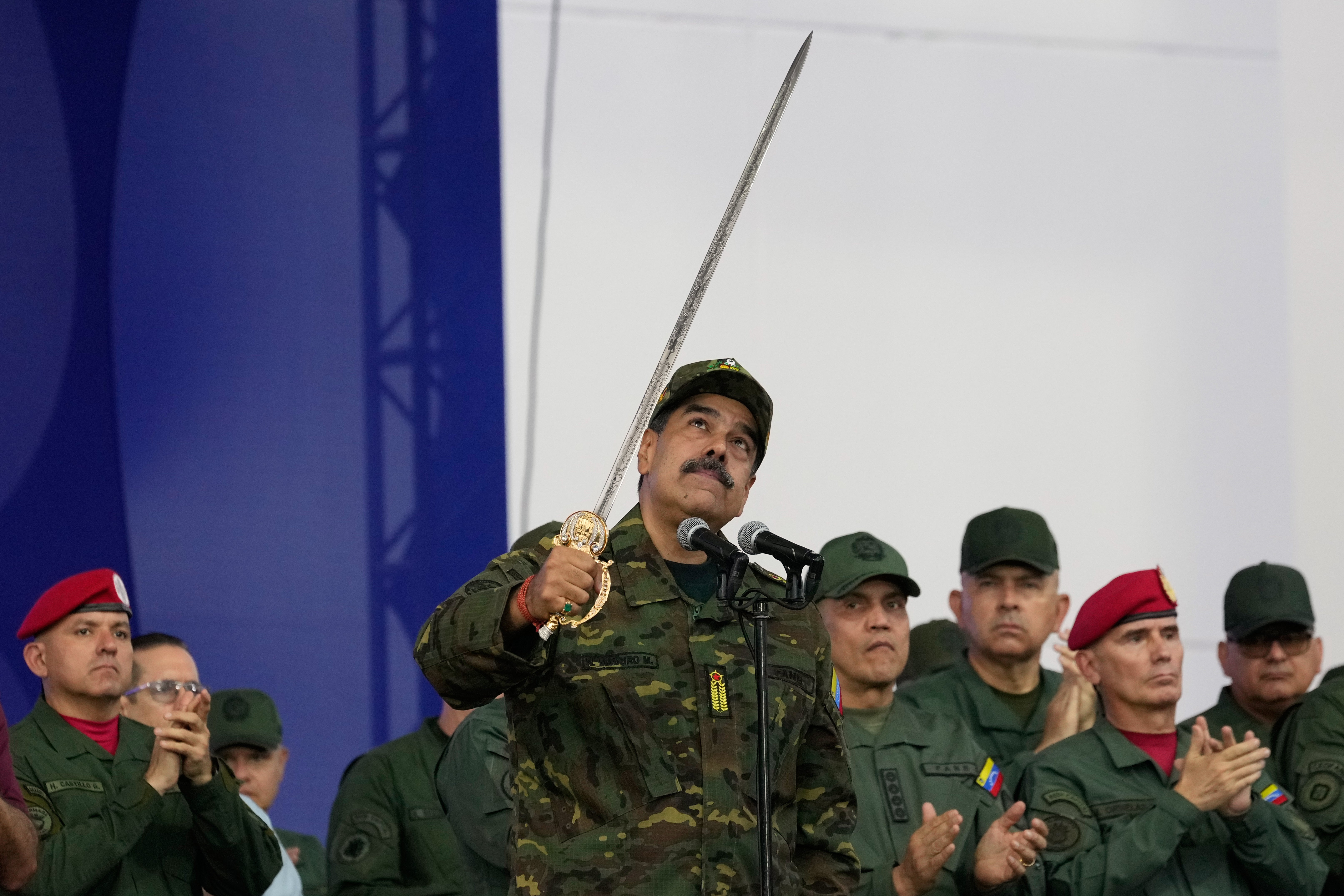
The capture of Nicolas Maduro in an unprecedented US military operation has left a political vacuum in Venezuela and reignited hopes that opposition leader Maria Corina Machado could spearhead a democratic revival in the country.
Machado, 58, has been living in hiding due to security risks and threats to her life since the last disputed election in Venezuela.
Despite Machado releasing a statement supporting Maduro’s exit, the exiled opposition leader’s whereabouts are still unknown. Trump sparked alarm on Sunday after suggesting she could not become leader of Venezuela as she lacked “respect” and “support” in the country.
His comments appeared to be driven by his anger over her acceptance of the Nobel Peace Prize, with sources close to Trump suggesting she had committed the “ultimate sin” by refusing to give the prize to the US president.
The Independent looks at Machado’s rise in politics and whether she could play a role in a future government.
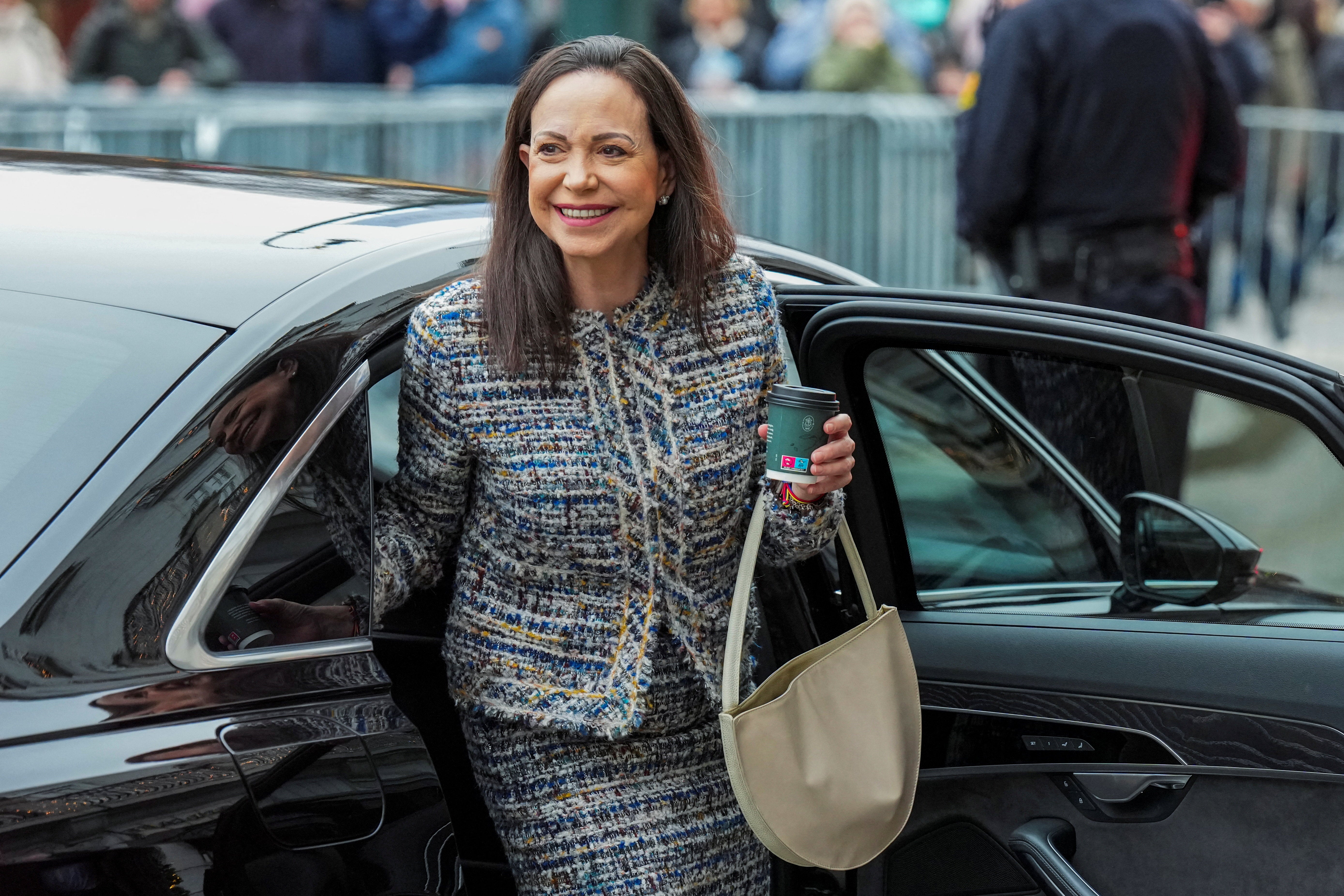
Who is Maria Corina Machado?
Machado is an industrial engineer by training who spent years running the Atenea Foundation for orphaned children living on the streets of Caracas.
She first entered politics through the co-founding of Sumate in 2002, a civic organisation focused on promoting fair elections and democracy. She was elected to the National Assembly in 2011 but was barred from running for office four years later for unspecified reasons.
Machado drew criticism from the governing socialist party for her upper-class roots due to her father being a prominent businessman in the country’s steel industry.
She co-founded political party Vente Venezuela in 2012, which she currently leads. In 2023, she won a resounding victory in the opposition’s primary elections, and her rallies drew large crowds.
But that same year, she was banned from public office and from running in presidential elections after unsubstantiated claims that she was involved in a “corruption plot”. The ban by a Venezuelan court was dubbed “arbitrary and politically fabricated” by the European Parliament.
Machado’s years in exile
Machado was replaced as leader by Edmundo Gonzalez in the 2024 elections, which he is widely believed to have won. However, the country’s National Electoral Council declared Maduro the winner, without any credible evidence.
Protests erupted across the country after the results were announced and were met with police brutality that left more than 20 people dead.
Machado went into hiding and emerged in January 2025 to make a brief appearance during a protest before Maduro’s inauguration, where she was arrested and subsequently released.

A secret voyage to collect the Nobel Peace Prize
Machado became the 20th woman to win the Nobel Peace Prize in 2025 for “her tireless work promoting democratic rights for the people of Venezuela and for her struggle to achieve a just and peaceful transition from dictatorship to democracy”.
Trump had expected to win the prize himself for his efforts in securing a ceasefire between Israel and Hamas in Gaza. In an apparent bid to curry favour with the US president, Machado dedicated her victory to Trump.
She later embarked on a daring three-day voyage to attend the Nobel ceremony in Oslo, Norway, on 10 December with the help of the US military, but suffered an injury along the way.
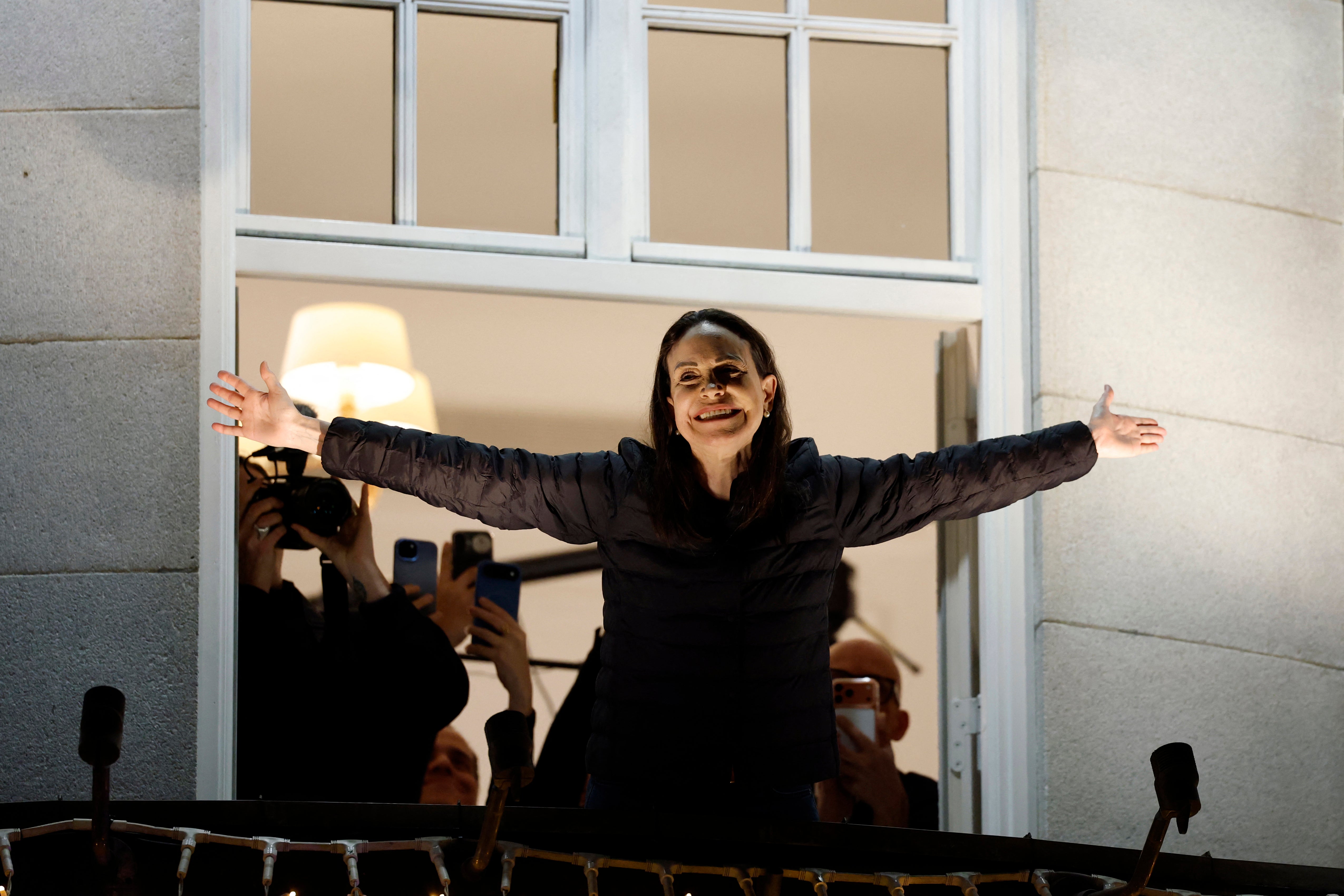
Upon her arrival, she greeted jubilant supporters gathered outside her hotel in Oslo. She later left the country for an undisclosed location to receive medical treatment.
Her relationship with Trump
Machado has been effusive in her support for Trump and his highly controversial attacks on Venezuelan “drug-boats” and “narco-terrorists” that have killed at least 115 people. UN experts have dubbed the strikes “extrajudicial executions”.
But while the pair previously enjoyed a warm relationship, Trump is said to have cooled towards her after the Nobel win.
After Maduro’s capture, he said she was a “very nice woman” but that it would be “tough” for her to lead Venezuela because she did not have “respect within or the support within the country”.
Two people close to the White House toldThe Washington Post that the president’s negative comments had been sparked by Machado’s acceptance of the prize, saying it had been perceived as the “ultimate sin” by Trump.
“If she had turned it down and said, ‘I can’t accept it because it’s Donald Trump’s,’ she’d be the president of Venezuela today,” the source said.
Join our commenting forum
Join thought-provoking conversations, follow other Independent readers and see their replies
Comments
Bookmark popover
Removed from bookmarks