Maduro, family and Venezuelan officials face ‘narco-terrorism’ grand jury indictment. Here are the charges
Four-count indictment alleges recently captured president and his wife enriched themselves with ‘cycle of narcotics-based corruption’
The Department of Justice has unsealed a sweeping grand jury indictment accusing Venezuelan President Nicolas Maduro of leading a massive cocaine trafficking operation.
A 25-page document from federal prosecutors in New York City claims Maduro, his wife and Venezuelan officials have “abused their positions of public trust and corrupted once-legitimate institutions to import tons of cocaine into the United States.”
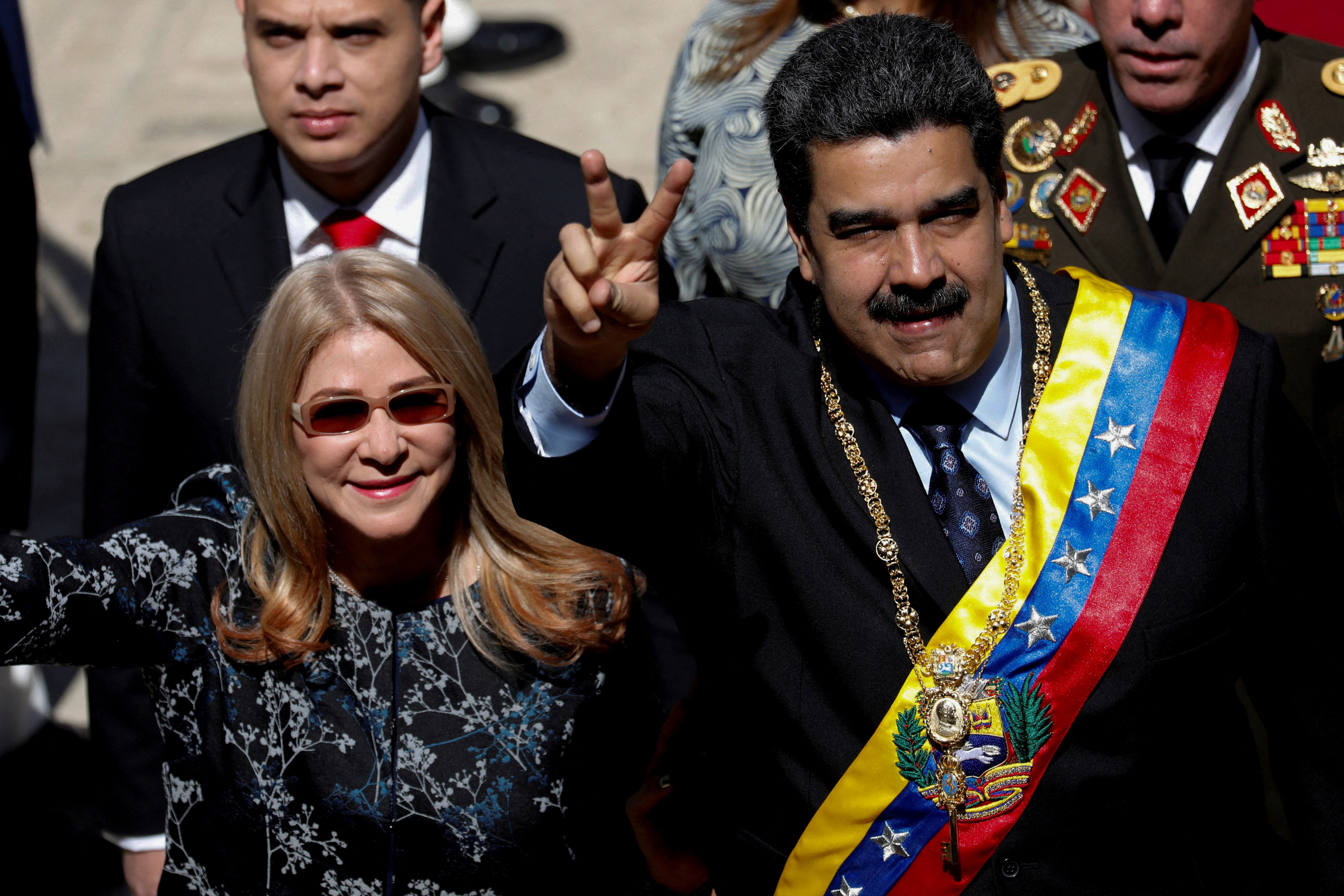
The four-count indictment, unsealed hours after Donald Trump announced the capture of Maduro and his wife Cilia Flores, claims the Venezuelan president and his family enriched themselves with a “cycle of narcotics-based corruption.”
That alleged drug-trafficking conspiracy “lines the pockets of Venezuelan officials and their families while also benefiting violent narco-terrorists who operate with impunity on Venezuelan soil and who help produce, protect, and transport tons of cocaine to the United States,” according to the document, which is signed by U.S. Attorney for the Southern District of New York Jay Clayton.
The new indictment echoes a previous 2020 indictment against the Venezuelan president, but the superseding document includes charges against his wife. Maduro’s son Nicolas Maduro Guerra and Venezuelan officials Diosdado Cabello and Ramon Rodriguez Chacn as well as the alleged head of Tren de Aragua are also charged.
They face charges of narco-terrorism conspiracy, cocaine importation conspiracy, and possession of and conspiracy to possess machine guns and destructive devices.
The case is also virtually the same as one against former Honduran President Juan Orlando Hernandez, who was similarly accused of enabling a massive cocaine-trafficking operation through his nation’s military and national police force.
He was sentenced to 45 years in prison. But Trump pardoned him last month, claiming that the case against him was a politically motivated “set up” under Joe Biden’s administration.
“It was a terrible thing. He was the president of the country and they basically said he was a drug dealer because he was the president of the country,” Trump told reporters last month. “And they said it was a Biden administration set-up. And I looked at the facts and I agreed with them.”
Maduro and Flores are expected to make an initial appearance on the charges in Manhattan federal court as soon as Monday.
Federal prosecutors allege Maduro led a conspiracy to ship drugs from Venezuela to the United States via the Caribbean and Central America using fishing boats and container ships as well as clandestine airstrips and commercial airports protected by “corrupt government and military officials.”
Defendants relied on “violent narco-terrorist groups” who “reaped the benefits” of the alleged conspiracy, according to the indictment. Those groups include various cartels and gangs throughout Central America, including Tren de Aragua, which the Trump administration has targeted as part of the president’s vast anti-immigration agenda.
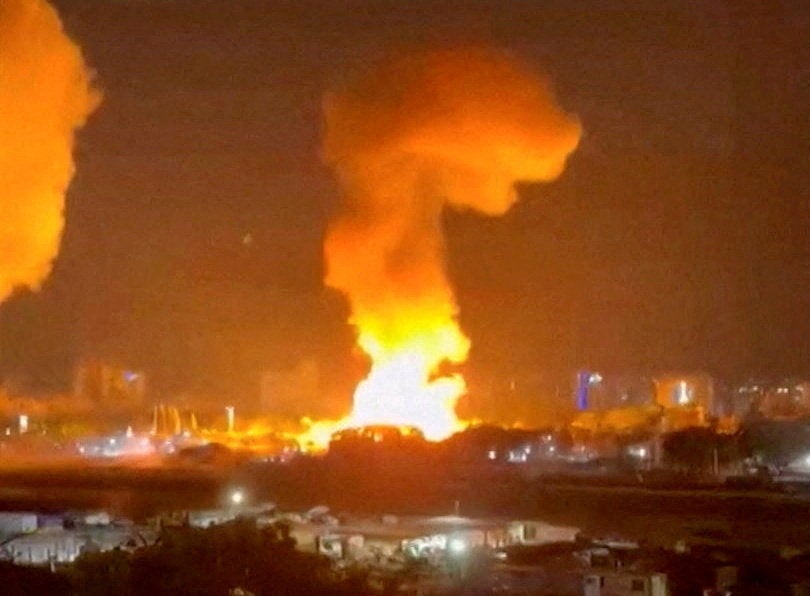
The capture of the Venezuelan president follows Trump’s months-long military campaign against his regime, including a lethal series of attacks on boats off Venezuela’s coast and a massive buildup of U.S. naval vessels and other military assets in the region.
The U.S. Coast Guard recently seized a second sanctioned oil tanker and pursued a third, following months of deadly strikes on alleged drug-carrying boats in the Caribbean and eastern Pacific that have killed more than 100 people.
Trump administration officials have warned that land strikes would soon follow while suggesting that regime change could be imminent.
Officials have offered varying justifications for the strikes in the oil-rich nation, where proven oil reserves are among the largest in the world. Trump’s chief of staff Susie Wiles recently told Vanity Fair that the attacks were aimed at getting Maduro to “cry uncle.”
Speaking to Fox & Friends Saturday morning, hours after Maduro’s capture, Trump said his administration is now going to “be very strongly involved” with Venezuela’s oil industry.
Asked what’s next for Venezuelans, Trump said: “We’re making that decision now. We can’t take a chance on letting somebody else run it and just take over where he left off.”
The latest attack and Maduro’s arrest will accelerate legal and political scrutiny into Trump’s lethal campaign, which law-of-war experts speaking to The Independent in recent months have labeled outright murders and war crimes and violations of international law.
Join our commenting forum
Join thought-provoking conversations, follow other Independent readers and see their replies
Comments
Bookmark popover
Removed from bookmarks