NFU chief hints farmers could take more extreme action if government ignores inheritance tax protest
More than 10,000 farmers descended on Westminster on Tuesday to urge the government to backtrack on the levy
The general secretary of the National Farmers’ Union (NFU) has hinted that more extreme action could be taken if the government does not backtrack on its plan to extend inheritance tax to agricultural properties, as around 13,000 people descended on Westminster to protest the levy.
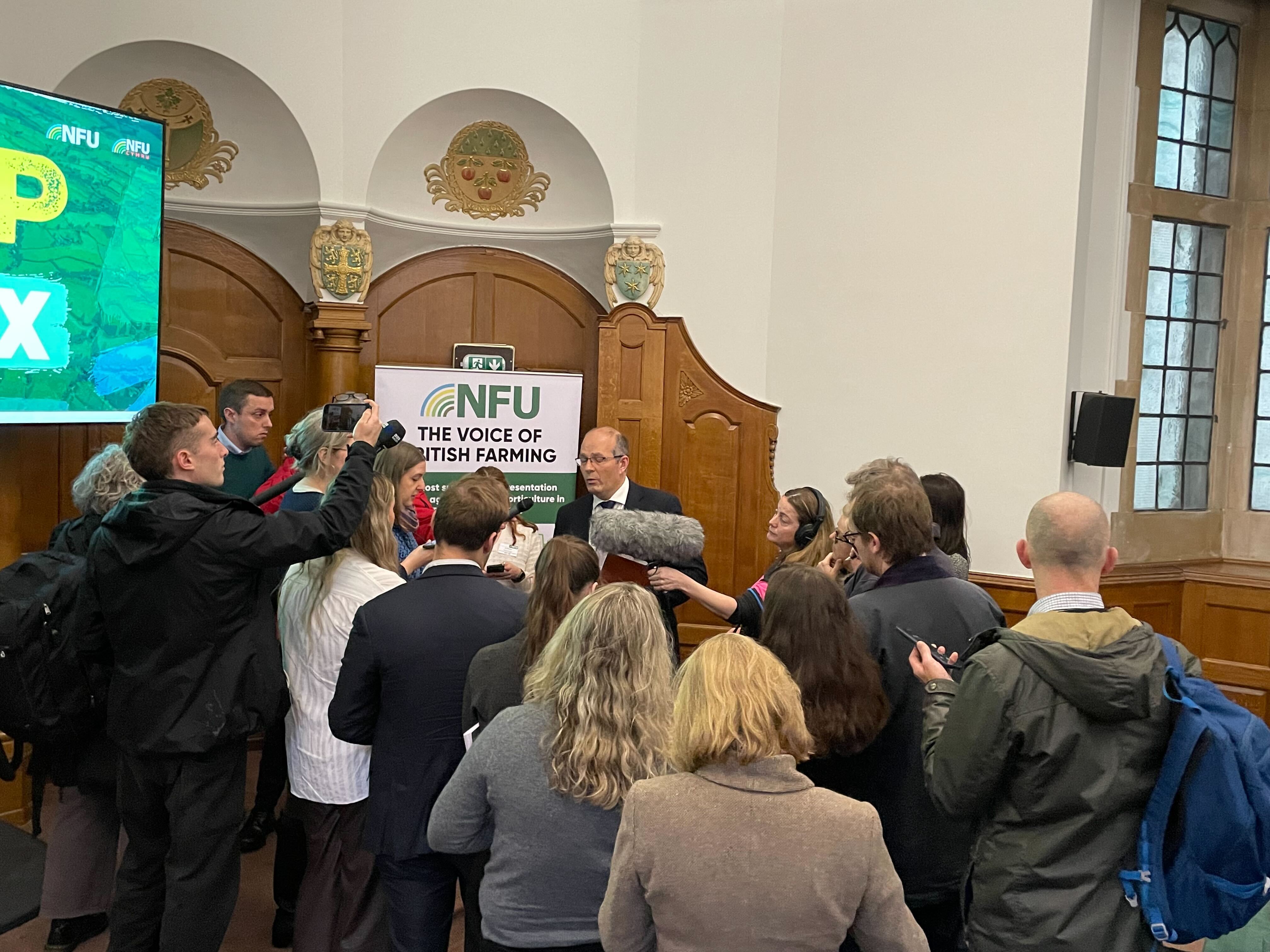
Asked what he thinks farmers’ next steps will be, following Tuesday’s demonstration, Tom Bradshaw said: “I think you’ll have all seen the media reports about what farmers across the United Kingdom think they should be doing next.”
It comes as farmers have threatened the government with “militant action” over the policy, which they argue will cause food shortages and the breakup of family farms.
“The ball is in the government’s court. They have to be the ones that now decide how they react to this”, Mr Bradshaw told journalists at the NFU’s mass lobby event, which saw union members engage with around 150 members of parliament in an event held alongside the demonstration on Whitehall.
But Oliver Atkinson, a farmer from Hampshire who took part in the protest, suggested that even Mr Bradshaw would not go far enough to force the government’s hand on the issue.
Key developments:
- Farmers who ploughed through ‘no entry’ barriers to be reported
- Kemi Badenoch tells protesters she would reverse the policy
- Keir Starmer denies Labour is waging a class war, saying it ‘isn’t at all what we’re doing’
- Steve Reed doubles down on tax, suggesting protesting farmers are wrong about its implications
He told The Independent there is a feeling among the agricultural community that the NFU chief needs to take a tougher approach in his talks with ministers, and be more supportive of protests and demonstrations.
Mr Atkinson said he expects further local action to be taken following on from today’s protest if the government doesn’t backtrack.
Tuesday’s protest saw TV personality Jeremy Clarkson urge the government to back down over the policy, saying it is a “hammer blow to the back of the head” for the agricultural industry.
He begged the government to “accept this was rushed through, wasn’t thought out, and was a mistake.”
Meanwhile, Tory leader Kemi Badenoch promised to reverse the policy if her party wins the next election, describing it as “cruel and wrong”.
But ministers have since doubled down on the policy, with environment secretary Steve Reed on Tuesday afternoon saying many farmers protesting on the streets are wrong about its implications and rejecting claims that many in the sector will be affected by the plans.
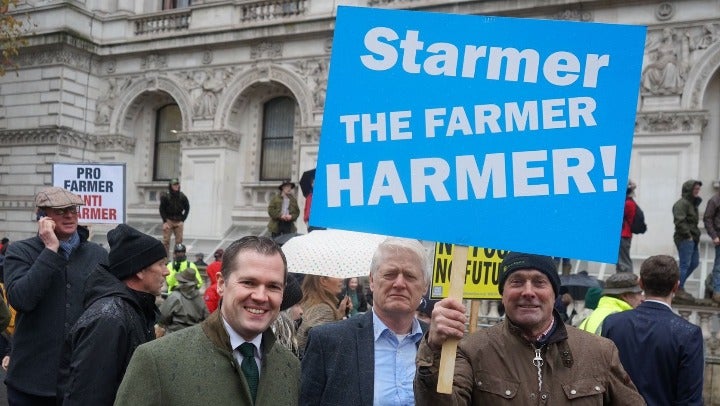
Sir Keir Starmer, meanwhile, denied that the Labour budget is waging a class war with the changes to inheritance tax, and the plan to impose VAT on private schools.
“No, absolutely not. It isn’t at all what we’re doing”, the prime minister told Sky News from the G20 summit in Brazil, insisting the “vast majority will be unaffected” by the policy.
First unveiled in chancellor Rachel Reeves’s October Budget, the plans to impose the duty on farms worth more than £1m have sparked fury among rural communities, who have contested the government’s assertion that small family farms will not be impacted by the changes.
Tom Morphew, from Full Circle Farms in Sussex, told The Independent he has come to London for the protest “to stand up for the next generation of farmers”, adding: “If this carries on there won’t be a next generation of farmers”.
“It’s not just about the tax, it’s about food”, he warned. “That’s what all these people here do, produce food. If we can’t do it, we’re going to rely on food from Peru, Spain or Portugal – and when they have a flood or a war, we won’t get the food. It will go to their people first and we’ll be stuffed and food prices will soar”.
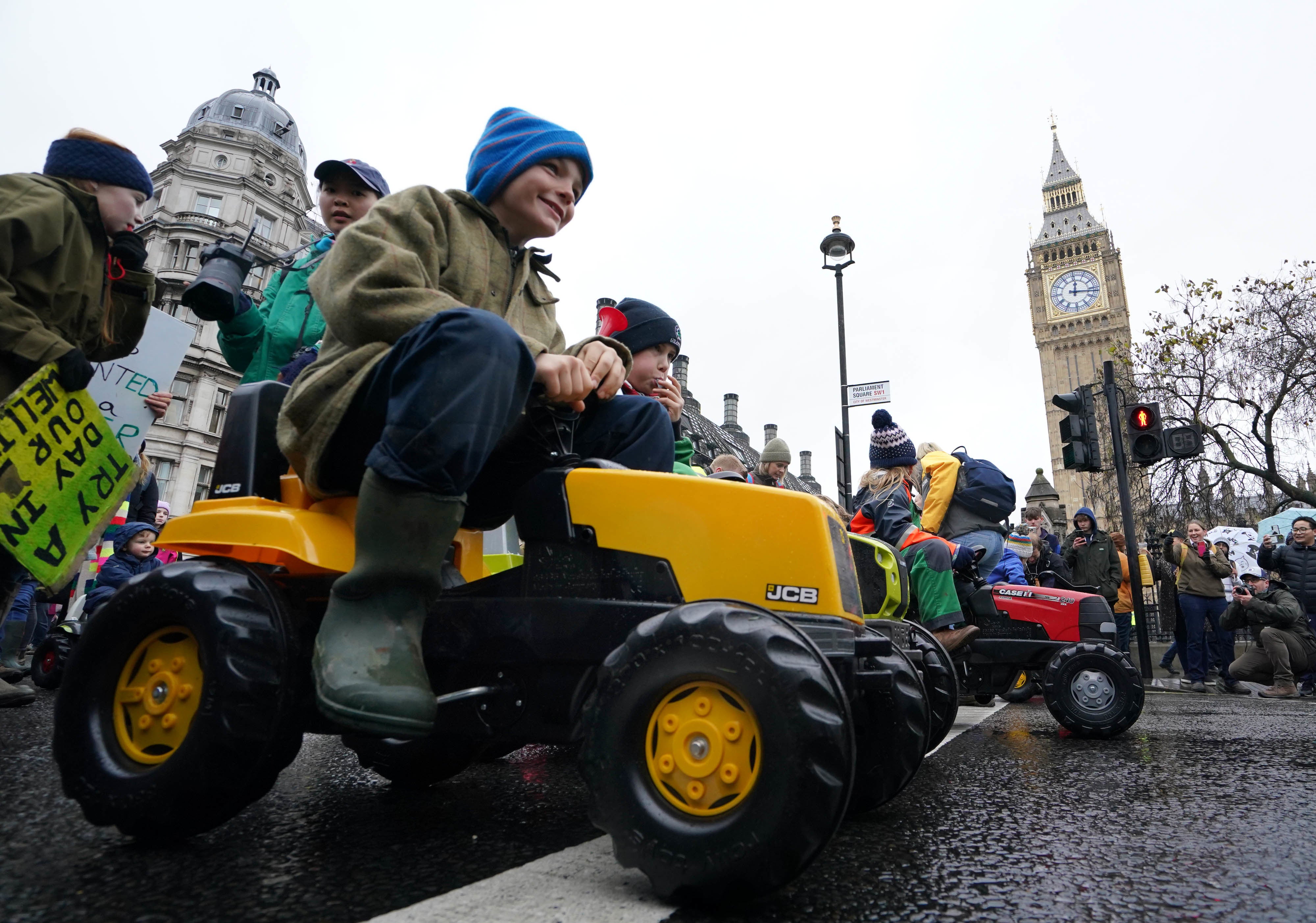
While the protest was largely peaceful, footage emerged of tractors ploughing into a no entry sign in Westminster - an incident the Metropolitan Police later confirmed would be reported.
Scotland Yard said that they had been engaging with those driving the vehicles but said that driving through a no entry sign was “not acceptable”.
In a joint statement with Mr Reed on Monday, Ms Reeves defended the policy, insisting the government had taken difficult decisions to fix gaps in the public finances.
“The reforms to agricultural property relief ensure that wealthier estates and the most valuable farms pay their fair share to invest in our schools and health services that farmers and families in rural communities rely on,” the pair said.
They added: “Farmers are the backbone of Britain, and we recognise the strength of feeling expressed by farming and rural communities in recent weeks. We are steadfast in our commitment to Britain’s farming industry because food security is national security.
“It’s why we are investing £5bn into farming over the next two years – the largest amount ever directed towards sustainable food production, rural economic growth and nature’s recovery in our country’s history.”
Mr Reed met with Mr Bradshaw on Monday evening ahead of the protest. However, the government did not line anyone up to attend the mass lobby of MPs on Tuesday morning.
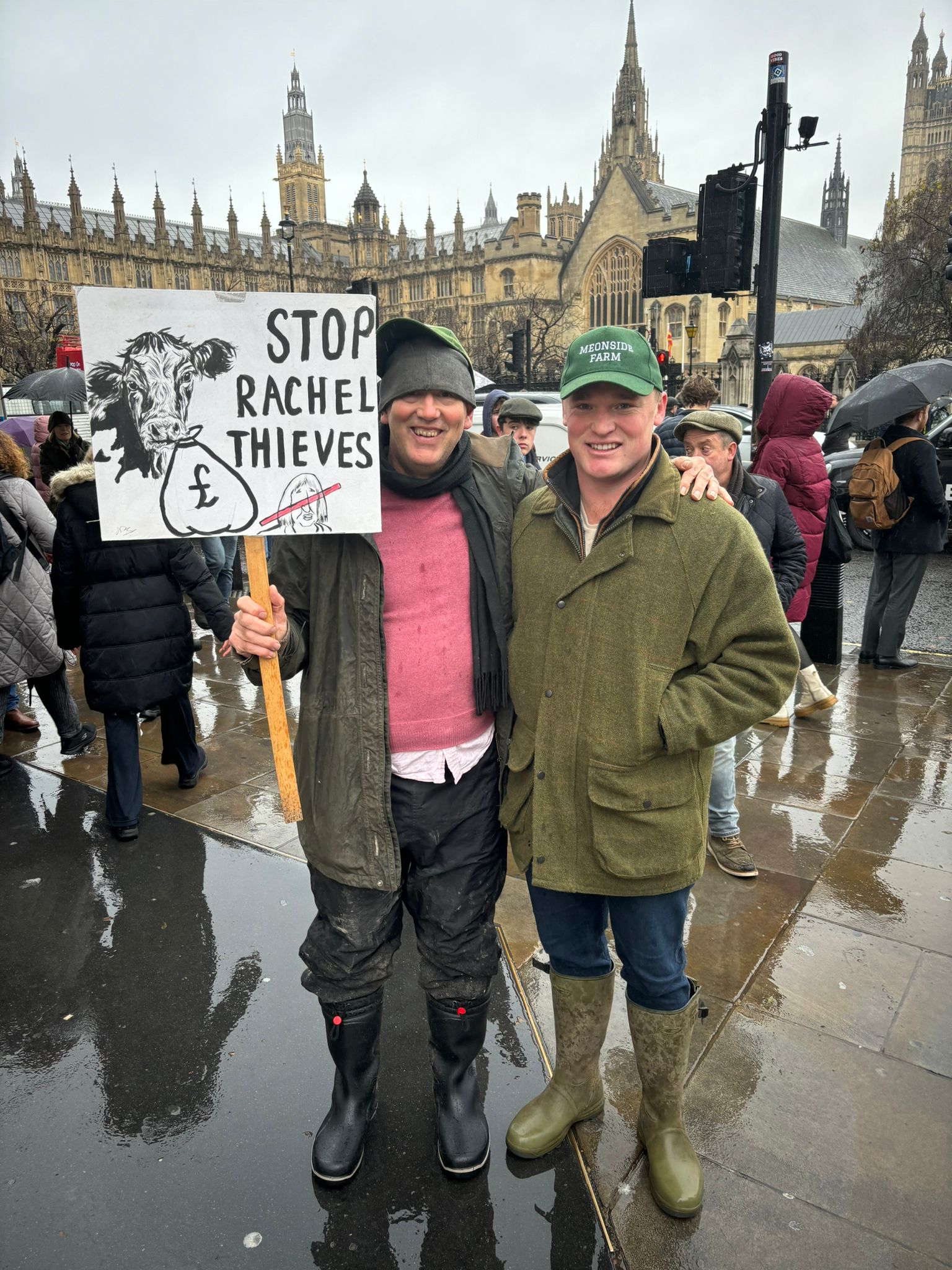
The NFU chief suggested there is division within the cabinet over the tractor tax, claiming that Rachel Reeves has entirely “refused to engage” with farmers on the policy.
Asked by The Independent whether he believes there is a disconnect between the Department for Environment, Food and Rural Affairs (Defra) and the Treasury, he said: “The very fact that we’re even arguing about the figures suggests that the foundations of this policy are very weak.
“We know that Defra figures show something very different to Treasury figures. Treasury are obviously working off historic claims.”
After meeting with Mr Reed on Monday night, he said it was clear that Defra was “not consulted” about the policy.
“There’s probably some very interesting conversations going on behind closed doors that we’re not privy to”, he added.
Treasury data shows that around three-quarters of farmers will pay nothing in inheritance tax as a result of the controversial changes.
But farmers have challenged the figures, pointing instead to data from Defra, which suggests 66 per cent of farm businesses are worth more than the £1m threshold at which inheritance tax will now need to be paid.
Join our commenting forum
Join thought-provoking conversations, follow other Independent readers and see their replies
Comments
Bookmark popover
Removed from bookmarks