Why are more women turning to sex work this year?
Sex work helplines have seen calls increase by a third in recent months, as more women seek to start – or restart – sex work. Radhika Sanghani speaks to sex workers and support workers to find out why
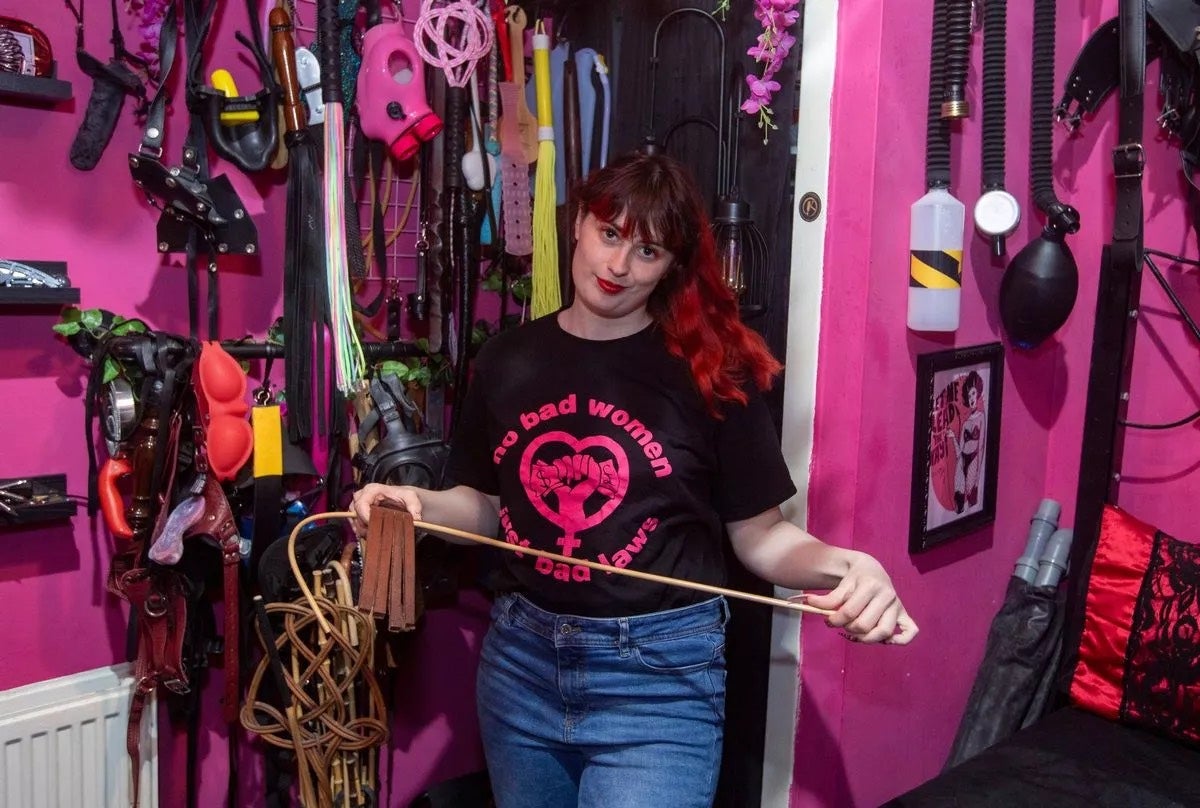
When Victoria was 18, she was earning minimum wage in McDonald’s, financially supporting her father who’d lost his job. She’d graduated from college but couldn’t find a higher-paying job, and was on the verge of homelessness. That was when she turned to sex work.
“A friend of mine was doing it, and I needed a way to escape my living situation,” says Victoria, now 26. “I didn’t believe I was entitled to benefits or anything like that – I’d never received external support before – so I didn’t even try. I just started escorting, advertising online for clients. I needed the money, and it helped me put food on the table.”
Victoria’s story is not unusual, but it’s now becoming more common than ever. The current cost of living crisis, as well as rising inflation and price hikes, means more and more people are turning to sex work to support themselves.
The English Collective of Prostitutes (ECP), a grassroots organisation of sex workers, has seen a 33 per cent increase in calls to their helpline during the last six months, mainly related to women starting or restarting sex work due to the increased cost of living. Over the year, they receive hundreds of calls from women seeking support with sex work.



Decrim Now, a grassroots campaign calling for the decriminalisation of sex work, released a report in October 2025 that found 76 per cent of people started sex work due to financial need, while 77 per cent of respondents considered themselves to be disabled or to have a long-term health condition, including mental illness and neurodivergence. Of the 172 people surveyed, over half had at least one other job outside of sex work, and childcare responsibilities were a key reason for entering or continuing in sex work.
“A lot of the women that call us are mums or carers,” explains Laura Watson, spokesperson for the ECP. “They’re struggling to make ends meet. For many women, there’s no alternative to sex work – if they have insecure immigration status, or no access to public funds, that’s their main income.
“Some women are in another job and working in prostitution to top up low wages because they can no longer manage on what they were on before. While some women are literally just going out, working to pay a specific bill, and then coming back in again.”
For Victoria, sex work helped her to escape her living situation, enabling her to buy a property in Fife, Scotland. When she fell unexpectedly pregnant, she swapped escorting for web-camming to pay her bills. Now, she’s a single mum who still works in sex work as a dominatrix to support herself and her child.
“The job comes with many negatives but you earn more than minimum wage and it’s liveable,” says Victoria, who has been diagnosed with autism and ADHD. “You go into sex work for a few reasons but the main one is poverty. And coming from poverty, you definitely do enjoy being able to actually have some money, whether that means you can go out and buy dessert, or take a taxi home from the shops. Little things like that are gold when you don’t have money.”

She has noticed a huge increase in people like herself turning to sex work for financial reasons. “I can see it online and with friends, where people just don’t have enough to live. They really don’t. They’re struggling. We shouldn't be blaming women for just trying to put food on the table for their child. We should be blaming the government. If poverty wasn’t an issue, there would only be people doing sex work who want to do it freely, who aren’t struggling to put food on the table.”
One25, a charity that provides a ‘night outreach’ van to women street sex-working in Bristol, has seen the number of women using their van more than double in three years, from 94 women in 2021-22 to 192 in 2024-25.
“There’s a number of issues that compound for the women we see,” explains operations manager Rachel Collins-White. “The impact of Covid and the cost of living was a factor for some women. When there’s monetary squeezes across the board, that impacts those who can be seen as being the most vulnerable. We also see from other women that they’re driven to street sex work to earn money for drug and alcohol use. It’s all really layered.”
The cost of living crisis means that women are facing higher costs, leading to fuel and food poverty, but it also means charities are receiving less funding, which creates more pressure. Meanwhile, women entrenched in drug and alcohol use now may need to earn upwards of £300-400 a day to fund their habit.
For the most vulnerable women, sex work is not a choice but a necessity. “The drivers and motivation and idea of choice and autonomy for sex work is really different when we look at street sex work,” explains Collins-White. “Women are not making a choice to be out in the streets and placing themselves in incredibly difficult situations night after night. There needs to be awareness about what women are facing.”
Rosie Hodsdon is a sex worker and activist, working as an independent sexual violence adviser for Basis Yorkshire, a charity helping women who work in the sex industry. “We’ve seen an increase across the entire spectrum of sex work,” she explains. “It’s a mixture of mostly newer people coming into sex work and people returning to sex work who may have previously left, but are now having to do more dangerous forms of sex work.
“It boils down to people needing money and not getting it elsewhere. They need it to access resources, or they’re using sex not just in exchange for money, but to access resources, like ‘sex for rent’. That’s often a housing strategy for people.”
I don’t need the job to be inherently empowering, but there is power in being able to meet your financial needs,
Hodsdon has personal experience of turning to sex work for money. Back in 2018, she was a 22-year-old student doing a PhD in law, living in the north-east with her partner, who was unable to work at the time and on universal credit. “I was supporting him with my stipend,” explains Hodsdon, who is disabled and needed work that would suit her lifestyle. “We needed more money, but I was studying full-time and needed a way to earn a good amount of money in the time that I had. I couldn’t think of a better option than sex work.”
Hodsdon started working in porn, filming personal content, as well as doing webcamming and in-person professional submissive sex work. Back then, it was easier to earn money online, with sites like OnlyFans helping women make thousands from sex work, but recently, things have changed. Legal changes to the Online Safety Act in July 2025, requiring porn sites to have strong age checks in place, have led to those sites earning less money due to less traffic.
It’s why online sex work is “not necessarily an option” she would consider now. “People who predominantly worked in that space are now finding it harder to get work and earn money, leading them to move into less safe work, like escorting, stripping or brothel-based work. While people who were already working in those spaces are now finding it harder to earn money and having to move into street-based work. There’s been a shift across the whole spectrum.”
For Hodsdon, sex work was never something she particularly enjoyed – “it was neutral to me” – she did it for the financial freedom it gave her. “Sex work gave me enough to pay the bills and enjoy my life a little bit. There were times when I enjoyed it and times when I didn’t. But the money was the important bit I don’t need the job to be inherently empowering, but there is power in being able to meet your financial needs, to be fed, to be warm, to have a house.”
She continued sex work regularly for a few years, even once her partner went back to work, which relieved their financial pressure, so she could buy the house where she now lives. Hodsdon is aware that her situation was less challenging than for many sex workers, as she went into it in a position of privilege – already having friends who shared information, and loved ones who accepted her choice without judgement.
It’s why she now advocates for the rights of sex workers, and hopes the government decriminalise sex work. “Right now, people struggle to leave sex work because they end up with criminal records that mean they can’t leave sex work and are barred from so many jobs,” explains Amber Wilson, deputy CEO at Basis Yorkshire.


The charity also point out that the lack of statistics around the number of people in sex work is a huge issue, as it creates a barrier to campaigning for their rights, but the stigma and criminalisation of sex work means people don’t want to be recognised as sex workers. Current laws also mean sex workers don’t have labour rights, and that any two or more sex workers working together – something that can hugely improve safety – can be charged for brothel-keeping.
“It happened to me,” says Victoria. “I was raided for working with other sex workers in my own property. I had social services called on me. When I was charged with brothel-keeping, I went to multiple solicitors and only one had any idea what could be done.”
Her case was eventually dismissed due to a lack of evidence, but the experience left her with post-traumatic stress disorder. It’s why she now campaigns along with other sex workers for basic labour rights. ”There’s massive amounts of stigma and misogyny. Parents can get their children taken off them by social services, our bank accounts can instantly close because the banks don’t agree with our jobs. We deserve labour rights and safety just like any other job.”
Responding to the increase in numbers of women working in the sex industry, a Home Office spokesperson told Sky News in December: "As part of our mission to halve violence against women and girls in a decade, we are funding a pilot of the first national law enforcement intelligence and investigation hub for sexual exploitation.
"We are currently considering options on how we can best support those impacted by prostitution and sexual exploitation."
Hodsdon, who now works full-time to help other sex workers like herself, says she looks forward to a world where sex workers are safe, part of our community, respected, valued ad where they have the same rights and legal protection as any other worker and can access the services they need – whether it’s housing or healthcare.
“I have no desire to see the end of the sex worker”, she says, “but I have a desire for every person to have the resources they need to make the best choices available to them.”
Join our commenting forum
Join thought-provoking conversations, follow other Independent readers and see their replies
Comments
Bookmark popover
Removed from bookmarks