Unemployment is rising – how to become one of the 35 per cent of ‘irreplaceables’
As jobless figures soar – particularly among 18- to 24-year-olds – consultant Grant Feller explains the golden number of people who will survive the workplace AI-mageddon and speaks to business leaders who are now prioritising human thinking over machine learning

I’m lucky enough to spend a lot of my working life with younger people. Lucky, because they keep me young. At the age when my parents were contemplating retirement – I’m 58 this year – I’m enjoying a new lease of life because of them.
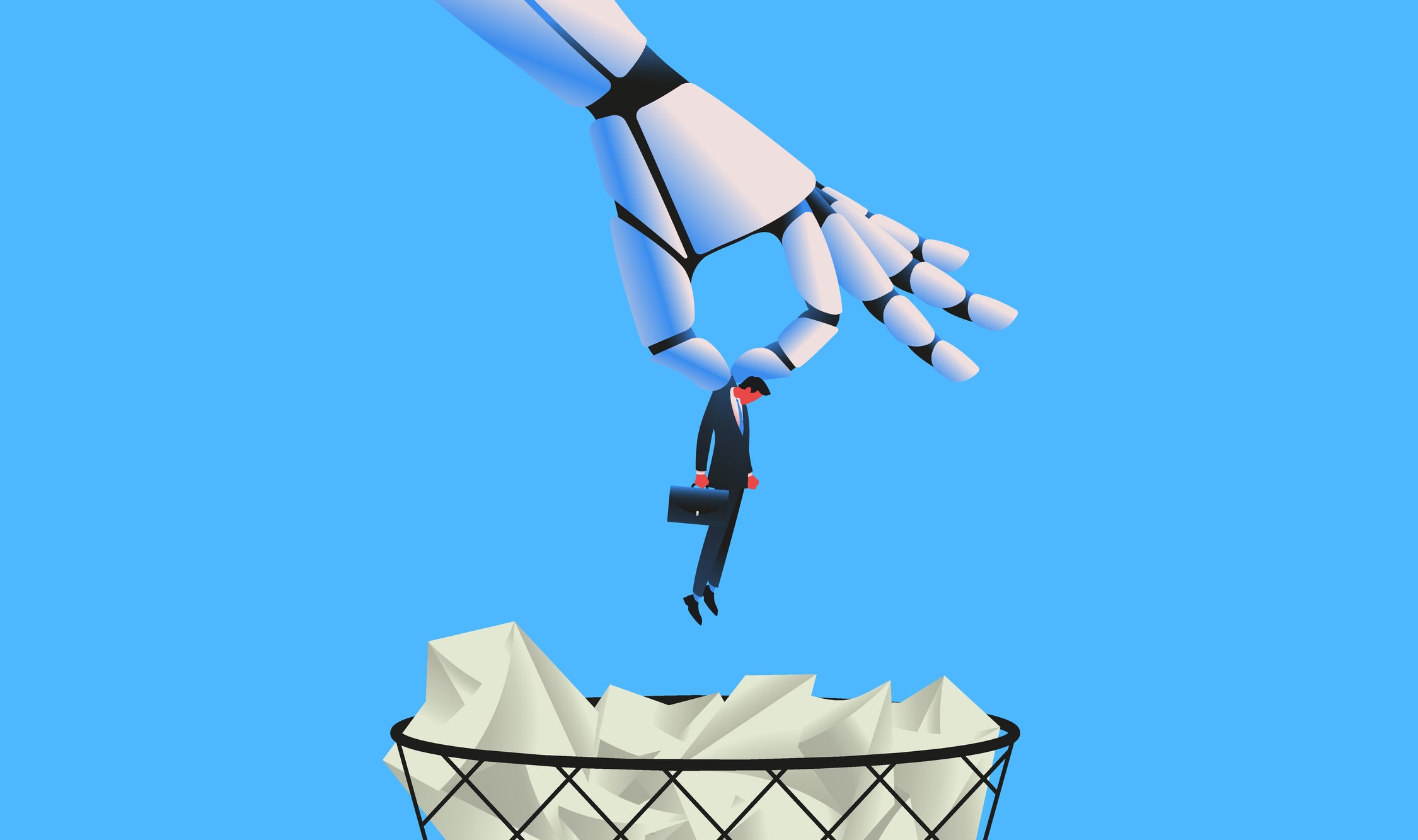
But something has changed in the past months. The sparkle has gone from their eyes. They’re frightened for their careers because they’re told generative AI is coming for their jobs. And many have been sharing with me the same doom-mongering essay entitled “Something Big Is Happening”, written by Matt Shumer. More than 70 million people have viewed with horror the picture Matt has painted about a thriving corporate future devoid of human interaction, where the white-collar worker is an extinct species.
Just so you know, Matt is an investor in AI, and his essay was partly written by technology. The essay was published on the same day that Microsoft’s AI chief, Mustafa Suleyman, issued another stark warning: “White-collar work, where you’re sitting down at a computer, either being a lawyer or an accountant or a project manager or a marketing person – most of those tasks will be fully automated by an AI within the next 12 to 18 months.”
It’s a fascinating essay – and a scary prediction. It certainly chimes with job figures out today, which show the UK’s unemployment rate hitting a near five-year high in the last three months of 2025, climbing to 5.2 per cent. The existential crisis this is causing is everywhere – from essays on LinkedIn to new films like Subservience or the South Korean film No Other Choice – a dark social thriller about a middle-aged man whose life collapses after redundancy and whose job hunt turns murderous as he kills any competition going for the same position in a shrinking, AI-driven job market.
But I just don’t buy this narrative being peddled of a hopeless future. Or not all of it, anyway.


-copy.jpeg?quality=75&width=230&crop=3%3A2%2Csmart&auto=webp)
Yes, artificial intelligence is transforming the world of work in ways we struggle to comprehend and predict. We’re all replaceable and AI, so we’re told, is just speeding up the inevitable. The latest figures about the creative industries tell their own story. Last year, according to the Institute of Practitioners in Advertising, the number of employees declined by more than 14 per cent. When it comes to employees aged under 25 – the sector’s future – that figure is closer to 20 per cent. A fifth of the future workforce has simply disappeared.
The latest batch of unemployment figures is also worrying, and shows that unemployment was particularly high among young workers. Among 16- to 24-year-olds, the rate rose to 16.1 per cent at the end of 2025 – the highest it’s been in more than a decade.
But what I want to tell this cohort is, don’t give up. You can make yourself irreplaceable in this new world. Titles mean nothing any more, so don’t chase them. Instead, focus on the skills that AI simply can’t compete with – become what is being dubbed the “35 per cent”.

In the past 12 months, something truly interesting has been happening in the corporate work I do. I’m working at a senior level and my success is also down to how companies and individuals are using AI tools. Or not. There is a new mood in town where business leaders are waking up to the fact that the technology is flawed.
Emotional depth, critical thinking, complex and nuanced storytelling, serendipitous moments of creativity, personal connection, daring leadership are all missing ingredients... and this is where the irreplaceables are and will be – the 35 per cent or so of those white-collar professionals who will successfully navigate the AI-mageddon.
My advice? Double down on the human skills you have because they’re more valuable than ever. Even for those entry-level “replaceables” who are being unfairly written off by Shuman and Suleyman. AI is a tool. But it needs you to make it work properly. You have the muscles, so use them.
Last week, I was asked to pitch for a piece of skills training work, which could be one of my biggest gigs. More than 100 marketers, insights and data professionals who work for a large entertainment company. The brief included this: “Please do not include any AI-related tools or modules. We use AI all the time, but we’re not telling good enough stories to each other. Our communications skills have suffered because of the tech.”
This is not an unusual request. It now happens a couple of times a month.
I’m ghostwriting thought leadership for a handful of high-profile business leaders, whom you will undoubtedly know. All have, in the past, used AI to create their material without much success – because, they tell me, it doesn’t feel like “them”.
The larger organisations I work with are offering younger recruits storytelling training and mentorship programmes because they know how essential a skill it is. The problem is that there are too many young, brilliant minds emerging from higher education who struggle with deep thinking because they rely on technology to give them the answers.
They can’t think in headlines. They don’t have an empathetic understanding of audiences or customers. They often don’t ask the right questions, and look frightened when their immaculately researched work is met by a critical (or even sceptical) interrogation from their bosses. When I started my business, it was table tennis and bagels. Now it’s storytelling and critical thinking that are the perks everyone wants.

AI tools are brilliant, make no mistake. I use Perplexity for research, Claude to polish my writing. ChatGPT is essential for quick answers (I always check the source), Google Gemini makes me more efficient with emails, Canvas is brilliant for PowerPoint presentations, and I make tutorial videos with Synthesia. These are all super-fast, largely devoid of error, simple to use, but lacking the “secret sauce” of creativity that we bring as human beings.
Machines cannot make your work uniquely you. People have a signature style, a hinterland, an individual culture and perspective that brings authenticity to work. If everyone is writing the same stuff – and AI-generated content is easy to spot – the ones who use their own brains and provide their own original (and, yes, sometimes messy) thoughts will be more valued.
Machines cannot empathise in the heat of the moment. The most important part of a pitch or presentation is not the slick slides put together by the tech. It’s when you’re in the room, watching people’s reactions, sensing their frustration, knowing when you’ve hit a bullseye or missed an open goal. That’s the moment that matters, the part that will seal a deal.

Machines cannot match your human skills. You have the anecdotes, the colour, the personal experience, the reactive qualities that can make things more meaningful in an instant. GenAI is getting better every day, but it is sycophantic in its interactions and simply predicts how we might act – guessing at how to be human.
In this environment, success is down to being able to communicate effectively by watching and listening, then quickly adapting to the changing needs of current and potential clients, customers and colleagues.
In a world of AI slop, there is a desperate need for originality. For something daring; for something that looks a bit different from everything else. If you can do that kind of messy critical thinking and approach tasks that leverage AI, rather than outsource everything to it, you can grow in this world, as can your business.

While AI is promising to revolutionise business, many organisations are discovering that it fails to deliver value, is too costly or complex to implement alone. Employ people to work with AI; don’t sack them because of it. AI is, in fact, failing at scale and driving a new demand for human expertise to fix it.
Humans are there to provide trust, accuracy and authenticity.
That last sentence was provided by AI. I couldn’t have put it better myself.
Grant Feller writes on Substack about the business of storytelling at https://open.substack.com/pub/grantfeller
Join our commenting forum
Join thought-provoking conversations, follow other Independent readers and see their replies
Comments
Bookmark popover
Removed from bookmarks