How Generation X became the backbone of the workplace
With six different cohorts now occupying the workplace for the first time, it’s Gen X – the so-called Slacker Generation – that’s suddenly and quietly running the country, says Stephen Armstrong. And, luckily, the ‘middle children of history’ are also the best suited to navigate the turbulence ahead


This year will no doubt be memorable for lots of reasons, but something that is already remarkable is that 2026 is the first year that six generations of Brits will be in the workplace. The oldest of Gen Alpha, born after 2010, will begin internships and early work experiences in 2026, while the last of the Traditionalists, aka the Silent Generation, are still hanging on, making up one per cent of employees.
At the core, it’s boomers, Gen X, millennials and Gen Z, slugging it out for the top jobs as AI snaps at their feet. At least in theory, 2026 may also be the year that AI’s limits are revealed. But which of these generations is best equipped to handle the chaos of Trump, tariffs, technology and talent?
Surprisingly, for a Gen Xer like me, it’s my generation that’s emerging as the nation’s best hope. If you Google “Generation X backbone of the UK workforce”, you’ll find HR firms and business analysts praising the little-talked-about Xer for their resilience and adaptability. Despite being outnumbered by millennials, Gen X makes up around 35 per cent of the workforce and over 50 per cent of managers, and the average age of FTSE100 CEOs is 55, according to research from executive search company Heidrick and Struggles. The UK cabinet is 75 per cent Gen X, and the average age of national newspaper editors is 56. Generation X is suddenly running the country, and true to form, we’re not really telling anyone.

This seems strange. Gen X was brought up on slacker films, free parties in fields, the end of a job for life and collapsing faith in all authority. UK divorce rates soared from 1965, the first year we stumbled into existence, while those whose parents stayed together were increasingly likely to have both worked, as the 1970 Equal Pay Act saw 51 per cent of women working by 1971, according to the Office for National Statistics. Coming home from school by yourself to an empty house, heating up food, mooching about with friends – putting us in charge seems against God’s plan. But this turns out to have been perfect training for the messy workplace of 2026 rather than a reason to go to therapy.
“Gen X leaders didn’t grow up expecting to be in charge, or to define themselves as a cohort at all,” explains Tanya Gass, partner at Norman Broadbent, the UK’s oldest CEO head hunter. “Shaped by repeated disruption – financial crisis, the Cold War, rapid technological change, Brexit, the pandemic – I think Gen X leaders are perhaps more comfortable with uncertainty and more realistic about trade-offs and limits than the generations on either side of them. They are instinctively wary of hype, but open to change when it delivers real value, particularly in the current debate around AI.”

Dominic Black at Westray, an employment consultancy in northeast England specialising in professional, technical, engineering, industrial and manufacturing recruitment, agrees. He hires a whole different kind of employee but thinks the phrase “backbone of the workforce” describes Gen X perfectly.
“Gen X is reliable and pragmatic,” he says. “Compared with other generations, they complete tasks, they are more likely to have a greater range of experiences to draw upon, and they have developed higher social skills. You hear about Gen Z and millennials all the time because they have stronger stereotypes and stronger opinions on more controversial topics.
“Generation X are more open-minded and much harder to define and pigeonhole. But they are also keener on finding happiness in work than anything else. We surveyed the different generations’ attitudes to work last year, and Gen X might be summed up by the guy who said ‘better a shit job with good people than a good job with sh*t people.’”
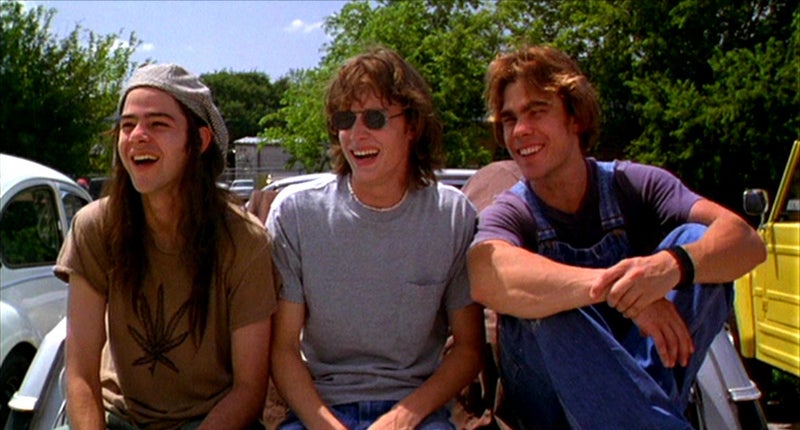
So what’s different about Gen X?
“Whatever millennials say, we were the first generation who did not assume we’d be better off than our parents,” says journalist Richard Benson, who was editor of The Face magazine during the 1990s peak of Gen X culture. “We saw the collapse of ideology on right and left, and knew capitalism wasn’t eternal progress – but the Berlin Wall coming down showed us Communism didn’t have the answer. That’s where pragmatism comes from. There were no big ideas, so we had to do things for ourselves. There was a Mike D from The Beastie Boys quote – people want to be enterprising, but they don't want to be exploitative, which I think is a good summation of what the workplace politics were. Gen X could organise a party in a field with 10,000 people, organise the promoting, the sound system, the DJs, the tickets, the decorations and yet never want to scale that and sell it to a VC.”
Gen X also went to school before league tables were introduced in 1992 and state schools weren’t ranked by performance until the last Gen Xer had already started school. After that, middle-class parents played the system or went private. It’s a shame. At my south London comprehensive, the kids from the Coppice and the Turps estate rubbed shoulders with the kids whose dads were doctors or worked in the city.

That’s why the legendary Boys Own acid house party, record label, clothing line and magazine was founded by carpenter Cymon Eckel, gas fitter Terry Farley and shopfloor worker Andy Weatherall.
“We were comprehensive kids from Slough who wanted to create a party brand and make sure the customer had a fantastic experience,” explains Eckel. “We found people from every walk of life who wanted to write articles, paint, design, put a night on – we taught ourselves and built this groundswell of entrepreneurialism not based upon an MBA, but based on creating really good things and building a real-world social network. Parties work much better with a big crowd of people who aren’t like you, but all have the same purpose – to have the best time. Diversity and inclusion may be out in America, but it made for the best club nights.”
Tanya Gass acknowledges Gen X’s resulting people skills. “Gen X CEOs bridge generational divides and lead with pragmatism rather than ideology,” she explains. “They’re less interested in performing leadership than in getting on with it. Having lived in both the old world and the new, they are often more discerning than dogmatic about what to keep and what to change.”
That means, perhaps surprisingly, that Gen X might be the best bet we have during the AI revolution, according to Stephen Smith, a Silicon Valley strategic AI consultant. “Gen X was initially known for having a cynical or sceptical worldview, but that has evolved into independence and adaptability,” he says. “That group has survived and thrived in every technology evolution in the past 30 years. They know how businesses work and can apply AI in a way that genuinely creates efficiency and optimisation in high-value places. While Gen Z and millennials may know how to ‘use’ AI, Gen X will make AI essential.”



He’s found that younger generations tend to either be in awe of AI or opposed to it, while older generations don’t understand it. “This group saw the rise of the personal computer, email, local area networks, the internet, mobile, social, and so much more,” he points out. “They aren’t the digital natives that future generations were, but they adapted and adopted quickly. The people who are getting the most significant impact out of using generative AI tools are people with expertise in their industries, functions, companies, and markets – Gen X are now at the age where they have built that expertise across companies over 25 years.”
It’s much like social media. I recently interviewed Michael Corcoran, who created Ryanair’s sarcastic social media burns for customers who didn’t understand that cheap seats meant certain compromises. He listed the social media attitudes of boomers, millennials and Gen Z, then finished. I asked about Gen X. “Ah, the forgotten generation,” he smiled. “Less offended on other people’s behalf than millennials, but more PC than boomers. More realistic than both. Wary of social media because they don’t want to be cancelled and are not interested in its worst features – they’re not as offended or pissed off with other people’s views. They think you can have a difference of opinion and still get on. So they’re watching, but they’re not posting that much.”

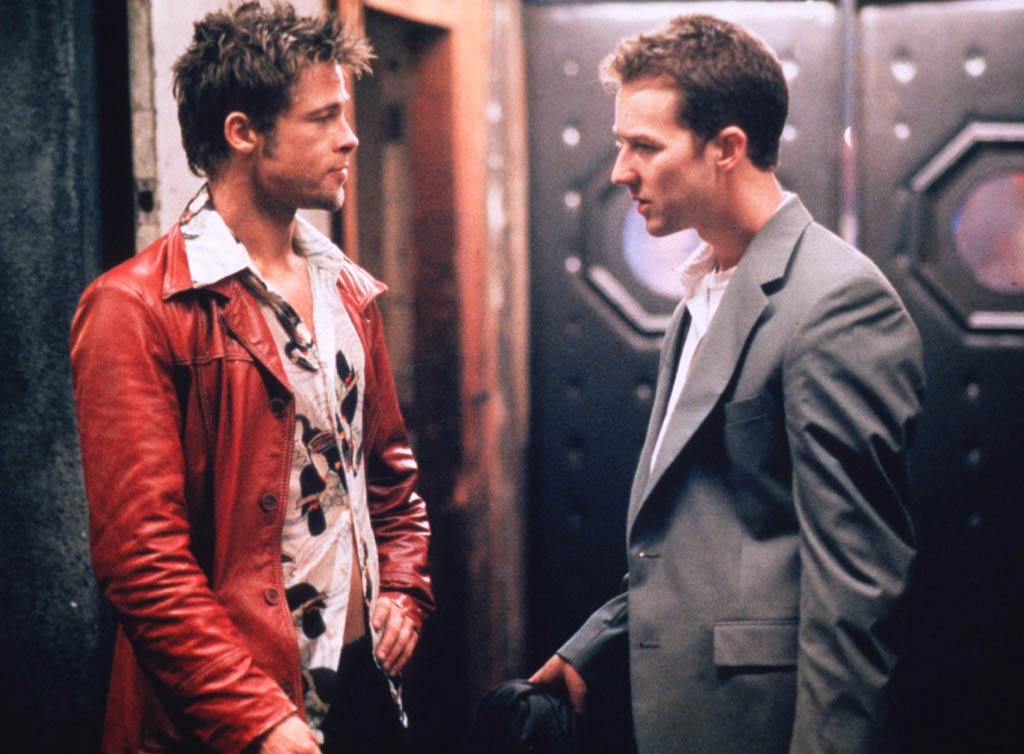
Most Gen Xers thought it wouldn’t work out this way. Peak Gen X culture was the mid-to-late 1990s, the era of the slacker film and anti-heroes like Fight Club’s Tyler Durden. Durden says Gen Xers are “the middle children of history, man. No purpose or place. We have no Great War. No great depression. Our great war’s a spiritual war... our great depression is our lives. We’ve all been raised on television to believe that one day we’d all be millionaires, movie gods and rock stars. But we won’t.” Which may be true. But his conclusion? “We’re slowly learning that fact. And we’re very, very pissed off.” Not so much.
Instead, we quietly got on with the hard work required to end up running things while remaining cynical enough to call bullshit on what’s wrong with innovations like AI, but curious enough to find the best way to make it work.
Join our commenting forum
Join thought-provoking conversations, follow other Independent readers and see their replies
Comments
Bookmark popover
Removed from bookmarks