Why Gen X might be the winners in the AI job revolution as their children flounder
While many are warning older workers are at a disadvantage from AI recruitment models with a built in bias against them, that is only half the story, says Eleanor Mills. Those midlifers who are employed at a higher level, may be more protected than their younger colleagues who will bear the brunt of the new workplace disruptor


As we get older, it’s easy to get stuck; it’s tempting to stay with the tried and tested. The old cliché about it being hard to teach an old dog a new trick is a truism for a reason. But when it comes to being employed – and since none of us fiftysomethings are getting our pensions until our late sixties – we need to stay work-relevant (which means embracing AI) if we’re going to eat, pay the mortgage and support our increasingly boomeranging young folk.
LinkedIn is full of worrying posts bewailing the hostile recruitment algorithms making it hard for older workers to get a job. But luckily, that is only half the story. The good news is that by 2030, 47 per cent of the UK workforce will be over 50: every month, 55,000 Gen-Xers are passing that milestone and over-fifties control over 60 per cent of the nation’s wealth.
Our generation embodies valuable experience and work smarts (particularly for companies increasingly wanting to talk to this cohort because we are the last ones in Britain with money). And although the International Monetary Fund is predicting that 40 per cent of all jobs could be taken by AI, it is actually youngsters who are being the worst hit. It might seem counterintuitive, but the truth is that AI might just be a saviour for older workers.
Don’t just take it from me – take it from the AI itself. (And if you haven’t started using Copilot or ChatGPT or any of the other AI-powered gizmos in your computer, please have a go... it’s miraculous.)
“In the age of artificial intelligence,” my AI Copilot says, “the narrative often centers [we’ll forgive it the US spelling] on disruption – automation replacing jobs, algorithms outpacing human judgment. But for older workers, AI isn’t a threat. It’s a lifeline. A bridge between decades of experience and the digital future. AI is not just good for older professionals – it’s transformative.”


The reason is that, unlike our junior colleagues who don’t yet know what they don’t know, those of us who have been working in industries for three decades (or more) bring deep institutional knowledge, nuanced judgment, and emotional intelligence that no algorithm can replicate.
AI tools can amplify these strengths by handling data-heavy tasks, freeing up time for strategic thinking and transmitting our knowledge through mentorship to the younger generation. According to the UK’s Centre for Ageing Better (full disclosure, I am one of their expert advisors) 89 per cent of employers believe older workers perform as well or better than younger workers in roles involving AI tools.
Lyndsey Simpson, CEO and founder of 55/Redefined, a company which helps organisations embrace the longevity economy and recruit older workers, says: “Innovation needs experience and experienced workers bring the clarity of institutional memory, the pragmatism of past digital revolutions, and the soft skills AI cannot replicate.
“The combination of AI in the hands of an experienced worker doesn’t just support all generations in the workplace, it saves businesses from costly mistakes, drives growth, and ensures AI is developed and deployed ethically.”
But what does that actually mean in practice? Simpson says, “For instance, with the advent of ‘off the shelf’ AI tools, the businesses we represent no longer need an army of coders and developers; they need trainers and checkers.

“It is imperative for businesses and industries to engage and retain the most experienced people in every role and process so they can teach our large language model AI tools how things are done and why – and correct the mistakes the tools inevitably make. With AI, age is a superpower.”
As a journalist, I can relate to what she says. I often find when I ask AI to give me the data in an area I know well, about 75 per cent of it is gold dust, absolutely bang on – but about 20 per cent, sometimes more is pure hallucination or just not relevant to what I am looking for. Once, I asked the AI about my own work and company and it brought up a whole load of facts which related to another journalist and founder entirely. Oops.
Older workers have an advantage in a workplace which is undergoing AI “creep” because in the decades they have had to engage a “sniff” test, a sense of when the facts just don’t stack up; a capacity to kick the tyres, stress test an idea and find the weak spots in what is presented as “facts” to weed out the dross. We were a generation raised to think critically. And this will be more in demand than ever in the new AI era.
Piers Linney, former Dragons’ Den investor and entrepreneur, is now the founder of a company called Implement AI. He agrees that rather than being a hindrance to older employees and workers, “AI is actually a leveller”. What does he mean by that?
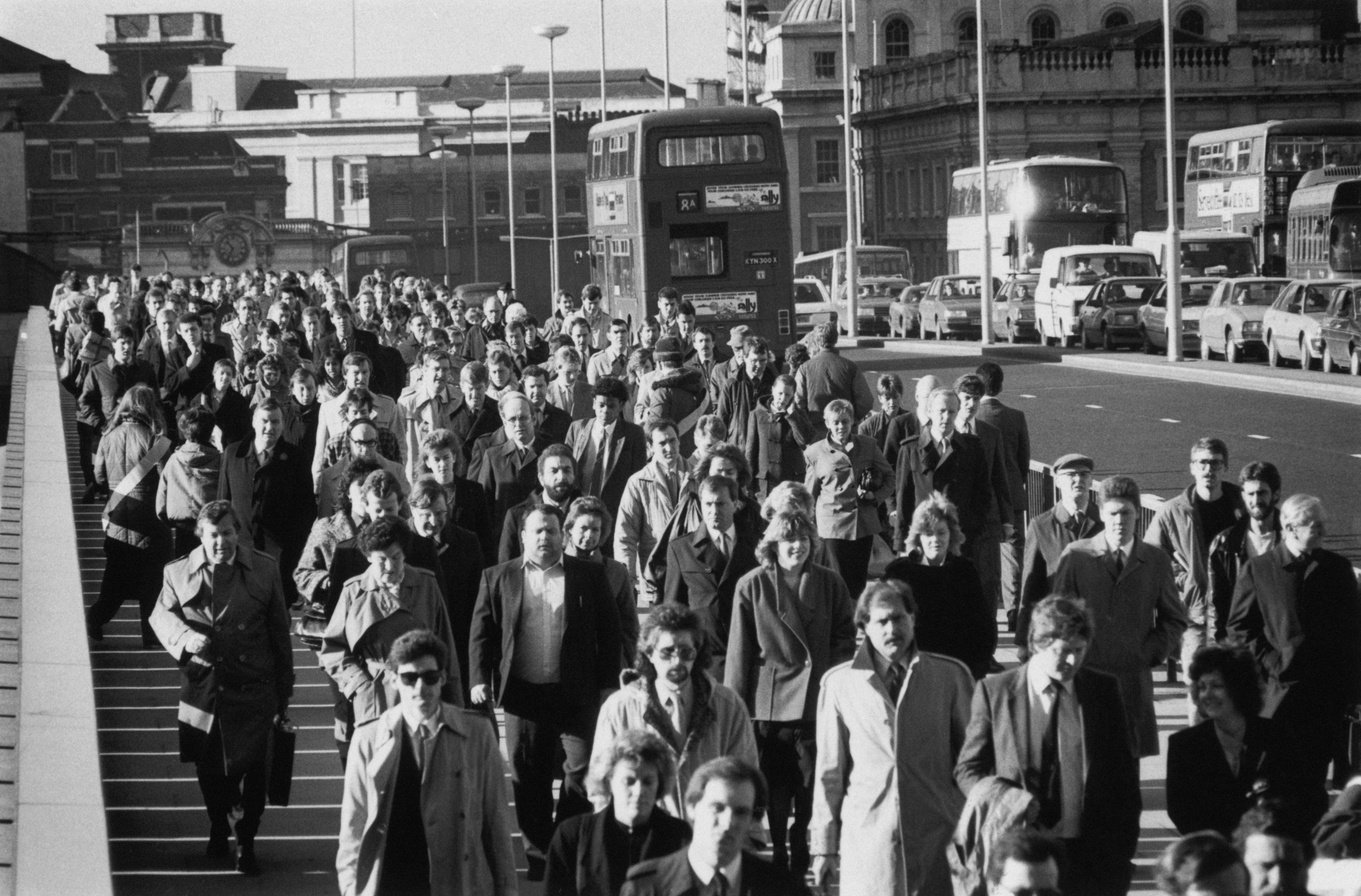
“AI is often seen as a threat, and in the long run, we will have to re-engineer work, economics and society because of it. However, in the short to medium term AI is a leveller. Anyone can now become an expert and acquire new skills. Whether you are less able, neurodiverse, or approaching retirement, those who master how to use and apply AI will remain in gainful employment. If an older worker can outperform several younger competitors for the same job, they will be hired. The key is to embrace AI and become skilled in its use. Whether you are an older participant in the labour market or a recent graduate, without such skills the chances of securing a job will diminish rapidly.”
That is both useful and terrifying. For many older workers, AI can feel like an alien frontier. But the reality is it’s just like a super-powered search engine, or a robot which can help you organise your thoughts and gather information. Those of us in our fifties and beyond have already lived through one mighty tech revolution. We are the only generation that has straddled the analogue and digital divide and had to adapt to an entirely new way of working when the tech came.
Our Gen Z children don’t remember the era before smartphones and the internet. We don’t just remember, we also know what it takes to move with the times. Just as we got into using email, then Blackberries and smartphones and now social media, we can start playing around with the new tools and be knowingly confident that we will adapt to those too. And, crucially, have the brain-back-up to cope if and when they let us down.
Take my own situation. After 25 years as a top editor in newspapers, I had become a deskilled manager-baby; as you get more senior, you issue commands and make judgements which other people execute. When I set up my own business five years ago, I couldn’t do an Instagram Live (the first time I tried, I was weeping on my stairs and had to be rescued by my 14-year-old daughter).
These days I’ve not only built an Insta following for myself and my business but regularly use Streamyard to livestream simultaneously to LinkedIn and Facebook, run two businesses through Stripe and Xero and regularly use AI to transcribe interviews (it does immediately what used to take me two days), draft articles, translate from one language to another in real time, search up information and fact check. Visual AI is also invaluable for images, for example, there is a dire dearth of pictures of older women doing things like jetskiing. AI can create them in a flash. It is also helpful for workers with disabilities – Microsoft’s Accessibility report in 2023 found that AI tools helped 88 per cent of workers with a disability, some of whom were older.
I am not the only midlifer who has found AI a huge boon in my day-to-day work. A 2024 Deloitte survey found that 51 per cent of workers aged 55 and above say AI makes their jobs easier by automating routine tasks by using tools like voice-to-text (my transcribing tool) and smart scheduling of meetings (we’ve all come across Calendly) and automatically summarising conversations and meetings (invaluable when they have meandered all over the place). I find that helpful for follow-up emails on the necessary next tasks after meetings.
Of course, a lot of this “grunt” work is entry-level and it’s where our children, Gen Z, might suffer. While the rise in employers’ national insurance contributions is thought to be the main factor in an increase in recruitment freezes and workplace uncertainty, many believe that AI is starting to impact those entry-level roles too.
With AI taking the strain on some of our more tedious and repetitive job aspects, Bain & Company predicts that 150 million jobs globally will shift to workers over 55 by 2030, especially in leadership and advisory roles. These are all roles which shift value away from speed or memory – where many older workers often feel at a disadvantage – and towards wisdom, contextual thinking and human connection, all areas where experienced Gen X workers excel.

However, one counter view comes from Christine Armstrong, a researcher on the future of work. “I don’t believe AI is any more of a threat or a boon for older workers than it is for anyone else,” she says. “It is a tool which all of us can use to our own advantage privately, professionally and socially. My worry is that the data currently shows us that older people are the least likely to have engaged with it, played with it, or tried out what it can do. That is a potential disadvantage because then you are being left behind. So my advice would be to explore it, understand it, play with it and find out how it can help you.”
Of course, changing skills are now needed across all sectors and upskilling and reskilling will be needed throughout a career, not just at the end of one.
So where would she suggest novices at the technology begin? “Start by recording meetings or calls, get the AI to give you notes out of it and ask it to give you a “draft follow-up”. In my experience, these are pretty reliable; it will need a bit of editing, but it is a god send.”
“What I am seeing within organisations is AI increasingly being used for scheduling and drafting responses. This isn’t always great, it can make email overload even worse and documents longer and more rambling, as AI doesn’t necessarily know what is important.”
I would say play around, don’t be scared of it, find out where it is helpful and where it isn’t. What workload can it take so you are free to do the more important original “thinking” work. Use it for what you can’t do. AI assistants can be used to generate reports, code, or presentations without deep technical training, that many older workers can get spooked by. As Christina Armstrong says: “We’re currently at the penny farthing stage in terms of riding bikes – when it comes to AI. There is a long way to go!”
Take heart that the AI technology is currently young and learning and that we can grow with it. AI is not going away and it can be brilliantly useful and a way for us older workers to thrive in our role as experienced guides and mentors. Ultimately, all the generations are having to navigate the new AI-enabled workplace together. But as a Gen X-er, it might just save your (working) life – we have nothing to lose but fear.
Eleanor Mills is the founder of NOON.org.uk, the premier network for women in midlife and beyond and the author of Much More to Come: Lessons on the Mayhem and Magnificence of Midlife (HarperCollins)
Join our commenting forum
Join thought-provoking conversations, follow other Independent readers and see their replies
Comments
Bookmark popover
Removed from bookmarks