The Independent's journalism is supported by our readers. When you purchase through links on our site, we may earn commission.
Hit on, then shamed: inside the world of men who use smart glasses to secretly film women
Meta’s new wearable glasses have spawned a whole new seam of ‘content’: men covertly videoing their attempts to pick up women and uploading the footage to social media. Helen Coffey digs into this latest toxic trend


After a night out with friends, the last thing Kassy Zanjani expected was to go viral. Particularly given that she hadn’t, to her knowledge, been filmed. The 25-year-old social worker was finishing up the night in a fast-food restaurant in Vancouver, Canada, when she was approached by a man in sunglasses.
“He said something along the lines of, ‘I saw you from outside, and you’re so f***ing gorgeous I had to come say hi,’” she recalls. “Immediately, because he was wearing his sunglasses, I was kind of weirded out. I thought I would just politely reject him and say that I have a boyfriend.”
The man walked away and Zanjani didn’t give the interaction another thought – until a week later, when a friend forwarded her a video of the entire conversation, posted on Instagram. Unbeknown to Zanjani, the man had been wearing smart glasses, equipped with a tiny hidden camera, and had secretly recorded their interaction.
“It was very anxiety-provoking being secretly filmed without my awareness or consent, and for that to then be posted in this manner – that I don’t think is rooted in any good intentions,” she says. “I think he’s purposefully targeting intoxicated women, vulnerable women, to elicit a response from them to use as content.”
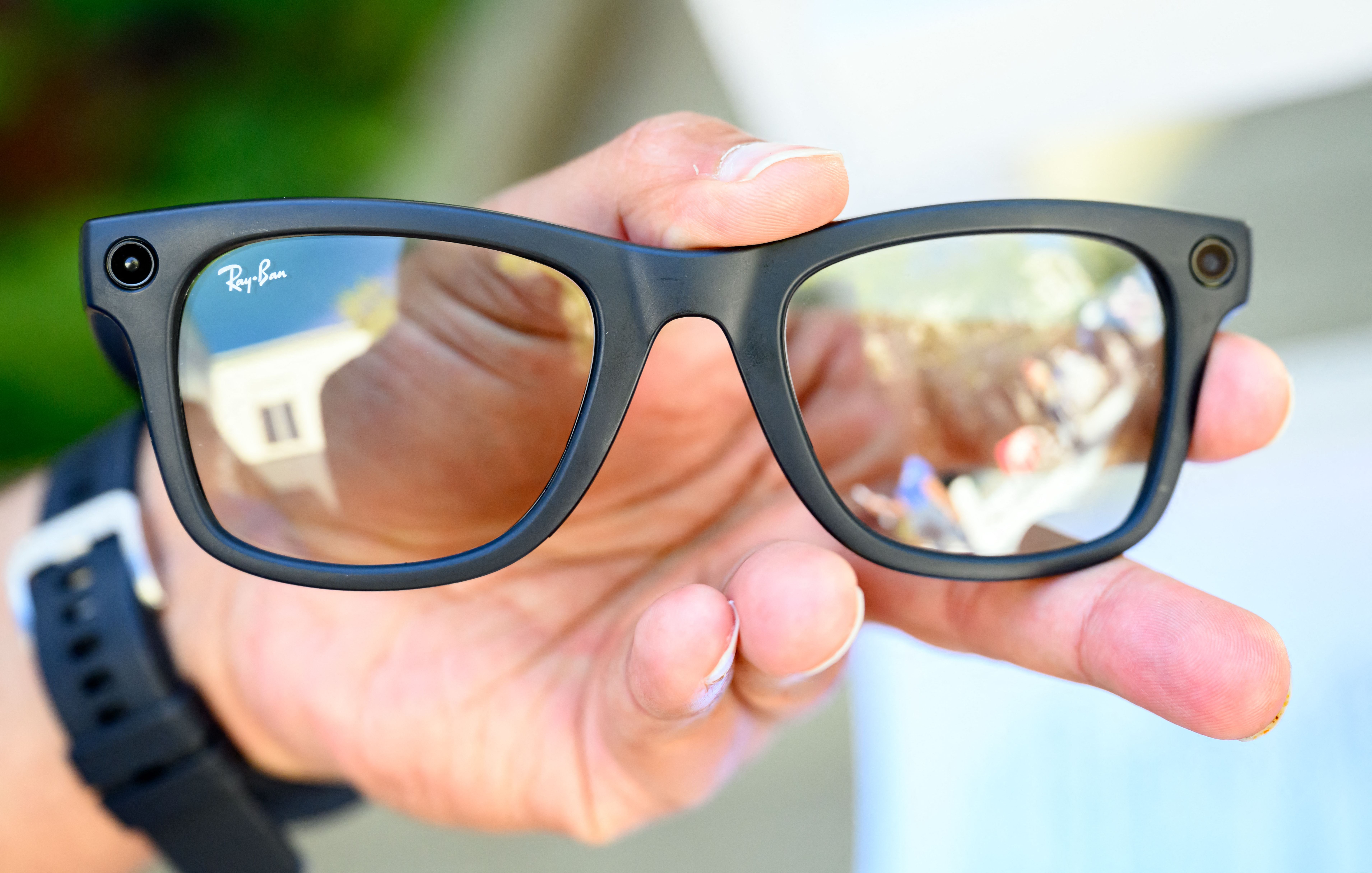
Zanjani’s experience is the tip of the iceberg. There are entire accounts dedicated to this type of “pick-up artist” content: men whose shtick is stopping women in the street and chatting them up, with the exchange covertly captured on sophisticated smart glasses, such as Meta’s Ray-Bans, and then shared on social media.
As the tech has evolved, the glasses themselves have become less obtrusive; it’s far from obvious when someone is wearing them. Women frequently only become aware that they were being filmed once the video has already gone viral and a friend or acquaintance tips them off. By that point, the post may have been viewed hundreds of thousands or even millions of times.
A woman called Oonagh recently shared her experience of being approached by a man in Brighton last June after sunbathing on the beach. He asked for her number and she declined, saying that she had a boyfriend.
A few weeks later, she was forwarded a TikTok video, clearly taken from the man’s perspective, Peep Show-style. By that point, it had racked up around a million views and hundreds of comments, many of which were either sexually explicit, abusive or derogatory. “I had no idea it was happening to me, I didn’t consent to that being posted, I didn’t consent to being secretly filmed,” she told the BBC. “It really freaked me out – it made me feel afraid to go out in public.”
Another British woman, Millie, was secretly filmed via Meta glasses while reading a book on Sydney’s Bondi Beach last February. The man in question approached her and persistently asked for her number – again, Millie had no clue that he was recording the conversation.
“I felt really uncomfortable and I didn’t know how to get him to leave,” Millie told Australian current affairs show The Project. By the time a friend in the UK shared the TikTok video with her, it had already gone viral, with more than a million views. “I felt absolutely embarrassed, distraught, upset, crying – I didn’t want to leave my bed,” she said.
It felt very violating and made me feel very powerless
Another Sydney woman, Amy (not her real name), had a similar experience and described the fallout as “soul-destroying”. She was alerted to the video’s existence by several friends, and the hundreds of comments from strangers left her feeling wildly exposed and degraded. “It’s all so violating and disgusting,” she told ABC. “I didn’t even realise I was getting filmed, let alone Joe Bloggs down the road saying how ugly I am, or how fat I am.”
The latter two women were both secretly filmed by an American content creator who goes by the name “itspolokidd”. He has 1.6 million followers on Instagram; the content is exclusively videos of him hitting on women in public places. Sometimes the women seem unfazed; sometimes they are unsettled by his full-on approach (he often walks up to them and calls them sexy or beautiful, then starts referring to them as his future wife or the future mother of his children). Even when his behaviour isn’t apparently distressing for the women involved, there is no escape from the comments on his videos, which can range from insulting to sexist to lascivious. In one itspolokidd video, the woman being filmed is standing with a friend, another woman with a shaved head. “What on EARTH is THAT next to her?!” reads one of the multiple derogatory comments.
In several cases, women featuring in such videos have sent requests to the poster and/or social media platform hosting the content to remove the footage – with incredibly mixed results. Zanjani, for example, contacted both Meta and TikTok. The former removed the video of her from Instagram; the latter never responded.
One US woman did manage to convince the man who’d secretly filmed her to delete the video following intense public backlash. Elyse, who goes by the handle “Herculyse”, was unknowingly recorded by a Spanish-language content creator called Jose Mercado Reyes as he attempted to ask her out while she was shopping. Reposting the video on X (Twitter), she wrote the following furious caption: “THIS is why these glasses or any version should NOT exist. I VIVIDLY remember this interaction, I had no idea I was being filmed. This was to be sent to me tonight after I was recognised. This is disturbing. Makes me sick physically, this is violating and WRONG. F*** you.”
In the above-mentioned cases, the women involved have little to no recourse. UK law allows the filming of other people in public spaces without their consent – and uploading that footage online is also perfectly legal. Oonagh, for example, reported the incident to Sussex Police, but was told there was nothing they could do.
Then there are even more disturbing potential scenarios. One woman in New York shared an incident in which she realised her aesthetician was wearing Meta Ray-Bans while she was having a Brazilian wax. Aniessa Navarro asked if the glasses were live and was told they had run out of charge; this did little to reassure her. “It’s been haunting me ever since,” the influencer said in a TikTok video in August. “I kind of shut down and I could not stop thinking, ‘Could this girl be filming me right now?’” Navarro said the thought that she could have been filmed while having such an intimate treatment had made her feel “sick” for weeks.
There are already confirmed cases in which smart glasses have been used illegally. On 6 January, David Williams, 47, pleaded guilty to voyeurism at Warrington Magistrates’ Court after he’d recorded sex with a woman without her explicit consent using a pair of smart glasses. Williams swerved jail and was instead fined £800 and ordered to pay a £320 surcharge and court costs of £85, reported The Telegraph.
But even in the less obviously harmful cases, the End Violence Against Women coalition (EVAW) has flagged other potential safety issues connected to women being non-consensually filmed. Specifically, when the footage of them shared online includes their personal details, such as their location or phone number, says Rebecca Hitchen, head of policy and campaigns. “The safety risks of this are huge, as is the subsequent level of harassment, trolling and doxxing many are subjected to when videos are posted online.”
A spokesperson from Meta highlighted that the glasses “have an LED light that activates whenever someone captures content, so it’s clear to others that the device is recording, and [it] features tamper detection technology to prevent people from covering that light”.
They added: “Our terms of service clearly state that users are responsible for complying with all applicable laws and should not tamper with the product. As with any recording device, including phones, people should use smart glasses in a safe, respectful manner, which includes not engaging in harmful activities like harassment, infringing privacy rights, or capturing sensitive information.”
The safety risks of this are huge, as is the subsequent level of harassment
However, it is incredibly easy to override the LED light, according to Jake Moore, a cyber security adviser for ESET. He bought himself a pair of Meta Ray-Bans to see whether it would be possible to hack them in various ways, and demonstrates to me at least one very simple way of covering the light while filming is still taking place. (Meta says it is “aware and concerned that there are small numbers of users who choose to misuse our products, despite the measures we have put in place. We are dedicated to delivering valuable, safe, and innovative products for people and continually review opportunities to enhance our AI glasses, informed by customer feedback and ongoing research.”)
Moore’s main concern, however, is not sexual harassment but cyber security. Moore managed to rig his Meta Ray-Bans so that they were secretly recording a live feed that was fed into facial recognition software. This enabled him, in real time, to discover a person’s name, place of work, alma mater and hobbies. Provided the person in question had some kind of internet presence, Moore had access to all kinds of information about them in under a minute.
It is, as Moore puts it, “very Mission: Impossible”. And Brits are the perfect targets for this kind of infiltration tactic, with our tendency to prioritise politeness over asking questions. Someone could misuse tech wearables by socially engineering a conversation with a target and pretending to already know them: “If you can get someone to believe you, you can break into any company,” says Moore. “It’s that easy.”
There’s another deeply upsetting prospect, too: that this tech could be combined with AI software like Grok, which has enabled users to “undress” women and create sexually explicit deepfakes of them using their social media pictures. Hitchen says EVAW shares experts’ fears about smart glasses “being used to nudify women and girls in real time. With the ease of access to nudification technology, how long will it be before this is happening?”
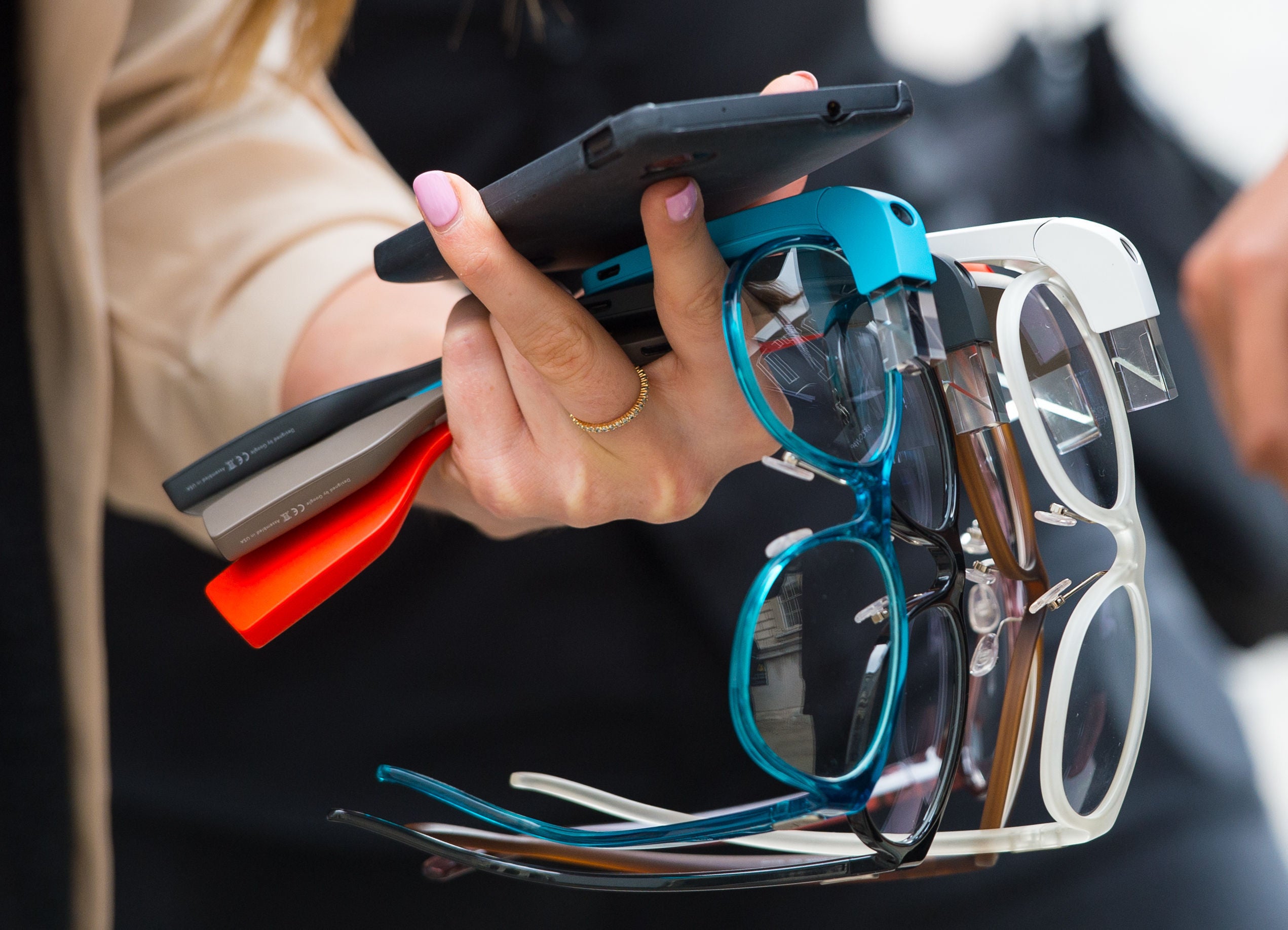
Campaigners are calling for the government and online regulator Ofcom to take urgent action to ensure the Online Safety Act is fit for purpose to respond to the emerging threats posed by ever-evolving technology. Many of the women who have been targeted by men in smart glasses, meanwhile, believe our privacy laws are outdated and desperately need an overhaul in a world where covert filming is becoming increasingly easy.
“I definitely do think they need to be updated,” says Zanjani. “It felt very violating and made me feel very powerless... Just because there are things that are technically legal, it doesn’t mean that it’s not completely wrong, immoral and unethical.”
Moore thinks it’s unlikely that the government will intervene any time soon, for one key reason: mass surveillance. “We do need to bring in more privacy laws... but at the same time, it’s a double-edged sword if we talk about legislation. The government would shoot themselves in the foot if they introduced it, because they want to be able to use this kind of technology.” The UK already has one of the biggest CCTV camera networks in the world; police are now attempting to implement live facial recognition technology into all body-worn cameras.
In the meantime, Moore recommends being on guard and taking a “zero trust” approach when it comes to strangers.
The depressing reality is that perpetrators will always exploit new technologies to find novel ways to harm women and girls, according to Rebecca Hitchen: “Smart glasses are therefore not an exciting innovation – for women, they present a new threat to our everyday lives.”
Join our commenting forum
Join thought-provoking conversations, follow other Independent readers and see their replies
Comments
Bookmark popover
Removed from bookmarks