Gen Z are lonely, online and antisocial. So why are they bringing back communal dining?
Older diners will remember when Wagamama benches were a novelty and the hot chaos of Belgo, so what is making the loneliest generation bringing communal dining back? Hannah Twiggs explores why Gen Z are choosing to eat with strangers – and what it says about how they want to live now


Gen Z are accused of many things: that they’re chronically online, surgically attached to their phones, avoidant of eye contact, allergic to small talk. They are, we’re told, the loneliest generation, and supposedly the one least able to hold a conversation with a stranger.
So, it may come as a surprise to learn that they, not the extroverted, freewheeling generations before them, are the ones bringing back communal dining.
Recent reporting shows that around 90 per cent of Gen Z diners say they enjoy communal tables, compared to 60 per cent of those aged 61 to 79. Meanwhile, the “more social” generations – Boomers, Gen X, Millennials – prefer to huddle in pairs and fours, privately partitioned in booths, nursing the same rituals they’ve clung to since the Noughties.
It’s an exquisite generational irony: the loneliest people are making the most communal choice.
Anyone who grew up in the Nineties will remember the first wave of communal dining – not that we called it that. We just called it Wagamama. Or Belgo. We remember the awkward bench-mounting, the screaming toddlers, the couple mid-breakup on your left, the student with the loud cough to your right. The feeling that you were essentially one long conga line of strangers trying to eat soup without elbowing each other in the ribs.


Little wonder, then, that older diners flinch at the idea it’s becoming fashionable again. Our version was chaotic and transactional. Gen Z’s is curated and communal: less Belgo, more bonding.
We’ve spent years mocking Gen Z for living online, then tutting when they didn’t go to pubs as much, then wringing our hands when they said they were lonely. Now, they’ve responded with the most analogue solution imaginable: voluntarily sitting cheek-to-jowl with strangers while they eat. Who on earth would choose to sit with people they don’t know?
Perhaps the kids weren’t the disconnected ones after all.

It certainly looked like they were. Nearly half of Gen Z say they often feel lonely, according to Oxfam. Meanwhile, a third of young men say they haven’t seen anyone outside their household in the past week, and only a fifth say they have friends they can truly rely on.
And yet: these same young adults are filling communal tables, attending supper clubs, booking early dinners in groups, talking to strangers and rebuilding the idea of eating as a social act, not a private one. Maybe the problem wasn’t that they didn’t want connection, but that the existing formats for it – late-night bars, overpriced clubs, competitive drinking cultures – didn’t work for them?
Gen Z is emerging as the first generation in years to make a conscious effort to log off. Phone-free nights, “de-influencing” trends are booming without documenting any of it. Communal dining fits perfectly: you can’t doomscroll when you’re hemmed in on both sides by actual humans.
Their drinking habits are shifting, too. At first, it looked like the teens of the 2020s were… well, boring. In 2023, more than a third of Gen-Zers were sober; now, IWSR data shows 73 per cent drank alcohol in the past six months – the biggest increase of any generation.
Cost is undoubtedly a big driver: where can you find a pint for under £7 these days? Yes, they go out less than millennials did. Yes, they spend less at bars and are less wedded to big club nights. But they’re also organising DIY parties, themed house gatherings, art raves, curated socials – and communal dinners are part of that too.
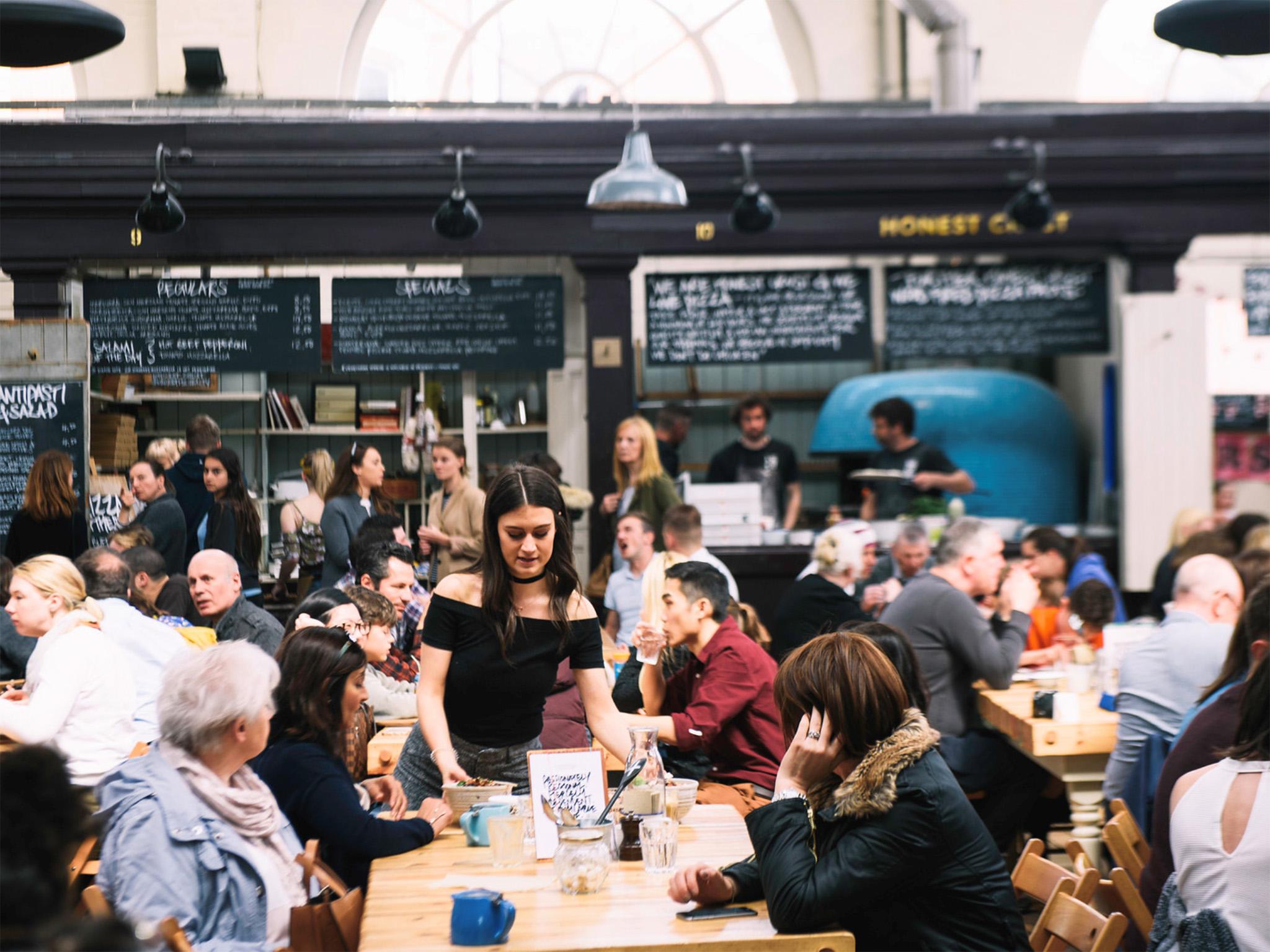
Gen Z aren’t opting out of community. They’re opting out of our version of it. They were never antisocial, just intentional. They don’t want to socialise in ways that trash their mental health, bank accounts or sleep schedules. Eating together is the perfect substitution: softer edges, real conversation, less regret. And if you’re already drinking less and choosing conversation over chaos, you might as well be doing it with other people.
Older diners might wonder whether this will all go a bit Belgo again – a sea of benches, communal chaos, and everyone’s dishes coming out at different times – but Gen Z’s version is softer, more curated. Less factory line, more intentional gathering.
And restaurants are moving into that vacuum.
90%
of Gen Z diners enjoy communal tables
Longer tables are appearing because they fill quickly, encourage mixing and generate the kind of low-level buzz you can’t manufacture. Menus are drifting further towards sharing formats, but with bigger portions and better value to share. “Come alone” nights and curated supper clubs offer structured mingling. Drinks lists tilt toward low- and no-alcohol options, all aligning with what this generation wants from a night out.
Restaurants have always been about more than just food, but somewhere between the cost-of-living crisis, the obsession with “value” and the endless culture wars about tipping and pricing, older diners seem to have forgotten that. Gen Z haven’t.
That’s not to say communal dining is something new. During the Second World War, Britain had “British restaurants”: communal dining halls endorsed by Winston Churchill that served affordable, nutritious meals to the nation. They were wildly successful – socially, nutritionally, culturally.
Gen Z, perhaps without knowing it, are resurrecting that same logic. If you want community, you have to build it somewhere. And the table is the easiest place to start.
Join our commenting forum
Join thought-provoking conversations, follow other Independent readers and see their replies
Comments
Bookmark popover
Removed from bookmarks