The Independent's journalism is supported by our readers. When you purchase through links on our site, we may earn commission.
How ‘dodgy stick’ streaming became a socially acceptable crime
Streaming sports, TV series and movies on a modified device is illegal, but ‘dodgy stick’ devotees don’t seem to care. Katie Rosseinsky explores how this growing issue is anything but a victimless crime

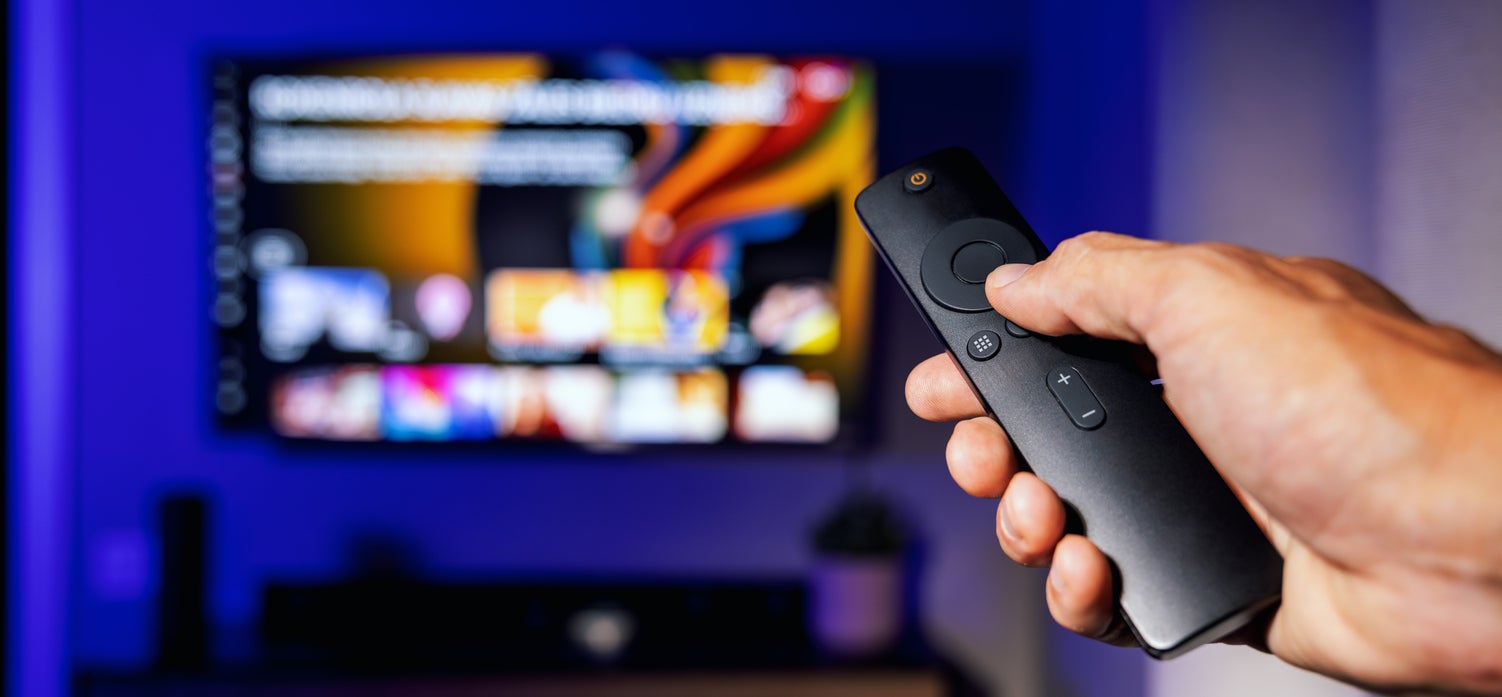
In a world where new streaming platforms seem to launch every month (and the ones you’ve already signed up for are hiking up their prices almost as frequently), one simple device is offering access to pretty much everything you could ever want to watch. You just have to get in touch with a friend of a friend, or follow a dubious link on a pop-up-laden website, hand over a one-off fee, and you’re sorted. Or so you think.
This is the promise of the so-called “dodgy stick”, the ubiquitous nickname for modified – or, to use the more technical term, “jailbroken” – versions of easy-to-use devices such as Amazon Fire Sticks that come pre-loaded with thousands of free channels and streaming libraries. Conduct a quick poll of your friends or colleagues, and you’ll probably discover that many of them already own a similar device. Perhaps they’re using it to follow their football team of choice without endless sports subscriptions, or to watch American shows before they land in the UK.
The only catch? It’s completely illegal. Using modified sticks to stream content that you’re not paying for violates the Fraud Act of 2006. Yet this doesn’t seem to put off the devotees. Otherwise law-abiding citizens who’d never dream of dabbling in other illicit behaviour seem perfectly happy to break the rules when it comes to dodgy sticks. Some of them don’t even realise they’re doing anything wrong.
Recent stats from The Athletic found that almost five million of us consumed pirated sports coverage over the past six months, with 31 per cent admitting to using a modified Fire TV Stick or similar to do so. These devices have become so widespread that earlier this year, Sky’s chief operating officer Nick Herm claimed that their use accounted for “probably about half of the piracy” in the UK, and argued that “tech giants” such as Amazon were failing to sufficiently “address some of those problems”. He suggested it is costing the broadcasting industry hundreds of millions of dollars in lost revenue.
It’s almost as if owning a dodgy stick has become the ultimate “acceptable” crime, infiltrating middle-class homes. Eva*, 34, is a recent convert. She and her partner sourced one from a friend after they worked out the exact amount they’d been spending on streaming as part of their mortgage application process. “It was ridiculous how much we were paying each month, especially for sports,” she says. “It wasn’t worth it for a couple of games or boxing matches.” It is £80 for a year’s use of the illegal option, or spend just under that amount per month on the legitimate versions? It was an easy decision – especially when it meant they had unlimited access to new episodes of Below Deck.
The platform she uses boasts sports, TV series and films – even ambient footage of virtual log fires, just in time for Christmas festivities. Sometimes they have to faff around with the language settings when their new favourite show suddenly defaults to a French dub, but it’s a sacrifice they’re willing to make for the savings. That they might be eating away at the potential profits of a mega media corporation “hasn’t crossed [their] minds” and the fact that “everybody is doing it” makes it feel less illicit.
So how does it work? What makes a dodgy stick so, well, dodgy? When a device is “jailbroken”, its inbuilt protections have been bypassed, explains ethical hacker Rob Shapland. Once this has been done, pirates can load it up with their own apps from outside the official app stores, which allow viewers to access illegal content in a process known as “sideloading”.
Sellers tend to rely on word-of-mouth recommendations. “It’s mates bragging down the pub, saying, ‘I’ve got access to this’, and it feels like there’s no downside,” Shapland says. WhatsApp groups, social media accounts and websites will pop up offering the devices, too.

The illicit appeal is obvious: the pirates have taken something that the average consumer already knows how to use (like a Fire TV Stick, for example) and packed it with a whole load of shiny streaming options, at what seems like a great price. Once, anyone hoping to access an illegal stream would have had to poke around in the murky recesses of the internet to try and find one. With one of these devices, though, they can simply plug and play.
It’s so straightforward that it might not necessarily feel like breaking the law. Using a modified stick “becomes an easy route into illegal streaming”, says David Ingham, head of media, entertainment and sport at tech consultancy Cognizant. The average customer, he suggests, “and even some of the middlemen selling these devices, [does] not realise that they are stepping into a world of piracy, fraud and the theft of intellectual property. They think they are simply buying or passing on a low-cost gadget”.
And as for those who do know that they’re doing something dubious? “The simple fact of the matter is that this is a fraud and everyone since time immemorial has tended to look at fraud as a victimless crime against corporations,” says Kieron Sharp, chairman at the anti-piracy organisation Federation Against Copyright Theft (FACT). He suggests that the popularity of modified sticks is essentially the modern equivalent of picking up pirated videos or DVDs back in the day. “People would jump at the chance of buying them very cheaply regardless of the fact that they were stolen.”
The cost of living crisis has certainly squeezed the nation’s disposable income; couple this with rising streaming subscription prices, and you have a landscape where it’s easy for users to “justify the infraction as acceptable”, as Ingham puts it. This year alone, Netflix has upped the cost of its standard ad-free subscription in the UK to £12.99 a month, marking an increase of 18 per cent; Disney+ has hiked its standard rates by £1 a month, and so has Apple TV (a subscription for the latter now costs twice as much as it did when it launched in November 2019).
This is a fraud and everyone since time immemorial has tended to look at fraud as a victimless crime against corporations
But investing in a device that seems like a bargain might turn out to cause users a whole load of pain in the long run. As well as coming pre-loaded with streaming apps, the chances are that your dodgy stick will also be riddled with viruses and malware. A recent survey from BeStreamWise found that 65 per cent of people who’ve watched content illegally over the past 12 months have had a security scare while doing so. “If you think about the morals of the people that are making the sticks, they’re obviously breaking the rules already,” says Shapland. “It’s not a very big step to then put software on there that allows [them] to access someone’s online banking account”.
Sometimes, Shapland adds, the device might act as a keylogger, recording your passwords and personal details and then sending them on to the criminals. According to a survey from BeStreamWise, almost four in 10 illegal streamers have suffered financial losses after being targeted by fraudsters; the average amount stolen was £1,680, but one in 10 respondents ended up losing more than £5,000.
Once you’ve entered your payment details, fraudsters might activate “set and forget” payments, and “just keep billing”, says Gareth Sutcliffe, the author of a recent report into video piracy from media and tech consultancy Enders Analysis. Or they might steer users towards cryptocurrencies through dodgy sideloaded apps, or sell your details to a third party.
So, when you’re handing over, say, £20 for your dodgy stick, you’re potentially inviting organised crime groups into the comfort of your own living room. “The idea, really, is [for criminals] to be able to put their tentacles right into the average consumer”, who often thinks that “they’ve got a good deal, when in fact they’ve opened the hen house door to the fox”, says Sutcliffe. And your money could end up funding other types of organised crime activity, too.

But Sutcliffe reckons that the rise of the dodgy stick is not just about arbitrage, or “getting something for less than you would pay for if you were going through a legitimate service”. It’s also a question of innovation. “If the broadcasters were innovating more, providing different sets of packages, a wider range of services, would that be something that perhaps would ameliorate the risk from piracy?” he asks. “You have to argue: ‘possibly, yes.’”
Sky’s chief operating officer has estimated that piracy is costing sports broadcasting companies hundreds of millions of dollars. Again, it’s easy for illegal streamers to tell themselves that football, for example, is already a wildly lucrative industry, and that broadcasters (and the players) don’t need the extra money. But Sharp tells me that “the Premier League would not be attracting the best players in the world, would not be seen as the best league in the world, would not be the most watched sporting event in the world if people weren’t paying for it in the first place”.
The same goes for TV shows and films. Most of these projects cost vast amounts of money, Sharp notes, and plenty of them “don’t actually make a profit. None of those things would happen if people weren’t paying [for content]”. And when broadcasters cut back, it’s the ordinary workers who feel the impact. “There’s only a few people getting millions – the rest are all being paid normal wages as sound technicians or set designers or whatever it might be,” he says.
A crackdown is underway. Over the past couple of years, a handful of sellers have been sentenced to between two and four years in prison on copyright and fraud charges. And in recent weeks, you might have seen headlines about a spate of raids targeting 17 areas across the UK. When law enforcement operatives raid suppliers, they can typically access their customer databases and find out who is using the devices, Sharp explains.
But, he says, the emphasis is usually on the suppliers. “Our intention is never to criminalise everybody within the whole ecosystem,” he says, noting that the users are “people we would like to see as being legitimate players. They’re obviously film fans, football fans – we want to see them paying for the original content in its best format, and to save themselves any potential future heartache if they were to fall foul of the law”.
Even if this particular Fire Stick diminishes in terms of its risk to the public and to content owners, others will come up in its place
Amazon has also stepped up its efforts. Last month, the company, which has always maintained that it “encourages the responsible consumption of content”, confirmed that it is in the process of blocking pirate apps on its Fire TV Sticks. This is currently in progress in Germany and France and is set to expand globally. “We’ll now block apps identified as providing access to pirated content, including those downloaded from outside our app store,” a spokesperson said. And the latest Fire TV Stick model, the 4K Select, uses a new operating system called Vega, which doesn’t allow sideloading, rather than the previous Android software.
This won’t necessarily wipe out the pirates, who are pretty nifty when it comes to innovating and adapting. “Even if this particular Fire Stick diminishes in terms of its risk to the public and to content owners, others will come up in its place,” says Sutcliffe. “It’s always like whack-a-mole.”
And if you’re still willing to break the law to get your streaming fix? Just don’t kid yourself that you’re making some big anti-establishment gesture. “It’s very easy to think of it as, ‘I’m just sticking a finger up to the man,’” Shapland says. “But you end up screwing yourself over instead.”
*Name has been changed for anonymity
Join our commenting forum
Join thought-provoking conversations, follow other Independent readers and see their replies
Comments
Bookmark popover
Removed from bookmarks