The Independent's journalism is supported by our readers. When you purchase through links on our site, we may earn commission. Why trust us?
Best TVs of 2026, tried and tested by a tech expert
From home cinema to on-wall art, the latest 4k HDR TVs can do it all - but which is the best for you? I compare the best new televisions boasting the latest technologies
- 1
 2
2
- 3
 4
4
- 5
 6
6
- 7
 8
8
- 9

If there’s one thing you can be sure of, the next TV you buy will be bigger, brighter, sharper and smarter than the one it replaces. Screens continue to evolve at a rapid pace, with each new range offering one upgrade or another. High-definition feels positively quaint, now that 4K UHD and HDR have become the norm.
While most modern TVs look broadly similar – slim, minimalist, growling larger by the day – what lurks behind the screen varies considerably. LED flatscreens are virtually impulse buys, but take things up a quality notch and you’ll encounter Mini LED models, which employ next-generation backlighting for better contrast and peak brightness, and QLED sets that add a Quantum Dot layer for greater colour depth.
If you’re a film fan who prefers dimmed lights and cinematic contrast, there’s also OLED. Because each OLED pixel is self-lit, with no backlight required, these panels produce perfect blacks and fine shadow detail, making them a firm favourite for moody dramas and big-screen blockbusters.
Whether you're replacing an old set or building a home cinema, knowing the strengths of each display type will help you find the right match. Buying a TV can feel complicated, but it doesn’t need to be. Read on for our guide to the best TVs to suit your viewing habits and your budget.
Read more: The best surround sound systems to pair with your new TV, reviewed
The best TVs for 2026 are:
- Best overall – Panasonic Z95B OLED TV: £1699, Currys.co.uk
- Best for sports – Sony Bravia 8 II OLED TV: £1,899, Sony.co.uk
- Best budget TV – Toshiba 43UV2F LED TV: £259, Argos.co.uk
- Best lifestyle – Samsung The Frame QLED TV: £899, Amazon.co.uk
- Best value – Philips 55OLED760 OLED TV OLED TV: £899, Amazon.co.uk
How I tested

I auditioned each of the televisions featured in this list through a range of tests intended to reveal their technical abilities and general usability. As well as bench-testing every TV, I lived with each of them in turn to get an idea of how they perform in everyday life, watching streaming popular shows from the likes of Netflix and Prime Video, and using them with Blu-ray players and TV set top boxes. During testing, I looked at everything from picture quality and HDR performance to smart functionality, gaming, sound and build. You can read my full testing methodology at the bottom of the article.
Read more: Protect your online privacy with the best VPN services, tested by an expert
1Panasonic Z95B OLED TV

- Best TV overall
- Screen Tech OLED
- Screen size 55in
- Dimensions 1,448mm x 888mm x 52mm
- Weight 24kg
- Smart TV platform Fire TV
- Why we love it
- Sensational picture quality
- Immersive Dolby Atmos sound system
- Fire TV OS and Freely
- Take note
- Only two HDMI ports support full high-frame-rate gaming
- Unapologetically expensive
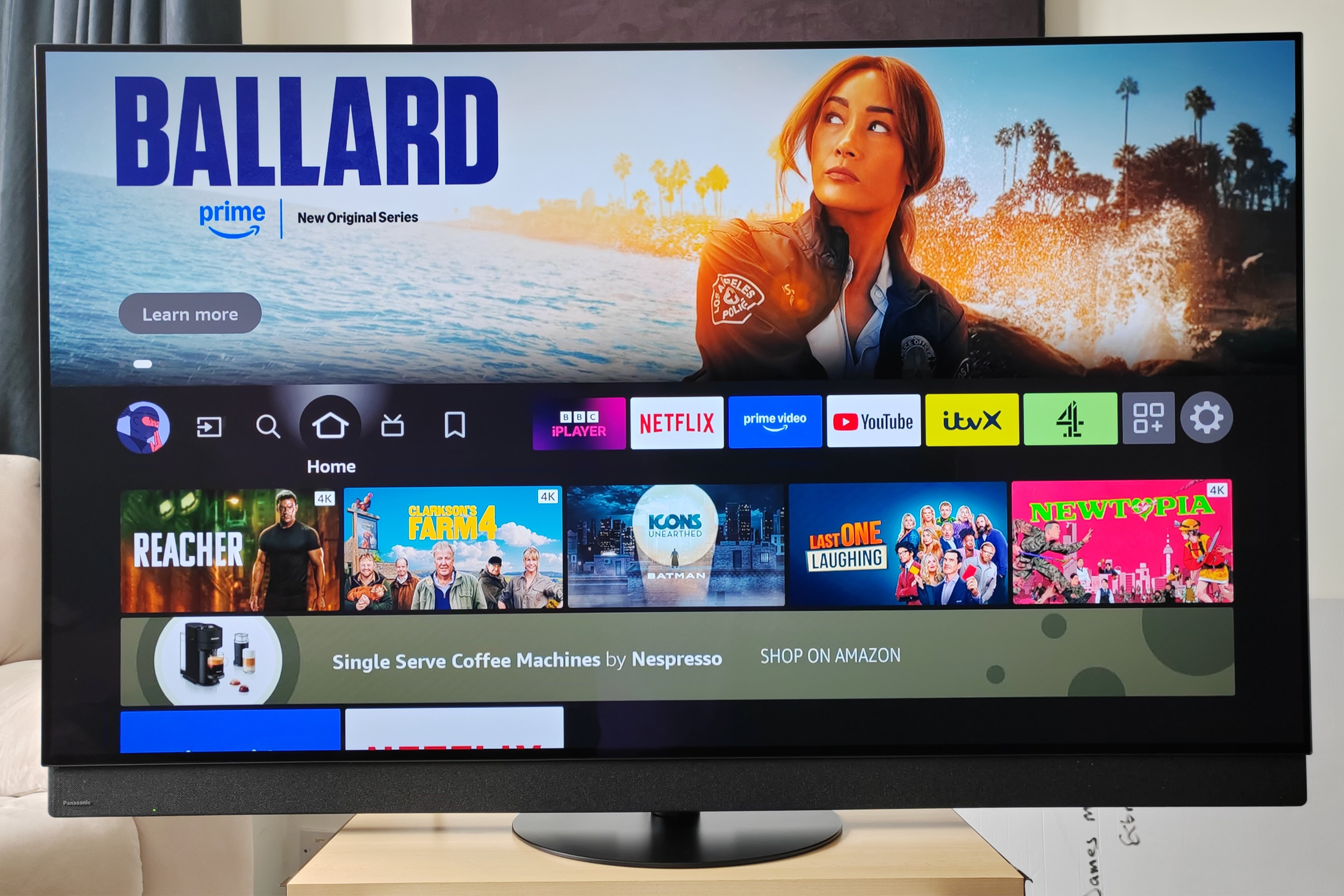
Mixing pro-grade image quality with cutting edge everyday convenience, Panasonic’s Z95B proves you really can have it all - if you’re prepared to dig deep enough.
Sitting proudly at the top of the brand’s TV lineup, with a price tag to match, this is an elite display built around a state-of-the-art RGB Tandem OLED panel, fronted by Amazon’s Fire TV interface, and bolstered by the aerial-free Freely service.

The set oozes luxury. With charcoal grey fabric concealing the built-in Dolby Atmos speaker system, it sits on a circular, swivel-capable centre stand that makes positioning a doddle.
Around the back, a large woofer with twin passive radiators hints at Panasonic’s ambitions for its audio performance.
Connectivity includes 4k 120Hz support, but it’s only offered on two HDMI ports, and one of those doubles as the eARC port.
Gamers get AMD FreeSync Premium, NVIDIA G-SYNC compatibility, 144Hz support and a well-designed Game Control Bar interface.
Picture quality is best in class. That new Tandem OLED panel tech is significantly brighter than previous Panasonic models, while clever thermal Flow cooling helps sustain its highly dynamic performance. Colours are vibrant but never gaudy, striking a balance between filmic accuracy and crowd-pleasing punch. Black levels remain classically OLED: inky, consistent and full of subtle detail.
The HCX Pro AI Processor MK II handles motion, colour and tone mapping with signature Panasonic restraint - no oversaturation, no artificial sharpness - while HDR support covers Dolby Vision, HDR10+ Adaptive, HDR10 and HLG. You want more? How about Auto AI picture optimisation with ambient light sensing.
Smart functionality comes via Amazon Fire TV OS, with Freely included for aerial-free live TV.
Audio is the final highlight. The 360° Soundscape Pro system, tuned by Technics, throws sound out wide and high. Front-facing, side-firing and height drivers collaborate to form an expansive soundstage. It’s tailor made for blockbuster movies.
The Panasonic Z95B is a flagship OLED for those who care deeply about sound and vision. It delivers some of the most natural colour handling you’ll find outside of a professional monitor, while Fire TV and Freely make it genuinely convenient for everyday viewing. The only caveat is having to juggle those two high frame rate HDMI ports. Beyond that, the Z95B is an outstanding OLED TV.
2Toshiba 43UV2F LED TV

- Best Budget small-screen TV
- Screen tech LED
- Screen size 43-inches
- Dimensions 965 x 625 x 259mm
- Weight 6.85kg
- Smart TV platform VIDAA Smart OS
- Why we love it
- Freely wireless TV channels
- Great value for money
- Vidaa smart TV platform
- Take note
- HDR is underwhelming
- Only three HDMI inputs
It’s astonishing how much TV you can get for very little cash. Consider this Toshiba 43UV2F. Key to its appeal is Freely, the Wi-Fi delivered free-to-view channel platform from the makers of Freeview. Freely means you can use this set pretty much anywhere without having to worry about aerials or dishes. It also runs the Vidaa smart TV OS, so there’s no shortage of streaming services to watch either.
Navigation is intuitive. Apps and live TV channels are arranged across horizontal rails, with Netflix, iPlayer, Disney+, and Prime Video sharing space with various other free streaming channels.
The set may have a cookie-cutter design, but it’s solidly put together, and its light weight makes for easy wall mounting.

Connectivity is a tad limited, with just three HDMI inputs, including one with eARC for easy soundbar integration. The panel itself is 60Hz, so don’t expect High Frame Rate gaming support. That said, input lag is impressively low, making it fine for most console gaming.
Out of the box, the 43UV2F doesn’t make the best first impression. In Standard mode, the picture looks flat and dim. Move to the Cinema preset, though, and the screen comes alive, colours are richer, contrast improves. The model is HDR compatible but doesn’t really have the luminosity to make the most of HDR.
That said, within its comfort zone - HD streaming, regular telly, bright-room viewing - the 43UV2F is just fine.
The Toshiba 43UV2F is a well-featured budget 4K TV that punches above its price when it comes to usability and streaming versatility. Freely channels are the obvious win here, making this a smart budget buy for smaller rooms and bedrooms where casual viewing is king.
3TCL C805 mini LED TV

- Best Family TV
- Screen Tech Mini LED
- Screen size 55-inches
- Dimensions 1395 x 857 x 146mm
- Weight 13.1kg
- Smart TV platform Google TV Smart OS
- Why we love it
- Bright, vibrant QD-Mini LED picture performance
- Strong gaming option
- Google TV smart TV platform
- Take note
- No Freeview Play
- Only two HDMI ports handle High Frame Rate gaming
TCL is fast earning a reputation for high-specification TVs that don’t break the bank. This 55-incher boasts a high-brightness Quantum Dot Mini LED panel, has support for Dolby Vision IQ and HDR10+, and is capable of refresh rates up to 144Hz. Hard to beat for the price.
It looks good too. The brushed titanium frame and slim bezel lend it a clean, modern aesthetic, and the central metal pedestal stand makes placement simple.
Around the back, you’ll find four HDMI inputs, two of which support 120Hz games.

The set’s smart OS is polished. Google TV offers confident content curation, and app support is excellent - Netflix, Disney+, Prime Video, Apple TV+, and YouTube are all on hand. The TV also works with Apple AirPlay 2.
Of course, the best reason to buy this TCL is its picture, which is very impressive, thanks to its QD-Mini LED panel. Images are bright and vibrant, and its HDR performance is startling for the price. Audio performance is handled by Onkyo-designed stereo speakers, delivering 30W of power - clear enough for everyday use. DTS Virtual:X processing adds a touch of spaciousness, for that cinema sound vibe.
The TCL 55C805 is a very accomplished sub-£500 TV that delivers a big-screen cinematic experience with little compromise. It earns an easy recommendation for bright rooms, gaming setups or family lounges.
4Samsung QN73F neo QLED mini LED TV

- Best TV for bright rooms
- Screen tech Mini LED
- Screen size 65in
- Dimensions 1,452mm x 832mm x 26mm
- Weight 20.8kg
- Smart TV platform Tizen
- Why we love it
- Slim, stylish design
- Bright, punchy picture quality
- Strong gaming credentials, including 4K 120Hz and 144Hz support
- Take note
- Lacks the HDR precision of high-end Neo QLED models
- No Dolby Vision HDR support
This handsome all-rounder sits at the affordable end of Samsung’s Mini LED range, but it doesn’t skimp on niceties.
It’s a well specified gateway to the Mini LED experience that looks slick, courtesy of an AirSlim design, and has generous connectivity. All four HDMI ports are capable of 4K at 120Hz playback (ideal for console gaming), with one supporting eARC for soundbar connection. Samsung’s Tizen smart platform is also well stocked with streaming apps, including Netflix, Disney+, BBC iPlayer and Samsung TV Plus.
Picture quality impresses straight out of the box. Adaptive Picture, Adaptive Sound Pro, and Active Voice Amplifier Pro auto modes available to save you the bother of menu diving.
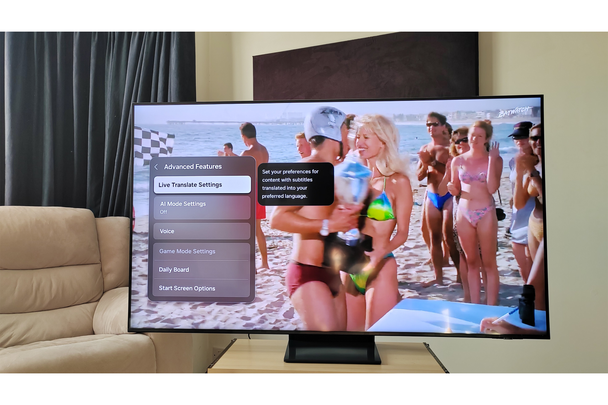
This is a TV that favours high brightness, rich colour and clean motion over cinematic subtlety, but it does so with finesse. HDR support covers HDR10 and HDR10+ (but not Dolby Vision). Images are generally very bright, making this a good choice for bright room/daytime use.
Sound often suffers on thin TVs, but here it’s better than I expected. With 20W stereo output coupled to Samsung’s Object Tracking Lite system, I found dialogue remains clear, even in busy movie mixes.
Overall, the QN73F is a great option for everyday viewing. It delivers the kind of picture that flatters almost any content, comes with a comprehensive smart platform, and is particularly suitable for those who like to view with the lights on rather than off.
5Sony Bravia 8 II TV

- Best OLED TV for sports
- Screen tech QD-OLED
- Screen size 55in
- Dimensions 1,224mm x 707mm x 34mm
- Weight 17.2kg
- Smart TV platform Google TV
- Why we love it
- Cinematic QD-OLED pictures
- Strong audio performance, with deep bass
- Slick, premium design
- Take note
- Only two HDMI ports support high-frame-rate gaming
- No HDR10+ support, which some streaming services use
Not to be confused with the original Sony Bravia 8, this sequel is an altogether better performing flatscreen. It’s brighter, and more colourful than its predecessor. Contrast is excellent and picture processing sublime. A proprietary XR Cognitive Processor doesn’t just sharpen edges, it uses AI to prioritise elements, such as faces, highlights, key points of action, creating a realistically detailed image. It’s very clever stuff.
Design wise, the K55XR8M2 is quite the looker, too. Following the brand’s Slim One Slate design philosophy, it’s near-borderless, giving the impression of a single seamless sheet of glass. The look is effortlessly high-end.
Note that the feet are placed at the edge of the chassis, so you’ll need a broad AV unit if you’re not going to wall mount.
Connectivity covers most bases, but only two HDMI ports support 4K 120Hz gameplay, and one of those doubles as eARC for soundbar connection.
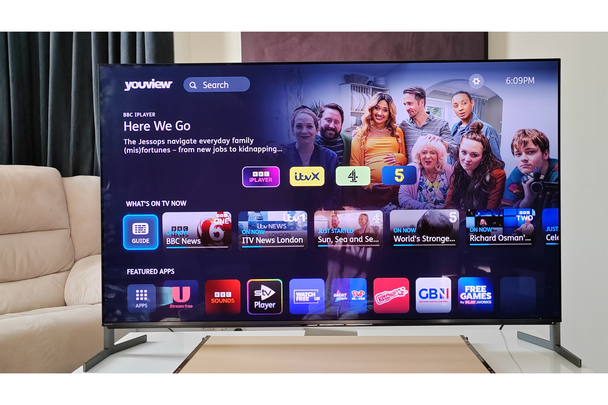
The set runs the Google TV smart platform, and offers all major apps, plus Sony Pictures Core, where you’ll find IMAX Enhanced movie content (fast broadband speed required - from 25Mbps for basic 4K HDR to 115 Mbps if you want to take advantage of Sony’s highest quality Pure Stream mode).
HDR support covers Dolby Vision, HLG and HDR10, while Gamers get VRR, ALLM, Dolby Vision Game mode and a dedicated Game Menu with quick setting access. PlayStation users also have PS Remote Play support, so you can stream from your console while it’s somewhere else in the home.
This is easily the brightest Sony OLED I’ve tested. Black levels are rich and stable, with excellent shadow detail. Not only is this a fine screen for movies, motion handling is excellent, making this a solid choice for sports fans.
Sound quality is also above average. Sony’s Acoustic Surface Audio+ tech turns the entire panel into a speaker via discreet actuators, anchoring dialogue to the screen and panning stereo with precision.
This beautifully built, cinema-grade QD-OLED boasts outstanding colour, and black level brilliance, plus an unexpectedly powerful sound system. Not cheap for a 55in set, and the frugal high-speed HDMI offering is a shame, but an exceptional performer all the same.
6Sky Glass Air TV

- Best Premium subscription TV
- Screen tech QLED
- Screen size 65in
- Dimensions 1,453mm x 840mm x 77mm
- Weight 20.1kg
- Smart TV platform Sky Entertainment OS
- Why we love it
- Built-in Sky TV, no dish required
- Bright, colourful picture quality
- Stylish, slim design
- Take note
- 60Hz screen isn’t great for gaming
- Requires a live Sky subscription for full functionality
- Peak HDR isn’t the brightest
The Sky Glass Air is something of an outlier when it comes to new TV options - but it’s finding plenty of fans. You get a Sky Glass TV on subscription, much like your mobile phone, and it comes with Sky TV built in, no dish or aerial required.
This is actually the second Sky Glass TV to launch, and it’s cheaper and lighter than its stablemate, not least because it junks the big Dolby Atmos sound system of its forebear.
Design wise, it’s rather smart. There’s a choice of Sea Green, Carbon Grey and Cotton White finishes, with central pedestal stand and remote control both colour matched.
Connectivity includes three HDMI ports (one with eARC); the big catch is this is a 60Hz panel, with no support for high-frame-rate gaming. It’s definitely a telly made for TV bingeing, not gameplay.
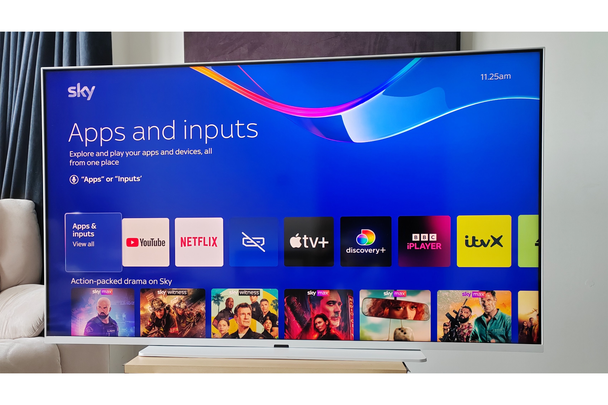
Key to the Sky Glass Air experience is the Sky OS, a smart platform that unifies live Sky channels, streaming apps such as Netflix, Prime Video, Disney+ and BBC iPlayer, and personal recommendations into one clean, voice-controlled interface. You don’t need an aerial. Everything comes via your wifi network.
Cloud recording replaces traditional DVR storage. Set a Series Link and your shows are held in Sky’s cloud, ready for you to catch-up.
Picture quality is fine. The Quantum Dot 4K panel offers Dolby Vision, HDR10 and HLG support, and for the most part looks dynamic and lush. HDR performance isn’t the brightest but Sky’s Auto picture mode makes the most of anything you watch. Contrast is sufficient to enjoy dark dramas and moody movies.
Sound quality is more routine - there’s 2 x 15W speakers - so you might want to budget for a soundbar at some point.
The real win here is Sky’s content rich ecosystem, which borders on brilliant.
Sky Glass Air is a smart, good-looking TV designed for viewers who want Sky channels and on-demand content, for a monthly subscription. It nails everyday performance, looks stylish and is surprisingly affordable – just be sure you’re buying into Sky’s subscription world with full understanding of the add-on costs.
7Philips 55OLED760 OLED TV

- Best Budget OLED TV
- Screen tech OLED
- Screen size 55in
- Dimensions 1,228mm x 708mm x 58mm
- Weight 17.2kg
- Smart TV platform Titan OS
- Why we love it
- Three-sided Ambilight
- Punchy, dynamic images
- Titan smart TV OS, with Freely TV over Wi-Fi
- Take note
- Lacks flagship OLED brightness
This OLED TV has an obvious edge over rivals, in the form of Ambilight. The built-in three-sided lighting system syncs to the programmes you watch and rows of LED bulbs on the back flood the room with complimentary light. I’m a big fan of the technology. Once you’ve lived with it, other TVs seem rather dull in comparison.
Despite its entry-level price, this is actually a well specified screen, and arrives with features you would expect from models far further up the range. There’s 4K 120Hz support on every HDMI port, Dolby Vision and HDR10+ support, and plenty of streaming apps, courtesy of its Titan OS. You get ALLM, VRR and AMD FreeSync Premium for gaming, alongside Dolby Vision Gaming support.
The TV even includes Freely, the aerial-free streaming alternative to Freeview.

It looks nice, too. The wafer-thin OLED panel is framed by a slim black bezel, perched on two minimalist ‘Edge Stand’ supports that sit close to each edge, giving it a wide, cinematic stance.
The set is based around an OLED EX panel and uses Philips’ 7th Gen P5 processor. Not the latest silicon, but it delivers everything you might want from an OLED - deep blacks, smooth gradation, and a natural colour palette with just enough vibrancy. HDR performance is good (although it doesn’t match the dynamics of a more expensive OLED screen), but it looks tremendous with movies in low (or no) light rooms.
For a 2x10W stereo setup, the OLED760 makes a commendable effort at width and clarity. Dialogue clarity is high, and action sequences have heft.
The Philips 55OLED760 feels like a TV built for real-world home cinema living. It’s not the brightest OLED on the market, but all things considered this is one of the most convincing sub-£1,000 TVs you can buy. If you want cinematic picture quality, next-gen connectivity and sophisticated lighting, without spending flagship money, it’s an easy recommendation.
8LG OLED65C5 OLED TV

- Best OLED TV for gaming
- Screen tech OLED
- Screen size 65-inches
- Dimensions 1,441mm x 832mm x 46mm
- Weight 24kg
- Smart TV platform webOS 25
- Why we love it
- Next-gen gaming support, including 144Hz
- Outstanding picture quality
- Comprehensive webOS smart platform
- Take note
- Average audio performance, so you’ll want a soundbar
- No HDR10+ support
The LG C-Series has long been the OLED model that most people end up buying, not because it’s the cheapest, or the brightest, but because it strikes a near irresistible balance between performance, design and price. With the new C5 model, that formula remains unchanged.
Maintaining LG’s position in this premium sweet spot, the C5 boasts a new Alpha 9 Gen 8 processor, smarter webOS platform with AI personalisation, and gaming credentials strong enough to satisfy even PC players with 144Hz rigs.
Design wise, this set is a beauty. Slim to the point of impossibility, the bezel is minimal and the central metal stand reassuringly sturdy.

Connectivity is textbook LG: four HDMI 2.1 ports, all of which support 4K 120Hz, VRR and ALLM. PC users get 144Hz compatibility, provided your GPU is up to it. There’s also VRR, NVIDIA G-Sync, AMD FreeSync, and ALLM. Acronyms that will gladden the heart of gamers everywhere.
Image quality is excellent. Black levels are immaculate, with rich depth and near-black detail able to make the most of shadow-heavy films. Boosting brightness is a suite of new algorithms and associated picture tech. HDR support covers Dolby Vision, HDR10 and HLG.
LG’s webOS smart platform has also been overhauled with AI-powered personal profiles, and voice ID switching.
Motion handling remains an LG strong point, which is good news for sports fans.
Conversely, audio is fine, but nothing more. The mid-range is detailed, and there’s some width, thanks to LG’s AI Pro mode, but bass is limited and action scenes land without much heft. It’s worth planning to add a compatible LG soundbar.
The C5 is a refined, beautifully balanced OLED that delivers superb picture performance and cutting-edge gaming support, just budget for a soundbar to finish the job.
9Samsung the Frame TV

- Best 4K lifestyle TV
- Screen tech QLED
- Screen size 55in
- Dimensions 1,232mm x 707mm x 25mm
- Weight 15.4kg
- Smart TV platform Tizen
- Why we love it
- Anti-glare matte finish screen
- Customisable picture frame-style bezels
- Tizen smart TV platform with Art Mode
- Take note
- Average audio
- No Dolby Vision
The Frame has been a runaway success for Samsung and it’s easy to see why. Wall-mounted, it can masquerade as an artwork, with the addition of an optional gallery-style picture bezel, you’ll be hard pressed to know it’s a telly when in standby.
The matte, canvas-like, screen is perfectly suited to displaying classic art or modern masterpieces. Clip-on gallery bezels come in wood, metal or colour finishes, allowing the TV to blend into a room rather than dominate it.
To help installation, the TV is flat-backed, purposely designed for flush wall mounting, and Samsung helpfully includes a Slim Fit Wall Mount in the box. A separate One Connect Box unit is used to handle aerial lead, any connected devices and the power supply. Just a single near-invisible cable links this box to the set itself.
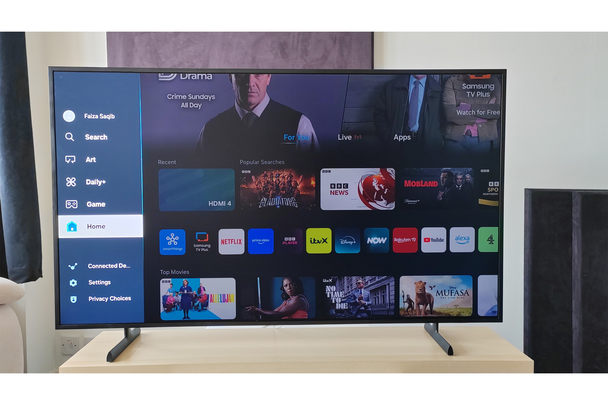
Of course, this is also a fully functional TV, not just an art piece. It runs Samsung’s Tizen OS, which comes with Netflix, Disney+, BBC iPlayer, Prime Video, Samsung TV Plus, amongst others. It also has support 4K 120Hz gameplay.
Picture quality is good. Samsung’s familiar Quantum Processor 4K, paired with Quantum Dot (QLED) handles colour, while a Dual LED backlight array improves contrast. Sound is delivered via a 40W 2.0.2 speaker array with Object Tracking Sound Lite. It creates a decent sense of width and elevation, but bass presence is limited.
The Frame is a beautifully designed TV able to blend into a room in a way regular TVs just can’t. Picture performance is fine, although this isn’t really a TV for home cinema fans, as it lacks Dolby Vision support. Still, for style-led buyers and those who like their screens to fade into the decor rather than dominate it, The Frame remains a brilliant option.
What is the best TV?
Whether you’re looking for picture perfection, or design inspiration, our roundup has you covered. All the TVs featured have been rigorously tested and can be considered amongst the very best you can buy right now. For the ultimate TV upgrade, nothing quite matches the Panasonic Z95B. This TV titan employs the latest OLED screen technology and comes with an artfully integrated Dolby Atmos cinema-style sound system. It’s not cheap, but it certainly delivers.
If you’d rather your 4K TV do something other than stare blankly at you when in Standby, the Samsung’s Frame model is a must have. Also boasting considerable lifestyle appeal is Philips 55OLED760, with its built-in Ambilight system. Want a premium TV package without the fuss? Sky Glass Air is difficult to resist. Gamers and sports fans are well served by the LG C5 and Sony Bravia 8 II respectively. Then again, you just might just want a TV that gets everything just about right for a price that won’t break the bank - which is where the Samsung QN73F Neo QLED Mini LED comes in.
How I tested the best TVs in full
- Picture quality: All of these TVs offer a variety of picture modes which manage brightness contrast, colour and detail, to better serve different genres of content. These were trialled with appropriate movie, sports and mainstream entertainment programming.
- Smart functionality: A key aspect of any modern TV is the Smart Operating System it runs on. While all serve largely the same purpose, they differ in operation and navigation. Not only did I consider the service support on offer (Netflix, Disney+, Apple TV etc) but the speed and usability of each platform.
- HDR performance: To better assess the ability of these screens to display 4K HDR content, I measured peak brightness, using a light sensor and software, in various measurement windows, from 2 per cent through to the industry standard 10 per cent, to judge just how effective the screens are at delivering an HDR experience.
- Gaming: Modern TV screens are not just used for TV shows, they’re increasingly part of the gaming ecosystem. Consequently, each set was considered as a gaming display, with measurements made of input lag, and High Frame Rate compliance.
- Build quality and design: I considered each TV’s overall build quality, the finish of the chassis, the quality of the materials used and its overall appearance.
- Sound: One consequence of thin TV design is invariably comprised audio, I I auditioned each sound system, considering its speaker deployment, the number of channels supported and its overall power output, using a variety of content plus a frequency sweep.
Why you can trust IndyBest reviews
Steve May is a technology journalist with more than 30 years’ experience, specialising in home audio, home cinema, TV, soundbars and personal audio. He writes for a variety of popular audio websites and publications. His reviews are based on real-world testing, and he will only recommend the handful of products he believes are worth your money.
For more, we’ve rounded up the best surround sound systems to accompany your telly
Bookmark popover
Removed from bookmarks