Confronting a catastrophic water crisis as millions forced to return to Afghanistan
With the return of millions of Afghans to their homeland as they are forced from neighbouring nations, the country’s water crisis is spinning out of control – compounded by brutal aid cuts and how the Taliban is handling it. Nick Ferris reports
When Arshad Malik visited Kabul earlier this month, a glance up at the Hindu Kush mountain range that surrounds the Afghan capital would fill him with concern.
“The amount of snow on the mountains that surround the city was far, far less than I have seen before,” the regional director for Save the Children Asia tells The Independent.
“I was told that there had only lightly snowed once so far this season, which is extremely unusual. We could also see that the city was extremely polluted because of the lack of snow or rain.”
The weak snowfall of the current wet season – which is believed to be at a 25-year low for the time of year – will result in groundwater levels falling, putting wells and boreholes at risk of drying up.
It will also mean less water behind the Qargha Dam, which is the crumbling water barrier built in the 1930s that remains critical to the supply of water for Kabul’s six million residents. Afghanistan’s farming and livestock sector – upon which around three-quarters of people depend – will suffer due to the water shortages, in turn exacerbating food insecurity.
It is now common for households in Kabul to spend up to 30 per cent of their income on water, according to a report published last year by the US NGO Mercy Corps, while around 80 per cent of Kabul’s groundwater is believed to be unsafe due to high levels of sewage, salt water, and other pollutants.
Nearly half of the city’s wells have now run dry, while the city’s aquifers, the technical term for critical, underground water reservoirs, are being drained twice as fast as they can be naturally replaced, and are projected to run dry by 2030.
“Within the last decade, groundwater levels dropped by about 25 to 30 metres in Kabul, and this trend is also being followed in other parts of the country,” explains Mercy Corps’ director of programmes for Afghanistan, Marianna von Zahn. “It’s becoming a health crisis, it’s becoming an economic crisis, and it’s ultimately also becoming a protection crisis… around 40 per cent of tribal conflicts in Afghanistan are now around water.”
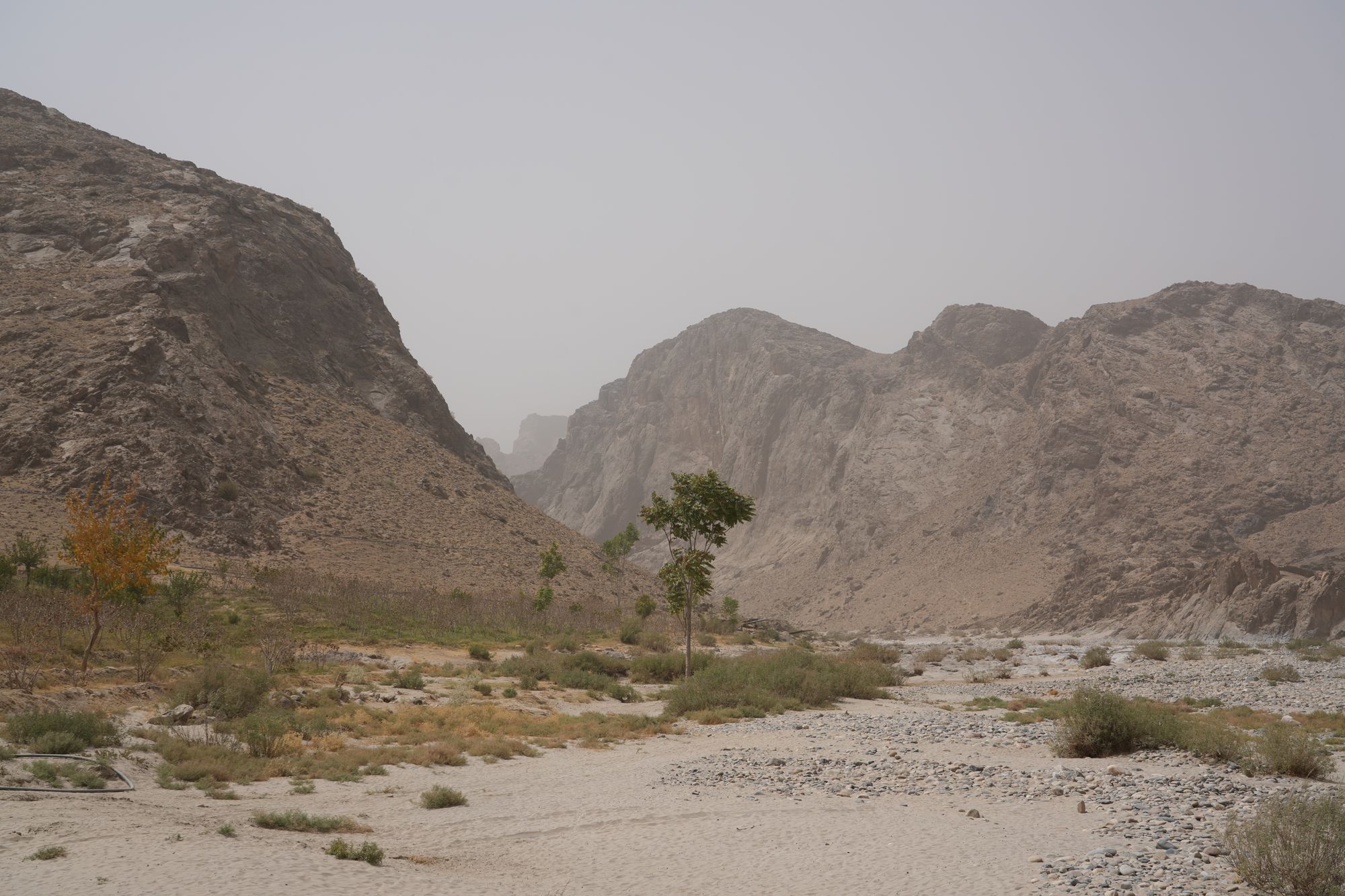
The country is far from alone in experiencing major worries around water as the climate crisis escalates. The world has now entered an “era of water bankruptcy”, according to a major UN report published last week. Four billion people now live with severe water scarcity for at least one month a year, and many parts of the world are no longer able to bounce back from periods of drought.
“In financial bankruptcy, the first warning signs often feel manageable: late payments, borrowed money and selling things you hoped to keep. Then the spiral tightens,” explained lead author Kaveh Madani. Water bankruptcy is similar, he said.
At first, countries withdraw a little more groundwater during dry years and use bigger pumps and wells; then lakes begin to shrink and countries plumb even deeper, rivers turn seasonal, salty water enters freshwater systems on the coast, and the land itself can begin to sink.
Other cities around the world at serious risk of these impacts include Jakarta, Mexico City and Bangkok, according to Madani.
More than 5m returned in three years
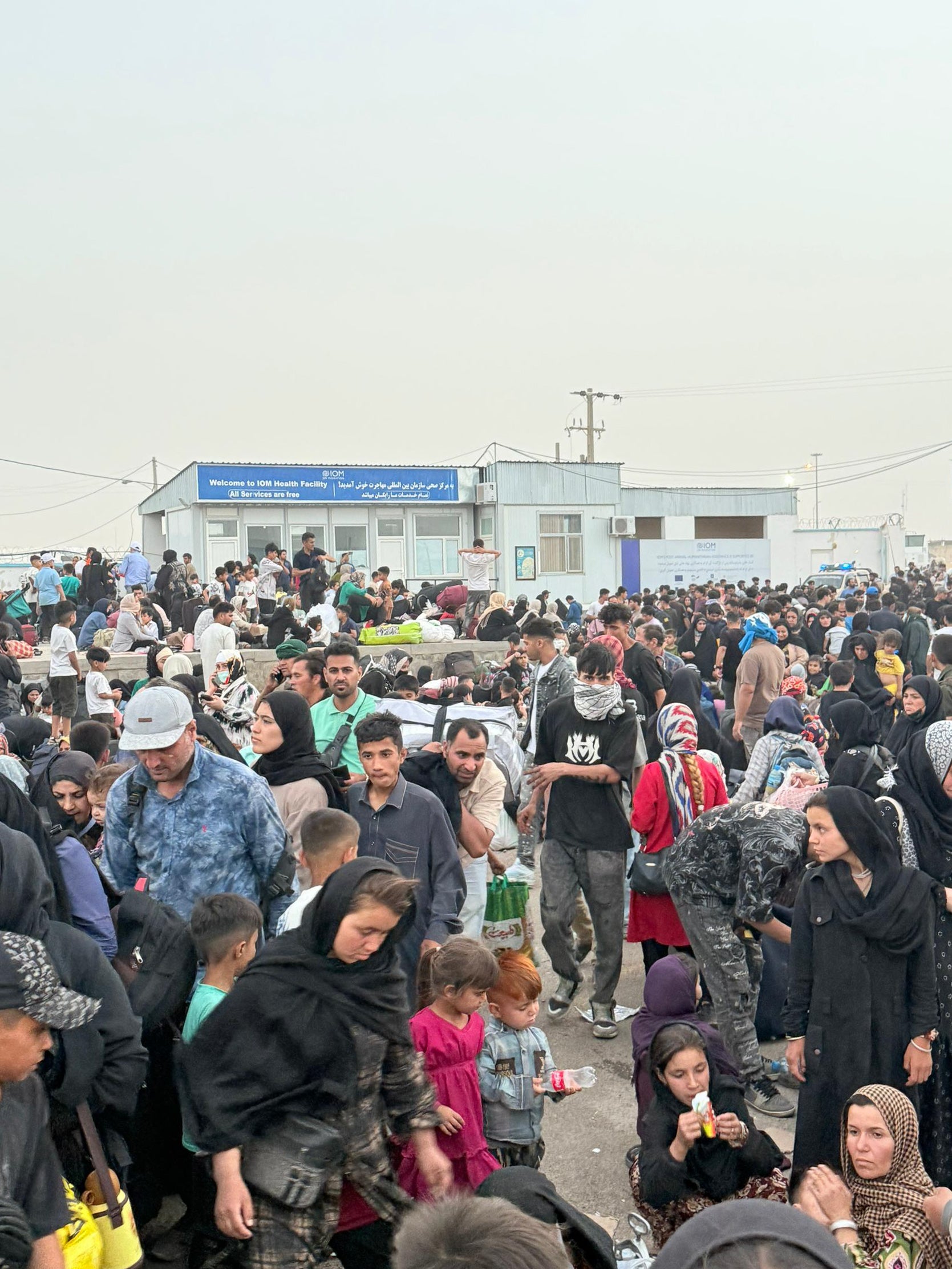
What sets apart the water crisis of Kabul, and Afghanistan more broadly, is the fact that, since 2023, more than five million Afghans have returned to their homeland from Iran and Pakistan – some of them voluntarily, but many of them forced to leave.
That has pushed the country’s overall population up by more than 10 per cent.
The influx has come as Afghan people have become a politically sensitive issue in these neighbouring countries, with Pakistan launching an Illegal Foreigners Repatriation Program (IFRP) in 2023, and Iran escalating a state-led mass expulsion of Afghan migrants following its clashes with Israel in late June 2025. Some 2.9 million Afghans returned from Iran and Pakistan in 2025 alone.
“Last summer, we were seeing around 40,000 returnees coming on a daily basis. This has fallen to several hundred families per day – but we expect things to pick back up again,” says Von Zahn. “It’s one of the biggest, if not the biggest, migration crises in Asia, and I don’t think people are very aware that it is happening.”
‘A once green land now looks like a desert’
The massive rise in population is putting a huge amount of pressure on the country’s water infrastructure.
Three-quarters of households in key districts hosting returnees reported that accessing clean water is “difficult” or “very difficult”, while 70 per cent reported that water access had worsened due to the influx of returnees, according to a field assessment of 292 households by Mercy Corps carried out late last year.
“There was a community in Herat [an Afghan district] where we had rehabilitated the water network. But this community then took an additional 300 families coming back from Iran, which meant that now we were only providing 50 per cent of required water,” says Von Zahn.
“It’s a situation that is repeating itself across the country– and there are millions more that could yet return.”
Families at the frontline of the escalating water crisis include that of 60-year-old farmer Wasiq, who is a father of 14. Prolonged droughts and water scarcity in Kandahar province has, over a number of years, led to a key irrigation canal drying up, forcing the family to leave their land in search of work on farms in other villages.
“It has been eight years since I left my village and home due to water scarcity,” he says. “What was once a green land with beautiful meadows and trees now looks like a desert. You might wonder why people would live in such a barren place, but it wasn't always a desert; it used to be a beautiful and fertile land.”
Drought, he adds, is a “silent killer” that is “destroying everything” in communities such as his. Even after travelling to other villages, he would find that the wells that the family relied on would often dry up after just a few months.
‘Drastic aid cuts have serious impact’
Wasiq’s village were offered a lifeline when Save the Children invested in a new solar-powered water supply system, which is now bringing 25,000 litres of clean water to the village every day. It has allowed the family to return to their land for the first time in eight years.
“I am very happy and grateful for the new water system in our village; it has truly ended our suffering and those of others in this village,” he says “We have clean and pure drinking water. Honestly, I was tired of moving from one village to another.”
Wasiq adds that his “greatest desire” is for a new dam to be built in the area, which would help further ensure that drought will not return in the same way as before. But a year of overseas aid cuts from countries including the US and the UK – which saw humanitarian aid flows into Afghanistan fall 37 per cent in 2025 compared to 2024 – means that the likelihood of such a large-scale intervention becomes ever more remote.
-Sediq(24)-Nabi(12)-Rashid(9)-Ali(14)-a-family-once-displaced-by-extreme-weather.JPG)
-and-Nabi(12)-next-to-Save-the-Childrens-water-supply-Kandahar-Afghanistan.JPG)
International NGOs have had to make serious savings on the services that they offer. Cuts to services from Save the Children, which employs 1,500 people in the country and works across 20 districts, have resulted in 700,000 people having their health services impacted, more than 100,000 children seeing education services disrupted, and 400,000 people facing disruptions in their clean water, sanitation, and hygiene support.
“The cuts we have made are quite drastic, and have had a serious impact on the children and people that rely on services,” says Save the Children Asia’s Arshad Malik. “This is on top of Afghanistan facing a large number of crises in recent years, including earthquakes, droughts, flooding, as well as the returnees.”
Mercy Corps, meanwhile, has been forced to reduce its footprint in the country by 50 per cent over the course of the year.
When the US aid stop-work order came through in January 2025, the NGO was forced to abandon a number of water infrastructure projects in the middle of construction, before they were “lucky” to secure private funding in order to complete them later on in the year, according to Von Zahn.
The NGO has produced several reports and carried out significant lobbying on the water crisis, but found that countries have been largely unwilling to respond financially.
“Donors like the EU and the UK are referring to our water report a lot, and saying that it is important to address the water crisis, but sadly, all we are continuing to see at the moment is funding cuts all over the place,” she says.
If significant interventions are not made soon, Von Zahn adds, whole neighbourhoods of Kabul could soon be forced to leave. But it is unclear where they will go, given pressure on water across the country, and the closed borders to Iran and Pakistan.
Von Zahn expects the pressure on aid services in Afghanistan to increase yet further in the coming year, with “several large NGOs currently at risk of closing offices in Kabul”, she says. Advocacy, she adds, has been further complicated by the fact that there continue to be few donor countries with a diplomatic presence in the country, following the Taliban retaking control of the country in 2021.
“It’s a very tough context here in Afghanistan,” she says. “A lot of cuts here are justified by criticisms of restrictions on women here and other human rights challenges. But cutting funding does not have a positive impact on women’s rights and human rights – in fact, quite the opposite, it is deepening misery for everyone.”
Taliban accused of downplaying crisis
NGOs stress, at the same time, that if significant money were made available, and it were invested in large-scale water infrastructure, then adapting to Afghanistan’s new water reality is very much a possibility. Another key help would be if the situation was managed more effectively. “Currently, people are just drilling all over the place, and going deeper and deeper,” says Von Zahn. “Some wells are 100 to 300 metres in some parts of the city.”
The Taliban have been accused of both downplaying the severity of the water crisis, while also assuring residents of Kabul that its impacts are being addressed. At the inauguration ceremony of a drinking water project, Kabul city governor Aminullah Obaid said that “the existing problems will be resolved shortly, and the [Taliban government] intends to supply clean drinking water to the people from Shah Toot Dam and Panjshir River”.
However, the construction of the Shah Toot Dam has yet to begin, with India originally signing up to fund the project just before the Taliban's return.
Aid workers, meanwhile, are doing their best to work with communities to adapt to the resources that are available.
“Afghans are extremely resilient, and not just victims of their situation,” says Von Zahn. “There’s a lot of things already happening at a community level, like water rationing, and we are also exploring how we can get the private sector involved to fund water-saving technologies, or sell certain crops that need less water.
“But this will only go so far. At the end of the day, significantly more international funding is needed to respond more effectively to the scale of crisis.”
This article was produced as part of The Independent’s Rethinking Global Aid project
Join our commenting forum
Join thought-provoking conversations, follow other Independent readers and see their replies
Comments
Bookmark popover
Removed from bookmarks